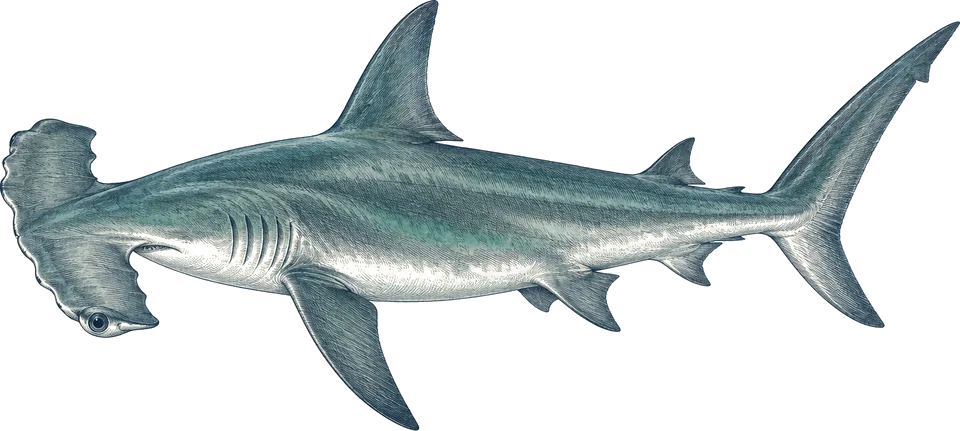
scalloped hammerhead
All yearGordon Rocks, Kicker Rock, North Seymour
Hang in the crater or on the outer wall at 15 to 30 m and watch the blue.2
Likely at Gordon Rocks; small schools elsewhere.
The best time to dive the central Galapagos is any month. January to May is warmer and calmer, with mantas; June to November is colder, at 19 to 23 °C, with more hammerheads and the odd mola at Gordon Rocks. Honestly, I'd pick on the rest of the trip, not the month.
Operators say: Any month: January to May warmer and calmer with mantas; June to November colder with more big animals. Our sighting records put oceanic mantas in June to November; Academy Bay ties them to the warm season at Beagle Rocks and Pinzón.

By Eugen. Based on 11 sources, checked 11 November 2026.
111 km across · coastline from Natural Earth 10m
The central islands are where land-based Galapagos diving happens. Day boats from Puerto Ayora on Santa Cruz run to Gordon Rocks, North Seymour, Mosquera, Daphne, Santa Fe and, on longer days, Bartolomé, Cousin's Rock and Floreana. From San Cristóbal, boats run to Kicker Rock (León Dormido). Liveaboards also dive Punta Carrión, Cousin's Rock and North Seymour on their first and last days.
Operators dive all year. From January to May the water is 24 to 28 °C, the sea is calmer and mantas visit sites such as Daphne, Beagle Rocks and Pinzón. From June to November it drops to 19 to 23 °C with thermoclines, grey skies and more plankton, but more big animals. Gordon Rocks is the hammerhead site and needs experience; North Seymour, Mosquera and Santa Fe suit newer divers.
Conditions barely change across the year, so no month beats another — pick on wildlife or price.
Hover a month to isolate it.
| January | February | March | April | May | June | July | August | September | October | November | December | |
|---|---|---|---|---|---|---|---|---|---|---|---|---|
| Conditions | Poor | Poor | Poor | Poor | Poor | Excellent | Excellent | Excellent | Excellent | Excellent | Excellent | Poor |
| Water temp (°C) | 25 | 27 | 27 | 26 | 25 | 24 | 23 | 22 | 22 | 22 | 23 | 23 |
| Visibility (m) | 15–25 | 15–25 | 15–25 | 15–25 | 15–25 | 15–25 | 15–25 | 15–25 | 15–25 | 15–25 | 15–25 | 15–25 |
| Marine life | Steady | Steady | Steady | Steady | Steady | Busy | Busy | Busy | Busy | Busy | Busy | Steady |
Long-term averages, 2016–2025. Visibility is estimated from satellite chlorophyll-a. Water temperature is the surface mean; it is cooler at depth.
Diving conditionsThe wind is up. The sea is calmer.
Marine lifeGalapagos sea lion (near-guaranteed), Whale shark (hit-or-miss), Oceanic manta (hit-or-miss) peak at Galapagos Central in these months.
Diving conditionsIt rains more. The wind eases.
Marine lifeMunk's mobula (hit-or-miss) peaks at Galapagos Central in these months.
5,272 underwater observation records · 31 surveyed years of ocean data · 10 years of sea temperature
Dashed: monthly average. Band: eight days in ten.
10th to 90th percentile rangemonthly mean
Seas top 2.5 m on under 1% of days. Enough to cancel a liveaboard crossing
Gusts over 40 km/h, about where a day boat stays in port
0 of them bring heavy rain
| Month | Swell | Gusts over 40 km/h | Wet days | Heavy rain | Air | Daylight |
|---|---|---|---|---|---|---|
| Jan | 0.7 m | 0% | 7 | 0 | 28 °C | 12.0 h |
| Feb | 0.7 m | 0% | 13 | 1 | 29 °C | 12.0 h |
| Mar | 0.5 m | 0% | 14 | 3 | 29 °C | 12.0 h |
| Apr | 0.6 m | 0% | 13 | 1 | 29 °C | 12.0 h |
| May | 0.6 m | 0% | 4 | 0 | 28 °C | 12.0 h |
| Jun | 0.7 m | 0% | 1 | 0 | 27 °C | 12.0 h |
| Jul | 0.6 m | 0% | 1 | 0 | 27 °C | 12.0 h |
| Aug | 0.7 m | 0% | 0 | 0 | 26 °C | 12.0 h |
| Sep | 0.7 m | 0% | 0 | 0 | 26 °C | 12.0 h |
| Oct | 0.6 m | 0% | 0 | 0 | 26 °C | 12.0 h |
| Nov | 0.6 m | 0% | 0 | 0 | 27 °C | 12.0 h |
| Dec | 0.7 m | 0% | 1 | 0 | 28 °C | 12.0 h |
Swell is the rough end of the month: nine days in ten come in under it. Sea temperature covers 10 years, waves 4.
Darker is better, against this site's own year. Pick a month for its weeks.
| Week 1 | ||||||||||||
|---|---|---|---|---|---|---|---|---|---|---|---|---|
| Week 2 | ||||||||||||
| Week 3 | ||||||||||||
| Week 4 |
| Week | Conditions | Water | Swell | Wind | Rain chance |
|---|---|---|---|---|---|
| Week 1 | Poor | 24 °C | 0.6 m | 20 km/h | 9% |
| Week 2 | Poor | 25 °C | 0.6 m | 20 km/h | 17% |
| Week 3 | Moderate | 25 °C | 0.7 m | 20 km/h | 27% |
| Week 4 | Moderate | 26 °C | 0.7 m | 19 km/h | 32% |
| Week 1 | Poor | 26 °C | 0.7 m | 17 km/h | 38% |
| Week 2 | Poor | 26 °C | 0.7 m | 16 km/h | 47% |
| Week 3 | Moderate | 27 °C | 0.7 m | 16 km/h | 48% |
| Week 4 | Poor | 27 °C | 0.7 m | 16 km/h | 41% |
| Week 1 | Moderate | 27 °C | 0.6 m | 16 km/h | 42% |
| Week 2 | Moderate | 27 °C | 0.5 m | 15 km/h | 47% |
| Week 3 | Moderate | 27 °C | 0.5 m | 15 km/h | 46% |
| Week 4 | Moderate | 27 °C | 0.5 m | 17 km/h | 42% |
| Week 1 | Poor | 27 °C | 0.5 m | 17 km/h | 43% |
| Week 2 | Moderate | 27 °C | 0.6 m | 18 km/h | 47% |
| Week 3 | Moderate | 26 °C | 0.6 m | 18 km/h | 47% |
| Week 4 | Poor | 26 °C | 0.5 m | 19 km/h | 34% |
| Week 1 | Moderate | 25 °C | 0.5 m | 20 km/h | 24% |
| Week 2 | Moderate | 25 °C | 0.6 m | 22 km/h | 21% |
| Week 3 | Poor | 25 °C | 0.7 m | 24 km/h | 8% |
| Week 4 | Poor | 24 °C | 0.6 m | 25 km/h | 5% |
| Week 1 | Excellent | 24 °C | 0.7 m | 25 km/h | 7% |
| Week 2 | Excellent | 24 °C | 0.7 m | 24 km/h | 4% |
| Week 3 | Good | 24 °C | 0.7 m | 25 km/h | 0% |
| Week 4 | Good | 23 °C | 0.6 m | 25 km/h | 2% |
| Week 1 | Excellent | 23 °C | 0.6 m | 25 km/h | 4% |
| Week 2 | Excellent | 23 °C | 0.6 m | 25 km/h | 3% |
| Week 3 | Excellent | 23 °C | 0.7 m | 25 km/h | 1% |
| Week 4 | Excellent | 23 °C | 0.7 m | 25 km/h | 1% |
| Week 1 | Excellent | 22 °C | 0.6 m | 25 km/h | 0% |
| Week 2 | Excellent | 22 °C | 0.6 m | 24 km/h | 0% |
| Week 3 | Excellent | 22 °C | 0.7 m | 24 km/h | 0% |
| Week 4 | Excellent | 22 °C | 0.7 m | 24 km/h | 0% |
| Week 1 | Good | 22 °C | 0.6 m | 24 km/h | 0% |
| Week 2 | Excellent | 22 °C | 0.7 m | 25 km/h | 0% |
| Week 3 | Good | 22 °C | 0.7 m | 24 km/h | 1% |
| Week 4 | Excellent | 22 °C | 0.6 m | 23 km/h | 1% |
| Week 1 | Excellent | 22 °C | 0.6 m | 23 km/h | 0% |
| Week 2 | Excellent | 22 °C | 0.6 m | 23 km/h | 1% |
| Week 3 | Excellent | 22 °C | 0.6 m | 23 km/h | 0% |
| Week 4 | Excellent | 22 °C | 0.6 m | 23 km/h | 0% |
| Week 1 | Excellent | 22 °C | 0.6 m | 23 km/h | 1% |
| Week 2 | Excellent | 23 °C | 0.6 m | 23 km/h | 1% |
| Week 3 | Excellent | 23 °C | 0.6 m | 23 km/h | 1% |
| Week 4 | Excellent | 23 °C | 0.7 m | 23 km/h | 2% |
| Week 1 | Poor | 23 °C | 0.6 m | 22 km/h | 2% |
| Week 2 | Poor | 23 °C | 0.6 m | 21 km/h | 2% |
| Week 3 | Poor | 23 °C | 0.7 m | 21 km/h | 4% |
| Week 4 | Moderate | 24 °C | 0.7 m | 20 km/h | 7% |
10 years of daily records, averaged into weeks.
Sized for each month's coldest water.
| Jan | Feb | Mar | Apr | May | Jun | Jul | Aug | Sep | Oct | Nov | Dec | |
|---|---|---|---|---|---|---|---|---|---|---|---|---|
| Suit | 5 mm | 3 mm | 3 mm | 3 mm | 5 mm | 5 mm | 5 mm | 5 mm | 5 mm | 5 mm | 5 mm | 5 mm |
Suit row is for surface water. At depth: 7 mm suit with hood and gloves from June to November, when thermoclines can reach 13 °C. SMB essential.
Each month's rough end: nine days in ten are calmer.
Amber is over 2.5 m.
No tropical storm has come within 250 km in 30 years of records. Swell and wind set the season, not cyclones.
| Species | When | Observed window | Reliability | Evidence | Records |
|---|---|---|---|---|---|
| Galapagos sea lion | All year | Near-guaranteed | 2363 | ||
| Marine iguana | All year | Near-guaranteed | 568 | ||
| Galapagos penguin | All year | Near-guaranteed | 418 | ||
| Whitetip reef shark | All year | Near-guaranteed | 348 | ||
| Bottlenose dolphin | All year | Near-guaranteed | 92 | ||
| Ocellated eagle ray | All year | Likely | 187 | ||
| Scalloped hammerhead | All year | Likely | 78 | ||
| Humpback whale | Aug–Sep | Likely | 33 | ||
| Whale shark | Sep–Oct | Hit-or-miss | 13 | ||
| Munk's mobula | Jan–Mar | Hit-or-miss | 10 | ||
| Green turtle | Dec–Jan, May | Near-guaranteed | 1045 | ||
| Oceanic manta | Mar–Apr, Sep, Nov | Hit-or-miss | 19 | ||
| Yellowfin tuna | Feb, Apr, Jul, Sep | Likely | 11 | ||
| Orca | Jan, Apr, Jul | Hit-or-miss | 11 | ||
| Bigeye trevally | Mar, Jul–Aug, Dec | Hit-or-miss | 9 | ||
| Common dolphin | Jan, Jun | Hit-or-miss | 9 | ||
| Short-finned pilot whale | Jan, Apr, Nov | Hit-or-miss | 8 |
Logged sightings, not a full survey. How to read this table.
| Site | Depth | Level | What to expect |
|---|---|---|---|
| Gordon Rockssubmerged crater | 6–32 m | Experienced | Eroded crater off north-east Santa Cruz, 45 to 60 min from Puerto Ayora. Sand at 32 m; hammerhead schools up to 50, strong surge. The day trip I'd build around.2 |
| Kicker Rock (León Dormido)wall and channel | 5–30 m | Advanced | Split rock off San Cristóbal, maximum 25 to 30 m. Brisk current in the channel; reef, Galapagos and hammerhead sharks, turtles, eagle rays.1 |
| North Seymourwall | 8–18 m | Open Water | Drift over a rocky step at 8 m to sand at 16 to 18 m. Whitetips, small hammerhead schools, eagle rays, garden eels.2 |
| Mosquerasand platform and drop | ≈ 10–21 m | Open Water | Sandy platform to about 21 m with thousands of garden eels, eagle rays, sea lions, occasional hammerheads.2 |
| Santa Fereef and cave | 5–16 m | Open Water | Shallow, sheltered dive 40 min from Puerto Ayora with a cave at 16 m; sea lions, turtles, whitetips and big fish schools.2 |
| Punta Carriónreef | 5–18 m | Open Water | Mouth of the Itabaca Channel, rarely deeper than 12 to 18 m. Usual first liveaboard dive: sea lions, whitetips, mobulas.1 |
| Cousin's Rockwall and terraces | 12–30 m | Advanced | Off east Santiago, about 2 h by car and boat. Wall and terraced ridge with seahorses and octopus; mantas, eagle rays and hammerheads offshore.5 |
| Bartolomédrift | 10–25 m | Advanced | Mild to moderate drift round the pinnacle: whitetips, golden morays, barracuda and jacks, and sometimes Galapagos penguins.1 |
| Beagle Rocksplatform and wall | ≈ 12–25 m | Advanced | Platform at 12 m above a wall past 60 m. Hammerheads and Galapagos sharks off the wall; mantas in the warm season.2 |
| Cabo Marshallwall | 10–30 m | Advanced | North-east Isabela, liveaboard only. Plateau at about 10 m and a wall past 30 m; giant mantas, hit or miss, plus hammerheads.1 |
Gordon Rocks, Kicker Rock, North Seymour
Hang in the crater or on the outer wall at 15 to 30 m and watch the blue.2
Likely at Gordon Rocks; small schools elsewhere.
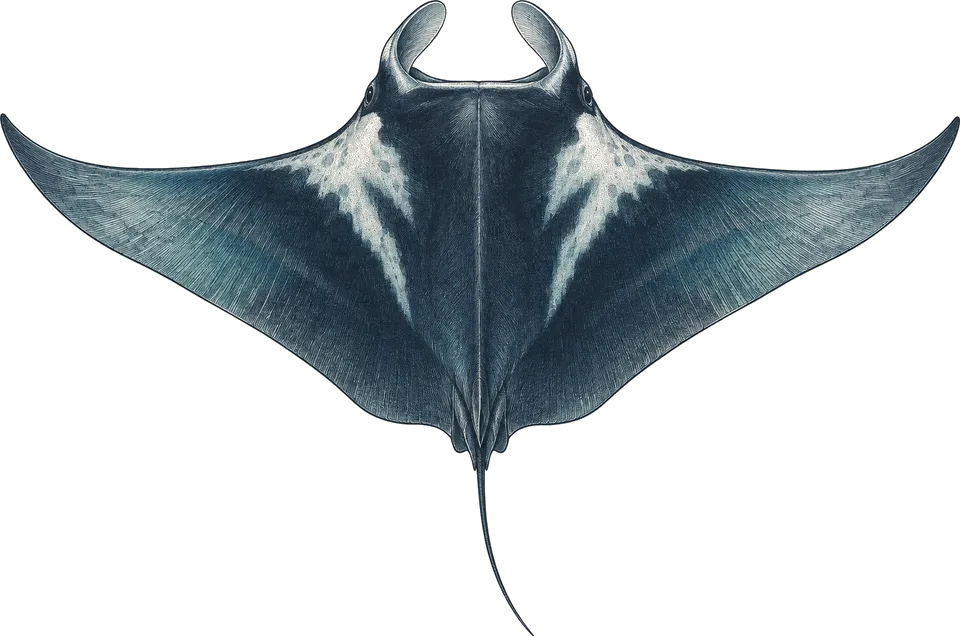
Daphne Minor, Beagle Rocks, Pinzón, Cabo Marshall
Stay shallow on the platform or wall edge and watch open water.2
Hit or miss; best chance in the warm season.
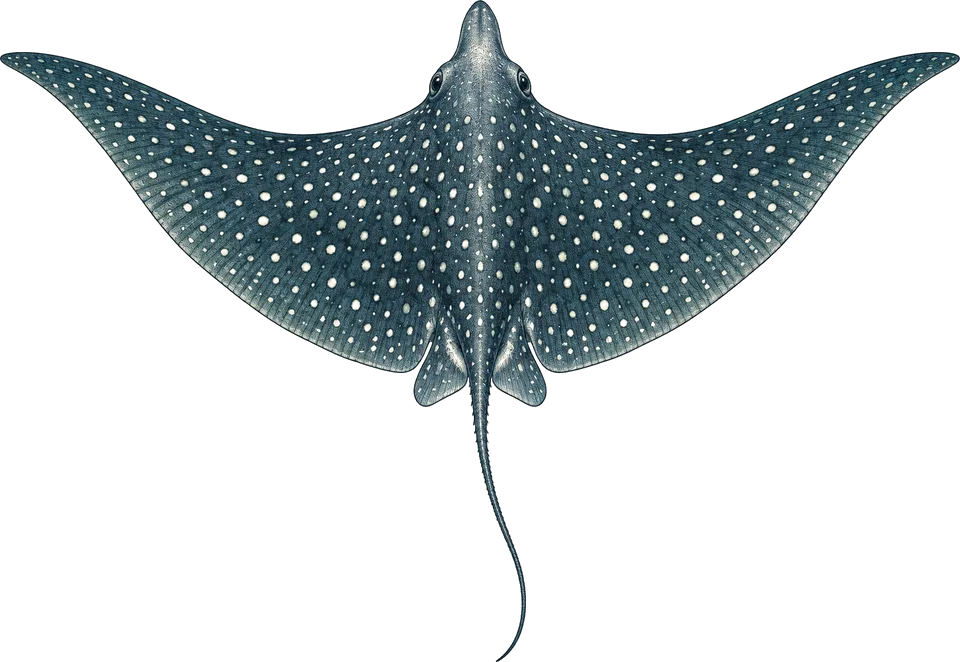
North Seymour, Mosquera, Gordon Rocks
Seen gliding along walls and over sand on most central sites.2
Common all year.
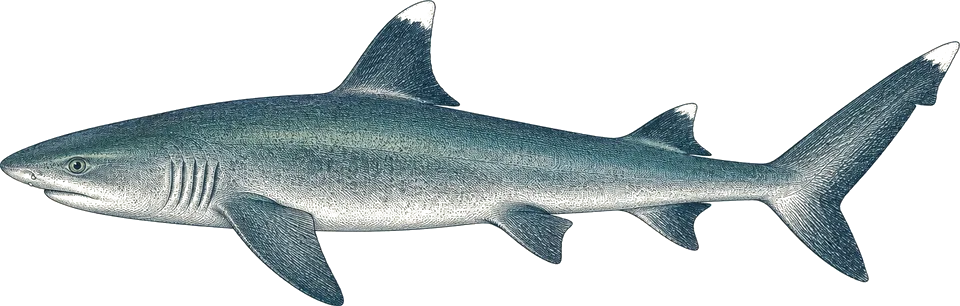
North Seymour, Santa Fe, Punta Carrión
Resting on sand and under ledges at 10 to 18 m.2
Seen on most dives.
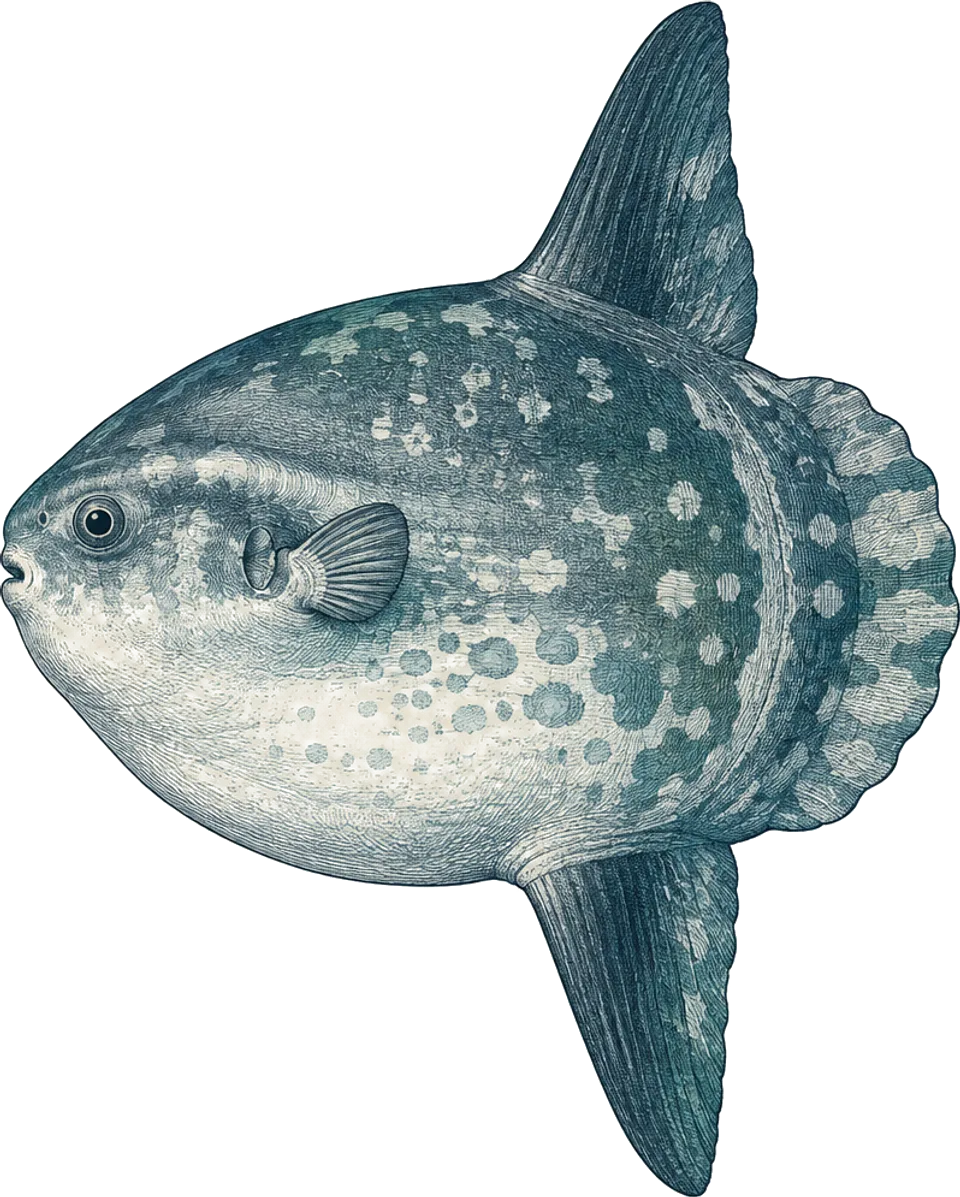
Gordon Rocks
Watch the blue near cold thermoclines on the outside of the crater.3
Occasional, in the colder months.
Compiled from the sources above, last checked 2026-11-11. Monthly conditions come from our own climate records; see how we score.