
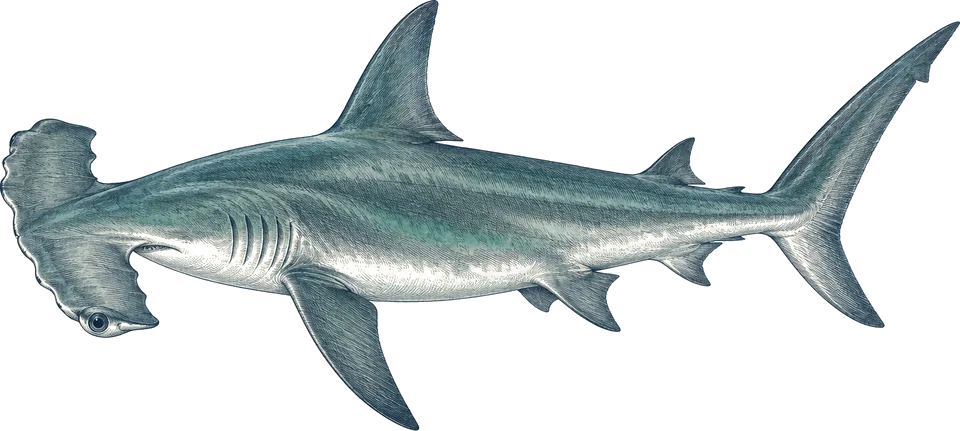
scalloped hammerhead
All yearLa Nevera, El Bajón
Negative entry, then hang at 20 to 30 m near cleaning stations and watch the blue.6
Year-round; schools come as shallow as 10 m January to April.
The best time to dive Malpelo is January to April, when cold upwelling brings the largest hammerhead schools shallower and smalltooth sand tigers within reach. June to October has calmer seas, clearer water, silky sharks and whale sharks. I'd take the cold for the hammerheads.
Operators say: January to April for hammerheads and sand tigers; June to October for calmer seas, silkies and whale sharks. Our data rates January to May best on wind and rain; operators say those months bring rougher seas and cold, green water.
888 km across · coastline from Natural Earth 10m
Malpelo is a bare volcanic rock about 500 km west of the Colombian mainland, reached only by liveaboard from Buenaventura after a crossing of roughly 30 to 40 hours. Only one boat may be inside the sanctuary at a time, and since 2018 only boats departing from Colombia may enter. Diving is from RIBs in groups of six or fewer, on 32% nitrox, with strong and changing currents, negative entries and free ascents under an SMB.
The year splits in two. From January to April the water is colder, the thermocline rises to around 20 m and visibility can drop to 5 to 15 m, but hammerhead schools come shallower and smalltooth sand tigers appear at El Bajo del Monstruo. From May or June to December the water warms to 26 to 28 °C, seas are calmer, visibility opens to 15 to 30 m, silky sharks school early in the season and whale sharks pass from July. Hammerheads are present all year.
Hover a month to isolate it.
| January | February | March | April | May | June | July | August | September | October | November | December | |
|---|---|---|---|---|---|---|---|---|---|---|---|---|
| Conditions | Excellent | Excellent | Excellent | Excellent | Excellent | Poor | Poor | Poor | Poor | Poor | Poor | Poor |
| Water temp (°C) | 28 | 27 | 26 | 28 | 28 | 28 | 27 | 27 | 27 | 27 | 27 | 27 |
| Visibility (m) | 20–30 | 15–25 | 15–25 | 15–25 | 20–30 | 20–30 | 20–30 | 20–30 | 20–30 | 20–30 | 20–30 | 20–30 |
| Marine life | Peak | Peak | Peak | Peak | Peak | Steady | Steady | Steady | Steady | Steady | Steady | Steady |
| Best time | Peak | Peak | Peak | Peak |
Long-term averages, 2016–2025. Visibility is estimated from satellite chlorophyll-a. Water temperature is the surface mean; it is cooler at depth.
Diving conditionsIt rains less.
Marine lifeScalloped hammerhead (near-guaranteed), Whale shark (hit-or-miss) peak at Malpelo in these months.
Diving conditionsIt rains more.
Marine lifeTiger shark (hit-or-miss) peaks at Malpelo in these months.
813 underwater observation records · 22 surveyed years of ocean data · 10 years of sea temperature
Dashed: monthly average. Band: eight days in ten.
10th to 90th percentile rangemonthly mean
Seas top 2.5 m on 1% of days. Enough to cancel a liveaboard crossing
Gusts over 40 km/h, about where a day boat stays in port
6 of them bring heavy rain
| Month | Swell | Gusts over 40 km/h | Wet days | Heavy rain | Air | Daylight |
|---|---|---|---|---|---|---|
| Jan | 1.8 m | 1% | 22 | 6 | 27 °C | 11.8 h |
| Feb | 2.0 m | 2% | 8 | 2 | 27 °C | 11.9 h |
| Mar | 1.8 m | 1% | 5 | 0 | 27 °C | 12.0 h |
| Apr | 2.0 m | 0% | 19 | 7 | 28 °C | 12.1 h |
| May | 2.2 m | 0% | 25 | 9 | 28 °C | 12.2 h |
| Jun | 2.2 m | 0% | 24 | 9 | 27 °C | 12.2 h |
| Jul | 2.2 m | 1% | 25 | 8 | 27 °C | 12.2 h |
| Aug | 2.1 m | 0% | 22 | 5 | 27 °C | 12.1 h |
| Sep | 2.2 m | 0% | 21 | 4 | 27 °C | 12.0 h |
| Oct | 2.1 m | 0% | 16 | 4 | 27 °C | 11.9 h |
| Nov | 2.3 m | 0% | 18 | 5 | 26 °C | 11.8 h |
| Dec | 1.8 m | 0% | 25 | 9 | 26 °C | 11.8 h |
Swell is the rough end of the month: nine days in ten come in under it. Sea temperature covers 10 years, waves 4.
Darker is better, against this site's own year. Pick a month for its weeks.
| Week 1 | ||||||||||||
|---|---|---|---|---|---|---|---|---|---|---|---|---|
| Week 2 | ||||||||||||
| Week 3 | ||||||||||||
| Week 4 |
| Week | Conditions | Water | Swell | Wind | Rain chance |
|---|---|---|---|---|---|
| Week 1 | Excellent | 28 °C | 1.8 m | 20 km/h | 84% |
| Week 2 | Excellent | 28 °C | 1.8 m | 20 km/h | 77% |
| Week 3 | Excellent | 28 °C | 1.8 m | 20 km/h | 67% |
| Week 4 | Excellent | 27 °C | 2.1 m | 21 km/h | 54% |
| Week 1 | Good | 27 °C | 2.3 m | 23 km/h | 40% |
| Week 2 | Excellent | 27 °C | 2.0 m | 21 km/h | 33% |
| Week 3 | Excellent | 27 °C | 2.0 m | 21 km/h | 25% |
| Week 4 | Excellent | 26 °C | 1.8 m | 23 km/h | 17% |
| Week 1 | Excellent | 26 °C | 1.7 m | 23 km/h | 12% |
| Week 2 | Excellent | 26 °C | 1.7 m | 21 km/h | 11% |
| Week 3 | Excellent | 26 °C | 1.9 m | 21 km/h | 13% |
| Week 4 | Excellent | 27 °C | 1.9 m | 20 km/h | 21% |
| Week 1 | Excellent | 27 °C | 1.9 m | 17 km/h | 35% |
| Week 2 | Good | 28 °C | 2.1 m | 18 km/h | 54% |
| Week 3 | Good | 28 °C | 2.1 m | 18 km/h | 70% |
| Week 4 | Good | 29 °C | 2.0 m | 18 km/h | 78% |
| Week 1 | Good | 29 °C | 2.0 m | 19 km/h | 80% |
| Week 2 | Good | 29 °C | 2.1 m | 20 km/h | 80% |
| Week 3 | Excellent | 28 °C | 2.3 m | 22 km/h | 81% |
| Week 4 | Excellent | 28 °C | 2.4 m | 23 km/h | 83% |
| Week 1 | Poor | 28 °C | 2.2 m | 24 km/h | 80% |
| Week 2 | Poor | 28 °C | 2.3 m | 23 km/h | 79% |
| Week 3 | Poor | 28 °C | 2.2 m | 23 km/h | 83% |
| Week 4 | Poor | 28 °C | 2.0 m | 24 km/h | 82% |
| Week 1 | Poor | 27 °C | 2.1 m | 24 km/h | 81% |
| Week 2 | Poor | 27 °C | 2.3 m | 24 km/h | 82% |
| Week 3 | Poor | 27 °C | 2.3 m | 25 km/h | 82% |
| Week 4 | Poor | 27 °C | 2.0 m | 25 km/h | 81% |
| Week 1 | Moderate | 27 °C | 1.9 m | 25 km/h | 76% |
| Week 2 | Poor | 27 °C | 1.9 m | 26 km/h | 73% |
| Week 3 | Poor | 27 °C | 2.2 m | 26 km/h | 70% |
| Week 4 | Poor | 27 °C | 2.3 m | 25 km/h | 69% |
| Week 1 | Poor | 27 °C | 2.3 m | 26 km/h | 70% |
| Week 2 | Poor | 27 °C | 2.3 m | 27 km/h | 67% |
| Week 3 | Poor | 27 °C | 2.2 m | 26 km/h | 68% |
| Week 4 | Moderate | 27 °C | 2.1 m | 26 km/h | 68% |
| Week 1 | Poor | 27 °C | 2.1 m | 26 km/h | 59% |
| Week 2 | Poor | 27 °C | 2.2 m | 26 km/h | 53% |
| Week 3 | Poor | 27 °C | 2.1 m | 27 km/h | 52% |
| Week 4 | Poor | 27 °C | 2.1 m | 27 km/h | 51% |
| Week 1 | Poor | 27 °C | 2.3 m | 26 km/h | 52% |
| Week 2 | Poor | 27 °C | 2.2 m | 27 km/h | 60% |
| Week 3 | Poor | 27 °C | 2.2 m | 27 km/h | 62% |
| Week 4 | Poor | 27 °C | 2.2 m | 26 km/h | 62% |
| Week 1 | Poor | 27 °C | 1.8 m | 25 km/h | 70% |
| Week 2 | Poor | 27 °C | 1.7 m | 22 km/h | 75% |
| Week 3 | Poor | 27 °C | 1.8 m | 22 km/h | 83% |
| Week 4 | Poor | 27 °C | 1.8 m | 23 km/h | 85% |
10 years of daily records, averaged into weeks.
Sized for each month's coldest water.
| Jan | Feb | Mar | Apr | May | Jun | Jul | Aug | Sep | Oct | Nov | Dec | |
|---|---|---|---|---|---|---|---|---|---|---|---|---|
| Suit | 3 mm | 3 mm | 3 mm | 3 mm | skin | skin | 3 mm | 3 mm | 3 mm | 3 mm | 3 mm | 3 mm |
Suit row is for surface water. At depth: I'd take a 7 mm wetsuit with hood for the January to April thermoclines; 5 mm is enough May to December. SMB and PLB required on every dive (the operator lends the PLB). Nitrox certification required.
Each month's rough end: nine days in ten are calmer.
Amber is over 2.5 m.
No tropical storm has come within 250 km in 30 years of records. Swell and wind set the season, not cyclones.
| Species | When | Observed window | Reliability | Evidence | Records |
|---|---|---|---|---|---|
| Scalloped hammerhead | All year | Near-guaranteed | 283 | ||
| Whitetip reef shark | All year | Likely | 188 | ||
| Silky shark | Jan–Mar | Likely | 53 | ||
| Whale shark | Jan | Hit-or-miss | 24 | ||
| Spotted eagle ray | Jan–Apr | Hit-or-miss | 75 | ||
| Tiger shark | Aug | Hit-or-miss | 11 | ||
| Bottlenose dolphin | Mar, Nov–Dec | Likely | 48 | ||
| Yellowfin tuna | Feb–Mar, Jun, Oct | Hit-or-miss | 25 | ||
| Bigeye trevally | Feb, Oct | Hit-or-miss | 18 | ||
| Humpback whale | Aug, Nov | Hit-or-miss | 9 | ||
| Common dolphin | Mar, Aug, Dec | Hit-or-miss | 8 |
Logged sightings, not a full survey. How to read this table.
| Site | Depth | Level | What to expect |
|---|---|---|---|
| El Bajo del Monstruoseamount | ≈ 20–40 m | Experienced | Rock formation dropping into deep water. Smalltooth sand tigers seen from about 21 m in the cold season; almaco jacks and cleaning angelfish.5 |
| La Nevera (The Freezer)wall / cleaning station | ≈ 15–30 m | Experienced | Cold-water cleaning station. Hammerheads pass in waves at around 24 m, just above the thermocline, with eagle rays and silkies. The site I'd most want to hang at.5 |
| El Bajónseamount | ≈ 18–30 m | Experienced | Seamount where hammerheads hold at about 30 m, with bluefin trevally and Galápagos sharks. Visibility can change within one dive.5 |
| D'Artagnan (Three Musketeers)pinnacle / swim-through | 5–35 m | Experienced | Walls, canyons and ridges with a swim-through running from the surface to 35 m. Bigeye jack schools, giant hawkfish, lobsters.5 |
| La Gringarock / cave | 24–40 m | Experienced | Largest rock on the south side, with a cave running between 40 and 24 m. Strong local down-current; bigeye jacks and hammerheads.1 |
| La Ferreteríapinnacle | ≈ 17–30 m | Experienced | Pinnacle with its summit at about 17 m, covered in moray eels and scorpionfish.5 |
| El Acuarioseamount | ≈ 27–35 m | Experienced | Seamount topping out at about 27 m: rainbow chubs, snappers, bonito, yellowfin tuna and wahoo in open water.5 |
| The Cathedralpinnacle / tunnel | ≈ 10–18 m | Experienced | Pinnacle with a tunnel through it, rising from sand at 18 m. Walls covered in corals and sponges.1 |
La Nevera, El Bajón
Negative entry, then hang at 20 to 30 m near cleaning stations and watch the blue.6
Year-round; schools come as shallow as 10 m January to April.
El Bajo del Monstruo
Deep dives below the thermocline on the seamount; seen as shallow as 21 m in the cold season.5
Possible in the cold season only; not seen in summer.
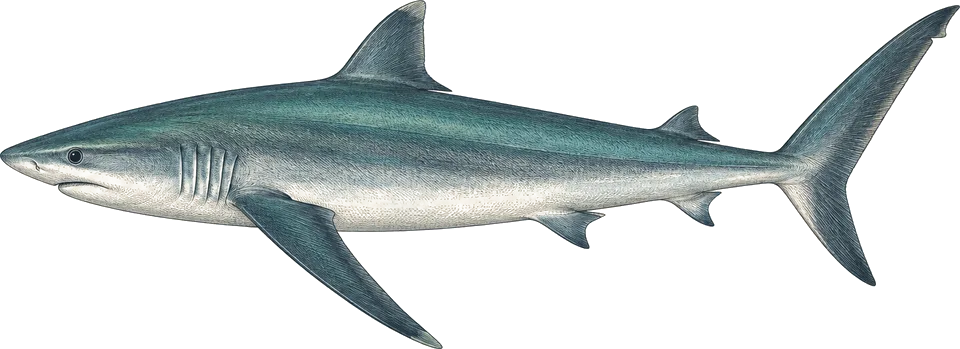
Around the island
Schools around the rock and in the blue, often mixing with hammerheads.3
Common May to July or August; numbers have fallen in recent years.
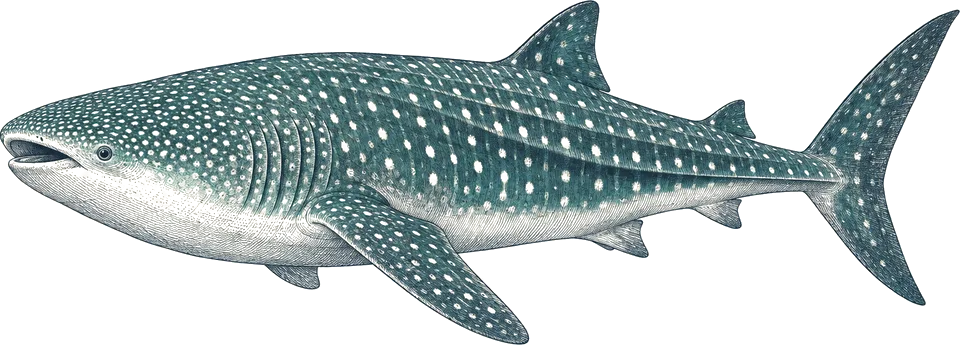
El Bajo del Ancla and open water
Passing encounters on dives or from the RIB, sometimes snorkelled.3
Occasional, July to September or October.
Compiled from the sources above, last checked 2026-11-11. Monthly conditions come from our own climate records; see how we score.