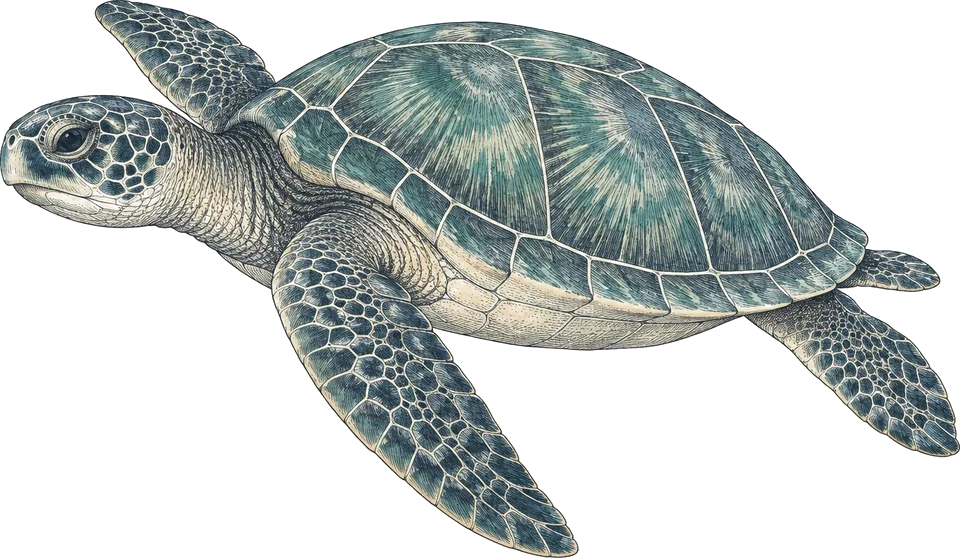
green turtle
All yearAbu Dabbab Bay seagrass
Hover over the seagrass at 6 to 10 m and keep at least 2 m away while they graze.3
Almost daily; 15 to 30 a day reported in 2013.
The best time to dive Abu Dabbab is any month: green turtles graze the seagrass all year. May to November has the warmest water, and dugongs are seen slightly more in summer. I'd go in October, with the sea still about 28 °C.
Operators say: Any month. Turtles are resident; the water is warmest May to November and dugongs are seen a little more in summer.

By Eugen. Based on 11 sources, checked 11 November 2026.
222 km across · coastline from Natural Earth 10m
Abu Dabbab is a small, sandy bay on Egypt's southern Red Sea coast, about 34 km north of Marsa Alam town. Most of it is seagrass at 6 to 10 m, with coral reefs along the north and south sides. Divers walk in from the beach: motorised boats have been barred from the bay since 2007, so speedboats only work the reefs outside it. The diving itself is easy and shallow, which makes it a common first dive for new divers and snorkellers.
People come for the animals. Green turtles graze the seagrass almost every day, guitarfish rest on the sand, and hawksbills use the southern reef. Dugongs still visit, but sightings are a matter of luck: one local guide puts the daily odds below even, slightly better in summer. Visibility in the bay is often only 4 to 10 m over the sand. I'd get in early, before the coaches arrive.
Conditions barely change across the year, so no month beats another — pick on wildlife or price.
Hover a month to isolate it.
| January | February | March | April | May | June | July | August | September | October | November | December | |
|---|---|---|---|---|---|---|---|---|---|---|---|---|
| Conditions | Even | Even | Even | Even | Even | Even | Even | Even | Even | Even | Even | Even |
| Water temp (°C) | 23 | 23 | 23 | 24 | 26 | 27 | 29 | 30 | 29 | 28 | 27 | 25 |
| Visibility (m) | 10–20 | 10–20 | 10–20 | 15–25 | 15–25 | 15–25 | 20–30 | 20–30 | 20–30 | 15–25 | 15–25 | 10–20 |
| Marine life | Steady | Busy | Steady | Steady | Busy | Busy | Busy | Busy | Busy | Busy | Peak | Peak |
Long-term averages, 2016–2025. Visibility is estimated from satellite chlorophyll-a. Water temperature is the surface mean; it is cooler at depth.
Diving conditionsSeas stay mostly calm.
Marine lifeOceanic whitetip (hit-or-miss), Scalloped hammerhead (hit-or-miss) peak at Abu Dabbab in these months.
1,396 underwater observation records · 26 surveyed years of ocean data · 10 years of sea temperature
Dashed: monthly average. Band: eight days in ten.
10th to 90th percentile rangemonthly mean
Seas top 1.5 m on 7% of days. Enough to cancel a day boat
Gusts over 40 km/h, about where a day boat stays in port
0 of them bring heavy rain
| Month | Swell | Gusts over 40 km/h | Wet days | Heavy rain | Air | Daylight |
|---|---|---|---|---|---|---|
| Jan | 1.3 m | 1% | 0 | 0 | 23 °C | 10.6 h |
| Feb | 1.5 m | 2% | 0 | 0 | 23 °C | 11.1 h |
| Mar | 1.8 m | 4% | 0 | 0 | 26 °C | 11.8 h |
| Apr | 1.5 m | 3% | 0 | 0 | 30 °C | 12.6 h |
| May | 1.6 m | 2% | 0 | 0 | 33 °C | 13.2 h |
| Jun | 1.3 m | 6% | 0 | 0 | 35 °C | 13.6 h |
| Jul | 1.1 m | 1% | 0 | 0 | 37 °C | 13.4 h |
| Aug | 1.4 m | 3% | 0 | 0 | 37 °C | 12.9 h |
| Sep | 1.4 m | 2% | 0 | 0 | 35 °C | 12.1 h |
| Oct | 1.3 m | 0% | 0 | 0 | 32 °C | 11.4 h |
| Nov | 1.2 m | 0% | 1 | 0 | 28 °C | 10.7 h |
| Dec | 1.2 m | 0% | 0 | 0 | 25 °C | 10.4 h |
Swell is the rough end of the month: nine days in ten come in under it. Sea temperature covers 10 years, waves 4.
Darker is better, against this site's own year. Pick a month for its weeks.
| Week 1 | ||||||||||||
|---|---|---|---|---|---|---|---|---|---|---|---|---|
| Week 2 | ||||||||||||
| Week 3 | ||||||||||||
| Week 4 |
| Week | Conditions | Water | Swell | Wind | Rain chance |
|---|---|---|---|---|---|
| Week 1 | Moderate | 24 °C | 1.2 m | 25 km/h | 1% |
| Week 2 | Moderate | 23 °C | 1.2 m | 25 km/h | 1% |
| Week 3 | Moderate | 23 °C | 1.4 m | 26 km/h | 0% |
| Week 4 | Moderate | 23 °C | 1.5 m | 27 km/h | 0% |
| Week 1 | Moderate | 23 °C | 1.4 m | 27 km/h | 0% |
| Week 2 | Moderate | 23 °C | 1.5 m | 27 km/h | 0% |
| Week 3 | Moderate | 23 °C | 1.6 m | 27 km/h | 0% |
| Week 4 | Moderate | 23 °C | 1.5 m | 27 km/h | 0% |
| Week 1 | Moderate | 23 °C | 1.5 m | 27 km/h | 0% |
| Week 2 | Moderate | 23 °C | 1.7 m | 28 km/h | 0% |
| Week 3 | Moderate | 23 °C | 1.8 m | 29 km/h | 1% |
| Week 4 | Moderate | 23 °C | 1.7 m | 30 km/h | 0% |
| Week 1 | Moderate | 23 °C | 1.6 m | 29 km/h | 0% |
| Week 2 | Moderate | 24 °C | 1.7 m | 29 km/h | 0% |
| Week 3 | Moderate | 24 °C | 1.7 m | 29 km/h | 0% |
| Week 4 | Moderate | 24 °C | 1.3 m | 28 km/h | 0% |
| Week 1 | Moderate | 25 °C | 1.2 m | 29 km/h | 0% |
| Week 2 | Moderate | 25 °C | 1.5 m | 30 km/h | 0% |
| Week 3 | Moderate | 26 °C | 1.6 m | 30 km/h | 0% |
| Week 4 | Moderate | 26 °C | 1.6 m | 30 km/h | 0% |
| Week 1 | Moderate | 27 °C | 1.4 m | 31 km/h | 0% |
| Week 2 | Moderate | 27 °C | 1.2 m | 31 km/h | 0% |
| Week 3 | Moderate | 28 °C | 1.3 m | 32 km/h | 0% |
| Week 4 | Moderate | 28 °C | 1.3 m | 32 km/h | 0% |
| Week 1 | Moderate | 28 °C | 1.1 m | 30 km/h | 0% |
| Week 2 | Moderate | 29 °C | 1.1 m | 30 km/h | 0% |
| Week 3 | Moderate | 29 °C | 1.1 m | 29 km/h | 0% |
| Week 4 | Moderate | 29 °C | 1.0 m | 28 km/h | 0% |
| Week 1 | Moderate | 30 °C | 1.0 m | 28 km/h | 0% |
| Week 2 | Moderate | 30 °C | 1.3 m | 30 km/h | 0% |
| Week 3 | Moderate | 30 °C | 1.5 m | 30 km/h | 0% |
| Week 4 | Moderate | 30 °C | 1.5 m | 31 km/h | 0% |
| Week 1 | Moderate | 30 °C | 1.4 m | 31 km/h | 0% |
| Week 2 | Moderate | 29 °C | 1.4 m | 31 km/h | 0% |
| Week 3 | Moderate | 29 °C | 1.5 m | 31 km/h | 0% |
| Week 4 | Moderate | 29 °C | 1.4 m | 30 km/h | 0% |
| Week 1 | Moderate | 29 °C | 1.3 m | 29 km/h | 0% |
| Week 2 | Moderate | 28 °C | 1.2 m | 28 km/h | 0% |
| Week 3 | Moderate | 28 °C | 1.3 m | 27 km/h | 1% |
| Week 4 | Moderate | 28 °C | 1.3 m | 26 km/h | 3% |
| Week 1 | Moderate | 27 °C | 1.0 m | 25 km/h | 3% |
| Week 2 | Moderate | 27 °C | 1.1 m | 24 km/h | 2% |
| Week 3 | Moderate | 27 °C | 1.3 m | 25 km/h | 3% |
| Week 4 | Moderate | 26 °C | 1.3 m | 25 km/h | 2% |
| Week 1 | Moderate | 26 °C | 1.2 m | 24 km/h | 1% |
| Week 2 | Moderate | 25 °C | 1.3 m | 25 km/h | 1% |
| Week 3 | Moderate | 25 °C | 1.3 m | 25 km/h | 0% |
| Week 4 | Moderate | 25 °C | 1.2 m | 25 km/h | 0% |
10 years of daily records, averaged into weeks.
Sized for each month's coldest water.
| Jan | Feb | Mar | Apr | May | Jun | Jul | Aug | Sep | Oct | Nov | Dec | |
|---|---|---|---|---|---|---|---|---|---|---|---|---|
| Suit | 5 mm | 5 mm | 5 mm | 5 mm | 3 mm | 3 mm | skin | skin | skin | skin | 3 mm | 3 mm |
Suit row is for surface water. At depth: 3 mm from about May to November; 5 mm in winter. The Red Sea is saltier than most seas, so expect to add 2 to 3 kg of weight.
Each month's rough end: nine days in ten are calmer.
Amber is over 1.5 m.
No tropical storm has come within 250 km in 30 years of records. Swell and wind set the season, not cyclones.
| Species | When | Observed window | Reliability | Evidence | Records |
|---|---|---|---|---|---|
| Bluespotted ribbontail ray | All year | Near-guaranteed | 455 | ||
| Green turtle | All year | Near-guaranteed | 450 | ||
| Spinner dolphin | All year | Near-guaranteed | 66 | ||
| Hawksbill turtle | All year | Near-guaranteed | 126 | ||
| Dugong | All year | Near-guaranteed | 76 | ||
| Ocellated eagle ray | All year | Likely | 46 | ||
| Napoleon wrasse | All year | Likely | 52 | ||
| Whitetip reef shark | All year | Likely | 32 | ||
| Oceanic whitetip | Nov–Dec | Hit-or-miss | 32 | ||
| Scalloped hammerhead | May–Jun | Hit-or-miss | 8 | ||
| Bottlenose dolphin | Feb, Jun–Jul, Dec | Likely | 18 |
Logged sightings, not a full survey. How to read this table.
| Site | Depth | Level | What to expect |
|---|---|---|---|
| Abu Dabbab Bay seagrassseagrass bay | 3–10 m | Open Water | Shore dive over seagrass at 6 to 10 m where green turtles graze and guitarfish rest on the sand. Dugongs feed here on lucky days.7 |
| Abu Dabbab house reefs (north and south)fringing reef | 3–20 m | Open Water | Reefs flanking the seagrass, entered from the beach at 1 to 3 m. Coral gardens to about 20 m; hawksbills on the south reef.1 |
| Heaven One wreckwreck | 10–15 m | Open Water | Wreck of the Heaven One, sunk in 2004, in about 15 m of water; now coral-encrusted. One local source names it.4 |
| Abu Dabbab 1reef | 5–20 m | Open Water | Reef at the bay's edge to 20 m, by shore or boat. Guitar sharks, blue-spotted stingrays, turtles and eagle rays are logged here.5 |
| Abu Dabbab 4coral garden / pinnacles | 12–22 m | Advanced | Offshore reef by speedboat from the beach: coral gardens, table corals and pinnacles at 12 to 22 m, quieter than the bay.6 |
Abu Dabbab Bay seagrass
Hover over the seagrass at 6 to 10 m and keep at least 2 m away while they graze.3
Almost daily; 15 to 30 a day reported in 2013.
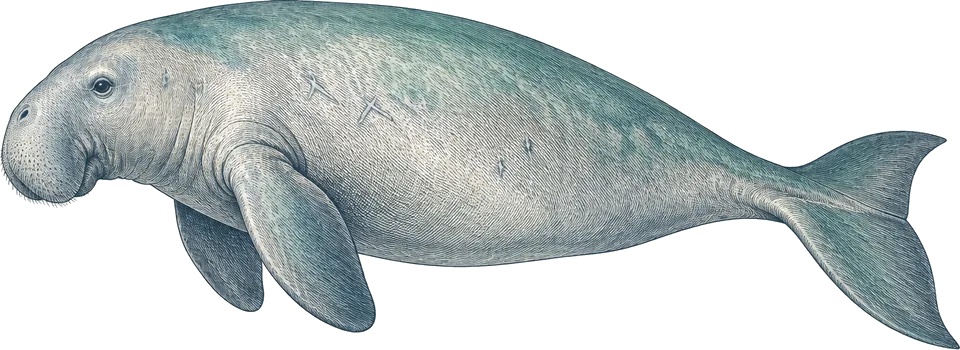
Abu Dabbab Bay seagrass
Search the seagrass quietly early in the day; never chase, touch or block it.4
Under 50/50 on a given day; slightly better in summer.
Abu Dabbab Bay seagrass, Abu Dabbab 1
Scan the sand at the edge of the seagrass; they lie still and tolerate a slow approach.4
Almost daily per one guide; PADI calls them occasional.
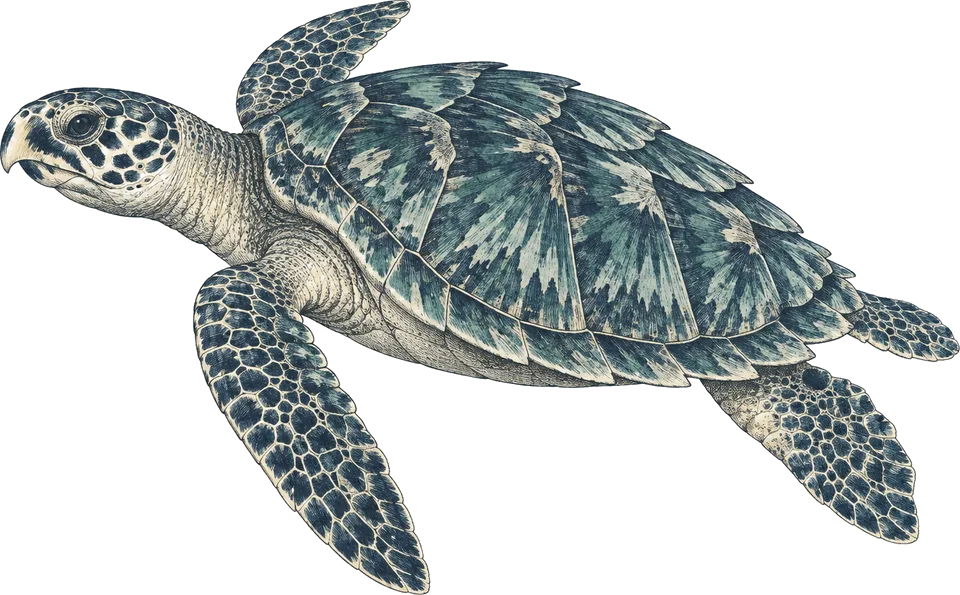
Abu Dabbab house reefs (north and south)
Follow the southern reef slowly; they feed and rest on the coral.4
Very good chance on the south reef.
Compiled from the sources above, last checked 2026-11-11. Monthly conditions come from our own climate records; see how we score.