
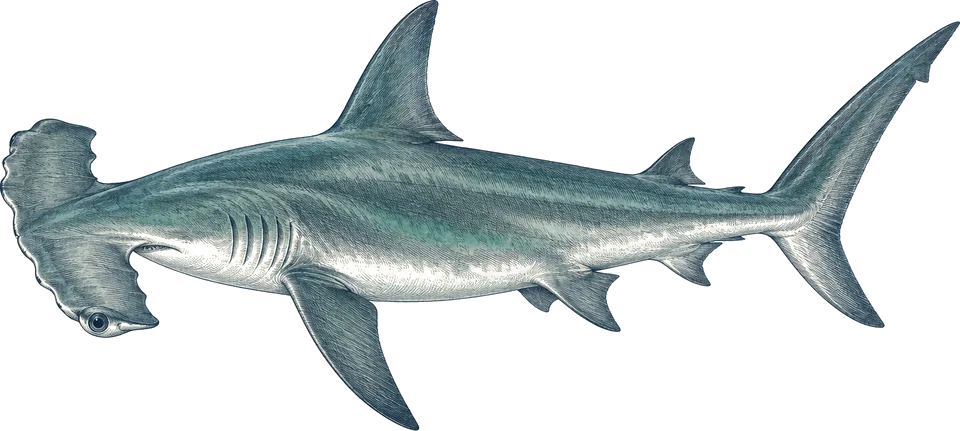
scalloped hammerhead
May–AugNorth Point
Early-morning dives at the north point, hanging off the wall at 20 to 40 m.3
Best in early summer; schools of 10 or more on good days.
The best time to dive Daedalus Reef is May to November: scalloped hammerheads school off the north point from about May to August, and oceanic whitetips peak in October and November. If I had one week, I'd book June, for hammerheads and the calmest crossings.
Operators say: May to November: hammerheads in early summer, oceanic whitetips in autumn. Our data picks June to August, when the sea is calmest; operators extend the season into autumn for oceanic whitetips.
222 km across · coastline from Natural Earth 10m
Daedalus is a lone offshore reef with a lighthouse, roughly 80 to 90 km east of Marsa Alam in the open Red Sea. It is inside an Egyptian marine park and reached only by liveaboard, usually from Port Ghalib on a week combining it with the Brothers, Elphinstone, St John's or Rocky and Zabargad. The reef is less than 1 km long with walls dropping into very deep water, so the diving is wall drifts in a north-to-south current, with the north point the place to wait for sharks.
The draw is scalloped hammerheads, most often seen in early summer, plus oceanic whitetips, which most operators expect from about June to November and at their best in October and November. Thresher sharks turn up at the southern point. Water runs from about 23 °C in winter to 30 °C in August, and the crossing can be rough when the north wind blows.
Hover a month to isolate it.
| January | February | March | April | May | June | July | August | September | October | November | December | |
|---|---|---|---|---|---|---|---|---|---|---|---|---|
| Conditions | Poor | Poor | Poor | Poor | Poor | Excellent | Excellent | Excellent | Poor | Poor | Poor | Poor |
| Water temp (°C) | 25 | 24 | 24 | 25 | 27 | 28 | 30 | 31 | 30 | 29 | 28 | 26 |
| Visibility (m) | 15–25 | 15–25 | 15–25 | 15–25 | 15–25 | 15–25 | 20–30 | 20–30 | 20–30 | 20–30 | 20–30 | 20–30 |
| Marine life | Steady | Steady | Steady | Steady | Steady | Busy | Busy | Busy | Steady | Steady | Steady | Steady |
| Best time | Peak | Peak | Peak | Peak | Peak | Peak | Peak |
Long-term averages, 2016–2025. Visibility is estimated from satellite chlorophyll-a. Water temperature is the surface mean; it is cooler at depth.
Diving conditionsIt rains less. The sea is calmer.
Marine lifeScalloped hammerhead (likely) peaks at Daedalus Reef in these months.
Diving conditionsThe sea is rougher.
Marine lifeOceanic whitetip (hit-or-miss), Oceanic manta (hit-or-miss) peak at Daedalus Reef in these months.
141 underwater observation records · 20 surveyed years of ocean data · 10 years of sea temperature
Dashed: monthly average. Band: eight days in ten.
10th to 90th percentile rangemonthly mean
Seas top 2.5 m on under 1% of days. Enough to cancel a liveaboard crossing
Gusts over 40 km/h, about where a day boat stays in port
0 of them bring heavy rain
| Month | Swell | Gusts over 40 km/h | Wet days | Heavy rain | Air | Daylight |
|---|---|---|---|---|---|---|
| Jan | 1.7 m | 8% | 1 | 0 | 22 °C | 10.6 h |
| Feb | 1.8 m | 11% | 1 | 0 | 22 °C | 11.2 h |
| Mar | 2.1 m | 14% | 0 | 0 | 23 °C | 11.8 h |
| Apr | 1.8 m | 7% | 0 | 0 | 25 °C | 12.6 h |
| May | 1.8 m | 7% | 0 | 0 | 28 °C | 13.2 h |
| Jun | 1.4 m | 6% | 0 | 0 | 30 °C | 13.5 h |
| Jul | 1.1 m | 3% | 0 | 0 | 31 °C | 13.4 h |
| Aug | 1.4 m | 4% | 0 | 0 | 32 °C | 12.9 h |
| Sep | 1.5 m | 5% | 0 | 0 | 30 °C | 12.1 h |
| Oct | 1.5 m | 1% | 0 | 0 | 29 °C | 11.4 h |
| Nov | 1.4 m | 1% | 2 | 1 | 27 °C | 10.8 h |
| Dec | 1.6 m | 8% | 1 | 0 | 24 °C | 10.5 h |
Swell is the rough end of the month: nine days in ten come in under it. Sea temperature covers 10 years, waves 4.
Darker is better, against this site's own year. Pick a month for its weeks.
| Week 1 | ||||||||||||
|---|---|---|---|---|---|---|---|---|---|---|---|---|
| Week 2 | ||||||||||||
| Week 3 | ||||||||||||
| Week 4 |
| Week | Conditions | Water | Swell | Wind | Rain chance |
|---|---|---|---|---|---|
| Week 1 | Poor | 25 °C | 1.5 m | 30 km/h | 2% |
| Week 2 | Poor | 25 °C | 1.6 m | 31 km/h | 3% |
| Week 3 | Poor | 24 °C | 1.7 m | 31 km/h | 2% |
| Week 4 | Poor | 24 °C | 1.9 m | 32 km/h | 3% |
| Week 1 | Poor | 24 °C | 1.8 m | 33 km/h | 3% |
| Week 2 | Poor | 24 °C | 1.9 m | 33 km/h | 2% |
| Week 3 | Poor | 24 °C | 1.9 m | 32 km/h | 1% |
| Week 4 | Poor | 24 °C | 1.8 m | 31 km/h | 1% |
| Week 1 | Poor | 24 °C | 1.9 m | 29 km/h | 0% |
| Week 2 | Poor | 24 °C | 2.0 m | 30 km/h | 0% |
| Week 3 | Poor | 24 °C | 2.2 m | 31 km/h | 1% |
| Week 4 | Poor | 24 °C | 2.0 m | 31 km/h | 0% |
| Week 1 | Poor | 24 °C | 2.0 m | 29 km/h | 1% |
| Week 2 | Poor | 24 °C | 2.0 m | 29 km/h | 1% |
| Week 3 | Poor | 25 °C | 2.0 m | 28 km/h | 0% |
| Week 4 | Moderate | 25 °C | 1.5 m | 27 km/h | 0% |
| Week 1 | Moderate | 26 °C | 1.5 m | 28 km/h | 0% |
| Week 2 | Moderate | 26 °C | 1.8 m | 28 km/h | 0% |
| Week 3 | Poor | 27 °C | 1.8 m | 29 km/h | 0% |
| Week 4 | Poor | 27 °C | 1.8 m | 30 km/h | 0% |
| Week 1 | Good | 28 °C | 1.6 m | 30 km/h | 0% |
| Week 2 | Excellent | 28 °C | 1.3 m | 31 km/h | 0% |
| Week 3 | Good | 28 °C | 1.5 m | 31 km/h | 0% |
| Week 4 | Good | 29 °C | 1.4 m | 30 km/h | 0% |
| Week 1 | Good | 29 °C | 1.2 m | 27 km/h | 0% |
| Week 2 | Excellent | 30 °C | 1.1 m | 24 km/h | 0% |
| Week 3 | Excellent | 30 °C | 1.2 m | 23 km/h | 0% |
| Week 4 | Excellent | 30 °C | 1.0 m | 22 km/h | 0% |
| Week 1 | Excellent | 31 °C | 1.2 m | 23 km/h | 0% |
| Week 2 | Good | 31 °C | 1.5 m | 26 km/h | 0% |
| Week 3 | Good | 31 °C | 1.6 m | 28 km/h | 0% |
| Week 4 | Good | 30 °C | 1.6 m | 30 km/h | 0% |
| Week 1 | Poor | 30 °C | 1.5 m | 32 km/h | 0% |
| Week 2 | Poor | 30 °C | 1.5 m | 32 km/h | 0% |
| Week 3 | Poor | 30 °C | 1.5 m | 32 km/h | 0% |
| Week 4 | Moderate | 30 °C | 1.4 m | 31 km/h | 0% |
| Week 1 | Moderate | 29 °C | 1.4 m | 30 km/h | 0% |
| Week 2 | Moderate | 29 °C | 1.5 m | 30 km/h | 0% |
| Week 3 | Poor | 29 °C | 1.5 m | 28 km/h | 0% |
| Week 4 | Moderate | 29 °C | 1.4 m | 26 km/h | 3% |
| Week 1 | Moderate | 28 °C | 1.2 m | 25 km/h | 4% |
| Week 2 | Poor | 28 °C | 1.4 m | 26 km/h | 3% |
| Week 3 | Poor | 27 °C | 1.5 m | 27 km/h | 5% |
| Week 4 | Poor | 27 °C | 1.4 m | 27 km/h | 5% |
| Week 1 | Moderate | 27 °C | 1.4 m | 28 km/h | 5% |
| Week 2 | Poor | 26 °C | 1.7 m | 29 km/h | 4% |
| Week 3 | Poor | 26 °C | 1.8 m | 30 km/h | 4% |
| Week 4 | Poor | 25 °C | 1.5 m | 29 km/h | 2% |
10 years of daily records, averaged into weeks.
Sized for each month's coldest water.
| Jan | Feb | Mar | Apr | May | Jun | Jul | Aug | Sep | Oct | Nov | Dec | |
|---|---|---|---|---|---|---|---|---|---|---|---|---|
| Suit | 5 mm | 5 mm | 5 mm | 5 mm | 3 mm | skin | skin | skin | skin | skin | 3 mm | 3 mm |
Suit row is for surface water. At depth: I'd pack a 5 mm for winter trips and a 3 mm for high summer, when the water nears 30 °C. SMB and a dive computer are needed; most boats offer nitrox.
Each month's rough end: nine days in ten are calmer.
Amber is over 2.5 m.
No tropical storm has come within 250 km in 30 years of records. Swell and wind set the season, not cyclones.
Only 141 records have been logged within 60 km. A thin record is not an empty reef.
| Species | When | Observed window | Reliability | Evidence | Records |
|---|---|---|---|---|---|
| Napoleon wrasse | All year | Likely | 32 | ||
| Oceanic whitetip | Oct–Nov | Hit-or-miss | 28 | ||
| Oceanic manta | Jul, Sep, Nov | Hit-or-miss | 11 | ||
| Silky shark | Apr | Hit-or-miss | 12 | ||
| Hawksbill turtle | Aug–Oct | Likely | 9 | ||
| Scalloped hammerhead | Apr, Aug, Nov | Likely | 23 |
Logged sightings, not a full survey. How to read this table.
| Site | Depth | Level | What to expect |
|---|---|---|---|
| North Pointplateau / drift | 20–40 m | Experienced | Exposed tip where the current splits. Shelter in an eddy off the wall and watch the blue for hammerheads and oceanic whitetips. The dive the trip hangs on.1 |
| East Wallwall / drift | 5–30 m | Advanced | Steep wall of fans and soft coral, dived in the morning as a drift south to the southern point.1 |
| West Wall (Anemone City)wall / drift | 5–30 m | Advanced | Afternoon drift south; ledge at about 10 m packed with anemones and Red Sea anemonefish, big Porites heads and cleaning stations.1 |
| South Plateauplateau | 10–30 m | Advanced | End point of the wall drifts. Turtles graze here, and thresher sharks and oceanic whitetips are seen off the edge.4 |
North Point
Early-morning dives at the north point, hanging off the wall at 20 to 40 m.3
Best in early summer; schools of 10 or more on good days.
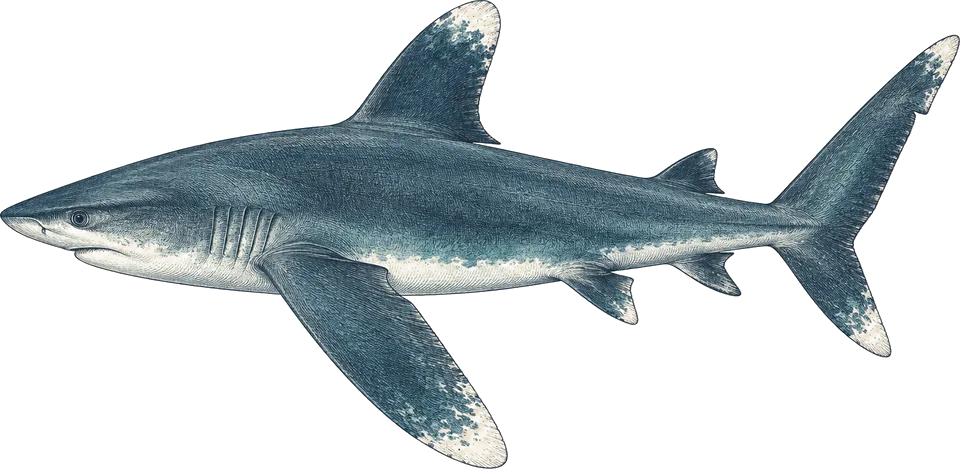
North Point, South Plateau
Comes up to divers and boats near the surface; stay in a group and keep watch.8
Likely in autumn, peaking October and November.
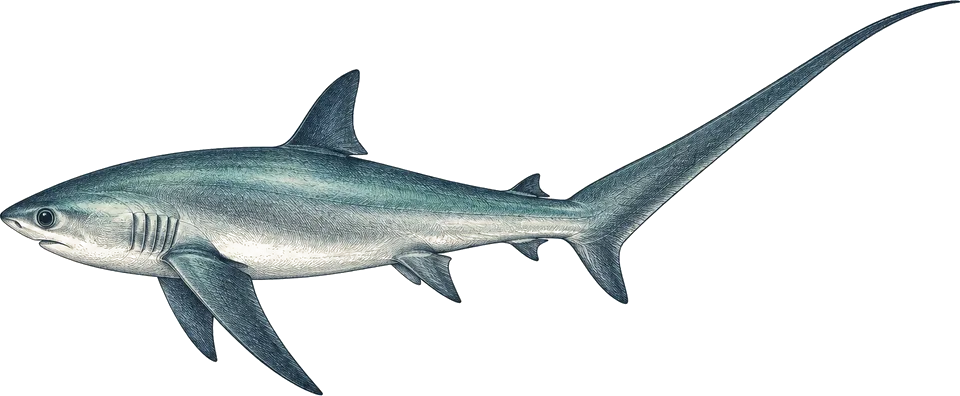
South Plateau
Look down and out into the blue off the southern point.4
Occasional; one source says more often in cooler months.
East and west walls
Pass along the walls during plankton blooms.4
Occasional; more likely in May and June blooms.
Compiled from the sources above, last checked 2026-11-11. Monthly conditions come from our own climate records; see how we score.