
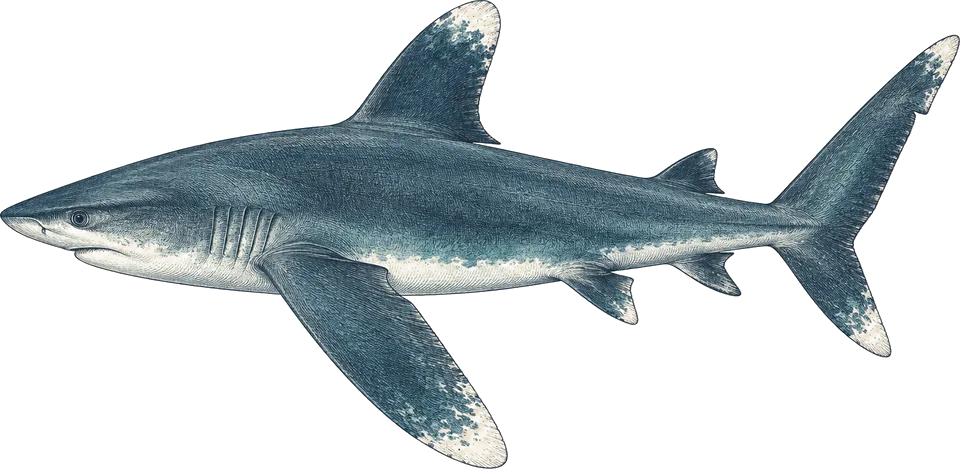
oceanic whitetip shark
Sep–NovBig Brother, Little Brother
Watch the shallows and the blue on safety stops; they cruise near the surface and around boats.2
Possible all year; best September to November.
The best time to dive the Brothers Islands is May to November, when most liveaboard safaris run and crossings are calmer. October and November add the best oceanic whitetip odds and lighter winds. October would be my pick, once I have the dives.
Operators say: May to November; October and November for oceanic whitetips and the lightest winds. Our data rates only October and November highly and marks January and February closed for wind; operators still run full summer schedules.
222 km across · coastline from Natural Earth 10m
The Brothers are two small islands about 1 km apart in the open Red Sea, roughly 60 to 70 km off the Egyptian coast and reached only by liveaboard. Big Brother has the lighthouse and two wrecks on its walls, the Numidia (1901) and the Aida (1957). Little Brother is a teardrop of sheer wall with plateaus at each end where grey reef sharks, silvertips and, on dawn dives, thresher sharks patrol. Currents are often strong and most dives are drifts from a zodiac, so operators ask for Advanced Open Water and 30 to 50 logged dives.
Boats sail most of the year, but trips concentrate from about May to November. Hammerhead sightings lean towards early summer and oceanic whitetips towards autumn, peaking about September to November. October and November combine good shark odds with lighter winds. In winter the water drops to about 23 °C and the north wind makes the 6 to 9 hour crossing rougher.
Hover a month to isolate it.
| January | February | March | April | May | June | July | August | September | October | November | December | |
|---|---|---|---|---|---|---|---|---|---|---|---|---|
| Conditions | Poor | Poor | Poor | Poor | Poor | Poor | Moderate | Poor | Poor | Excellent | Excellent | Poor |
| Water temp (°C) | 23 | 23 | 23 | 24 | 26 | 27 | 29 | 30 | 29 | 28 | 27 | 25 |
| Visibility (m) | 20–30 | 20–30 | 20–30 | 20–30 | 25–35 | 25–35 | 25–35 | 25–35 | 25–35 | 25–35 | 25–35 | 20–30 |
| Marine life | Closed | Closed | Quiet | Quiet | Quiet | Quiet | Quiet | Quiet | Quiet | Busy | Busy | Busy |
| Best time | Peak | Peak | Peak | Peak | Peak | Peak | Peak |
Long-term averages, 2016–2025. Visibility is estimated from satellite chlorophyll-a. Water temperature is the surface mean; it is cooler at depth.
Diving conditionsIt rains more.
Marine lifeOceanic whitetip (likely) peaks at Brothers Islands in these months.
Diving conditionsIt rains less.
Marine lifeScalloped hammerhead (likely) peaks at Brothers Islands in these months.
101 underwater observation records · 19 surveyed years of ocean data · 10 years of sea temperature
Dashed: monthly average. Band: eight days in ten.
10th to 90th percentile rangemonthly mean
Seas top 2.5 m on under 1% of days. Enough to cancel a liveaboard crossing
Gusts over 40 km/h, about where a day boat stays in port
0 of them bring heavy rain
| Month | Swell | Gusts over 40 km/h | Wet days | Heavy rain | Air | Daylight |
|---|---|---|---|---|---|---|
| Jan | 1.9 m | 18% | 1 | 0 | 21 °C | 10.5 h |
| Feb | 2.0 m | 30% | 1 | 0 | 21 °C | 11.1 h |
| Mar | 2.1 m | 31% | 0 | 0 | 23 °C | 11.8 h |
| Apr | 2.0 m | 30% | 0 | 0 | 25 °C | 12.6 h |
| May | 1.9 m | 27% | 0 | 0 | 27 °C | 13.3 h |
| Jun | 1.6 m | 30% | 0 | 0 | 29 °C | 13.6 h |
| Jul | 1.4 m | 15% | 0 | 0 | 31 °C | 13.5 h |
| Aug | 1.7 m | 26% | 0 | 0 | 31 °C | 12.9 h |
| Sep | 1.7 m | 29% | 0 | 0 | 30 °C | 12.1 h |
| Oct | 1.7 m | 12% | 0 | 0 | 28 °C | 11.4 h |
| Nov | 1.6 m | 8% | 1 | 0 | 26 °C | 10.7 h |
| Dec | 1.7 m | 15% | 1 | 0 | 23 °C | 10.4 h |
Swell is the rough end of the month: nine days in ten come in under it. Sea temperature covers 10 years, waves 4.
Darker is better, against this site's own year. Pick a month for its weeks.
| Week 1 | ||||||||||||
|---|---|---|---|---|---|---|---|---|---|---|---|---|
| Week 2 | ||||||||||||
| Week 3 | ||||||||||||
| Week 4 |
| Week | Conditions | Water | Swell | Wind | Rain chance |
|---|---|---|---|---|---|
| Week 1 | Poor | 24 °C | 1.5 m | 33 km/h | 4% |
| Week 2 | Poor | 24 °C | 1.7 m | 34 km/h | 3% |
| Week 3 | Poor | 23 °C | 2.0 m | 35 km/h | 3% |
| Week 4 | Poor | 23 °C | 2.0 m | 36 km/h | 2% |
| Week 1 | Poor | 23 °C | 2.0 m | 36 km/h | 1% |
| Week 2 | Poor | 23 °C | 2.1 m | 36 km/h | 2% |
| Week 3 | Poor | 23 °C | 2.1 m | 36 km/h | 3% |
| Week 4 | Poor | 23 °C | 2.0 m | 35 km/h | 2% |
| Week 1 | Poor | 23 °C | 2.0 m | 35 km/h | 0% |
| Week 2 | Poor | 23 °C | 2.2 m | 36 km/h | 1% |
| Week 3 | Poor | 23 °C | 2.3 m | 37 km/h | 1% |
| Week 4 | Poor | 23 °C | 2.0 m | 37 km/h | 0% |
| Week 1 | Poor | 23 °C | 2.0 m | 35 km/h | 0% |
| Week 2 | Poor | 23 °C | 2.2 m | 36 km/h | 0% |
| Week 3 | Poor | 24 °C | 2.2 m | 35 km/h | 0% |
| Week 4 | Moderate | 24 °C | 1.7 m | 34 km/h | 0% |
| Week 1 | Moderate | 25 °C | 1.6 m | 35 km/h | 0% |
| Week 2 | Poor | 25 °C | 1.9 m | 35 km/h | 0% |
| Week 3 | Poor | 26 °C | 2.0 m | 37 km/h | 0% |
| Week 4 | Poor | 26 °C | 2.0 m | 38 km/h | 0% |
| Week 1 | Poor | 27 °C | 1.8 m | 37 km/h | 0% |
| Week 2 | Poor | 27 °C | 1.6 m | 37 km/h | 0% |
| Week 3 | Poor | 27 °C | 1.6 m | 38 km/h | 0% |
| Week 4 | Poor | 28 °C | 1.6 m | 36 km/h | 0% |
| Week 1 | Good | 28 °C | 1.4 m | 34 km/h | 0% |
| Week 2 | Moderate | 29 °C | 1.4 m | 33 km/h | 0% |
| Week 3 | Good | 29 °C | 1.5 m | 33 km/h | 0% |
| Week 4 | Moderate | 29 °C | 1.4 m | 30 km/h | 0% |
| Week 1 | Moderate | 30 °C | 1.5 m | 30 km/h | 0% |
| Week 2 | Poor | 30 °C | 1.7 m | 35 km/h | 0% |
| Week 3 | Poor | 30 °C | 1.9 m | 36 km/h | 0% |
| Week 4 | Poor | 29 °C | 1.8 m | 37 km/h | 0% |
| Week 1 | Poor | 29 °C | 1.7 m | 38 km/h | 0% |
| Week 2 | Poor | 29 °C | 1.7 m | 38 km/h | 0% |
| Week 3 | Poor | 29 °C | 1.8 m | 37 km/h | 0% |
| Week 4 | Poor | 28 °C | 1.7 m | 37 km/h | 0% |
| Week 1 | Good | 28 °C | 1.7 m | 37 km/h | 0% |
| Week 2 | Good | 28 °C | 1.7 m | 35 km/h | 0% |
| Week 3 | Excellent | 28 °C | 1.7 m | 33 km/h | 0% |
| Week 4 | Good | 27 °C | 1.6 m | 31 km/h | 1% |
| Week 1 | Good | 27 °C | 1.4 m | 31 km/h | 1% |
| Week 2 | Good | 27 °C | 1.7 m | 31 km/h | 2% |
| Week 3 | Excellent | 26 °C | 1.8 m | 32 km/h | 2% |
| Week 4 | Good | 26 °C | 1.7 m | 33 km/h | 3% |
| Week 1 | Moderate | 25 °C | 1.7 m | 33 km/h | 3% |
| Week 2 | Poor | 25 °C | 1.8 m | 33 km/h | 3% |
| Week 3 | Poor | 24 °C | 1.8 m | 34 km/h | 3% |
| Week 4 | Poor | 24 °C | 1.5 m | 34 km/h | 4% |
10 years of daily records, averaged into weeks.
Sized for each month's coldest water.
| Jan | Feb | Mar | Apr | May | Jun | Jul | Aug | Sep | Oct | Nov | Dec | |
|---|---|---|---|---|---|---|---|---|---|---|---|---|
| Suit | 5 mm | 5 mm | 5 mm | 5 mm | 3 mm | 3 mm | skin | skin | skin | 3 mm | 3 mm | 5 mm |
Suit row is for surface water. At depth: 5 mm wetsuit most of the year, plus a hood on winter or long deep dives. Dive on a computer and carry a DSMB; Nitrox is widely offered and suits the repetitive profiles.
Each month's rough end: nine days in ten are calmer.
Amber is over 2.5 m.
No tropical storm has come within 250 km in 30 years of records. Swell and wind set the season, not cyclones.
Only 101 records have been logged within 60 km. A thin record is not an empty reef.
| Species | When | Observed window | Reliability | Evidence | Records |
|---|---|---|---|---|---|
| Napoleon wrasse | Jul, Sep–Oct | Likely | 25 | ||
| Scalloped hammerhead | Jul, Sep–Oct, Dec | Likely | 8 | ||
| Bluespotted ribbontail ray | Nov–Dec | Likely | 8 | ||
| Oceanic whitetip | Jul, Oct | Likely | 19 | ||
| Hawksbill turtle | Apr, Jun, Oct | Likely | 13 |
Logged sightings, not a full survey. How to read this table.
| Site | Depth | Level | What to expect |
|---|---|---|---|
| Numidia (Big Brother)wreck | 8–40 m | Advanced | British cargo steamer wrecked on Big Brother's north tip in 1901. Bow at 8 m, stern beyond 80 m; dives stay on the upper hull.1 |
| Aida (Big Brother)wreck | 28–40 m | Experienced | Egyptian supply ship lost in 1957. Starts at about 30 m and slides down the wall past 60 m; penetration for advanced divers only.1 |
| Big Brother south-east pointwall / plateau | 5–35 m | Advanced | Steep wall and promontory where grey and whitetip reef sharks, hammerheads and oceanic whitetips appear; threshers on some dawn dives.1 |
| Little Brother north plateauplateau | 20–40 m | Experienced | Shark-watching plateau at about 40 m, the edge of recreational limits. Silvertips and grey reef sharks; great hammerheads sometimes. Not one I'd rush.1 |
| Little Brother east and west wallswall | 5–30 m | Advanced | Sheer walls with large gorgonian fans, black coral and dense fish. The current usually runs north to south, so they are dived as drifts.1 |
| Little Brother south plateauplateau | 20–30 m | Advanced | Plateau from about 20 m with schooling barracuda, dogtooth tuna and reef sharks, next to a forest of fan corals on the south-east side.1 |
Big Brother, Little Brother
Watch the shallows and the blue on safety stops; they cruise near the surface and around boats.2
Possible all year; best September to November.
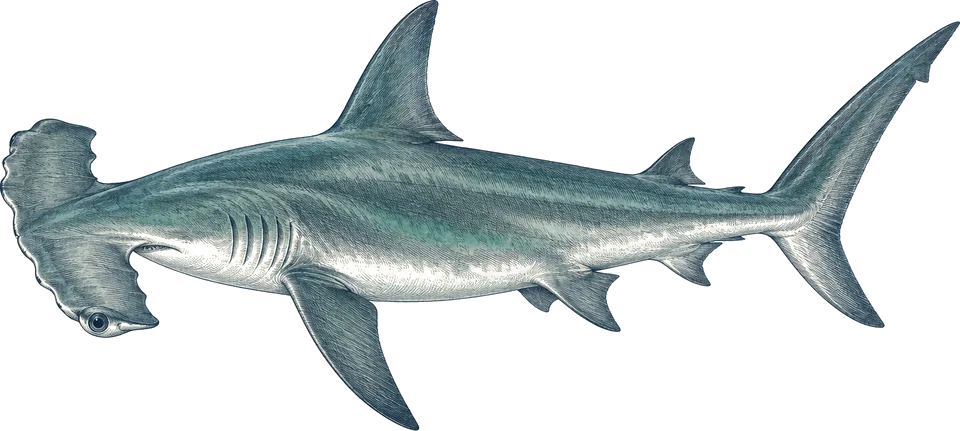
Little Brother, Big Brother south-east point
Hang off the plateau edges and watch the blue below you.3
Occasional; most sources say early summer, not all agree.
Big Brother south-east point, Little Brother
Dawn dive on the plateaus and points, at 20 to 40 m.1
Dawn dives only; sources disagree on the season.
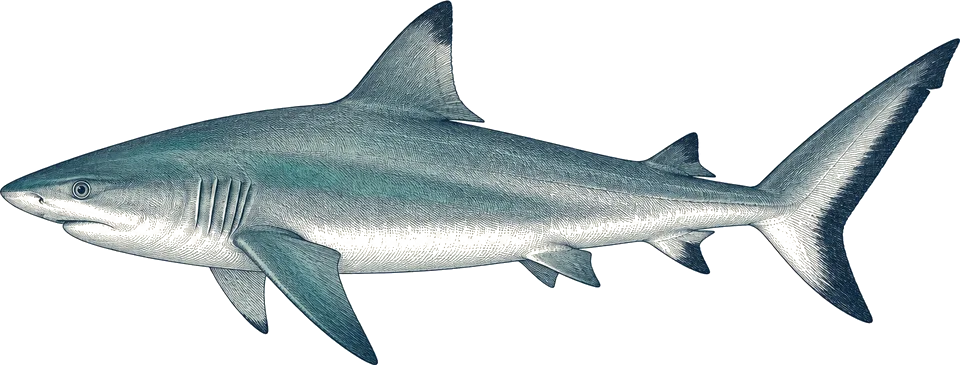
Little Brother
Settle at the edge of Little Brother's north or south plateau.3
Common; they gather to mate around October.
Compiled from the sources above, last checked 2026-11-11. Monthly conditions come from our own climate records; see how we score.