
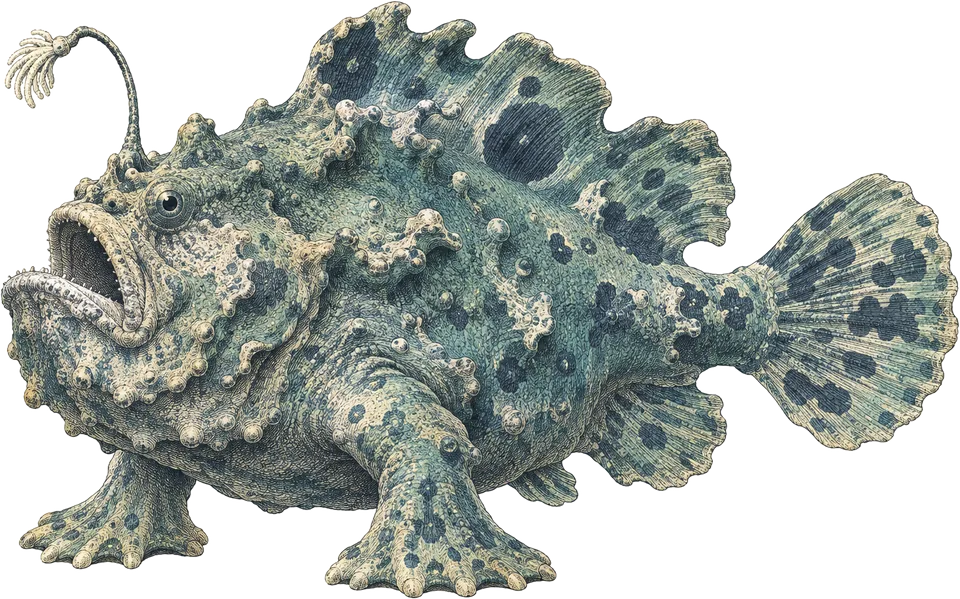
frogfish
All yearSeaventures Dive Rig, Froggy Lair, Eel Garden
Slow dives with a torch along structures and sand; let the guide point them out.3
Resident; seen on most macro dives.
The best time to dive Mabul and Kapalai is March to May, when seas are calmest and rain is lightest. Diving runs all year on shallow, sheltered macro sites. Honestly, I'd plan around getting Sipadan permits more than the month.
Operators say: March to May, with diving all year. Our data adds February. Operators differ: Dive The World calls March to July and October to December settled, while Divezone rates July and August best.
Worth knowing: 7 days a month of heavy rain.
111 km across · coastline from Natural Earth 10m
Mabul and Kapalai sit off Semporna in south-east Sabah, 25 minutes by boat from Sipadan. Mabul is an inhabited island with a mix of resorts; Kapalai is a sandbar with a water village resort on stilts. Both are bases for Sipadan, and between Sipadan days you dive their own reefs, slopes and artificial structures, which are some of the best-known macro and muck sites in South-East Asia.
Most dives are shallow, around 5 to 20 m, with little current, so they suit new divers and photographers. Expect frogfish, flamboyant cuttlefish, ghost pipefish, mandarinfish at dusk and turtles at Awas. Visibility is modest, usually 5 to 15 m, because the bottom is sand and silt. Water stays at 27 to 30 °C, and diving goes on all year.
Hover a month to isolate it.
| January | February | March | April | May | June | July | August | September | October | November | December | |
|---|---|---|---|---|---|---|---|---|---|---|---|---|
| Conditions | Poor | Good | Good | Excellent | Good | Moderate | Poor | Good | Moderate | Poor | Moderate | Poor |
| Water temp (°C) | 29 | 29 | 29 | 30 | 30 | 30 | 30 | 30 | 30 | 30 | 30 | 29 |
| Visibility (m) | 10–20 | 10–20 | 10–20 | 15–25 | 15–25 | 10–20 | 10–20 | 10–20 | 10–20 | 10–20 | 10–20 | 10–20 |
| Marine life | Busy | Busy | Busy | Busy | Busy | Busy | Steady | Busy | Busy | Steady | Busy | Busy |
| Best time | Peak | Peak | Peak |
Long-term averages, 2016–2025. Visibility is estimated from satellite chlorophyll-a. Water temperature is the surface mean; it is cooler at depth.
Diving conditionsThe sea is calmer. The wind is up.
Marine lifeGiant devil ray (hit-or-miss) peaks at Mabul / Kapalai in these months.
Diving conditionsThe sea is rougher. The wind eases.
Diving conditionsThe sea is calmer. The wind eases.
725 underwater observation records · 23 surveyed years of ocean data · 10 years of sea temperature
Dashed: monthly average. Band: eight days in ten.
10th to 90th percentile rangemonthly mean
Seas top 1.5 m on under 1% of days. Enough to cancel a day boat
Gusts over 40 km/h, about where a day boat stays in port
7 of them bring heavy rain
| Month | Swell | Gusts over 40 km/h | Wet days | Heavy rain | Air | Daylight |
|---|---|---|---|---|---|---|
| Jan | 0.6 m | 0% | 24 | 7 | 28 °C | 11.8 h |
| Feb | 0.6 m | 0% | 19 | 5 | 28 °C | 11.9 h |
| Mar | 0.5 m | 0% | 22 | 5 | 29 °C | 12.0 h |
| Apr | 0.4 m | 0% | 21 | 5 | 29 °C | 12.1 h |
| May | 0.4 m | 0% | 27 | 7 | 29 °C | 12.2 h |
| Jun | 0.5 m | 0% | 26 | 7 | 29 °C | 12.2 h |
| Jul | 0.8 m | 0% | 25 | 7 | 29 °C | 12.2 h |
| Aug | 0.6 m | 0% | 27 | 6 | 29 °C | 12.1 h |
| Sep | 0.7 m | 0% | 25 | 7 | 29 °C | 12.0 h |
| Oct | 0.8 m | 0% | 26 | 9 | 29 °C | 11.9 h |
| Nov | 0.5 m | 0% | 27 | 8 | 29 °C | 11.8 h |
| Dec | 0.4 m | 0% | 28 | 10 | 29 °C | 11.8 h |
Swell is the rough end of the month: nine days in ten come in under it. Sea temperature covers 10 years, waves 4.
Darker is better, against this site's own year. Pick a month for its weeks.
| Week 1 | ||||||||||||
|---|---|---|---|---|---|---|---|---|---|---|---|---|
| Week 2 | ||||||||||||
| Week 3 | ||||||||||||
| Week 4 |
| Week | Conditions | Water | Swell | Wind | Rain chance |
|---|---|---|---|---|---|
| Week 1 | Moderate | 29 °C | 0.5 m | 22 km/h | 84% |
| Week 2 | Poor | 29 °C | 0.5 m | 22 km/h | 82% |
| Week 3 | Poor | 29 °C | 0.6 m | 22 km/h | 78% |
| Week 4 | Poor | 29 °C | 0.6 m | 24 km/h | 68% |
| Week 1 | Good | 29 °C | 0.6 m | 25 km/h | 67% |
| Week 2 | Good | 29 °C | 0.7 m | 25 km/h | 66% |
| Week 3 | Good | 29 °C | 0.6 m | 25 km/h | 59% |
| Week 4 | Good | 29 °C | 0.6 m | 26 km/h | 62% |
| Week 1 | Moderate | 29 °C | 0.6 m | 25 km/h | 67% |
| Week 2 | Moderate | 29 °C | 0.5 m | 24 km/h | 64% |
| Week 3 | Good | 29 °C | 0.5 m | 22 km/h | 69% |
| Week 4 | Excellent | 29 °C | 0.5 m | 21 km/h | 78% |
| Week 1 | Good | 29 °C | 0.5 m | 20 km/h | 71% |
| Week 2 | Good | 30 °C | 0.5 m | 19 km/h | 68% |
| Week 3 | Excellent | 30 °C | 0.3 m | 18 km/h | 73% |
| Week 4 | Excellent | 30 °C | 0.3 m | 17 km/h | 77% |
| Week 1 | Good | 30 °C | 0.4 m | 17 km/h | 82% |
| Week 2 | Good | 30 °C | 0.4 m | 16 km/h | 85% |
| Week 3 | Good | 30 °C | 0.4 m | 17 km/h | 88% |
| Week 4 | Moderate | 30 °C | 0.5 m | 17 km/h | 85% |
| Week 1 | Moderate | 30 °C | 0.5 m | 18 km/h | 83% |
| Week 2 | Good | 30 °C | 0.4 m | 17 km/h | 86% |
| Week 3 | Moderate | 30 °C | 0.5 m | 18 km/h | 88% |
| Week 4 | Poor | 30 °C | 0.6 m | 18 km/h | 88% |
| Week 1 | Moderate | 30 °C | 0.6 m | 18 km/h | 85% |
| Week 2 | Moderate | 29 °C | 0.7 m | 20 km/h | 84% |
| Week 3 | Poor | 29 °C | 0.9 m | 22 km/h | 82% |
| Week 4 | Poor | 29 °C | 0.9 m | 23 km/h | 80% |
| Week 1 | Moderate | 29 °C | 0.7 m | 22 km/h | 77% |
| Week 2 | Good | 29 °C | 0.6 m | 20 km/h | 83% |
| Week 3 | Good | 29 °C | 0.6 m | 20 km/h | 88% |
| Week 4 | Good | 30 °C | 0.7 m | 20 km/h | 90% |
| Week 1 | Good | 30 °C | 0.8 m | 19 km/h | 89% |
| Week 2 | Poor | 30 °C | 1.0 m | 20 km/h | 86% |
| Week 3 | Poor | 30 °C | 1.0 m | 20 km/h | 80% |
| Week 4 | Good | 30 °C | 0.6 m | 18 km/h | 75% |
| Week 1 | Moderate | 30 °C | 0.6 m | 18 km/h | 79% |
| Week 2 | Moderate | 30 °C | 0.5 m | 18 km/h | 81% |
| Week 3 | Poor | 30 °C | 0.8 m | 19 km/h | 85% |
| Week 4 | Poor | 30 °C | 1.1 m | 18 km/h | 89% |
| Week 1 | Poor | 30 °C | 0.9 m | 18 km/h | 91% |
| Week 2 | Poor | 30 °C | 0.7 m | 18 km/h | 88% |
| Week 3 | Good | 30 °C | 0.6 m | 18 km/h | 87% |
| Week 4 | Good | 29 °C | 0.5 m | 19 km/h | 92% |
| Week 1 | Poor | 29 °C | 0.4 m | 19 km/h | 90% |
| Week 2 | Poor | 29 °C | 0.4 m | 20 km/h | 89% |
| Week 3 | Poor | 29 °C | 0.5 m | 21 km/h | 90% |
| Week 4 | Poor | 29 °C | 0.5 m | 21 km/h | 90% |
10 years of daily records, averaged into weeks.
Sized for each month's coldest water.
| Jan | Feb | Mar | Apr | May | Jun | Jul | Aug | Sep | Oct | Nov | Dec | |
|---|---|---|---|---|---|---|---|---|---|---|---|---|
| Suit | skin | skin | skin | skin | skin | skin | skin | skin | skin | skin | skin | skin |
Suit row is for surface water. At depth: 3 mm full suit. A torch on every dive and a macro lens if you shoot; muck sites reward patience and good buoyancy over the silt.
Each month's rough end: nine days in ten are calmer.
Amber is over 1.5 m.
No tropical storm has come within 250 km in 30 years of records. Swell and wind set the season, not cyclones.
| Species | When | Observed window | Reliability | Evidence | Records |
|---|---|---|---|---|---|
| Green turtle | All year | Near-guaranteed | 257 | ||
| Whitetip reef shark | All year | Near-guaranteed | 72 | ||
| Bumphead parrotfish | All year | Near-guaranteed | 68 | ||
| Bluespotted ribbontail ray | All year | Near-guaranteed | 73 | ||
| Bigeye trevally | All year | Near-guaranteed | 57 | ||
| Hawksbill turtle | All year | Near-guaranteed | 39 | ||
| Blackfin barracuda | All year | Near-guaranteed | 25 | ||
| Ocellated eagle ray | All year | Hit-or-miss | 20 | ||
| Napoleon wrasse | Apr–May, Sep, Dec | Likely | 35 | ||
| Grey reef shark | Nov–Jan, Jun | Likely | 21 | ||
| Giant devil ray | Mar, Aug, Nov | Hit-or-miss | 17 | ||
| Zebra shark | Jan–Feb, May | Likely | 10 |
Logged sightings, not a full survey. How to read this table.
| Site | Depth | Level | What to expect |
|---|---|---|---|
| Seaventures Dive Rigartificial structure | 12–18 m | Open Water | Under a converted oil rig off Mabul's north coast: frogfish, big morays, ghost pipefish, stonefish. Dive at slack tide. The one I'd want on my list.3 |
| Lobster Wallslope / drift | 5–20 m | Open Water | The steepest reef on Mabul, sloping to about 20 m. Lobsters, pipefish, mantis shrimp, turtles. Current can turn it into a drift.1 |
| Eel Gardenreef / sand | 5–22 m | Open Water | Reef from 2 to 15 m above a sand plateau at about 22 m with garden eels, ribbon eels, frogfish and mantis shrimp.1 |
| Paradise I and IImuck | 5–18 m | Open Water | Sandy muck slopes with ghost pipefish, frogfish, sea moths, juvenile cuttlefish and ribbon eels.3 |
| Froggy Lairmuck | ≈ 5–15 m | Open Water | Shallow muck site reached by a short swim or boat. Frogfish, ornate ghost pipefish, flamboyant cuttlefish; visibility can drop to 3 m, so fin gently.3 |
| Crocodile Avenuemuck | 5–20 m | Open Water | Gentle sandy slope for seahorses, crocodilefish and ghost pipefish; cuttlefish and nudibranchs on night dives.3 |
| Ray Pointreef / sand | 5–14 m | Open Water | Terraces to 14 m on the south-west reef with bluespotted stingrays, crocodilefish, garden eels and turtles. Weak current.3 |
| Ribbon Valleyslope | 5–18 m | Advanced | Three sites with gorgonians, reef fish and better visibility than most of Mabul; slope reaches sand at 25 to 30 m. Stronger current.3 |
| Nudibranch Meadowslope | 8–18 m | Open Water | Gentle north-west slope with many nudibranch species, flatworms, mantis shrimp and occasional blue-ringed octopus.1 |
| Awashouse reef | ≈ 3–15 m | Open Water | A couple of minutes' swim from Scuba Junkie's jetty: dozens of green turtles, broadclub and flamboyant cuttlefish, frogfish.2 |
| Kapalaiartificial structures / slope | ≈ 5–20 m | Open Water | Artificial structures at about 20 m and a sloping reef: a resident giant moray, blue-ringed octopus, leaffish, and mandarinfish mating at sunset.2 |
Seaventures Dive Rig, Froggy Lair, Eel Garden
Slow dives with a torch along structures and sand; let the guide point them out.3
Resident; seen on most macro dives.
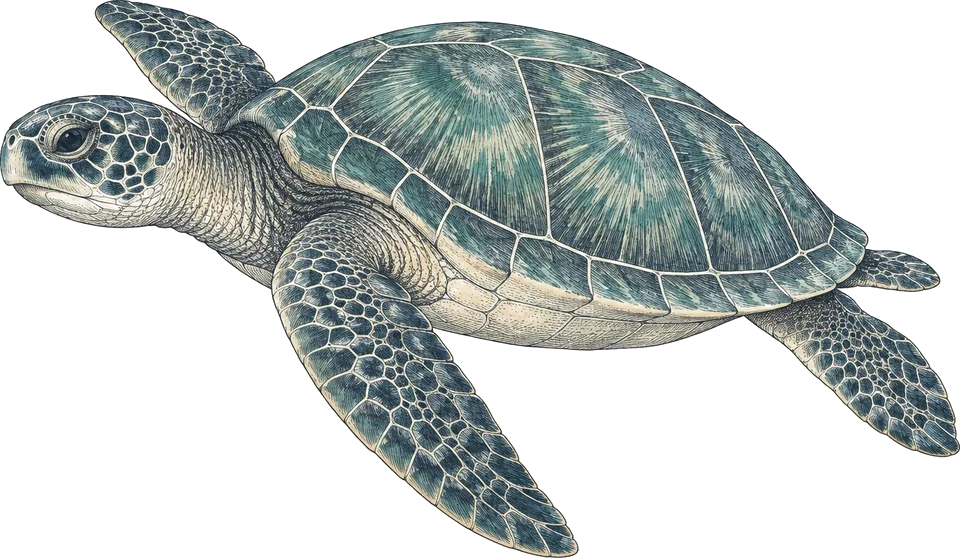
Awas, Lobster Wall, Ray Point
Shallow reef dive or snorkel off the jetty; turtles rest and get cleaned by wrasse.2
Very high at Awas, often dozens.
Kapalai
Dusk dive in the shallows; stay still near the coral rubble and wait for the mating rise.2
Reliable at sunset at Kapalai.
Froggy Lair, Lobster Wall, Awas
Search sand and rubble slopes slowly, often on afternoon or night dives.1
Regular but not on every dive.
Compiled from the sources above, last checked 2026-11-12. Monthly conditions come from our own climate records; see how we score.