
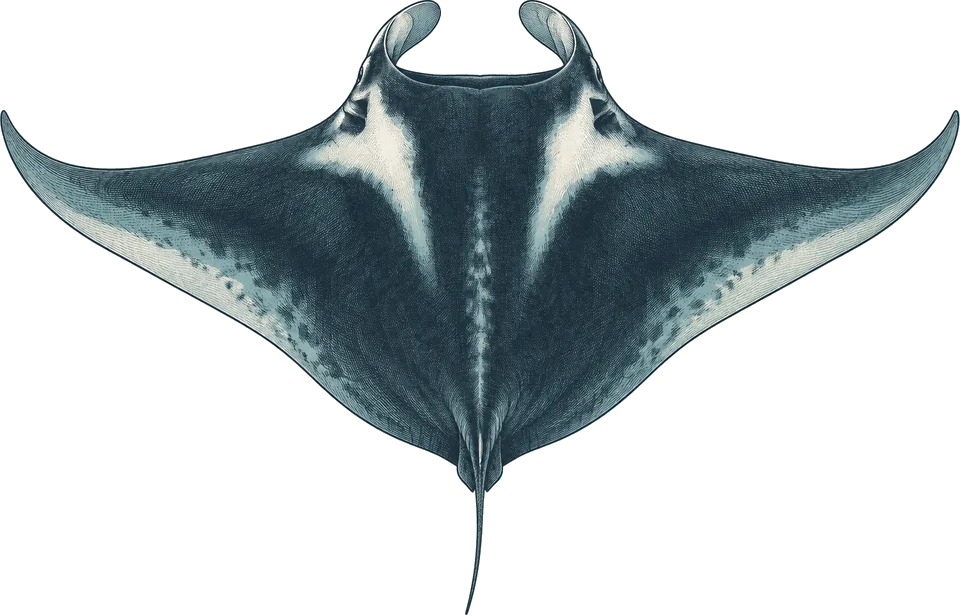
reef manta
All yearSangalaki
Hover near the cleaning stations at 12 to 18 m, or snorkel when they feed at the surface.1
Resident; most numerous May to September.
The best time to dive Derawan and Sangalaki is April to September, when seas are calmest and Sangalaki's mantas peak (May to September). Whale sharks visit Talisayan from mid-May. January and February are roughest. I'd pick June, when both overlap.
Operators say: Diving all year, with the main season about April to October; mantas peak May to September and January and February are roughest. Our data agrees on April to August and includes March and September in a wider season.
Worth knowing: 7 days a month of heavy rain.
111 km across · coastline from Natural Earth 10m
The Derawan archipelago combines four quite different islands. Sangalaki is shallow, rarely deeper than 20 m, with reef manta cleaning stations at 12 to 18 m and beaches where green turtles nest all year. Kakaban has steep outer walls with strong current and a land-locked lake of stingless jellyfish, open to snorkellers only. Maratua's channel, Big Fish Country, holds schools of chevron barracuda that can top 1,000 fish, and pelagic thresher sharks visit cleaning stations at 30 to 38 m. Derawan itself is a macro and turtle island with limited visibility.
Water stays near 28 °C all year and diving runs in every month. The main season is roughly April to September or October, when manta numbers rise with plankton blooms and liveaboards visit; January and February bring the hardest conditions. Whale sharks gather at fishing platforms off Talisayan from mid-May to mid-September.
Hover a month to isolate it.
| January | February | March | April | May | June | July | August | September | October | November | December | |
|---|---|---|---|---|---|---|---|---|---|---|---|---|
| Conditions | Poor | Moderate | Good | Good | Good | Excellent | Excellent | Excellent | Excellent | Moderate | Poor | Poor |
| Water temp (°C) | 29 | 29 | 29 | 30 | 30 | 30 | 30 | 29 | 30 | 30 | 30 | 29 |
| Visibility (m) | 10–20 | 15–25 | 15–25 | 15–25 | 15–25 | 15–25 | 15–25 | 15–25 | 15–25 | 15–25 | 15–25 | 15–25 |
| Marine life | Steady | Steady | Busy | Steady | Peak | Peak | Peak | Peak | Peak | Busy | Steady | Steady |
| Best time | Peak | Peak | Peak | Peak | Peak | Peak |
Long-term averages, 2016–2025. Visibility is estimated from satellite chlorophyll-a. Water temperature is the surface mean; it is cooler at depth.
Diving conditionsThe wind is up.
Diving conditionsSeas are usually flat. This is the wet season topside.
Marine lifeWhale shark (hit-or-miss), Reef manta (likely) peak at Derawan / Sangalaki in these months.
Diving conditionsThe wind is up.
Diving conditionsThe wind eases.
100 underwater observation records · 16 surveyed years of ocean data · 10 years of sea temperature
Dashed: monthly average. Band: eight days in ten.
10th to 90th percentile rangemonthly mean
Seas top 1.5 m on under 1% of days. Enough to cancel a day boat
Gusts over 40 km/h, about where a day boat stays in port
8 of them bring heavy rain
| Month | Swell | Gusts over 40 km/h | Wet days | Heavy rain | Air | Daylight |
|---|---|---|---|---|---|---|
| Jan | 0.6 m | 0% | 29 | 12 | 28 °C | 11.9 h |
| Feb | 0.7 m | 0% | 25 | 8 | 28 °C | 11.9 h |
| Mar | 0.6 m | 0% | 26 | 8 | 28 °C | 12.0 h |
| Apr | 0.4 m | 0% | 23 | 7 | 29 °C | 12.0 h |
| May | 0.3 m | 0% | 27 | 9 | 29 °C | 12.1 h |
| Jun | 0.4 m | 0% | 25 | 7 | 29 °C | 12.1 h |
| Jul | 0.6 m | 0% | 21 | 6 | 29 °C | 12.1 h |
| Aug | 0.4 m | 0% | 21 | 6 | 29 °C | 12.1 h |
| Sep | 0.5 m | 0% | 22 | 7 | 29 °C | 12.0 h |
| Oct | 0.5 m | 0% | 25 | 9 | 29 °C | 12.0 h |
| Nov | 0.4 m | 0% | 26 | 9 | 29 °C | 11.9 h |
| Dec | 0.3 m | 0% | 28 | 11 | 29 °C | 11.9 h |
Swell is the rough end of the month: nine days in ten come in under it. Sea temperature covers 10 years, waves 4.
Darker is better, against this site's own year. Pick a month for its weeks.
| Week 1 | ||||||||||||
|---|---|---|---|---|---|---|---|---|---|---|---|---|
| Week 2 | ||||||||||||
| Week 3 | ||||||||||||
| Week 4 |
| Week | Conditions | Water | Swell | Wind | Rain chance |
|---|---|---|---|---|---|
| Week 1 | Poor | 29 °C | 0.4 m | 19 km/h | 94% |
| Week 2 | Poor | 29 °C | 0.6 m | 19 km/h | 95% |
| Week 3 | Poor | 29 °C | 0.6 m | 19 km/h | 94% |
| Week 4 | Poor | 29 °C | 0.7 m | 21 km/h | 89% |
| Week 1 | Good | 29 °C | 0.7 m | 21 km/h | 87% |
| Week 2 | Moderate | 29 °C | 0.6 m | 22 km/h | 85% |
| Week 3 | Poor | 29 °C | 0.6 m | 22 km/h | 83% |
| Week 4 | Moderate | 29 °C | 0.7 m | 22 km/h | 85% |
| Week 1 | Moderate | 29 °C | 0.7 m | 21 km/h | 85% |
| Week 2 | Moderate | 29 °C | 0.6 m | 20 km/h | 80% |
| Week 3 | Good | 29 °C | 0.6 m | 20 km/h | 84% |
| Week 4 | Excellent | 29 °C | 0.5 m | 19 km/h | 90% |
| Week 1 | Excellent | 30 °C | 0.4 m | 19 km/h | 81% |
| Week 2 | Excellent | 30 °C | 0.5 m | 18 km/h | 72% |
| Week 3 | Excellent | 30 °C | 0.4 m | 18 km/h | 71% |
| Week 4 | Excellent | 30 °C | 0.3 m | 16 km/h | 82% |
| Week 1 | Good | 30 °C | 0.3 m | 16 km/h | 89% |
| Week 2 | Good | 30 °C | 0.3 m | 16 km/h | 86% |
| Week 3 | Good | 30 °C | 0.3 m | 16 km/h | 89% |
| Week 4 | Moderate | 30 °C | 0.4 m | 17 km/h | 87% |
| Week 1 | Excellent | 30 °C | 0.3 m | 17 km/h | 83% |
| Week 2 | Good | 30 °C | 0.4 m | 17 km/h | 84% |
| Week 3 | Excellent | 30 °C | 0.4 m | 17 km/h | 87% |
| Week 4 | Excellent | 30 °C | 0.4 m | 17 km/h | 85% |
| Week 1 | Excellent | 30 °C | 0.4 m | 18 km/h | 78% |
| Week 2 | Excellent | 29 °C | 0.5 m | 19 km/h | 71% |
| Week 3 | Good | 29 °C | 0.6 m | 22 km/h | 63% |
| Week 4 | Good | 29 °C | 0.6 m | 22 km/h | 60% |
| Week 1 | Excellent | 29 °C | 0.5 m | 21 km/h | 59% |
| Week 2 | Excellent | 29 °C | 0.4 m | 20 km/h | 63% |
| Week 3 | Excellent | 29 °C | 0.4 m | 19 km/h | 67% |
| Week 4 | Excellent | 29 °C | 0.5 m | 19 km/h | 73% |
| Week 1 | Excellent | 30 °C | 0.6 m | 19 km/h | 78% |
| Week 2 | Good | 30 °C | 0.6 m | 19 km/h | 75% |
| Week 3 | Good | 30 °C | 0.6 m | 19 km/h | 67% |
| Week 4 | Excellent | 30 °C | 0.4 m | 18 km/h | 74% |
| Week 1 | Good | 30 °C | 0.4 m | 16 km/h | 83% |
| Week 2 | Good | 30 °C | 0.4 m | 16 km/h | 83% |
| Week 3 | Poor | 30 °C | 0.5 m | 17 km/h | 82% |
| Week 4 | Poor | 30 °C | 0.6 m | 17 km/h | 79% |
| Week 1 | Poor | 30 °C | 0.6 m | 17 km/h | 80% |
| Week 2 | Poor | 30 °C | 0.4 m | 17 km/h | 85% |
| Week 3 | Moderate | 30 °C | 0.4 m | 17 km/h | 90% |
| Week 4 | Moderate | 30 °C | 0.4 m | 16 km/h | 94% |
| Week 1 | Poor | 30 °C | 0.3 m | 17 km/h | 95% |
| Week 2 | Poor | 29 °C | 0.3 m | 18 km/h | 89% |
| Week 3 | Poor | 29 °C | 0.4 m | 19 km/h | 86% |
| Week 4 | Poor | 29 °C | 0.4 m | 19 km/h | 91% |
10 years of daily records, averaged into weeks.
Sized for each month's coldest water.
| Jan | Feb | Mar | Apr | May | Jun | Jul | Aug | Sep | Oct | Nov | Dec | |
|---|---|---|---|---|---|---|---|---|---|---|---|---|
| Suit | skin | skin | skin | skin | skin | skin | skin | skin | skin | skin | skin | skin |
Suit row is for surface water. At depth: 3 mm suit for 28 to 30 °C water. Carry an SMB and a reef-safe approach: no sunscreen in the jellyfish lake. Nitrox is offered by the main resorts and liveaboards.
Each month's rough end: nine days in ten are calmer.
Amber is over 1.5 m.
No tropical storm has come within 250 km in 30 years of records. Swell and wind set the season, not cyclones.
Only 100 records have been logged within 60 km. A thin record is not an empty reef.
| Species | When | Observed window | Reliability | Evidence | Records |
|---|---|---|---|---|---|
| Green turtle | All year | Near-guaranteed | 32 | ||
| Whale shark | Jul–Aug | Hit-or-miss | 11 | ||
| Reef manta | May–Jun, Sep | Likely | 11 |
Logged sightings, not a full survey. How to read this table.
| Site | Depth | Level | What to expect |
|---|---|---|---|
| Sangalaki manta cleaning stationscleaning station | 12–18 m | Open Water | Shallow reef where reef mantas visit cleaning stations at 12 to 18 m, often feeding just below the surface.1 |
| Big Fish Country (Maratua Channel)drift | 20–30 m | Experienced | Channel dive at 20 to 30 m on the incoming tide. Chevron barracuda schools that can exceed 1,000, trevally, grey reef sharks and eagle rays. The one I'd come for.1 |
| Turtle Trafficreef | 5–15 m | Open Water | Shallow Maratua reef to about 15 m with many green turtles.1 |
| Lighthouse (Maratua)wall | 20–40 m | Experienced | Deep Maratua wall above a sandy plateau at about 40 m. For experienced divers watching depth.1 |
| Barracuda Point (Kakaban)wall / drift | ≈ 10–30 m | Experienced | Kakaban's outer wall dropping to about 180 m, dived as a drift in strong current. Barracuda, sharks and other pelagics.1 |
| Kelapa Dua (Kakaban)wall | ≈ 10–30 m | Advanced | Vertical Kakaban wall known as an early-morning spot for thresher sharks.1 |
| Blue Light Cave (Kakaban)cave | 21–44 m | Experienced | Technical cave: entry at about 21 m, exit at 44 m. Only for cave-trained, deep-certified divers. I'm not one, and I wouldn't go near it.1 |
| Derawan Jetty and house reefslope | ≈ 3–15 m | Open Water | Shallow shore and jetty dives, popular at night. Turtles, blue-ringed octopus, flamboyant cuttlefish, ghost pipefish; visibility is limited.5 |
Sangalaki
Hover near the cleaning stations at 12 to 18 m, or snorkel when they feed at the surface.1
Resident; most numerous May to September.
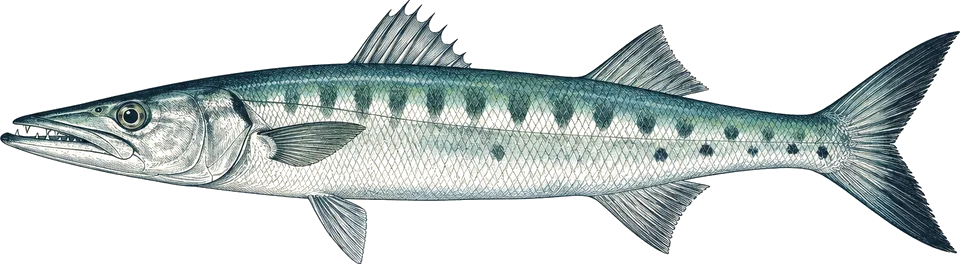
Big Fish Country, Maratua
Ride the incoming current through the channel at 20 to 30 m.1
Regular; schools can exceed 1,000 fish.
Maratua, Kelapa Dua (Kakaban)
Early-morning dives to cleaning stations at 30 to 38 m.1
Possible, not regular.
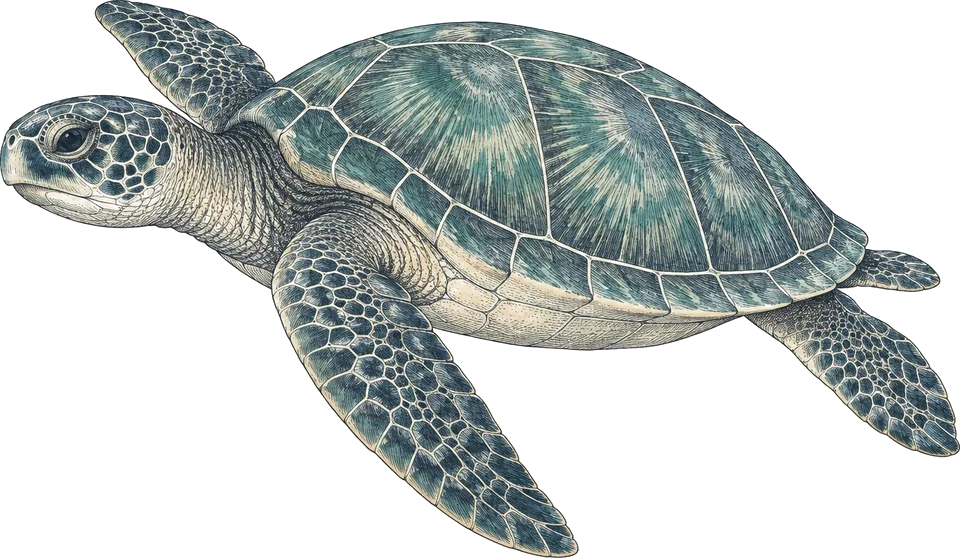
Sangalaki, Derawan, Turtle Traffic
Seen on most dives; green turtles nest on Sangalaki's beaches all year.1
Very high; hatching peaks June to September.
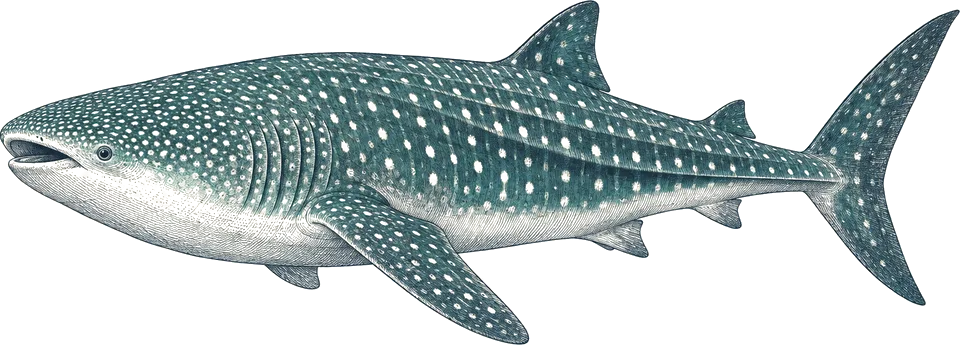
Talisayan (mainland coast)
Pre-dawn snorkel or dive beside fishing platforms (bagan).1
Good mid-May to mid-September.
Compiled from the sources above, last checked 2026-11-12. Monthly conditions come from our own climate records; see how we score.