
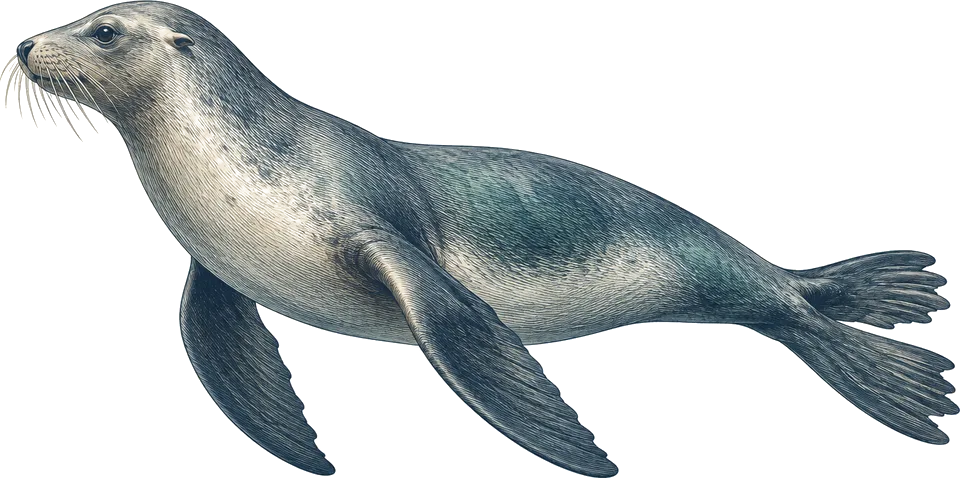
California sea lion
All yearSea Lion Rookery (Santa Barbara Island), Cathedral Cove
Kneel on the sand in the shallows and let them come to you.1
High at the Santa Barbara Island rookery; up to about 20.
The best time to dive the Channel Islands is July to November: the water is warmest, up to about 21 °C, and clearest from September to November. April to June brings plankton and green water. I'd aim for September or October.
Operators say: July to November, warmest from mid-July to October and clearest from September to November. Our data rates June good on sea state; operators find spring plankton often keeps June green and still dive well into November.
Worth knowing: water around 17 °C.
111 km across · coastline from Natural Earth 10m
The Channel Islands are boat-only diving. Day and overnight boats from Ventura, Oxnard and Santa Barbara run to Anacapa, Santa Cruz, Santa Rosa and San Miguel, and boats from San Pedro and Long Beach cover Santa Barbara Island and San Clemente. The draw is giant kelp, with more marine life than Catalina: sheephead, garibaldi, lobster, bat rays, giant sea bass in summer and autumn, and sea lions and harbour seals that come in close.
Anacapa is the closest and most sheltered, with most dives under 18 m, which suits newer divers. Conditions get colder and rougher to the west: San Miguel and Santa Rosa face open swell, water can drop into single figures, and offshore pinnacles such as Wilson Rock are rarely diveable. Surface water runs from about 10 °C in winter to 21 °C at the end of summer, and visibility averages about 12 m, clearest in autumn.
Hover a month to isolate it.
| January | February | March | April | May | June | July | August | September | October | November | December | |
|---|---|---|---|---|---|---|---|---|---|---|---|---|
| Conditions | Poor | Poor | Poor | Poor | Moderate | Good | Excellent | Excellent | Excellent | Excellent | Moderate | Poor |
| Water temp (°C) | 15 | 14 | 14 | 14 | 16 | 17 | 19 | 20 | 20 | 19 | 17 | 16 |
| Visibility (m) | 15–25 | 15–25 | 10–20 | 10–20 | 10–20 | 10–20 | 15–25 | 15–25 | 15–25 | 15–25 | 15–25 | 15–25 |
| Marine life | Peak | Peak | Peak | Peak | Peak | Peak | Peak | Peak | Peak | Peak | Peak | Peak |
| Best time | Peak | Peak | Peak | Peak | Peak |
Long-term averages, 2016–2025. Visibility is estimated from satellite chlorophyll-a. Water temperature is the surface mean; it is cooler at depth.
Diving conditionsSeas stay mostly calm. It rains less.
Diving conditionsSeas stay mostly calm. It rains less. The wind eases.
Marine lifeOcean sunfish (hit-or-miss), Blue shark (near-guaranteed), Sardine (near-guaranteed), California sea lion (near-guaranteed) peak at Channel Islands in these months.
Diving conditionsSeas stay mostly calm. It rains more.
Diving conditionsExpect some swell. It rains more. The wind is up.
8,721 underwater observation records · 32 surveyed years of ocean data · 10 years of sea temperature
Dashed: monthly average. Band: eight days in ten.
10th to 90th percentile rangemonthly mean
Seas top 2.5 m on under 1% of days. Enough to cancel a liveaboard crossing
Gusts over 40 km/h, about where a day boat stays in port
1 of them bring heavy rain
| Month | Swell | Gusts over 40 km/h | Wet days | Heavy rain | Air | Daylight |
|---|---|---|---|---|---|---|
| Jan | 1.9 m | 25% | 6 | 3 | 16 °C | 10.0 h |
| Feb | 2.1 m | 30% | 5 | 2 | 15 °C | 10.8 h |
| Mar | 1.9 m | 34% | 7 | 3 | 15 °C | 11.7 h |
| Apr | 1.8 m | 31% | 2 | 0 | 16 °C | 12.9 h |
| May | 1.5 m | 22% | 1 | 0 | 16 °C | 13.8 h |
| Jun | 1.2 m | 11% | 0 | 0 | 18 °C | 14.3 h |
| Jul | 1.0 m | 1% | 0 | 0 | 20 °C | 14.1 h |
| Aug | 1.1 m | 0% | 1 | 0 | 20 °C | 13.3 h |
| Sep | 1.2 m | 6% | 1 | 0 | 21 °C | 12.2 h |
| Oct | 1.4 m | 14% | 1 | 0 | 20 °C | 11.1 h |
| Nov | 1.5 m | 18% | 3 | 1 | 18 °C | 10.2 h |
| Dec | 1.6 m | 24% | 5 | 2 | 16 °C | 9.7 h |
Swell is the rough end of the month: nine days in ten come in under it. Sea temperature covers 10 years, waves 4.
Darker is better, against this site's own year. Pick a month for its weeks.
| Week 1 | ||||||||||||
|---|---|---|---|---|---|---|---|---|---|---|---|---|
| Week 2 | ||||||||||||
| Week 3 | ||||||||||||
| Week 4 |
| Week | Conditions | Water | Swell | Wind | Rain chance |
|---|---|---|---|---|---|
| Week 1 | Poor | 15 °C | 2.1 m | 29 km/h | 24% |
| Week 2 | Poor | 15 °C | 2.0 m | 28 km/h | 21% |
| Week 3 | Poor | 15 °C | 1.5 m | 28 km/h | 18% |
| Week 4 | Poor | 15 °C | 1.5 m | 27 km/h | 16% |
| Week 1 | Poor | 15 °C | 1.8 m | 27 km/h | 19% |
| Week 2 | Poor | 15 °C | 2.1 m | 29 km/h | 19% |
| Week 3 | Poor | 14 °C | 2.1 m | 31 km/h | 18% |
| Week 4 | Poor | 14 °C | 2.0 m | 30 km/h | 20% |
| Week 1 | Poor | 14 °C | 2.1 m | 29 km/h | 25% |
| Week 2 | Poor | 14 °C | 1.9 m | 31 km/h | 28% |
| Week 3 | Poor | 14 °C | 1.9 m | 32 km/h | 22% |
| Week 4 | Poor | 14 °C | 2.0 m | 34 km/h | 14% |
| Week 1 | Poor | 14 °C | 1.9 m | 33 km/h | 11% |
| Week 2 | Poor | 14 °C | 1.7 m | 31 km/h | 8% |
| Week 3 | Moderate | 14 °C | 1.6 m | 31 km/h | 4% |
| Week 4 | Moderate | 15 °C | 1.6 m | 31 km/h | 4% |
| Week 1 | Poor | 15 °C | 1.5 m | 27 km/h | 4% |
| Week 2 | Poor | 15 °C | 1.7 m | 27 km/h | 3% |
| Week 3 | Moderate | 16 °C | 1.4 m | 28 km/h | 2% |
| Week 4 | Good | 16 °C | 1.1 m | 24 km/h | 1% |
| Week 1 | Good | 16 °C | 1.1 m | 20 km/h | 1% |
| Week 2 | Excellent | 17 °C | 1.2 m | 21 km/h | 1% |
| Week 3 | Excellent | 18 °C | 1.4 m | 21 km/h | 1% |
| Week 4 | Excellent | 18 °C | 1.2 m | 20 km/h | 0% |
| Week 1 | Excellent | 18 °C | 1.1 m | 21 km/h | 0% |
| Week 2 | Excellent | 19 °C | 1.0 m | 20 km/h | 0% |
| Week 3 | Excellent | 19 °C | 1.0 m | 20 km/h | 0% |
| Week 4 | Excellent | 20 °C | 1.0 m | 21 km/h | 1% |
| Week 1 | Excellent | 20 °C | 1.1 m | 22 km/h | 2% |
| Week 2 | Excellent | 20 °C | 1.1 m | 21 km/h | 2% |
| Week 3 | Excellent | 20 °C | 1.0 m | 20 km/h | 2% |
| Week 4 | Excellent | 20 °C | 1.0 m | 21 km/h | 2% |
| Week 1 | Excellent | 20 °C | 1.1 m | 22 km/h | 2% |
| Week 2 | Excellent | 20 °C | 1.2 m | 22 km/h | 3% |
| Week 3 | Excellent | 20 °C | 1.2 m | 22 km/h | 4% |
| Week 4 | Excellent | 20 °C | 1.1 m | 21 km/h | 4% |
| Week 1 | Excellent | 19 °C | 1.1 m | 20 km/h | 3% |
| Week 2 | Excellent | 19 °C | 1.3 m | 21 km/h | 4% |
| Week 3 | Excellent | 19 °C | 1.3 m | 23 km/h | 4% |
| Week 4 | Good | 18 °C | 1.4 m | 22 km/h | 4% |
| Week 1 | Good | 18 °C | 1.5 m | 22 km/h | 6% |
| Week 2 | Moderate | 17 °C | 1.5 m | 23 km/h | 9% |
| Week 3 | Poor | 17 °C | 1.5 m | 25 km/h | 12% |
| Week 4 | Poor | 16 °C | 1.2 m | 24 km/h | 14% |
| Week 1 | Moderate | 16 °C | 1.3 m | 24 km/h | 15% |
| Week 2 | Moderate | 16 °C | 1.5 m | 26 km/h | 11% |
| Week 3 | Poor | 15 °C | 1.6 m | 27 km/h | 14% |
| Week 4 | Poor | 15 °C | 1.8 m | 28 km/h | 23% |
10 years of daily records, averaged into weeks.
Sized for each month's coldest water.
| Jan | Feb | Mar | Apr | May | Jun | Jul | Aug | Sep | Oct | Nov | Dec | |
|---|---|---|---|---|---|---|---|---|---|---|---|---|
| Suit | 7 mm | 7 mm | dry | 7 mm | 7 mm | 7 mm | 5 mm + | 5 mm + | 5 mm + | 5 mm + | 7 mm | 7 mm |
Suit row is for surface water. At depth: Drysuit, or 7 mm wetsuit with hood and gloves. Bring an SMB and a kelp cutter. Most boats expect you to bring your own tanks and weights.
Each month's rough end: nine days in ten are calmer.
Amber is over 2.5 m.
No tropical storm has come within 250 km in 30 years of records. Swell and wind set the season, not cyclones.
| Species | When | Observed window | Reliability | Evidence | Records |
|---|---|---|---|---|---|
| Ocean sunfish | Aug–Oct | Hit-or-miss | 1856 | ||
| Blue shark | Aug–Oct | Near-guaranteed | 1933 | ||
| Sardine | Aug–Oct | Near-guaranteed | 1996 | ||
| Common dolphin | All year | Near-guaranteed | 129 | ||
| Common thresher | Aug–Sep | Near-guaranteed | 1890 | ||
| Humpback whale | All year | Near-guaranteed | 411 | ||
| California sea lion | All year | Near-guaranteed | 206 | ||
| Blue whale | Jun–Jul | Likely | 146 | ||
| Bottlenose dolphin | Jan, Mar–Apr | Likely | 38 | ||
| Harbour seal | Jan–Mar | Likely | 52 | ||
| Grey whale | Jan, Mar | Likely | 33 | ||
| Minke whale | May, Jul | Hit-or-miss | 15 | ||
| Orca | Dec–Feb | Hit-or-miss | 13 |
Logged sightings, not a full survey. How to read this table.
| Site | Depth | Level | What to expect |
|---|---|---|---|
| Landing Cove, Anacapakelp / reef / arch | 9–18 m | Open Water | Cove at 9 to 18 m with a large underwater arch, nudibranchs and other macro.1 |
| Cathedral Cove, Anacapakelp / reef | 3–18 m | Open Water | Giant kelp next to a sea lion rookery; shallow and sheltered, close to shore.2 |
| Coral Reef, Anacapareef | 12–24 m | Advanced | Rocky reef with a brittle star carpet at 18 to 24 m. Currents can be strong.1 |
| Gull Island, Santa Cruzkelp / reef | ≈ 6–20 m | Advanced | Marine reserve off the south-west side. Lush kelp, big sheephead, lobster, sea lions, harbour seals and shallow purple hydrocoral.1 |
| Brittle Star Reef, Santa Barbara Islandreef | 18–23 m | Advanced | Rocky reef and kelp with brittle stars carpeting the floor at 18 to 23 m.1 |
| The Archway, Santa Barbara Islandarch / reef | 10–24 m | Advanced | Arch at about 24 m with hydrocoral, gorgonians and sunflower stars.2 |
| Sea Lion Rookery, Santa Barbara Islandsand / reef | ≈ 3–12 m | Open Water | Shallow, sheltered sandy corner in the south-east where up to about 20 sea lions play with divers. Honestly, this is the dive I'd want most.1 |
| Wyckoff Ledge, San Miguelledge / reef | 9–30 m | Advanced | Fairly sheltered ledge with wolf eels, mosshead warbonnets and nudibranchs from 9 to 30 m. Cold water and surge.1 |
| Point Bennett, San Miguelkelp / reef | 9–15 m | Advanced | Dives at 9 to 15 m near the seal and sea lion breeding grounds.2 |
| Judith Rock, San Miguelpinnacle | 17–30 m | Experienced | South-west pinnacle with its top at about 17 m; heavy current at times.1 |
| Santa Rosa Pinnaclespinnacle | 15–30 m | Experienced | Steep kelp-covered pinnacles to 30 m with strong currents. Santa Rosa is often windy.2 |
Sea Lion Rookery (Santa Barbara Island), Cathedral Cove
Kneel on the sand in the shallows and let them come to you.1
High at the Santa Barbara Island rookery; up to about 20.
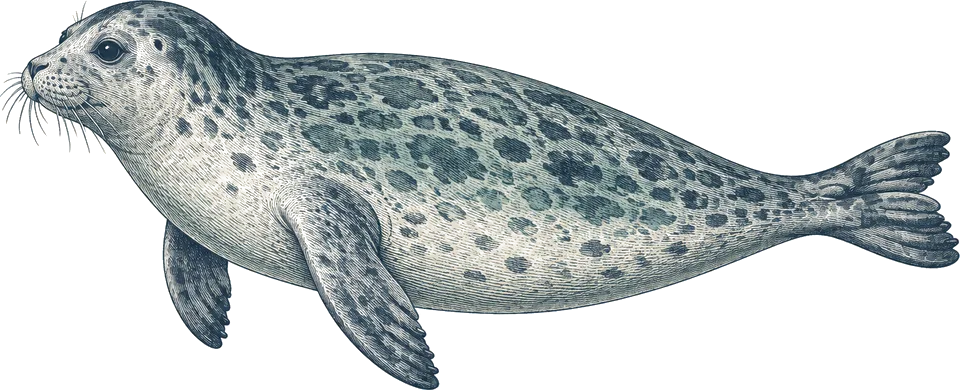
Anacapa (Channels), Gull Island
Shallow dives in the channels and kelp; stay still, they approach on their terms.1
Frequent around Anacapa and Santa Cruz.
Kelp sites around Anacapa and Santa Cruz
Hover at the kelp edge and wait; do not chase.1
Summer and autumn visitors; not guaranteed.
Wyckoff Ledge (San Miguel)
Search crevices on the ledge with a torch at 9 to 30 m.1
Resident; trips depend on San Miguel weather.
Compiled from the sources above, last checked 2026-11-12. Monthly conditions come from our own climate records; see how we score.