
southern sea otter
All yearCoral Street, Lovers Point, Point Lobos
Watch on the surface swim out through the kelp; keep your distance.2
Common on the Pacific Grove and Carmel coast.
The best time to dive Monterey is September to November, when the north-west winds ease, the water is at its warmest, around 13 to 16 °C, and visibility improves. Spring and summer are colder and greener. I'd go in October.
Operators say: September to November, with calm winter days between storms as a second window. Our data peaks July to October and scores November lower on swell; locals find summer green with plankton and count autumn as the calm season.
Worth knowing: 91% of days see seas over 1 m.
111 km across · coastline from Natural Earth 10m
Monterey is shore diving. San Carlos Beach, known as the Breakwater, is a gentle sandy slope at the end of Cannery Row and the bay's main training site. Lovers Point and Coral Street in Pacific Grove are kelp and granite reefs reached through rocky coves. South in Carmel, Point Lobos State Natural Reserve allows ten dive teams a day into Whalers Cove and Bluefish Cove, by reservation. Boats reach deeper sites such as Hopkins Deep Reef, with its fields of giant white anemones, and the Carmel Pinnacles, with pink and purple hydrocoral.
The water is cold all year, about 8 to 17 °C, and most divers wear a drysuit or 7 mm. Visibility is usually 5 to 12 m. North-west wind and swell in spring and summer, plus upwelling and plankton, make those the hardest months. Autumn, and calm spells between winter storms, bring the best conditions.
Hover a month to isolate it.
| January | February | March | April | May | June | July | August | September | October | November | December | |
|---|---|---|---|---|---|---|---|---|---|---|---|---|
| Conditions | Poor | Poor | Poor | Poor | Poor | Moderate | Good | Excellent | Excellent | Good | Poor | Poor |
| Water temp (°C) | 13 | 13 | 13 | 12 | 13 | 13 | 14 | 15 | 16 | 15 | 14 | 13 |
| Visibility (m) | 5–15 | 5–15 | 0–10 | 0–10 | 0–10 | 0–10 | 5–15 | 0–10 | 0–10 | 0–10 | 0–10 | 5–15 |
| Marine life | Peak | Peak | Peak | Peak | Peak | Peak | Peak | Peak | Peak | Peak | Peak | Peak |
| Best time | Peak | Peak | Peak |
Long-term averages, 2016–2025. Visibility is estimated from satellite chlorophyll-a. Water temperature is the surface mean; it is cooler at depth.
Diving conditionsIt rains less. The wind eases.
Diving conditionsThe wind eases. It rains less.
Marine lifeOcean sunfish (hit-or-miss), Blue shark (near-guaranteed), Sardine (near-guaranteed) peak at Monterey in these months.
Diving conditionsIt rains more. The wind is up.
Marine lifeCalifornia sea lion (near-guaranteed) peaks at Monterey in these months.
9,884 underwater observation records · 32 surveyed years of ocean data · 10 years of sea temperature
Dashed: monthly average. Band: eight days in ten.
10th to 90th percentile rangemonthly mean
Seas top 1.0 m on 96% of days. Enough to cancel a shore entry
Gusts over 40 km/h, about where a day boat stays in port
2 of them bring heavy rain
| Month | Swell | Gusts over 40 km/h | Wet days | Heavy rain | Air | Daylight |
|---|---|---|---|---|---|---|
| Jan | 3.9 m | 7% | 10 | 4 | 15 °C | 9.8 h |
| Feb | 4.2 m | 7% | 9 | 4 | 15 °C | 10.7 h |
| Mar | 3.7 m | 3% | 13 | 4 | 15 °C | 11.7 h |
| Apr | 3.4 m | 2% | 4 | 1 | 15 °C | 12.9 h |
| May | 2.9 m | 0% | 4 | 1 | 15 °C | 14.0 h |
| Jun | 2.5 m | 0% | 1 | 0 | 17 °C | 14.5 h |
| Jul | 1.9 m | 0% | 0 | 0 | 17 °C | 14.3 h |
| Aug | 1.8 m | 0% | 0 | 0 | 19 °C | 13.4 h |
| Sep | 2.2 m | 0% | 1 | 0 | 20 °C | 12.2 h |
| Oct | 2.9 m | 1% | 3 | 0 | 19 °C | 11.0 h |
| Nov | 3.4 m | 1% | 6 | 2 | 17 °C | 10.0 h |
| Dec | 4.2 m | 3% | 10 | 3 | 15 °C | 9.5 h |
Swell is the rough end of the month: nine days in ten come in under it. Sea temperature covers 10 years, waves 4.
Darker is better, against this site's own year. Pick a month for its weeks.
| Week 1 | ||||||||||||
|---|---|---|---|---|---|---|---|---|---|---|---|---|
| Week 2 | ||||||||||||
| Week 3 | ||||||||||||
| Week 4 |
| Week | Conditions | Water | Swell | Wind | Rain chance |
|---|---|---|---|---|---|
| Week 1 | Poor | 13 °C | 4.5 m | 19 km/h | 37% |
| Week 2 | Poor | 13 °C | 4.2 m | 18 km/h | 37% |
| Week 3 | Poor | 13 °C | 3.4 m | 18 km/h | 30% |
| Week 4 | Poor | 13 °C | 3.3 m | 17 km/h | 27% |
| Week 1 | Poor | 13 °C | 3.8 m | 18 km/h | 29% |
| Week 2 | Poor | 13 °C | 4.2 m | 19 km/h | 29% |
| Week 3 | Poor | 13 °C | 4.3 m | 20 km/h | 28% |
| Week 4 | Poor | 13 °C | 4.1 m | 20 km/h | 32% |
| Week 1 | Poor | 13 °C | 4.0 m | 21 km/h | 41% |
| Week 2 | Poor | 13 °C | 3.6 m | 20 km/h | 43% |
| Week 3 | Poor | 13 °C | 3.5 m | 20 km/h | 39% |
| Week 4 | Poor | 12 °C | 3.6 m | 21 km/h | 32% |
| Week 1 | Poor | 12 °C | 3.6 m | 20 km/h | 23% |
| Week 2 | Poor | 12 °C | 3.4 m | 19 km/h | 18% |
| Week 3 | Poor | 12 °C | 3.1 m | 20 km/h | 14% |
| Week 4 | Moderate | 12 °C | 3.0 m | 20 km/h | 11% |
| Week 1 | Poor | 13 °C | 3.1 m | 20 km/h | 12% |
| Week 2 | Poor | 13 °C | 2.9 m | 19 km/h | 15% |
| Week 3 | Poor | 13 °C | 2.7 m | 20 km/h | 13% |
| Week 4 | Moderate | 13 °C | 2.7 m | 19 km/h | 7% |
| Week 1 | Poor | 13 °C | 2.6 m | 19 km/h | 5% |
| Week 2 | Moderate | 13 °C | 2.6 m | 19 km/h | 3% |
| Week 3 | Good | 13 °C | 2.5 m | 19 km/h | 1% |
| Week 4 | Good | 14 °C | 2.1 m | 18 km/h | 2% |
| Week 1 | Good | 14 °C | 1.8 m | 17 km/h | 1% |
| Week 2 | Good | 14 °C | 1.9 m | 16 km/h | 0% |
| Week 3 | Excellent | 14 °C | 2.1 m | 16 km/h | 0% |
| Week 4 | Excellent | 15 °C | 1.7 m | 16 km/h | 1% |
| Week 1 | Excellent | 15 °C | 1.6 m | 15 km/h | 1% |
| Week 2 | Excellent | 15 °C | 1.7 m | 15 km/h | 0% |
| Week 3 | Excellent | 15 °C | 1.7 m | 16 km/h | 0% |
| Week 4 | Good | 15 °C | 1.8 m | 16 km/h | 0% |
| Week 1 | Excellent | 16 °C | 1.8 m | 15 km/h | 1% |
| Week 2 | Good | 16 °C | 1.9 m | 15 km/h | 4% |
| Week 3 | Good | 16 °C | 2.1 m | 16 km/h | 6% |
| Week 4 | Good | 16 °C | 2.5 m | 16 km/h | 7% |
| Week 1 | Excellent | 15 °C | 2.4 m | 16 km/h | 6% |
| Week 2 | Excellent | 15 °C | 2.5 m | 15 km/h | 7% |
| Week 3 | Moderate | 15 °C | 3.0 m | 15 km/h | 11% |
| Week 4 | Moderate | 15 °C | 3.2 m | 15 km/h | 13% |
| Week 1 | Moderate | 14 °C | 3.3 m | 15 km/h | 14% |
| Week 2 | Poor | 14 °C | 3.7 m | 15 km/h | 17% |
| Week 3 | Poor | 14 °C | 3.6 m | 16 km/h | 21% |
| Week 4 | Poor | 14 °C | 3.0 m | 16 km/h | 24% |
| Week 1 | Poor | 14 °C | 2.8 m | 16 km/h | 25% |
| Week 2 | Poor | 13 °C | 3.7 m | 16 km/h | 29% |
| Week 3 | Poor | 13 °C | 4.1 m | 17 km/h | 33% |
| Week 4 | Poor | 13 °C | 4.6 m | 18 km/h | 35% |
10 years of daily records, averaged into weeks.
Sized for each month's coldest water.
| Jan | Feb | Mar | Apr | May | Jun | Jul | Aug | Sep | Oct | Nov | Dec | |
|---|---|---|---|---|---|---|---|---|---|---|---|---|
| Suit | dry | dry | dry | dry | dry | dry | 7 mm | 7 mm | 7 mm | 7 mm | dry | dry |
Suit row is for surface water. At depth: Drysuit, or 7 mm wetsuit or semi-dry with hood and gloves. Point Lobos requires a device that keeps you positively buoyant. Carry a kelp cutter; SMB on boat dives.
Each month's rough end: nine days in ten are calmer.
Amber is over 1.0 m.
No tropical storm has come within 250 km in 30 years of records. Swell and wind set the season, not cyclones.
| Species | When | Observed window | Reliability | Evidence | Records |
|---|---|---|---|---|---|
| Humpback whale | All year | Near-guaranteed | 2999 | ||
| Ocean sunfish | Aug–Oct | Hit-or-miss | 1265 | ||
| Blue shark | Aug–Sep | Near-guaranteed | 1232 | ||
| Sardine | Aug–Oct | Near-guaranteed | 1248 | ||
| Common thresher | Aug–Oct | Near-guaranteed | 1170 | ||
| California sea lion | All year | Near-guaranteed | 332 | ||
| Harbour seal | All year | Near-guaranteed | 313 | ||
| Blue whale | Dec–Jan, Sep–Oct | Likely | 151 | ||
| Orca | Apr–May | Likely | 111 | ||
| Bottlenose dolphin | All year | Likely | 39 | ||
| Grey whale | Jan–Feb | Likely | 1000 | ||
| Common dolphin | Mar–Apr, Sep, Dec | Hit-or-miss | 17 |
Logged sightings, not a full survey. How to read this table.
| Site | Depth | Level | What to expect |
|---|---|---|---|
| San Carlos Beach (the Breakwater)sand slope / reef (shore) | 5–15 m | Open Water | Easy sandy entry at the end of Cannery Row sloping to about 15 m. Crabs, nudibranchs, the Metridium Fields, occasional mola. Weekend training site.1 |
| Lovers Pointkelp / reef (shore) | ≈ 3–12 m | Open Water | Shallow algae-covered reefs in Pacific Grove; enter through the sand channel at Lovers Cove, the safer of the entries.1 |
| Coral Streetkelp / granite reef (shore) | 3–18 m | Open Water | Follow the central sand channel past ridges to pinnacles at up to 18 m. Monkeyface eels, abalone, rock scallops, juvenile rockfish.2 |
| McAbee Beachkelp / reef (shore) | ≈ 5–15 m | Open Water | Cannery Row beach entry into kelp beds; McAbee Pinnacle further out has rockfish and nudibranchs.1 |
| Whalers Cove, Point Loboskelp / reef (shore) | 9–15 m | Open Water | Reservation-only entry from the slippery boat ramp into a cove of 9 to 15 m. Blue rockfish, white anemones, leopard sharks. If I booked one dive here, it'd be this.4 |
| Middle Reef, Point Lobosreef (shore) | 6–20 m | Advanced | Short swim north-east of the Whalers Cove ramp; kelp patches, nudibranchs and leopard sharks at 6 to 20 m.4 |
| Bluefish Cove, Point Loboscanyon / pinnacles | 10–27 m | Advanced | Steep, narrow canyon between two pinnacles to about 27 m. Strawberry anemones and sponges. No beach; reached by boat.1 |
| Hopkins Deep Reefreef (boat) | 18–27 m | Experienced | Reef off Hopkins Marine Station at 18 to 27 m. Giant white Metridium anemones, sea pens, Spanish shawls, lingcod; squid eggs in summer.7 |
| Carmel Pinnaclespinnacles (boat) | 18–27 m | Experienced | Marine reserve in Carmel Bay. Pink and purple hydrocoral, strawberry anemones, rockfish; surge, so divers drop deep and work up.7 |
Coral Street, Lovers Point, Point Lobos
Watch on the surface swim out through the kelp; keep your distance.2
Common on the Pacific Grove and Carmel coast.
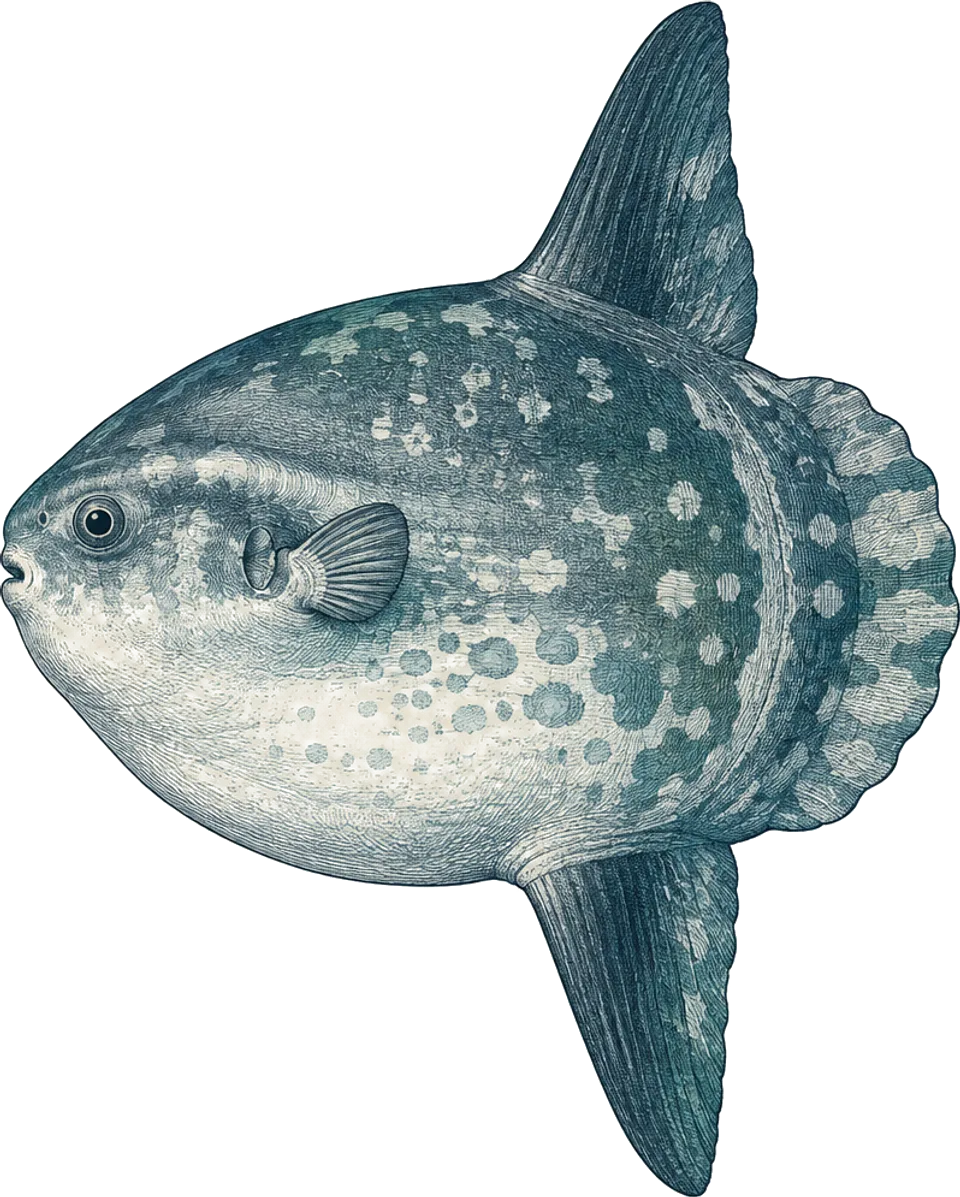
San Carlos Beach (the Breakwater)
Look up and out on the sand slope; they drift in from open water.1
Occasional; sources give no season.
Whalers Cove and Middle Reef, Point Lobos
Settle near the bottom in the cove and let them pass.4
Reported regularly; sources give no season.
Hopkins Deep Reef
Look for white egg capsules on the sand and reef.1
Most visible in summer; varies year to year.
Compiled from the sources above, last checked 2026-11-12. Monthly conditions come from our own climate records; see how we score.