plumose anemones and dead man's fingers
All yearGerman fleet wrecks
Look along hulls and guns on any of the German wrecks.7
Certain; the wrecks are covered in them.
The best time to dive Scapa Flow is April to September, when the seas are calmest and Stromness boats run weekly trips. Water peaks at about 13 °C in late summer, and visibility often improves late in the season. I'd book September.
Operators say: Easter to early November, with the clearest water in autumn once the plankton dies back. Our data rates April to August highest for calm seas; operators keep diving into October and rate late-season visibility best.
Worth knowing: water around 12 °C.

By Eugen. Based on 14 sources, checked 11 November 2026.
111 km across · coastline from Natural Earth 10m
On 21 June 1919 the interned German High Seas Fleet scuttled itself in Scapa Flow. Of 52 ships that sank, salvors raised 45. Seven remain and are the reason divers come: the battleships König, Markgraf and Kronprinz Wilhelm, which lie upside down at 37 to 46 m, and the cruisers Cöln, Dresden, Karlsruhe and Brummer on their sides at roughly 12 to 37 m. Several are collapsing, so penetration needs proper training.
This is drysuit diving in 7 to 13 °C water with typical visibility of 5 to 10 m. The Flow is sheltered, so boats sail in winds that would stop diving elsewhere in Britain, and the German wrecks have little current. Shallower dives are on the blockships in Burra Sound and at the Churchill Barriers, which are tidal and dived at slack water. Most divers come for a six-day boat week out of Stromness.
Hover a month to isolate it.
| January | February | March | April | May | June | July | August | September | October | November | December | |
|---|---|---|---|---|---|---|---|---|---|---|---|---|
| Conditions | Poor | Poor | Poor | Good | Excellent | Excellent | Excellent | Excellent | Excellent | Poor | Poor | Poor |
| Water temp (°C) | 8 | 7 | 7 | 8 | 9 | 11 | 13 | 13 | 13 | 12 | 11 | 9 |
| Visibility (m) | — | 10–20 | 10–20 | 5–15 | 5–15 | 5–15 | 5–15 | 5–15 | 5–15 | 5–15 | — | — |
| Marine life | Busy | Steady | Steady | Steady | Peak | Peak | Peak | Peak | Peak | Busy | Steady | Steady |
| Best time | Peak | Peak | Peak | Peak | Peak | Peak |
Long-term averages, 2016–2025. Visibility is estimated from satellite chlorophyll-a. Water temperature is the surface mean; it is cooler at depth.
Diving conditionsThe sea is calmer. The wind eases.
Marine lifeBasking shark (hit-or-miss), Grey seal (near-guaranteed) peak at Scapa Flow in these months.
Diving conditionsThe sea is rougher. The wind is up.
4,066 underwater observation records · 32 surveyed years of ocean data · 10 years of sea temperature
Dashed: monthly average. Band: eight days in ten.
10th to 90th percentile rangemonthly mean
Seas top 1.5 m on 28% of days. Enough to cancel a day boat
Gusts over 40 km/h, about where a day boat stays in port
2 of them bring heavy rain
| Month | Swell | Gusts over 40 km/h | Wet days | Heavy rain | Air | Daylight |
|---|---|---|---|---|---|---|
| Jan | 2.5 m | 41% | 19 | 3 | 7 °C | 6.6 h |
| Feb | 2.7 m | 37% | 17 | 2 | 7 °C | 8.9 h |
| Mar | 2.1 m | 26% | 17 | 2 | 8 °C | 11.4 h |
| Apr | 1.5 m | 17% | 13 | 1 | 9 °C | 14.1 h |
| May | 1.5 m | 6% | 13 | 1 | 12 °C | 16.6 h |
| Jun | 1.6 m | 10% | 15 | 2 | 14 °C | 18.1 h |
| Jul | 1.2 m | 5% | 19 | 1 | 15 °C | 17.4 h |
| Aug | 1.5 m | 6% | 18 | 2 | 16 °C | 15.2 h |
| Sep | 1.6 m | 20% | 18 | 3 | 14 °C | 12.5 h |
| Oct | 2.1 m | 29% | 21 | 3 | 12 °C | 9.8 h |
| Nov | 2.1 m | 28% | 18 | 3 | 9 °C | 7.3 h |
| Dec | 2.4 m | 32% | 19 | 2 | 8 °C | 5.9 h |
Swell is the rough end of the month: nine days in ten come in under it. Sea temperature covers 10 years, waves 4.
Darker is better, against this site's own year. Pick a month for its weeks.
| Week 1 | ||||||||||||
|---|---|---|---|---|---|---|---|---|---|---|---|---|
| Week 2 | ||||||||||||
| Week 3 | ||||||||||||
| Week 4 |
| Week | Conditions | Water | Swell | Wind | Rain chance |
|---|---|---|---|---|---|
| Week 1 | Poor | 9 °C | 2.3 m | 36 km/h | 61% |
| Week 2 | Poor | 8 °C | 2.2 m | 37 km/h | 58% |
| Week 3 | Poor | 8 °C | 2.4 m | 36 km/h | 58% |
| Week 4 | Poor | 8 °C | 3.1 m | 36 km/h | 64% |
| Week 1 | Poor | 8 °C | 3.2 m | 37 km/h | 66% |
| Week 2 | Poor | 7 °C | 2.6 m | 35 km/h | 62% |
| Week 3 | Poor | 7 °C | 2.5 m | 35 km/h | 60% |
| Week 4 | Poor | 7 °C | 2.5 m | 34 km/h | 56% |
| Week 1 | Poor | 7 °C | 2.3 m | 33 km/h | 52% |
| Week 2 | Poor | 7 °C | 2.1 m | 34 km/h | 57% |
| Week 3 | Poor | 7 °C | 2.1 m | 34 km/h | 55% |
| Week 4 | Moderate | 7 °C | 1.8 m | 32 km/h | 51% |
| Week 1 | Moderate | 7 °C | 1.6 m | 30 km/h | 48% |
| Week 2 | Moderate | 8 °C | 1.6 m | 30 km/h | 45% |
| Week 3 | Excellent | 8 °C | 1.5 m | 28 km/h | 41% |
| Week 4 | Excellent | 8 °C | 1.2 m | 26 km/h | 42% |
| Week 1 | Excellent | 9 °C | 1.3 m | 25 km/h | 40% |
| Week 2 | Excellent | 9 °C | 1.3 m | 25 km/h | 40% |
| Week 3 | Good | 9 °C | 1.4 m | 25 km/h | 49% |
| Week 4 | Good | 10 °C | 1.6 m | 25 km/h | 45% |
| Week 1 | Excellent | 10 °C | 1.6 m | 23 km/h | 40% |
| Week 2 | Excellent | 11 °C | 1.5 m | 25 km/h | 49% |
| Week 3 | Good | 11 °C | 1.4 m | 28 km/h | 53% |
| Week 4 | Excellent | 11 °C | 1.7 m | 27 km/h | 55% |
| Week 1 | Good | 12 °C | 1.5 m | 25 km/h | 60% |
| Week 2 | Excellent | 12 °C | 1.3 m | 25 km/h | 60% |
| Week 3 | Excellent | 13 °C | 1.0 m | 24 km/h | 62% |
| Week 4 | Excellent | 13 °C | 1.0 m | 24 km/h | 63% |
| Week 1 | Excellent | 13 °C | 1.4 m | 25 km/h | 67% |
| Week 2 | Excellent | 13 °C | 1.5 m | 26 km/h | 65% |
| Week 3 | Excellent | 13 °C | 1.5 m | 25 km/h | 57% |
| Week 4 | Excellent | 13 °C | 1.4 m | 25 km/h | 51% |
| Week 1 | Excellent | 13 °C | 1.4 m | 26 km/h | 55% |
| Week 2 | Good | 13 °C | 1.6 m | 28 km/h | 63% |
| Week 3 | Excellent | 13 °C | 1.5 m | 30 km/h | 60% |
| Week 4 | Good | 13 °C | 1.8 m | 32 km/h | 62% |
| Week 1 | Poor | 13 °C | 2.2 m | 34 km/h | 71% |
| Week 2 | Poor | 12 °C | 2.4 m | 33 km/h | 68% |
| Week 3 | Poor | 12 °C | 2.3 m | 33 km/h | 62% |
| Week 4 | Poor | 12 °C | 1.9 m | 34 km/h | 65% |
| Week 1 | Poor | 11 °C | 1.8 m | 33 km/h | 63% |
| Week 2 | Poor | 11 °C | 1.9 m | 33 km/h | 60% |
| Week 3 | Poor | 11 °C | 2.3 m | 35 km/h | 63% |
| Week 4 | Poor | 10 °C | 2.1 m | 33 km/h | 59% |
| Week 1 | Poor | 10 °C | 2.1 m | 32 km/h | 59% |
| Week 2 | Poor | 10 °C | 2.4 m | 35 km/h | 61% |
| Week 3 | Poor | 9 °C | 2.6 m | 35 km/h | 57% |
| Week 4 | Poor | 9 °C | 2.5 m | 35 km/h | 61% |
10 years of daily records, averaged into weeks.
Sized for each month's coldest water.
| Jan | Feb | Mar | Apr | May | Jun | Jul | Aug | Sep | Oct | Nov | Dec | |
|---|---|---|---|---|---|---|---|---|---|---|---|---|
| Suit | dry | dry | dry | dry | dry | dry | dry | dry | dry | dry | dry | dry |
Suit row is for surface water. At depth: Drysuit, hood and gloves all year. Carry an SMB and be confident deploying it; buddy pairs are optional on some boats. Torch for the wrecks. Nitrox and trimix are available on the boats.
Each month's rough end: nine days in ten are calmer.
Amber is over 1.5 m.
No tropical storm has come within 250 km in 30 years of records. Swell and wind set the season, not cyclones.
| Species | When | Observed window | Reliability | Evidence | Records |
|---|---|---|---|---|---|
| Minke whale | May–Jun, Aug | Near-guaranteed | 914 | ||
| Common dolphin | All year | Near-guaranteed | 199 | ||
| Orca | Apr–Jun | Near-guaranteed | 1019 | ||
| Basking shark | Jul–Sep | Hit-or-miss | 313 | ||
| Grey seal | May–Jun, Aug | Near-guaranteed | 1093 | ||
| Bottlenose dolphin | All year | Near-guaranteed | 123 | ||
| Humpback whale | All year | Likely | 45 | ||
| Harbour seal | May, Aug | Likely | 277 | ||
| Sperm whale | Mar, Dec | Hit-or-miss | 74 |
Logged sightings, not a full survey. How to read this table.
| Site | Depth | Level | What to expect |
|---|---|---|---|
| SMS Kronprinz Wilhelmwreck | 12–37 m | Experienced | König-class battleship upside down with a pronounced list. Hull from 12 to 14 m; twelve-inch gun barrels visible at the stern. The most-dived battleship.1 |
| SMS Markgrafwreck | 25–46 m | Experienced | Deepest of the seven, upside down on a 42 to 46 m seabed. Bow, stern and rudder intact; needs several visits and more experience.1 |
| SMS Königwreck | 16–40 m | Experienced | Jutland flagship lying upside down on sand. The most salvage-damaged battleship, which opens up machinery not visible on the others.1 |
| SMS Cölnwreck | 20–36 m | Advanced | Light cruiser on her starboard side, the most intact of the cruisers. Usually little current; deck hatches, anchor chains and skylights. My first choice of the seven.1 |
| SMS Dresdenwreck | 28–37 m | Advanced | Cöln's sister ship, on her port side on a sloping seabed. Bow at 28 m, stern at 37 m; pollock shoal here in summer.1 |
| SMS Brummerwreck | 25–36 m | Advanced | Fast minelayer on her starboard side with guns, capstans, conning tower and bridge in place. Forward hull largely rusted away.1 |
| SMS Karlsruhewreck | 12–26 m | Advanced | Shallowest German wreck, port side at 12 m. Heavily salvaged, so features inside and out are easy to reach; longer bottom times.1 |
| Tabarka (Burra Sound)wreck | 12–18 m | Advanced | Largest diveable blockship, upside down in a tidal sound. Blasted openings lead to the engine and boilers. Slack water only.2 |
| Gobernador Bories (Burra Sound)wreck | ≈ 10–18 m | Advanced | Blockship sunk in 1915, listing to port. Broken midships gives easy access inside; iron propeller and rudder still in place.2 |
| Dyle (Burra Sound)wreck | 12–16 m | Advanced | Blockship on rock in a kelp forest. Bow and stern intact, middle broken; the propeller is the highlight.2 |
| Churchill Barrier blockshipswreck / shore | 3–20 m | Open Water | Blockships beside the wartime causeways: about 8 m on the seaward side, 12 to 20 m inside the Flow. Barrier II has shore access.10 |
German fleet wrecks
Look along hulls and guns on any of the German wrecks.7
Certain; the wrecks are covered in them.
SMS Dresden and the other German wrecks
Shoals hang over the wrecks; look up during the ascent.6
Common in summer, growing in number through the season.
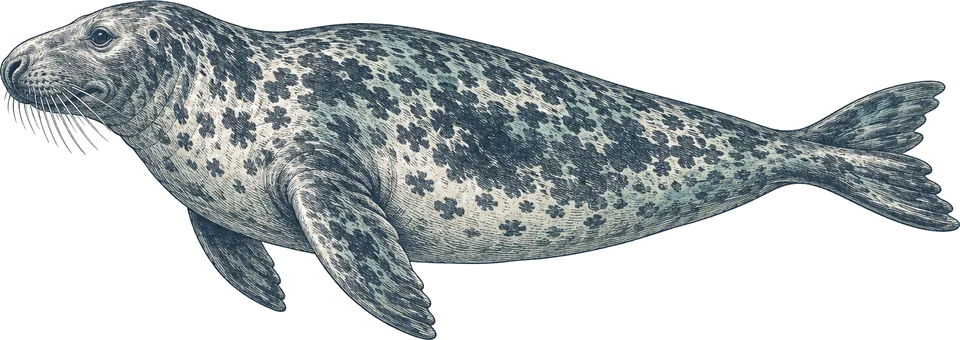
Burra Sound and the Churchill Barriers
Chance meetings on shallow blockship dives; let them approach.6
Common in Orkney waters; underwater meetings are occasional.
Compiled from the sources above, last checked 2026-11-11. Monthly conditions come from our own climate records; see how we score.