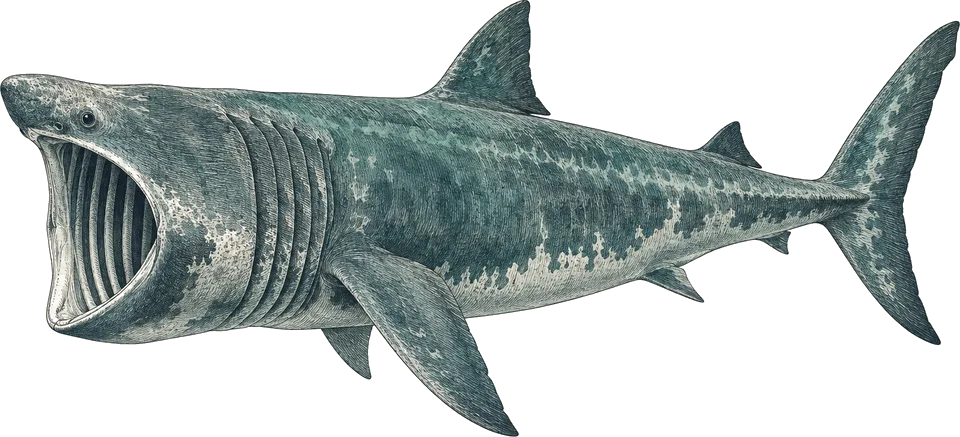
basking shark
Apr–SepGalway and Mayo islands, west Cork, Kerry, Donegal
Usually seen feeding at the surface from the boat; snorkel only if they are calm.7
Most first inshore sightings in April; seen into September.
The best time to dive Ireland is May to September, when the Atlantic is calmest and the water climbs from about 10 to 18 °C. Basking sharks show up inshore from April. My pick is late August or September, when the water is warmest.
Operators say: May to September; the water is warmest from July to September. Our data, from Malin Head, rates June and August highest for calm seas; operators run the season through September, when the water is warmest.
Worth knowing: 45% of days see seas over 1.5 m.

By Eugen. Based on 10 sources, checked 11 November 2026.
111 km across · coastline from Natural Earth 10m
Ireland's diving is Atlantic diving: kelp forests, anemone-covered walls and a long list of wrecks, in water that runs from about 8 to 10 °C in spring to 17 or 18 °C in late summer. The west coast holds most of it. Kerry's Maharees and Blasket Islands, Diamond Rocks at Kilkee in Clare and the Carraroe shore dives in Galway suit most levels; Killary Harbour and Clare Island go to 40 m and more. Off Malin Head in Donegal, and off Cork, lie wrecks such as the Laurentic, the Kowloon Bridge and the U-boat UC-42.
The season runs May to September, with some centres into October. Visibility averages around 20 m on the west coast and can reach 30 to 40 m on good days. Basking sharks start appearing inshore in April and are seen into September. Most visiting divers use drysuits.
Hover a month to isolate it.
| January | February | March | April | May | June | July | August | September | October | November | December | |
|---|---|---|---|---|---|---|---|---|---|---|---|---|
| Conditions | Poor | Poor | Poor | Poor | Good | Excellent | Good | Excellent | Good | Poor | Poor | Poor |
| Water temp (°C) | 9 | 9 | 9 | 9 | 11 | 13 | 14 | 15 | 15 | 13 | 12 | 10 |
| Visibility (m) | — | 0–10 | 0–10 | 5–15 | 5–15 | 5–15 | 5–15 | 5–15 | 5–15 | 0–10 | — | — |
| Marine life | Steady | Steady | Steady | Steady | Busy | Peak | Busy | Peak | Busy | Steady | Steady | Steady |
| Best time | Peak | Peak | Peak | Peak | Peak |
Long-term averages, 2016–2025. Visibility is estimated from satellite chlorophyll-a. Water temperature is the surface mean; it is cooler at depth.
Diving conditionsThe wind eases.
Marine lifeBasking shark (near-guaranteed), Grey seal (likely), Ocean sunfish (hit-or-miss), Blue shark (hit-or-miss) peak at Ireland in these months.
Diving conditionsThe wind is up.
746 underwater observation records · 30 surveyed years of ocean data · 10 years of sea temperature
Dashed: monthly average. Band: eight days in ten.
10th to 90th percentile rangemonthly mean
Seas top 1.5 m on 58% of days. Enough to cancel a day boat
Gusts over 40 km/h, about where a day boat stays in port
3 of them bring heavy rain
| Month | Swell | Gusts over 40 km/h | Wet days | Heavy rain | Air | Daylight |
|---|---|---|---|---|---|---|
| Jan | 4.3 m | 24% | 20 | 5 | 8 °C | 7.4 h |
| Feb | 4.6 m | 27% | 19 | 3 | 8 °C | 9.3 h |
| Mar | 3.7 m | 14% | 18 | 2 | 10 °C | 11.5 h |
| Apr | 2.3 m | 7% | 16 | 3 | 11 °C | 13.9 h |
| May | 2.3 m | 4% | 16 | 2 | 14 °C | 15.9 h |
| Jun | 2.5 m | 4% | 20 | 3 | 16 °C | 17.2 h |
| Jul | 2.1 m | 2% | 21 | 4 | 17 °C | 16.6 h |
| Aug | 2.5 m | 3% | 23 | 3 | 17 °C | 14.8 h |
| Sep | 2.9 m | 9% | 20 | 3 | 16 °C | 12.4 h |
| Oct | 3.2 m | 14% | 20 | 5 | 13 °C | 10.1 h |
| Nov | 3.1 m | 16% | 19 | 3 | 10 °C | 8.0 h |
| Dec | 4.0 m | 24% | 21 | 4 | 9 °C | 6.8 h |
Swell is the rough end of the month: nine days in ten come in under it. Sea temperature covers 10 years, waves 4.
Darker is better, against this site's own year. Pick a month for its weeks.
| Week 1 | ||||||||||||
|---|---|---|---|---|---|---|---|---|---|---|---|---|
| Week 2 | ||||||||||||
| Week 3 | ||||||||||||
| Week 4 |
| Week | Conditions | Water | Swell | Wind | Rain chance |
|---|---|---|---|---|---|
| Week 1 | Poor | 10 °C | 4.0 m | 31 km/h | 65% |
| Week 2 | Poor | 9 °C | 4.2 m | 31 km/h | 64% |
| Week 3 | Poor | 9 °C | 4.2 m | 31 km/h | 63% |
| Week 4 | Poor | 9 °C | 4.8 m | 34 km/h | 69% |
| Week 1 | Poor | 9 °C | 5.0 m | 35 km/h | 68% |
| Week 2 | Poor | 9 °C | 4.4 m | 34 km/h | 66% |
| Week 3 | Poor | 9 °C | 4.4 m | 35 km/h | 67% |
| Week 4 | Poor | 9 °C | 4.5 m | 33 km/h | 60% |
| Week 1 | Poor | 9 °C | 3.9 m | 29 km/h | 54% |
| Week 2 | Poor | 9 °C | 3.3 m | 30 km/h | 63% |
| Week 3 | Poor | 9 °C | 3.6 m | 29 km/h | 61% |
| Week 4 | Poor | 9 °C | 3.4 m | 26 km/h | 54% |
| Week 1 | Poor | 9 °C | 2.5 m | 26 km/h | 55% |
| Week 2 | Poor | 9 °C | 2.5 m | 26 km/h | 55% |
| Week 3 | Moderate | 9 °C | 2.3 m | 24 km/h | 45% |
| Week 4 | Moderate | 10 °C | 2.0 m | 23 km/h | 46% |
| Week 1 | Good | 10 °C | 1.9 m | 22 km/h | 52% |
| Week 2 | Good | 11 °C | 2.2 m | 22 km/h | 50% |
| Week 3 | Excellent | 11 °C | 2.5 m | 22 km/h | 56% |
| Week 4 | Moderate | 12 °C | 2.8 m | 22 km/h | 56% |
| Week 1 | Good | 12 °C | 2.8 m | 22 km/h | 57% |
| Week 2 | Good | 13 °C | 2.6 m | 23 km/h | 66% |
| Week 3 | Good | 13 °C | 2.1 m | 23 km/h | 67% |
| Week 4 | Good | 13 °C | 2.4 m | 23 km/h | 68% |
| Week 1 | Moderate | 14 °C | 2.6 m | 23 km/h | 71% |
| Week 2 | Good | 14 °C | 2.0 m | 22 km/h | 68% |
| Week 3 | Good | 15 °C | 1.7 m | 22 km/h | 64% |
| Week 4 | Good | 15 °C | 2.0 m | 22 km/h | 70% |
| Week 1 | Good | 15 °C | 2.2 m | 24 km/h | 78% |
| Week 2 | Excellent | 15 °C | 2.4 m | 25 km/h | 74% |
| Week 3 | Good | 15 °C | 2.8 m | 25 km/h | 74% |
| Week 4 | Good | 15 °C | 2.6 m | 24 km/h | 68% |
| Week 1 | Good | 15 °C | 2.4 m | 25 km/h | 64% |
| Week 2 | Moderate | 15 °C | 2.8 m | 26 km/h | 72% |
| Week 3 | Moderate | 15 °C | 3.0 m | 26 km/h | 67% |
| Week 4 | Moderate | 14 °C | 3.2 m | 29 km/h | 65% |
| Week 1 | Poor | 14 °C | 3.5 m | 32 km/h | 70% |
| Week 2 | Poor | 14 °C | 3.4 m | 30 km/h | 64% |
| Week 3 | Poor | 13 °C | 3.1 m | 29 km/h | 61% |
| Week 4 | Poor | 13 °C | 3.1 m | 30 km/h | 65% |
| Week 1 | Poor | 13 °C | 2.9 m | 28 km/h | 65% |
| Week 2 | Poor | 12 °C | 2.8 m | 29 km/h | 65% |
| Week 3 | Poor | 12 °C | 3.2 m | 31 km/h | 65% |
| Week 4 | Poor | 11 °C | 3.6 m | 28 km/h | 60% |
| Week 1 | Poor | 11 °C | 3.8 m | 29 km/h | 63% |
| Week 2 | Poor | 11 °C | 3.9 m | 31 km/h | 71% |
| Week 3 | Poor | 10 °C | 4.4 m | 32 km/h | 67% |
| Week 4 | Poor | 10 °C | 4.1 m | 32 km/h | 66% |
10 years of daily records, averaged into weeks.
Sized for each month's coldest water.
| Jan | Feb | Mar | Apr | May | Jun | Jul | Aug | Sep | Oct | Nov | Dec | |
|---|---|---|---|---|---|---|---|---|---|---|---|---|
| Suit | dry | dry | dry | dry | dry | dry | 7 mm | 7 mm | 7 mm | dry | dry | dry |
Suit row is for surface water. At depth: Drysuit for most of the season, or at least 7 mm with hood and gloves in July to September. SMB and a torch on every dive. Centres rent equipment.
Each month's rough end: nine days in ten are calmer.
Amber is over 1.5 m.
No tropical storm has come within 250 km in 30 years of records. Swell and wind set the season, not cyclones.
| Species | When | Observed window | Reliability | Evidence | Records |
|---|---|---|---|---|---|
| Bottlenose dolphin | All year | Near-guaranteed | 200 | ||
| Basking shark | Jun, Aug | Near-guaranteed | 111 | ||
| Grey seal | Jul, Sep | Likely | 259 | ||
| Ocean sunfish | Aug | Hit-or-miss | 11 | ||
| Blue shark | Jul | Hit-or-miss | 10 | ||
| Minke whale | May–Jul, Dec | Likely | 62 | ||
| Harbour seal | Feb, May, Aug | Likely | 39 | ||
| Common dolphin | Dec–Jan, May, Jul | Likely | 30 |
Logged sightings, not a full survey. How to read this table.
| Site | Depth | Level | What to expect |
|---|---|---|---|
| SS Laurenticwreck | ≈ 30–40 m | Experienced | Liner mined off Malin Head in the First World War, carrying gold. Salvaged flat at about 40 m; deck gun and boilers remain. Not for a first cold-water trip.3 |
| MV Kowloon Bridgewreck | ≈ 20–36 m | Experienced | Bulk carrier lost near the Stag Rocks, west Cork, in 1986; iron ore cargo spills out, with conger eels and ling. Bottom about 36 m.5 |
| UC-42 U-boatwreck | ≈ 20–28 m | Advanced | First World War minelaying submarine near Roches Point, Cork Harbour, at about 28 m, covered in soft corals with pollock and congers.5 |
| Diamond Rocks, Kilkeereef | ≈ 5–20 m | Open Water | Sheltered bay in Clare with quartz-veined rock, invertebrates, octopus and dogfish; visibility up to 30 m.4 |
| Carraroe Coral Beachshore reef | ≈ 2–10 m | Open Water | Easy, sheltered Galway shore dive over shallow reefs with lobster, conger eels and spider crabs, by day or night. The one I'd start with.4 |
| Killary Harbourfjord | ≈ 5–40 m | Advanced | Fjord on the Galway-Mayo border: thick kelp, walls, the anemone-covered Julia T wreck and dives to about 40 m; seals in late summer.4 |
| Maharees Islandsreef | ≈ 5–25 m | Open Water | Islands off the Dingle peninsula, 10 to 15 minutes by boat from the Maharees pier; visibility averages about 20 m.1 |
Galway and Mayo islands, west Cork, Kerry, Donegal
Usually seen feeding at the surface from the boat; snorkel only if they are calm.7
Most first inshore sightings in April; seen into September.
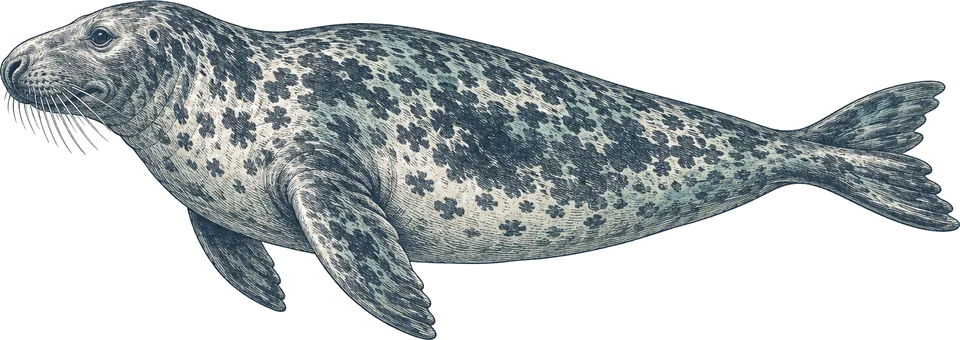
Killary Harbour, Blasket Islands, Dublin Bay
Watch the kelp edges and haul-outs; let them come to you.4
Common around islands; Killary sightings mainly late summer.
Kowloon Bridge, UC-42, Carraroe, Killary Harbour
Torch into wreck plates and reef holes at any depth.5
Near certain on the Cork wrecks.
Compiled from the sources above, last checked 2026-11-11. Monthly conditions come from our own climate records; see how we score.