Queensland groper
All yearYongala bow
Look along the bow; it holds station near the hull.5
Usually present.
The best time to dive SS Yongala is August to November, when seas are calmest and visibility most reliable before the summer storm season. Water warms from about 23 °C in August to 27 °C by November. September is my pick: calm in our data and a month operators rate highly.
Operators say: Operators favour roughly June to November for calmer seas and clearer water, and often name August and September as best. Our sea-state data also rates December well, while operators call December to February unpredictable.

By Eugen. Based on 11 sources, checked 11 November 2026.
111 km across · coastline from Natural Earth 10m
The SS Yongala, a 109 m passenger steamer, sank in a cyclone in March 1911 with all 122 people aboard. She lies on her starboard side on sand at about 28 to 30 m, with the top of the hull at 14 to 16 m, alone in open water in the Great Barrier Reef Marine Park. As the only large structure for miles, she draws dense baitfish, giant trevally, barracuda, a resident Queensland groper, sea snakes, marble rays and turtles.
Most divers go on a day trip from Alva Beach near Ayr, just over 30 minutes by boat, or from Townsville, about three hours each way. The wreck is a protected zone and maritime grave: no penetration. Conditions decide everything; currents can be strong, and calm days are most reliable from about June to November.
Hover a month to isolate it.
| January | February | March | April | May | June | July | August | September | October | November | December | |
|---|---|---|---|---|---|---|---|---|---|---|---|---|
| Conditions | Poor | Poor | Poor | Moderate | Moderate | Good | Good | Good | Good | Excellent | Excellent | Good |
| Water temp (°C) | 29 | 29 | 29 | 28 | 26 | 24 | 23 | 23 | 24 | 26 | 27 | 28 |
| Visibility (m) | 15–25 | 15–25 | 15–25 | 15–25 | 15–25 | 20–30 | 20–30 | 20–30 | 20–30 | 20–30 | 20–30 | 20–30 |
| Marine life | Busy | Busy | Busy | Busy | Busy | Busy | Busy | Steady | Steady | Busy | Busy | Busy |
| Best time | Peak | Peak | Peak | Peak |
Long-term averages, 2016–2025. Visibility is estimated from satellite chlorophyll-a. Water temperature is the surface mean; it is cooler at depth.
Diving conditionsExpect some swell. It rains more.
Marine lifeScalloped hammerhead (hit-or-miss) peaks at SS Yongala in these months.
Diving conditionsRain is frequent topside. The sea is rougher. The wind is up.
Marine lifeGreat hammerhead (hit-or-miss) peaks at SS Yongala in these months.
Diving conditionsIt rains less. The sea is calmer.
Marine lifeWhale shark (hit-or-miss) peaks at SS Yongala in these months.
9,928 underwater observation records · 27 surveyed years of ocean data · 10 years of sea temperature
Dashed: monthly average. Band: eight days in ten.
10th to 90th percentile rangemonthly mean
Seas top 1.5 m on 14% of days. Enough to cancel a day boat
Gusts over 40 km/h, about where a day boat stays in port
3 of them bring heavy rain
| Month | Swell | Gusts over 40 km/h | Wet days | Heavy rain | Air | Daylight |
|---|---|---|---|---|---|---|
| Jan | 1.6 m | 19% | 16 | 7 | 29 °C | 13.0 h |
| Feb | 1.7 m | 20% | 16 | 7 | 29 °C | 12.6 h |
| Mar | 1.6 m | 24% | 17 | 6 | 28 °C | 12.1 h |
| Apr | 1.8 m | 31% | 13 | 3 | 27 °C | 11.6 h |
| May | 1.7 m | 33% | 11 | 1 | 25 °C | 11.1 h |
| Jun | 1.5 m | 16% | 7 | 1 | 23 °C | 10.8 h |
| Jul | 1.6 m | 12% | 7 | 1 | 22 °C | 10.9 h |
| Aug | 1.6 m | 15% | 3 | 0 | 23 °C | 11.3 h |
| Sep | 1.7 m | 19% | 2 | 0 | 24 °C | 11.9 h |
| Oct | 1.4 m | 11% | 4 | 1 | 26 °C | 12.5 h |
| Nov | 1.1 m | 10% | 6 | 1 | 27 °C | 12.9 h |
| Dec | 1.6 m | 17% | 11 | 3 | 28 °C | 13.2 h |
Swell is the rough end of the month: nine days in ten come in under it. Sea temperature covers 10 years, waves 4.
Darker is better, against this site's own year. Pick a month for its weeks.
| Week 1 | ||||||||||||
|---|---|---|---|---|---|---|---|---|---|---|---|---|
| Week 2 | ||||||||||||
| Week 3 | ||||||||||||
| Week 4 |
| Week | Conditions | Water | Swell | Wind | Rain chance |
|---|---|---|---|---|---|
| Week 1 | Poor | 29 °C | 1.5 m | 30 km/h | 51% |
| Week 2 | Poor | 29 °C | 1.5 m | 31 km/h | 48% |
| Week 3 | Poor | 29 °C | 1.6 m | 31 km/h | 44% |
| Week 4 | Poor | 29 °C | 1.8 m | 31 km/h | 56% |
| Week 1 | Poor | 29 °C | 1.7 m | 31 km/h | 60% |
| Week 2 | Moderate | 29 °C | 1.6 m | 29 km/h | 49% |
| Week 3 | Poor | 29 °C | 1.6 m | 29 km/h | 50% |
| Week 4 | Poor | 29 °C | 1.7 m | 31 km/h | 55% |
| Week 1 | Poor | 29 °C | 1.6 m | 30 km/h | 54% |
| Week 2 | Poor | 29 °C | 1.8 m | 28 km/h | 54% |
| Week 3 | Poor | 29 °C | 1.7 m | 31 km/h | 56% |
| Week 4 | Poor | 28 °C | 1.5 m | 32 km/h | 58% |
| Week 1 | Good | 28 °C | 1.4 m | 32 km/h | 46% |
| Week 2 | Good | 28 °C | 1.6 m | 34 km/h | 39% |
| Week 3 | Poor | 27 °C | 2.0 m | 35 km/h | 45% |
| Week 4 | Poor | 27 °C | 2.1 m | 35 km/h | 45% |
| Week 1 | Moderate | 26 °C | 1.9 m | 36 km/h | 41% |
| Week 2 | Moderate | 26 °C | 1.8 m | 37 km/h | 40% |
| Week 3 | Good | 25 °C | 1.6 m | 36 km/h | 36% |
| Week 4 | Good | 25 °C | 1.5 m | 33 km/h | 31% |
| Week 1 | Good | 24 °C | 1.4 m | 32 km/h | 26% |
| Week 2 | Excellent | 24 °C | 1.3 m | 31 km/h | 25% |
| Week 3 | Good | 24 °C | 1.4 m | 31 km/h | 22% |
| Week 4 | Moderate | 23 °C | 1.6 m | 33 km/h | 27% |
| Week 1 | Moderate | 23 °C | 1.6 m | 34 km/h | 34% |
| Week 2 | Moderate | 23 °C | 1.7 m | 32 km/h | 25% |
| Week 3 | Good | 23 °C | 1.6 m | 31 km/h | 16% |
| Week 4 | Excellent | 23 °C | 1.6 m | 31 km/h | 13% |
| Week 1 | Good | 23 °C | 1.6 m | 32 km/h | 10% |
| Week 2 | Good | 23 °C | 1.5 m | 30 km/h | 9% |
| Week 3 | Excellent | 23 °C | 1.4 m | 29 km/h | 6% |
| Week 4 | Good | 23 °C | 1.6 m | 30 km/h | 7% |
| Week 1 | Good | 24 °C | 1.7 m | 30 km/h | 9% |
| Week 2 | Moderate | 24 °C | 1.8 m | 32 km/h | 8% |
| Week 3 | Good | 24 °C | 1.7 m | 31 km/h | 6% |
| Week 4 | Excellent | 25 °C | 1.4 m | 28 km/h | 4% |
| Week 1 | Excellent | 25 °C | 1.5 m | 27 km/h | 6% |
| Week 2 | Good | 26 °C | 1.6 m | 27 km/h | 11% |
| Week 3 | Excellent | 26 °C | 1.3 m | 25 km/h | 15% |
| Week 4 | Excellent | 27 °C | 1.1 m | 25 km/h | 14% |
| Week 1 | Excellent | 27 °C | 1.3 m | 26 km/h | 14% |
| Week 2 | Excellent | 27 °C | 1.2 m | 27 km/h | 14% |
| Week 3 | Excellent | 27 °C | 1.1 m | 28 km/h | 18% |
| Week 4 | Good | 28 °C | 1.1 m | 27 km/h | 26% |
| Week 1 | Excellent | 28 °C | 1.4 m | 27 km/h | 30% |
| Week 2 | Good | 28 °C | 1.6 m | 28 km/h | 34% |
| Week 3 | Good | 29 °C | 1.6 m | 28 km/h | 36% |
| Week 4 | Moderate | 29 °C | 1.6 m | 27 km/h | 45% |
10 years of daily records, averaged into weeks.
Sized for each month's coldest water.
| Jan | Feb | Mar | Apr | May | Jun | Jul | Aug | Sep | Oct | Nov | Dec | |
|---|---|---|---|---|---|---|---|---|---|---|---|---|
| Suit | skin | skin | skin | 3 mm | 3 mm | 5 mm | 5 mm | 5 mm | 5 mm | 3 mm | 3 mm | skin |
Suit row is for surface water. At depth: 5 mm from June to September, 3 mm in summer. SMB essential in open water. Nitrox extends bottom time at 25–30 m; a torch helps to look into the holds.
Each month's rough end: nine days in ten are calmer.
Amber is over 1.5 m.
6 of the last 30 Marchs saw a tropical storm pass within 250 km. Anything has been recorded Jan–Apr.
Share of the last 30 years with a storm that month.
| Species | When | Observed window | Reliability | Evidence | Records |
|---|---|---|---|---|---|
| Napoleon wrasse | Apr, Jun–Jul | Likely | 74 | ||
| Bull shark | All year | Hit-or-miss | 879 | ||
| Great hammerhead | May, Jul | Hit-or-miss | 107 | ||
| Tiger shark | All year | Hit-or-miss | 24 | ||
| Grey reef shark | All year | Hit-or-miss | 4850 | ||
| Silvertip shark | All year | Hit-or-miss | 3858 | ||
| Whale shark | Oct–Dec | Hit-or-miss | 12 | ||
| Scalloped hammerhead | Jan, Mar, Oct–Nov | Hit-or-miss | 11 | ||
| Loggerhead turtle | Apr, Jun | Hit-or-miss | 11 | ||
| Blackfin barracuda | Apr–May, Jul | Hit-or-miss | 9 | ||
| Zebra shark | Oct–Dec | Hit-or-miss | 8 | ||
| Humpback whale | Aug–Sep | Hit-or-miss | 8 | ||
| Green turtle | Feb, Jun–Jul, Dec | Likely | 17 | ||
| Hawksbill turtle | Apr, Jun, Nov | Likely | 16 | ||
| Whitetip reef shark | May, Sep | Hit-or-miss | 9 |
Logged sightings, not a full survey. How to read this table.
| Site | Depth | Level | What to expect |
|---|---|---|---|
| Yongala bowwreck | 16–28 m | Advanced | Descend the bow mooring line. The resident Queensland groper usually holds station here; the hull lies on its starboard side. The groper alone would get me on the boat.5 |
| Yongala sternwreck | 16–30 m | Advanced | Second mooring line. Barracuda, trevally and baitfish schools so dense they hide the structure.4 |
| Yongala port side (top of hull)wreck | 14–18 m | Open Water | Shallowest part of the wreck at 14–16 m, covered in hard and soft coral regrown since Cyclone Yasi in 2011; sea snakes and turtles.3 |
| Yongala midships and holdswreck | 18–28 m | Advanced | Shine a torch through openings and portholes from outside; entering the wreck or going under overhangs is banned.4 |
| Yongala sand linewreck / sand | 26–30 m | Advanced | Sand at 28–30 m beside the hull where guitarfish and marble rays rest. Short no-stop time on air; I'd want nitrox for this part.4 |
Yongala bow
Look along the bow; it holds station near the hull.5
Usually present.
Whole wreck
Stay calm and let them approach; they surface to breathe.4
Common; curious but not aggressive.
Yongala sand line
Check the sand line along the hull at 26 to 30 m.3
Common.
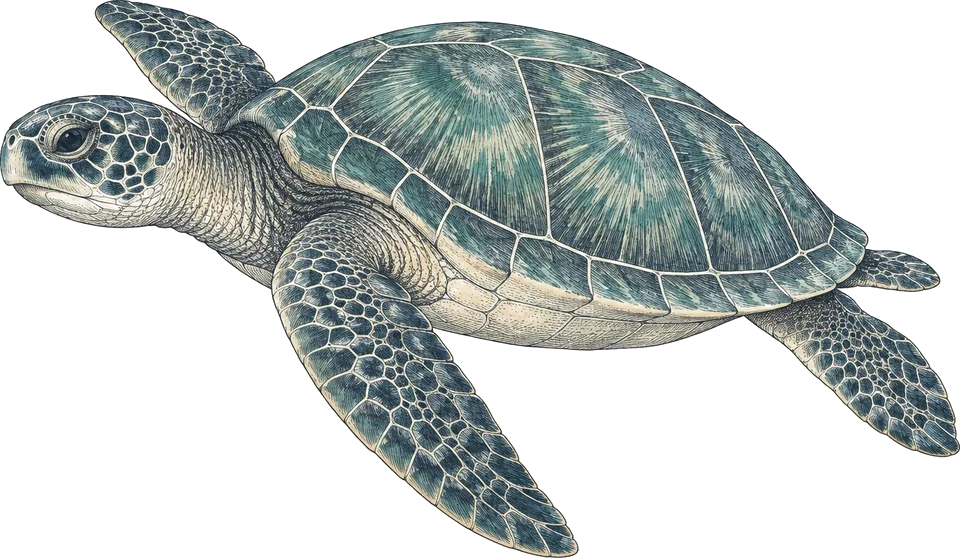
Whole wreck
Seen resting on the hull or swimming the length of the wreck.6
Common on most dives.
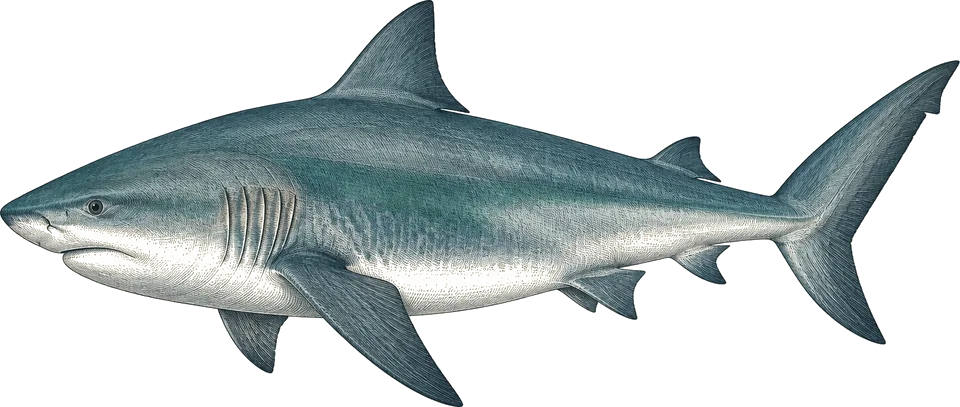
Around the wreck
Seen passing the wreck now and then; stay with the group and your guide.6
Occasional; no clear season.
Compiled from the sources above, last checked 2026-11-11. Monthly conditions come from our own climate records; see how we score.