
Galapagos shark
Sep–JunBalls Pyramid, Deacons Delight
They gather around the group during the ascent and safety stop at Balls Pyramid.2
Dozens at Balls Pyramid; 60 to 70 on one trip.
The best time to dive Lord Howe Island is November to April, when the water warms towards 26 °C and outer-reef visibility reaches 20 to 40 m. I'd go in December or January and leave spare days, because Balls Pyramid only runs when the weather allows.
Operators say: November to April: warmest water and clearest outer reefs. Our data rates November to January best and marks March down for wind and rain. Seas over 1.5 m are common all year, so Balls Pyramid trips depend on the weather.
Worth knowing: 95% of days see seas over 1.5 m.
1776 km across · coastline from Natural Earth 10m
Lord Howe Island, about two hours' flight from Sydney, has the world's southernmost coral reef, where tropical and temperate species mix: more than 500 fish species and 90 corals, including the endemic McCulloch's anemonefish and the rare Ballina angelfish. Dives range from 7 to 8 m holes in the sheltered lagoon to outer reefs and pinnacles at 18 to 30 m, with Galapagos sharks, kingfish, turtles and black cod.
The headline trip is Balls Pyramid, a 550 m sea stack about 23 km south-east, an hour or so by boat. Its sites average 25 m, with surge, changing currents and dozens of Galapagos sharks; Advanced certification is required. There is one dive operator, which runs from September to June. Water is about 17 °C in July and August and up to about 26 °C in late summer, when the outer reef is clearest.
Hover a month to isolate it.
| January | February | March | April | May | June | July | August | September | October | November | December | |
|---|---|---|---|---|---|---|---|---|---|---|---|---|
| Conditions | Excellent | Moderate | Poor | Good | Poor | Poor | Poor | Poor | Poor | Moderate | Excellent | Good |
| Water temp (°C) | 24 | 25 | 24 | 24 | 22 | 21 | 20 | 19 | 19 | 20 | 21 | 23 |
| Visibility (m) | 10–20 | 10–20 | 10–20 | 5–15 | 10–20 | 10–20 | 10–20 | 10–20 | 10–20 | 10–20 | 5–15 | 10–20 |
| Marine life | Busy | Steady | Quiet | Busy | Quiet | Steady | Steady | Steady | Steady | Busy | Busy | Steady |
| Best time | Peak | Peak | Peak | Peak | Peak | Peak |
Long-term averages, 2016–2025. Visibility is estimated from satellite chlorophyll-a. Water temperature is the surface mean; it is cooler at depth.
Diving conditionsSwell is common, and crossings can be rough.
Diving conditionsIt rains more.
Marine lifeGreat hammerhead (hit-or-miss) peaks at Lord Howe Island in these months.
Diving conditionsSwell is common, and crossings can be rough.
Diving conditionsIt rains less.
551 underwater observation records · 18 surveyed years of ocean data · 10 years of sea temperature
Dashed: monthly average. Band: eight days in ten.
10th to 90th percentile rangemonthly mean
Seas top 1.5 m on 93% of days. Enough to cancel a day boat
Gusts over 40 km/h, about where a day boat stays in port
3 of them bring heavy rain
| Month | Swell | Gusts over 40 km/h | Wet days | Heavy rain | Air | Daylight |
|---|---|---|---|---|---|---|
| Jan | 3.1 m | 15% | 9 | 2 | 24 °C | 13.8 h |
| Feb | 3.7 m | 22% | 9 | 2 | 24 °C | 13.1 h |
| Mar | 3.5 m | 24% | 12 | 3 | 24 °C | 12.2 h |
| Apr | 4.0 m | 24% | 12 | 3 | 22 °C | 11.2 h |
| May | 4.4 m | 32% | 11 | 3 | 21 °C | 10.4 h |
| Jun | 4.7 m | 38% | 14 | 4 | 19 °C | 10.0 h |
| Jul | 5.0 m | 48% | 14 | 3 | 19 °C | 10.1 h |
| Aug | 3.8 m | 37% | 12 | 3 | 18 °C | 10.8 h |
| Sep | 3.9 m | 36% | 9 | 3 | 19 °C | 11.8 h |
| Oct | 3.6 m | 30% | 11 | 3 | 20 °C | 12.8 h |
| Nov | 3.3 m | 24% | 9 | 3 | 21 °C | 13.6 h |
| Dec | 3.6 m | 18% | 9 | 2 | 23 °C | 14.0 h |
Swell is the rough end of the month: nine days in ten come in under it. Sea temperature covers 10 years, waves 4.
Darker is better, against this site's own year. Pick a month for its weeks.
| Week 1 | ||||||||||||
|---|---|---|---|---|---|---|---|---|---|---|---|---|
| Week 2 | ||||||||||||
| Week 3 | ||||||||||||
| Week 4 |
| Week | Conditions | Water | Swell | Wind | Rain chance |
|---|---|---|---|---|---|
| Week 1 | Excellent | 24 °C | 2.9 m | 29 km/h | 23% |
| Week 2 | Excellent | 24 °C | 2.8 m | 28 km/h | 28% |
| Week 3 | Good | 24 °C | 3.2 m | 29 km/h | 31% |
| Week 4 | Excellent | 25 °C | 3.3 m | 30 km/h | 26% |
| Week 1 | Good | 25 °C | 3.7 m | 32 km/h | 26% |
| Week 2 | Good | 25 °C | 3.8 m | 32 km/h | 29% |
| Week 3 | Good | 25 °C | 3.3 m | 32 km/h | 34% |
| Week 4 | Good | 25 °C | 3.4 m | 32 km/h | 41% |
| Week 1 | Poor | 25 °C | 3.9 m | 33 km/h | 44% |
| Week 2 | Moderate | 24 °C | 3.7 m | 34 km/h | 39% |
| Week 3 | Moderate | 24 °C | 3.4 m | 31 km/h | 35% |
| Week 4 | Moderate | 24 °C | 3.4 m | 30 km/h | 34% |
| Week 1 | Moderate | 24 °C | 4.0 m | 32 km/h | 39% |
| Week 2 | Moderate | 24 °C | 4.6 m | 32 km/h | 43% |
| Week 3 | Good | 23 °C | 4.2 m | 32 km/h | 41% |
| Week 4 | Good | 23 °C | 3.5 m | 32 km/h | 39% |
| Week 1 | Moderate | 23 °C | 3.5 m | 32 km/h | 38% |
| Week 2 | Moderate | 22 °C | 4.0 m | 34 km/h | 37% |
| Week 3 | Moderate | 22 °C | 4.5 m | 35 km/h | 36% |
| Week 4 | Poor | 21 °C | 5.2 m | 37 km/h | 39% |
| Week 1 | Poor | 21 °C | 5.1 m | 39 km/h | 43% |
| Week 2 | Poor | 21 °C | 4.8 m | 36 km/h | 44% |
| Week 3 | Poor | 20 °C | 4.7 m | 35 km/h | 48% |
| Week 4 | Poor | 20 °C | 4.2 m | 36 km/h | 49% |
| Week 1 | Poor | 20 °C | 4.3 m | 39 km/h | 46% |
| Week 2 | Poor | 20 °C | 4.7 m | 40 km/h | 49% |
| Week 3 | Poor | 20 °C | 4.8 m | 40 km/h | 48% |
| Week 4 | Poor | 19 °C | 5.3 m | 38 km/h | 41% |
| Week 1 | Poor | 19 °C | 5.0 m | 35 km/h | 38% |
| Week 2 | Moderate | 19 °C | 3.4 m | 34 km/h | 36% |
| Week 3 | Poor | 19 °C | 3.5 m | 36 km/h | 39% |
| Week 4 | Poor | 19 °C | 4.0 m | 37 km/h | 39% |
| Week 1 | Poor | 19 °C | 4.1 m | 36 km/h | 33% |
| Week 2 | Moderate | 19 °C | 3.9 m | 34 km/h | 31% |
| Week 3 | Poor | 19 °C | 3.4 m | 35 km/h | 31% |
| Week 4 | Poor | 20 °C | 3.6 m | 37 km/h | 29% |
| Week 1 | Poor | 20 °C | 3.9 m | 37 km/h | 30% |
| Week 2 | Moderate | 20 °C | 3.4 m | 35 km/h | 30% |
| Week 3 | Good | 20 °C | 3.3 m | 32 km/h | 34% |
| Week 4 | Poor | 21 °C | 3.6 m | 33 km/h | 39% |
| Week 1 | Good | 21 °C | 3.4 m | 34 km/h | 33% |
| Week 2 | Excellent | 21 °C | 3.2 m | 34 km/h | 30% |
| Week 3 | Good | 21 °C | 3.5 m | 32 km/h | 29% |
| Week 4 | Good | 22 °C | 3.4 m | 31 km/h | 30% |
| Week 1 | Moderate | 22 °C | 3.2 m | 32 km/h | 34% |
| Week 2 | Moderate | 23 °C | 3.4 m | 31 km/h | 31% |
| Week 3 | Excellent | 23 °C | 3.5 m | 30 km/h | 26% |
| Week 4 | Excellent | 23 °C | 3.6 m | 29 km/h | 25% |
10 years of daily records, averaged into weeks.
Sized for each month's coldest water.
| Jan | Feb | Mar | Apr | May | Jun | Jul | Aug | Sep | Oct | Nov | Dec | |
|---|---|---|---|---|---|---|---|---|---|---|---|---|
| Suit | 5 mm | 5 mm | 5 mm | 5 mm | 5 mm + | 5 mm + | 5 mm + | 5 mm + | 5 mm + | 5 mm + | 5 mm + | 5 mm |
Suit row is for surface water. At depth: 5 mm wetsuit with a hooded vest; one diver got chilled in 5 mm at 24 °C in the constant wind. SMB essential at Balls Pyramid. Freshwater limits mean only small rinse tanks.
Each month's rough end: nine days in ten are calmer.
Amber is over 1.5 m.
1 of the last 30 Februarys saw a tropical storm pass within 250 km. Anything has been recorded Feb–Mar.
Share of the last 30 years with a storm that month.
| Species | When | Observed window | Reliability | Evidence | Records |
|---|---|---|---|---|---|
| Green turtle | Jun | Hit-or-miss | 458 | ||
| Bottlenose dolphin | Oct–Nov | Likely | 17 | ||
| Great hammerhead | Jul, Nov | Hit-or-miss | 39 | ||
| Hawksbill turtle | Jan, Apr | Likely | 11 |
Logged sightings, not a full survey. How to read this table.
| Site | Depth | Level | What to expect |
|---|---|---|---|
| Erscotts Holelagoon hole | ≈ 3–8 m | Open Water | Sanctuary hole inside the lagoon, about 5 minutes by boat; maximum about 8 m. It's the one I'd save for days when the outer reefs are rough.1 |
| Comets Holelagoon hole | ≈ 3–8 m | Open Water | Lagoon sanctuary at 7 to 8 m with McCulloch's anemonefish, white-mouthed morays and three kinds of lionfish; popular with photographers.3 |
| Tenth of Junepinnacle | 7–18 m | Open Water | Pinnacle rising from 18 m to 7 m with Japanese boarfish, sea fans, trevally and drummer; often a Spanish dancer.1 |
| Tenth of June Deepreef / wall | 20–30 m | Advanced | Plateau reef at 20 m with a wall dropping to 30 m.1 |
| Deacons Delightreef | ≈ 15–22 m | Advanced | Reef at 22 m with swim-throughs of purple soft coral, Galapagos sharks, kingfish and the rare harlequin tuskfish.3 |
| Observatory Rock (Balls Pyramid)boulders | 8–16 m | Experienced | Boulders from 8 m on top to 16 m in the gullies, dived in the current's shadow; Ballina angelfish, Galapagos sharks. Honestly, Balls Pyramid is the reason to go.2 |
| South East Rock (Balls Pyramid)ledges | ≈ 5–25 m | Experienced | Stepped ledges with strong surge in the shallows; divers may be carried off the rock by current for pick-up.2 |
Balls Pyramid, Deacons Delight
They gather around the group during the ascent and safety stop at Balls Pyramid.2
Dozens at Balls Pyramid; 60 to 70 on one trip.
Balls Pyramid
Search ledges at about 25 m, a rare depth for this deep-water fish.1
A target fish; seen on good Balls Pyramid days.
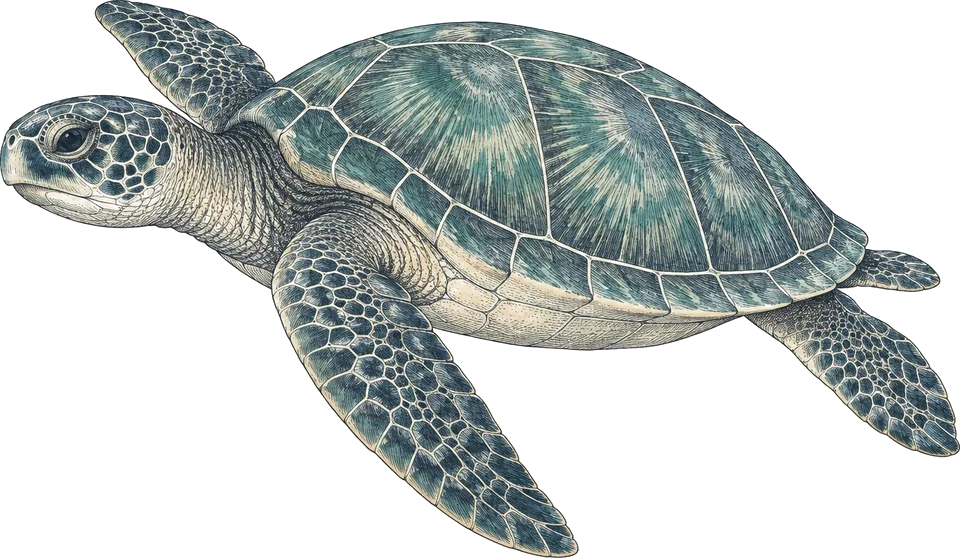
Rupert's Reef
Reef dives in the channels and around the island.3
Resident turtle at Rupert's Reef; more than two a day reported.
Comets Hole
Shallow lagoon dive at 7 to 8 m.3
Endemic and resident.
Compiled from the sources above, last checked 2026-11-12. Monthly conditions come from our own climate records; see how we score.