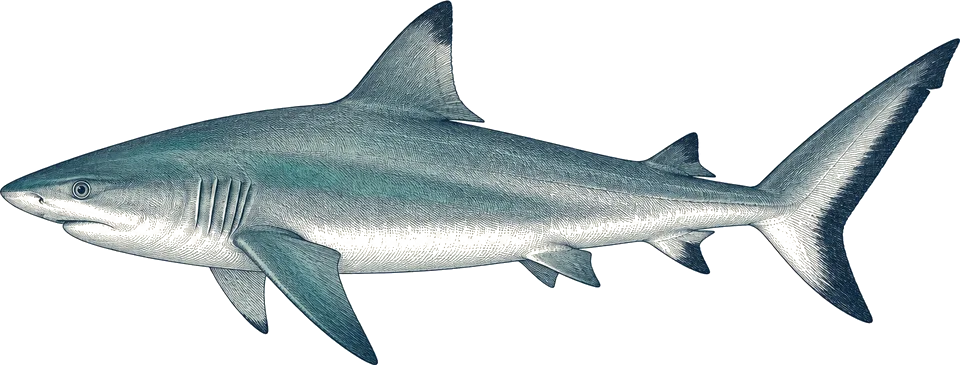
grey reef shark
All yearBlue Corner, New Drop Off, Peleliu Wall
Hook in at 18 to 25 m on the plateau edge on an incoming tide and wait.9
Usually seen; incoming tide brings the most activity.
The best time to dive Palau is January to April, the driest part of the dry season, with calmer seas, clear water and German Channel's manta peak. March and April are my pick: the driest, calmest months in our data, with mantas still around.
Operators say: Operators favour the dry season, November to April, with mantas peaking December to March. Our rain data finds November and December wet and rates January and February only moderate; March and April are the driest, calmest months.
Worth knowing: 9 days a month of heavy rain.

By Eugen. Based on 12 sources, checked 12 November 2026.
111 km across · coastline from Natural Earth 10m
Palau's best-known dives are on the outer reef south-west of Koror, where tidal current runs across plateaus and through channels. At Blue Corner divers hook into dead rock on the plateau edge and hang in the current while grey reef sharks, Napoleon wrasse and jacks work the drop-off. German Channel has mantas at cleaning stations, Ulong Channel is a shallow drift, and the lagoon holds Second World War Japanese wrecks such as the Iro.
The dry season runs roughly November to April, with water at 26 to 30 °C and visibility often over 30 m on the walls. Mantas peak December to March. From June to September wind and rain can limit the outer reefs and visibility drops to 15 to 20 m. Most sites suit Advanced divers; Jellyfish Lake is snorkel only.
Hover a month to isolate it.
| January | February | March | April | May | June | July | August | September | October | November | December | |
|---|---|---|---|---|---|---|---|---|---|---|---|---|
| Conditions | Moderate | Moderate | Excellent | Excellent | Poor | Good | Poor | Poor | Moderate | Poor | Poor | Poor |
| Water temp (°C) | 29 | 29 | 29 | 29 | 30 | 30 | 30 | 30 | 30 | 30 | 30 | 30 |
| Visibility (m) | 5–15 | 5–15 | 5–15 | 5–15 | 5–15 | 5–15 | 5–15 | 5–15 | 5–15 | 5–15 | 5–15 | 5–15 |
| Marine life | Peak | Peak | Peak | Peak | Steady | Peak | Busy | Busy | Busy | Busy | Steady | Busy |
| Best time | Peak | Peak | Peak | Peak |
Long-term averages, 2016–2025. Visibility is estimated from satellite chlorophyll-a. Water temperature is the surface mean; it is cooler at depth.
Diving conditionsThe wind is up. The sea is rougher.
Marine lifeReef manta (likely) peaks at Palau in these months.
Diving conditionsExpect some swell.
Marine lifeGolden jellyfish (likely) peaks at Palau in these months.
Diving conditionsThe wind eases. The sea is calmer.
1,041 underwater observation records · 27 surveyed years of ocean data · 10 years of sea temperature
Dashed: monthly average. Band: eight days in ten.
10th to 90th percentile rangemonthly mean
Seas top 2.5 m on 2% of days. Enough to cancel a liveaboard crossing
Gusts over 40 km/h, about where a day boat stays in port
13 of them bring heavy rain
| Month | Swell | Gusts over 40 km/h | Wet days | Heavy rain | Air | Daylight |
|---|---|---|---|---|---|---|
| Jan | 2.1 m | 8% | 25 | 11 | 28 °C | 11.6 h |
| Feb | 2.1 m | 9% | 21 | 8 | 28 °C | 11.8 h |
| Mar | 1.6 m | 2% | 20 | 8 | 28 °C | 12.0 h |
| Apr | 1.4 m | 2% | 23 | 10 | 29 °C | 12.2 h |
| May | 1.3 m | 2% | 27 | 14 | 29 °C | 12.3 h |
| Jun | 1.1 m | 1% | 28 | 16 | 29 °C | 12.4 h |
| Jul | 1.8 m | 5% | 29 | 19 | 29 °C | 12.4 h |
| Aug | 1.6 m | 3% | 28 | 15 | 29 °C | 12.2 h |
| Sep | 1.9 m | 6% | 25 | 12 | 29 °C | 12.0 h |
| Oct | 1.9 m | 5% | 26 | 14 | 29 °C | 11.8 h |
| Nov | 1.5 m | 3% | 27 | 14 | 29 °C | 11.7 h |
| Dec | 1.7 m | 4% | 27 | 13 | 29 °C | 11.6 h |
Swell is the rough end of the month: nine days in ten come in under it. Sea temperature covers 10 years, waves 4.
Darker is better, against this site's own year. Pick a month for its weeks.
| Week 1 | ||||||||||||
|---|---|---|---|---|---|---|---|---|---|---|---|---|
| Week 2 | ||||||||||||
| Week 3 | ||||||||||||
| Week 4 |
| Week | Conditions | Water | Swell | Wind | Rain chance |
|---|---|---|---|---|---|
| Week 1 | Poor | 29 °C | 1.8 m | 30 km/h | 88% |
| Week 2 | Poor | 29 °C | 2.0 m | 30 km/h | 80% |
| Week 3 | Moderate | 29 °C | 2.2 m | 31 km/h | 76% |
| Week 4 | Poor | 29 °C | 2.3 m | 32 km/h | 77% |
| Week 1 | Moderate | 29 °C | 2.2 m | 32 km/h | 77% |
| Week 2 | Moderate | 29 °C | 2.1 m | 32 km/h | 72% |
| Week 3 | Moderate | 28 °C | 2.1 m | 32 km/h | 70% |
| Week 4 | Poor | 28 °C | 2.1 m | 31 km/h | 69% |
| Week 1 | Good | 29 °C | 2.0 m | 30 km/h | 67% |
| Week 2 | Excellent | 29 °C | 1.6 m | 28 km/h | 66% |
| Week 3 | Excellent | 29 °C | 1.5 m | 27 km/h | 65% |
| Week 4 | Excellent | 29 °C | 1.5 m | 28 km/h | 69% |
| Week 1 | Good | 29 °C | 1.6 m | 27 km/h | 72% |
| Week 2 | Good | 29 °C | 1.8 m | 25 km/h | 74% |
| Week 3 | Excellent | 29 °C | 1.3 m | 25 km/h | 76% |
| Week 4 | Excellent | 29 °C | 1.2 m | 24 km/h | 82% |
| Week 1 | Moderate | 30 °C | 1.2 m | 24 km/h | 84% |
| Week 2 | Poor | 30 °C | 1.2 m | 24 km/h | 82% |
| Week 3 | Poor | 30 °C | 1.2 m | 21 km/h | 87% |
| Week 4 | Poor | 30 °C | 1.5 m | 20 km/h | 91% |
| Week 1 | Moderate | 30 °C | 1.3 m | 20 km/h | 94% |
| Week 2 | Good | 30 °C | 1.0 m | 20 km/h | 96% |
| Week 3 | Good | 30 °C | 1.1 m | 19 km/h | 95% |
| Week 4 | Moderate | 30 °C | 1.3 m | 20 km/h | 94% |
| Week 1 | Moderate | 30 °C | 1.3 m | 21 km/h | 96% |
| Week 2 | Poor | 30 °C | 1.6 m | 21 km/h | 95% |
| Week 3 | Moderate | 30 °C | 2.0 m | 23 km/h | 91% |
| Week 4 | Moderate | 30 °C | 1.9 m | 23 km/h | 90% |
| Week 1 | Poor | 30 °C | 1.7 m | 23 km/h | 86% |
| Week 2 | Poor | 30 °C | 1.6 m | 22 km/h | 87% |
| Week 3 | Moderate | 30 °C | 1.4 m | 21 km/h | 92% |
| Week 4 | Moderate | 30 °C | 1.6 m | 20 km/h | 89% |
| Week 1 | Good | 30 °C | 1.6 m | 20 km/h | 88% |
| Week 2 | Moderate | 30 °C | 1.9 m | 21 km/h | 85% |
| Week 3 | Poor | 30 °C | 2.2 m | 22 km/h | 81% |
| Week 4 | Good | 30 °C | 1.9 m | 20 km/h | 84% |
| Week 1 | Poor | 30 °C | 1.9 m | 20 km/h | 83% |
| Week 2 | Poor | 30 °C | 1.8 m | 21 km/h | 84% |
| Week 3 | Moderate | 30 °C | 2.0 m | 22 km/h | 85% |
| Week 4 | Moderate | 30 °C | 2.1 m | 22 km/h | 85% |
| Week 1 | Poor | 30 °C | 2.0 m | 22 km/h | 88% |
| Week 2 | Poor | 30 °C | 1.7 m | 24 km/h | 93% |
| Week 3 | Poor | 30 °C | 1.4 m | 25 km/h | 91% |
| Week 4 | Poor | 30 °C | 1.4 m | 25 km/h | 85% |
| Week 1 | Poor | 30 °C | 1.3 m | 24 km/h | 86% |
| Week 2 | Moderate | 30 °C | 1.5 m | 27 km/h | 90% |
| Week 3 | Poor | 30 °C | 1.8 m | 30 km/h | 88% |
| Week 4 | Poor | 29 °C | 1.8 m | 28 km/h | 87% |
10 years of daily records, averaged into weeks.
Sized for each month's coldest water.
| Jan | Feb | Mar | Apr | May | Jun | Jul | Aug | Sep | Oct | Nov | Dec | |
|---|---|---|---|---|---|---|---|---|---|---|---|---|
| Suit | skin | skin | skin | skin | skin | skin | skin | skin | skin | skin | skin | skin |
Suit row is for surface water. At depth: 3 mm full suit, or 5 mm if you feel the cold in February and March. Reef hook, SMB and torch. Nitrox helps on the 20–25 m plateau. Mineral sunscreen only.
Each month's rough end: nine days in ten are calmer.
Amber is over 2.5 m.
4 of the last 30 Decembers saw a tropical storm pass within 250 km. Anything has been recorded Oct–May.
Share of the last 30 years with a storm that month.
| Species | When | Observed window | Reliability | Evidence | Records |
|---|---|---|---|---|---|
| Napoleon wrasse | All year | Near-guaranteed | 159 | ||
| Grey reef shark | All year | Near-guaranteed | 172 | ||
| Whitetip reef shark | All year | Likely | 115 | ||
| Hawksbill turtle | All year | Likely | 105 | ||
| Bumphead parrotfish | All year | Likely | 85 | ||
| Bigeye trevally | All year | Likely | 71 | ||
| Green turtle | All year | Likely | 72 | ||
| Reef manta | Jan–Feb | Likely | 76 | ||
| Golden jellyfish | Mar–Apr, Jun | Likely | 41 | ||
| Blacktip reef shark | All year | Likely | 36 | ||
| Camouflage grouper | All year | Likely | 50 | ||
| Blackfin barracuda | All year | Likely | 16 | ||
| Ocellated eagle ray | Dec–Feb, Aug | Likely | 14 | ||
| Zebra shark | Feb, Jun | Hit-or-miss | 9 |
Logged sightings, not a full survey. How to read this table.
| Site | Depth | Level | What to expect |
|---|---|---|---|
| Blue Cornerplateau / wall | 8–30 m | Advanced | Plateau at 15–25 m between two walls. Hook into dead rock at the edge for grey reef sharks, Napoleon wrasse and jacks. Honestly, the dive I'd plan around.9 |
| Blue Holescavern | 5–30 m | Advanced | Four holes in the reef top drop into a cavern to about 30 m that exits onto the wall; often starts a Blue Corner dive.9 |
| German Channelchannel / cleaning station | 5–22 m | Advanced | Channel cut through the reef in the German colonial era. Mantas visit cleaning stations on sand at about 18–20 m by the south-west mouth.10 |
| Ulong Channeldrift | 5–20 m | Advanced | Hook in at the mouth near 20 m, then ride the incoming tide over sand to 13 m past a 7 m lettuce coral patch.1 |
| Big Drop Offwall | 5–25 m | Open Water | Wall off Ngemelis from near the surface to over 280 m. Drift at your chosen depth past soft corals, anemonefish and hawksbills. Where I'd start a trip.1 |
| New Drop Offcorner | 10–25 m | Advanced | Hook in at the second corner, about 15 m, for grey reef sharks and eagle rays. Newer divers only in mild current; heavy boat traffic.1 |
| Irowreck | 18–35 m | Advanced | Japanese Second World War ship upright in about 40 m: bow at 18 m, wheelhouse at 27 m. Soft corals; penetration for wreck-trained divers only.1 |
| Chandelier Cavecavern | 3–10 m | Advanced | Cavern off Malakal entered at about 8 m, leading to four air-filled chambers with stalactites. Torch essential; some operators advise cavern training.8 |
| Peleliu Wallwall / drift | 10–30 m | Experienced | Hook near 10 m, then descend the wall to about 30 m for sharks, barracuda and black coral. Often Palau's strongest current.1 |
Blue Corner, New Drop Off, Peleliu Wall
Hook in at 18 to 25 m on the plateau edge on an incoming tide and wait.9
Usually seen; incoming tide brings the most activity.
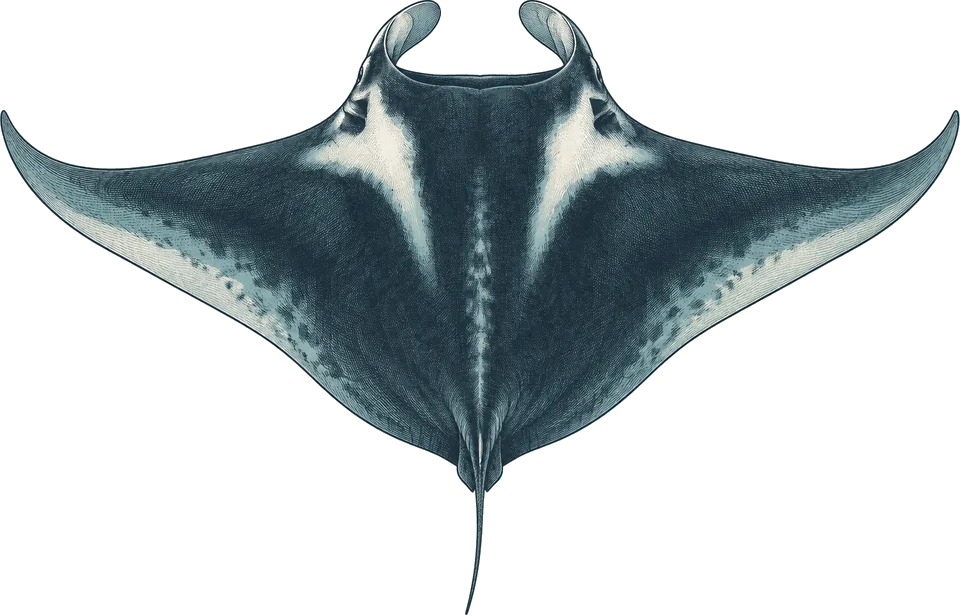
German Channel
Settle low on the sand near the cleaning station at 18 to 20 m.10
Possible all year; peak December to March.
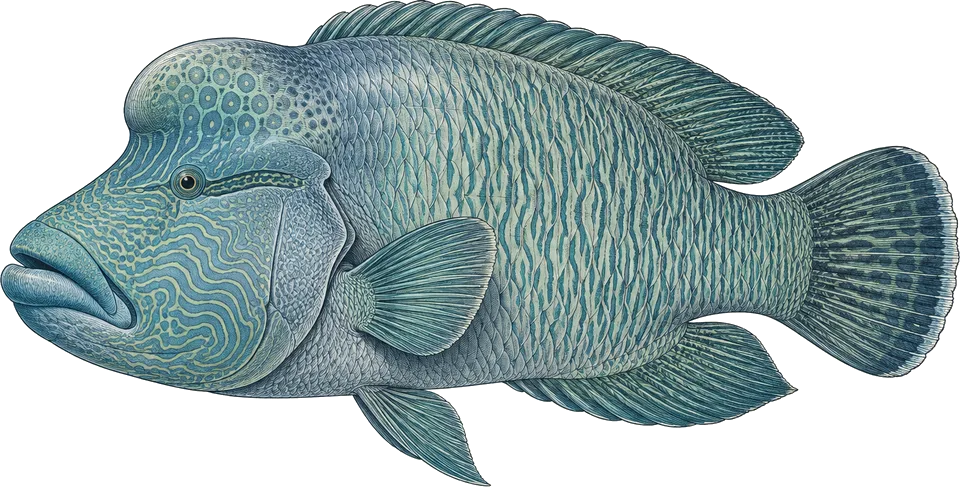
Blue Corner, German Channel
Hang on the plateau or drift the wall; they often come close.9
Usually seen at Blue Corner.
Ulong Channel, German Channel
Dive the channel mouth around the moon; each grouper species keeps its own lunar timing, so ask your operator.1
Full-moon aggregations March to July; camouflage groupers spawn separately, June to August.
Jellyfish Lake (Ongeim'l Tketau)
Snorkel only: short walk over the ridge from the boat, slow fin kicks.4
Thousands reported in March 2026; numbers rise and fall.
Compiled from the sources above, last checked 2026-11-12. Monthly conditions come from our own climate records; see how we score.