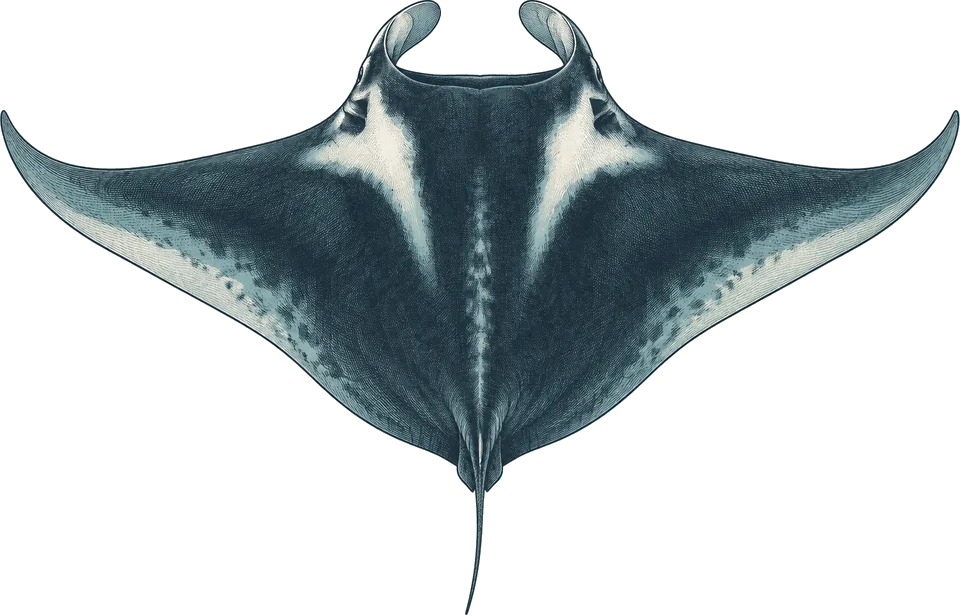
reef manta
Dec–AprMi'l Channel (Stammtisch)
Settle on the bottom below a shallow cleaning station and stay still; mantas arrive two or three at a time.2
Resident all year; mating trains of up to 12 December to April.
The best time to dive Yap is December to April, the manta mating season, when courting mantas gather in Mi'l Channel. Mantas stay all year, and typhoons can pass even in December and March. Honestly, the mating trains are the reason I'd go.
Operators say: Year-round diving; December to April for manta mating trains in Mi'l Channel. Our sea and rain data favours April to August, when the trade winds ease; operators rank the mating season first and dive the sheltered side then.
Worth knowing: 17% of years see a tropical storm pass within 250 km.

By Eugen. Based on 11 sources, checked 12 November 2026.
111 km across · coastline from Natural Earth 10m
Yap's diving is built around a resident population of reef mantas that use shallow cleaning stations inside the reef channels. Dives are timed to the tide: divers settle on the bottom near a station and wait for the mantas to come in, often two or three at a time. Outside the lagoon, the outer reef has more than 30 named wall and drift sites, a long-running grey reef shark feed at Vertigo and swim-throughs at Yap Caverns.
The manta season follows the wind. From about November to May the north-east trade winds blow, mantas use Mi'l Channel on the sheltered side, and December to April brings courtship and mating trains of up to 12 animals. From June to October the trades ease, seas calm, and Goofnuw Channel (Valley of the Rays) opens as the main summer manta site. Water stays around 27 to 29 °C all year.
Hover a month to isolate it.
| January | February | March | April | May | June | July | August | September | October | November | December | |
|---|---|---|---|---|---|---|---|---|---|---|---|---|
| Conditions | Moderate | Good | Good | Excellent | Excellent | Good | Excellent | Excellent | Poor | Moderate | Poor | Good |
| Water temp (°C) | 29 | 28 | 29 | 29 | 30 | 30 | 30 | 30 | 30 | 30 | 30 | 29 |
| Visibility (m) | 10–20 | 10–20 | 10–20 | 10–20 | 10–20 | 5–15 | 10–20 | 10–20 | 10–20 | 15–25 | 10–20 | 10–20 |
| Marine life | Steady | Busy | Steady | Busy | Peak | Steady | Busy | Busy | Quiet | Steady | Quiet | Busy |
| Best time | Peak | Peak | Peak | Peak | Peak |
Long-term averages, 2016–2025. Visibility is estimated from satellite chlorophyll-a. Water temperature is the surface mean; it is cooler at depth.
Diving conditionsExpect some swell.
Diving conditionsThe wind eases. The sea is calmer.
Diving conditionsThe sea is rougher.
209 underwater observation records · 9 surveyed years of ocean data · 10 years of sea temperature
Dashed: monthly average. Band: eight days in ten.
10th to 90th percentile rangemonthly mean
Seas top 1.5 m on 37% of days. Enough to cancel a day boat
Gusts over 40 km/h, about where a day boat stays in port
10 of them bring heavy rain
| Month | Swell | Gusts over 40 km/h | Wet days | Heavy rain | Air | Daylight |
|---|---|---|---|---|---|---|
| Jan | 2.5 m | 23% | 20 | 7 | 28 °C | 11.5 h |
| Feb | 2.4 m | 25% | 18 | 4 | 28 °C | 11.7 h |
| Mar | 1.9 m | 4% | 16 | 5 | 28 °C | 11.9 h |
| Apr | 1.8 m | 4% | 18 | 7 | 29 °C | 12.2 h |
| May | 1.6 m | 1% | 24 | 8 | 29 °C | 12.4 h |
| Jun | 1.3 m | 1% | 29 | 14 | 29 °C | 12.6 h |
| Jul | 1.5 m | 4% | 29 | 16 | 29 °C | 12.5 h |
| Aug | 1.7 m | 6% | 28 | 16 | 29 °C | 12.3 h |
| Sep | 1.8 m | 5% | 27 | 15 | 29 °C | 12.0 h |
| Oct | 2.2 m | 7% | 27 | 15 | 29 °C | 11.8 h |
| Nov | 1.9 m | 9% | 26 | 11 | 29 °C | 11.6 h |
| Dec | 2.1 m | 12% | 24 | 9 | 29 °C | 11.4 h |
Swell is the rough end of the month: nine days in ten come in under it. Sea temperature covers 10 years, waves 4.
Darker is better, against this site's own year. Pick a month for its weeks.
| Week 1 | ||||||||||||
|---|---|---|---|---|---|---|---|---|---|---|---|---|
| Week 2 | ||||||||||||
| Week 3 | ||||||||||||
| Week 4 |
| Week | Conditions | Water | Swell | Wind | Rain chance |
|---|---|---|---|---|---|
| Week 1 | Good | 29 °C | 2.2 m | 35 km/h | 71% |
| Week 2 | Good | 29 °C | 2.4 m | 34 km/h | 67% |
| Week 3 | Poor | 29 °C | 2.6 m | 35 km/h | 66% |
| Week 4 | Poor | 29 °C | 2.6 m | 37 km/h | 62% |
| Week 1 | Moderate | 29 °C | 2.5 m | 37 km/h | 58% |
| Week 2 | Excellent | 29 °C | 2.4 m | 36 km/h | 60% |
| Week 3 | Excellent | 28 °C | 2.4 m | 36 km/h | 63% |
| Week 4 | Excellent | 28 °C | 2.4 m | 35 km/h | 60% |
| Week 1 | Moderate | 28 °C | 2.3 m | 33 km/h | 50% |
| Week 2 | Excellent | 29 °C | 2.0 m | 31 km/h | 47% |
| Week 3 | Excellent | 29 °C | 1.8 m | 31 km/h | 51% |
| Week 4 | Excellent | 29 °C | 1.7 m | 32 km/h | 57% |
| Week 1 | Good | 29 °C | 1.9 m | 31 km/h | 61% |
| Week 2 | Good | 29 °C | 2.3 m | 30 km/h | 62% |
| Week 3 | Excellent | 29 °C | 1.6 m | 29 km/h | 57% |
| Week 4 | Excellent | 29 °C | 1.6 m | 29 km/h | 61% |
| Week 1 | Good | 29 °C | 1.6 m | 30 km/h | 72% |
| Week 2 | Good | 29 °C | 1.6 m | 29 km/h | 75% |
| Week 3 | Excellent | 30 °C | 1.5 m | 26 km/h | 77% |
| Week 4 | Excellent | 30 °C | 1.6 m | 24 km/h | 87% |
| Week 1 | Excellent | 30 °C | 1.5 m | 23 km/h | 92% |
| Week 2 | Good | 30 °C | 1.3 m | 23 km/h | 93% |
| Week 3 | Excellent | 30 °C | 1.2 m | 24 km/h | 96% |
| Week 4 | Excellent | 30 °C | 1.2 m | 23 km/h | 98% |
| Week 1 | Excellent | 30 °C | 1.1 m | 22 km/h | 97% |
| Week 2 | Good | 30 °C | 1.3 m | 23 km/h | 95% |
| Week 3 | Good | 30 °C | 1.5 m | 23 km/h | 92% |
| Week 4 | Good | 30 °C | 1.9 m | 24 km/h | 94% |
| Week 1 | Good | 30 °C | 1.9 m | 24 km/h | 92% |
| Week 2 | Good | 30 °C | 1.7 m | 23 km/h | 92% |
| Week 3 | Excellent | 30 °C | 1.5 m | 21 km/h | 93% |
| Week 4 | Excellent | 30 °C | 1.7 m | 21 km/h | 87% |
| Week 1 | Moderate | 30 °C | 1.7 m | 21 km/h | 87% |
| Week 2 | Poor | 30 °C | 2.0 m | 21 km/h | 90% |
| Week 3 | Moderate | 30 °C | 2.1 m | 23 km/h | 88% |
| Week 4 | Poor | 30 °C | 1.8 m | 23 km/h | 86% |
| Week 1 | Good | 30 °C | 1.8 m | 22 km/h | 85% |
| Week 2 | Good | 30 °C | 1.9 m | 22 km/h | 88% |
| Week 3 | Poor | 30 °C | 2.2 m | 23 km/h | 89% |
| Week 4 | Good | 30 °C | 2.5 m | 24 km/h | 87% |
| Week 1 | Moderate | 30 °C | 2.4 m | 25 km/h | 90% |
| Week 2 | Poor | 30 °C | 2.1 m | 28 km/h | 90% |
| Week 3 | Poor | 30 °C | 1.9 m | 30 km/h | 81% |
| Week 4 | Poor | 30 °C | 1.8 m | 31 km/h | 79% |
| Week 1 | Moderate | 30 °C | 1.8 m | 30 km/h | 79% |
| Week 2 | Moderate | 29 °C | 1.9 m | 31 km/h | 76% |
| Week 3 | Good | 29 °C | 2.2 m | 34 km/h | 76% |
| Week 4 | Good | 29 °C | 2.2 m | 34 km/h | 75% |
10 years of daily records, averaged into weeks.
Sized for each month's coldest water.
| Jan | Feb | Mar | Apr | May | Jun | Jul | Aug | Sep | Oct | Nov | Dec | |
|---|---|---|---|---|---|---|---|---|---|---|---|---|
| Suit | skin | skin | skin | skin | skin | skin | skin | skin | skin | skin | skin | skin |
Suit row is for surface water. At depth: 3 mm wetsuit or less; water is about 28 °C. Torch for the mandarinfish dusk dive. SMB for channel drifts. Nitrox is available at local centres.
Each month's rough end: nine days in ten are calmer.
Amber is over 1.5 m.
7 of the last 30 Novembers saw a tropical storm pass within 250 km. Anything has been recorded Sep–Jan, Mar–Jul.
Share of the last 30 years with a storm that month.
| Species | When | Observed window | Reliability | Evidence | Records |
|---|---|---|---|---|---|
| Napoleon wrasse | May, Jul, Dec | Near-guaranteed | 111 | ||
| Bumphead parrotfish | Feb, May, Jul | Likely | 35 | ||
| Blacktip reef shark | Feb–Apr, Oct | Likely | 18 | ||
| Whitetip reef shark | May, Aug | Likely | 11 | ||
| Camouflage grouper | May, Dec | Hit-or-miss | 10 |
Logged sightings, not a full survey. How to read this table.
| Site | Depth | Level | What to expect |
|---|---|---|---|
| Stammtisch (Mi'l Channel)cleaning station | ≈ 3–15 m | Open Water | Manta cleaning station in under 5 m inside Mi'l Channel. Kneel below the station on rubble and wait; the main winter and mating-season manta site.1 |
| Valley of the Rays (Goofnuw Channel)cleaning station | 5–16 m | Advanced | Floor about 16 m, main cleaning station about 9 m, a newer one at 5 to 6 m. Summer manta site; strong currents possible.6 |
| Vertigowall | 5–15 m | Advanced | West-coast reef edge dropping to about 100 m. Shark feed on a dead-coral balcony above 15 m with 15+ grey and blacktip reef sharks.5 |
| Yap Cavernscaverns / swim-throughs | 3–18 m | Advanced | Southern tip where currents meet: canyons, chimneys and swim-throughs with whitetips and groups of grey reef sharks. Visibility often over 30 m.2 |
| Spanish Walldrift | 18–25 m | Advanced | Slow drift along vertical walls at 18 to 25 m with lace coral in the alcoves; pelagics in the blue, sharks deeper.2 |
| Cabbage Patchwall | ≈ 10–25 m | Advanced | Vertical wall to about 25 m cut by large fissures covered in leather corals. Usually a gentle southerly drift of about half a knot.3 |
| Aliko Reefmini-wall | 6–15 m | Open Water | Mini-wall and broad hard-coral plateau at 6 to 15 m, with patches of green cabbage coral.3 |
| Gapow Reefwall | 5–22 m | Open Water | Double wall: an upper wall from 5 to 15 m onto a sandy terrace, then a second wall to about 22 m.3 |
| Eagle's Nestbommie | ≈ 10–15 m | Open Water | Coral bommie on a sandy plateau at about 15 m north of Lionfish Wall; sometimes several eagle rays circling.3 |
Mi'l Channel (Stammtisch)
Settle on the bottom below a shallow cleaning station and stay still; mantas arrive two or three at a time.2
Resident all year; mating trains of up to 12 December to April.
Valley of the Rays (Goofnuw Channel)
Tide-timed channel dive to cleaning stations at 5 to 9 m.2
The main manta site in summer, when the trade winds ease.
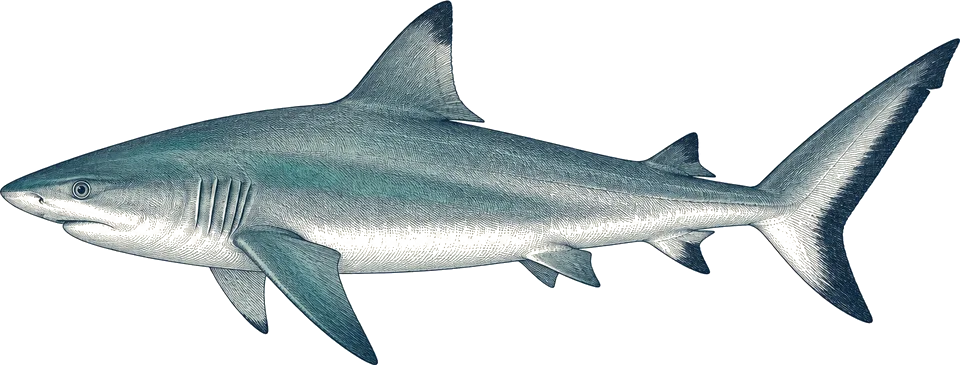
Vertigo
Sit still on a dead-coral balcony above 15 m while bait is in the water.5
15+ sharks on the feed; over 40 greys filmed mating there.
Near Manta Ray Bay Resort and O'Keefe's Island
Shallow dusk dive at about 3 m near Manta Ray Bay Resort.6
Resident at shallow sites near the resort.
Compiled from the sources above, last checked 2026-11-12. Monthly conditions come from our own climate records; see how we score.