Hawaiian monk seal
May–SepVertical Awareness, Niihau and Lehua; occasionally Koloa Landing
Stay still and let it come to you; never approach or follow.2
Common on Niihau trips; rare on Kauai dives.
The best time to dive Kauai and Niihau is May to September, when Niihau and Lehua trips run and the north shore is calm. South-shore boats dive all year. Hurricane season runs June to November, so keep spare days. Niihau is the reason I'd fly in, so I'd book summer.
Operators say: May to September for Niihau and the north shore; south-shore boats dive all year. Our data measures open-channel seas, so it closes October to April and favours August to September; local shops dive the sheltered south shore in every month.
Worth knowing: 42% of days see seas over 1.5 m.

By Eugen. Based on 13 sources, checked 12 November 2026.
111 km across · coastline from Natural Earth 10m
Most Kauai diving is off the south shore around Poipu and Koloa: lava fingers, ledges and partial lava tubes at 6 to 30 m, with green turtles on almost every dive and whitetip reef sharks under the ledges. Koloa Landing is the main shore dive and works most of the year. Tunnels on the north shore has more than 25 caverns but is only diveable in flat summer surf, and Fathom Five reported in November 2026 that commercial dive trips there are paused under state rules.
The big trip is Niihau and Lehua Crater. Boats cross about 2.5 hours each way in the calmer months, roughly May to September, for three deeper dives in very clear water. Sites such as Vertical Awareness, Pyramid Point and Neon Cave have caverns, arches, sharks and Hawaiian monk seals; Niihau has the largest population of this endangered seal. Water runs about 23 °C in winter to 27 °C in September.
Hover a month to isolate it.
| January | February | March | April | May | June | July | August | September | October | November | December | |
|---|---|---|---|---|---|---|---|---|---|---|---|---|
| Conditions | Closed | Closed | Closed | Closed | Poor | Excellent | Excellent | Excellent | Poor | Closed | Closed | Closed |
| Water temp (°C) | 25 | 25 | 25 | 25 | 26 | 26 | 27 | 27 | 28 | 27 | 27 | 26 |
| Visibility (m) | 25–35 | 20–30 | 25–35 | 25–35 | 25–35 | 25–35 | 25–35 | 20–30 | 25–35 | 25–35 | 25–35 | 20–30 |
| Marine life | Closed | Closed | Closed | Closed | Steady | Busy | Steady | Busy | Steady | Closed | Closed | Closed |
| Best time | Peak | Peak | Peak | Peak | Peak |
Long-term averages, 2016–2025. Visibility is estimated from satellite chlorophyll-a. Water temperature is the surface mean; it is cooler at depth.
Diving conditionsSwell is common, and crossings can be rough. The wind eases. It rains more.
The site is closed to diving in these months.
8,419 underwater observation records · 23 surveyed years of ocean data · 10 years of sea temperature
Dashed: monthly average. Band: eight days in ten.
10th to 90th percentile rangemonthly mean
Seas top 1.5 m on 68% of days. Enough to cancel a day boat
Gusts over 40 km/h, about where a day boat stays in port
1 of them bring heavy rain
| Month | Swell | Gusts over 40 km/h | Wet days | Heavy rain | Air | Daylight |
|---|---|---|---|---|---|---|
| Jan | 3.5 m | 5% | 8 | 1 | 26 °C | 10.8 h |
| Feb | 2.7 m | 5% | 10 | 1 | 25 °C | 11.3 h |
| Mar | 2.5 m | 4% | 12 | 2 | 25 °C | 11.8 h |
| Apr | 2.5 m | 0% | 14 | 1 | 26 °C | 12.5 h |
| May | 2.1 m | 0% | 16 | 1 | 27 °C | 13.0 h |
| Jun | 1.8 m | 0% | 15 | 1 | 28 °C | 13.3 h |
| Jul | 1.7 m | 1% | 14 | 0 | 29 °C | 13.2 h |
| Aug | 1.8 m | 0% | 15 | 0 | 29 °C | 12.8 h |
| Sep | 1.7 m | 0% | 15 | 0 | 29 °C | 12.1 h |
| Oct | 2.2 m | 0% | 16 | 1 | 28 °C | 11.5 h |
| Nov | 2.7 m | 2% | 9 | 1 | 27 °C | 10.9 h |
| Dec | 3.2 m | 2% | 10 | 1 | 26 °C | 10.7 h |
Swell is the rough end of the month: nine days in ten come in under it. Sea temperature covers 10 years, waves 4.
Darker is better, against this site's own year. Pick a month for its weeks.
| Week 1 | ||||||||||||
|---|---|---|---|---|---|---|---|---|---|---|---|---|
| Week 2 | ||||||||||||
| Week 3 | ||||||||||||
| Week 4 |
| Week | Conditions | Water | Swell | Wind | Rain chance |
|---|---|---|---|---|---|
| Week 1 | Poor | 25 °C | 3.3 m | 22 km/h | 22% |
| Week 2 | Poor | 25 °C | 3.7 m | 20 km/h | 25% |
| Week 3 | Poor | 25 °C | 3.5 m | 20 km/h | 29% |
| Week 4 | Poor | 25 °C | 3.2 m | 23 km/h | 31% |
| Week 1 | Poor | 25 °C | 3.0 m | 24 km/h | 30% |
| Week 2 | Poor | 25 °C | 2.7 m | 24 km/h | 35% |
| Week 3 | Poor | 25 °C | 2.7 m | 25 km/h | 40% |
| Week 4 | Poor | 25 °C | 2.7 m | 25 km/h | 38% |
| Week 1 | Poor | 24 °C | 2.7 m | 25 km/h | 37% |
| Week 2 | Poor | 24 °C | 2.5 m | 25 km/h | 35% |
| Week 3 | Poor | 25 °C | 2.4 m | 23 km/h | 37% |
| Week 4 | Poor | 25 °C | 2.4 m | 22 km/h | 43% |
| Week 1 | Poor | 25 °C | 2.5 m | 22 km/h | 48% |
| Week 2 | Poor | 25 °C | 2.5 m | 23 km/h | 49% |
| Week 3 | Poor | 25 °C | 2.2 m | 22 km/h | 49% |
| Week 4 | Poor | 25 °C | 2.1 m | 22 km/h | 50% |
| Week 1 | Poor | 25 °C | 2.1 m | 22 km/h | 53% |
| Week 2 | Poor | 25 °C | 2.1 m | 22 km/h | 51% |
| Week 3 | Moderate | 26 °C | 2.0 m | 20 km/h | 48% |
| Week 4 | Moderate | 26 °C | 1.8 m | 18 km/h | 49% |
| Week 1 | Excellent | 26 °C | 1.8 m | 18 km/h | 50% |
| Week 2 | Good | 26 °C | 1.7 m | 19 km/h | 48% |
| Week 3 | Excellent | 26 °C | 1.8 m | 18 km/h | 54% |
| Week 4 | Excellent | 27 °C | 1.8 m | 18 km/h | 54% |
| Week 1 | Excellent | 27 °C | 1.8 m | 18 km/h | 46% |
| Week 2 | Excellent | 27 °C | 1.8 m | 18 km/h | 44% |
| Week 3 | Good | 27 °C | 1.7 m | 19 km/h | 47% |
| Week 4 | Excellent | 27 °C | 1.7 m | 19 km/h | 44% |
| Week 1 | Excellent | 27 °C | 1.9 m | 19 km/h | 40% |
| Week 2 | Excellent | 27 °C | 1.8 m | 18 km/h | 49% |
| Week 3 | Good | 27 °C | 1.7 m | 18 km/h | 53% |
| Week 4 | Good | 28 °C | 1.8 m | 18 km/h | 53% |
| Week 1 | Poor | 28 °C | 1.7 m | 18 km/h | 53% |
| Week 2 | Moderate | 28 °C | 1.6 m | 18 km/h | 50% |
| Week 3 | Moderate | 28 °C | 1.7 m | 18 km/h | 48% |
| Week 4 | Moderate | 28 °C | 1.7 m | 18 km/h | 51% |
| Week 1 | Poor | 28 °C | 1.9 m | 18 km/h | 55% |
| Week 2 | Poor | 27 °C | 2.2 m | 19 km/h | 53% |
| Week 3 | Poor | 27 °C | 2.4 m | 20 km/h | 50% |
| Week 4 | Poor | 27 °C | 2.3 m | 19 km/h | 52% |
| Week 1 | Poor | 27 °C | 2.3 m | 20 km/h | 45% |
| Week 2 | Poor | 27 °C | 2.4 m | 21 km/h | 31% |
| Week 3 | Poor | 27 °C | 2.7 m | 22 km/h | 25% |
| Week 4 | Poor | 26 °C | 3.1 m | 23 km/h | 26% |
| Week 1 | Poor | 26 °C | 3.0 m | 22 km/h | 32% |
| Week 2 | Poor | 26 °C | 2.9 m | 23 km/h | 31% |
| Week 3 | Poor | 26 °C | 3.5 m | 23 km/h | 32% |
| Week 4 | Poor | 25 °C | 3.3 m | 23 km/h | 29% |
10 years of daily records, averaged into weeks.
Sized for each month's coldest water.
| Jan | Feb | Mar | Apr | May | Jun | Jul | Aug | Sep | Oct | Nov | Dec | |
|---|---|---|---|---|---|---|---|---|---|---|---|---|
| Suit | 3 mm | 5 mm | 5 mm | 3 mm | 3 mm | 3 mm | 3 mm | 3 mm | skin | 3 mm | 3 mm | 3 mm |
Suit row is for surface water. At depth: 3 mm for most of the year; a 5 mm helps in winter and on three-tank Niihau days. Nitrox for the deep Niihau profile. SMB for drifts.
Each month's rough end: nine days in ten are calmer.
Amber is over 1.5 m.
1 of the last 30 Julys saw a tropical storm pass within 250 km. Anything has been recorded Jul, Oct.
Share of the last 30 years with a storm that month.
| Species | When | Observed window | Reliability | Evidence | Records |
|---|---|---|---|---|---|
| Humpback whale | Feb | Near-guaranteed | 318 | ||
| Spinner dolphin | All year | Near-guaranteed | 79 | ||
| Green turtle | All year | Near-guaranteed | 80 | ||
| Minke whale | Feb–Apr | Hit-or-miss | 7692 | ||
| Bryde's whale | Sep–Oct | Hit-or-miss | 168 | ||
| Bottlenose dolphin | Feb, Jun, Aug | Likely | 39 | ||
| Short-finned pilot whale | Feb, Jun | Likely | 19 |
Logged sightings, not a full survey. How to read this table.
| Site | Depth | Level | What to expect |
|---|---|---|---|
| Vertical AwarenessNiihau / Lehua · wall | ≈ 15–32 m | Experienced | Wall near the southern tip of Lehua, often 30 m or more visibility. Monk seals, grey reef, whitetip and sandbar sharks, mantas.4 |
| Lehua CraterNiihau / Lehua · crater wall | 15–30 m | Experienced | Inside the crescent of Lehua at 15 to 30 m. Northeast trade winds often make it and the Keyhole undiveable.3 |
| Neon Cave and Niihau ArchesNiihau / Lehua · caverns / arches | ≈ 14–26 m | Experienced | Lava tubes and caverns in the Niihau–Lehua channel; finger coral on Neon Cave's walls. Usually the second or third dive of the day.4 |
| Sheraton CavernsSouth Shore · lava tubes | 11–21 m | Open Water | Partial lava tubes, arches and swim-throughs off Poipu with resident green turtles. The most popular boat dive.1 |
| Koloa LandingSouth Shore · shore | 6–14 m | Open Water | Easy shore entry at an old harbour: turtles, dragon morays, anchor chains; monk seals at times. Avoid when south surf tops 4 ft.3 |
| General StoreSouth Shore · reef / wreck | 20–30 m | Advanced | Horseshoe-shaped inlet with lava tubes and the remains of the Pele; dolphins often. Current can be strong, sometimes dived as a drift.1 |
| Brennecke's LedgeSouth Shore · ledge / drift | 18–30 m | Advanced | Ledge with an overhang, usually drifted. Grey reef sharks and big tuna; humpbacks have been seen. Current can change quickly.1 |
| Ice BoxSouth Shore · ledges / caves | 18–29 m | Advanced | Small ledges and caves with whitetip reef sharks, whiskered boarfish and turtles; milder currents.1 |
| Nukumoi PointSouth Shore · reef | 9–18 m | Open Water | Shallow dive for all levels off Poipu, known for green turtles.3 |
| Tunnels (Makua)North Shore · shore / caverns | 2–18 m | Advanced | More than 25 caverns and tubes with resting whitetips; summer only, at low tide with flat surf. Commercial dives paused by DLNR, per Fathom Five (November 2026).1 |
Vertical Awareness, Niihau and Lehua; occasionally Koloa Landing
Stay still and let it come to you; never approach or follow.2
Common on Niihau trips; rare on Kauai dives.
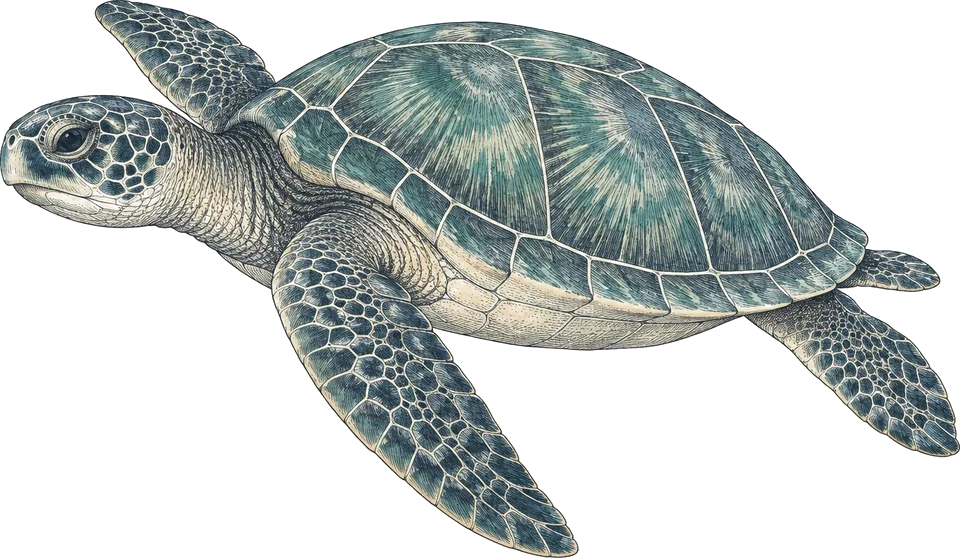
Sheraton Caverns, Nukumoi Point, Koloa Landing
Easy south-shore dives at 6 to 20 m; cleaning stations at Turtle Bluffs.1
On most south-shore dives.
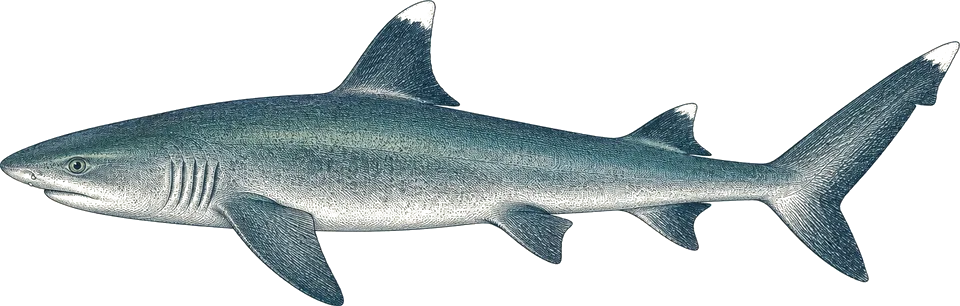
Ice Box, Tunnels, Vertical Awareness
Check under ledges for resting whitetips; greys cruise the Niihau walls.1
Whitetips regular; greys mostly at Niihau.
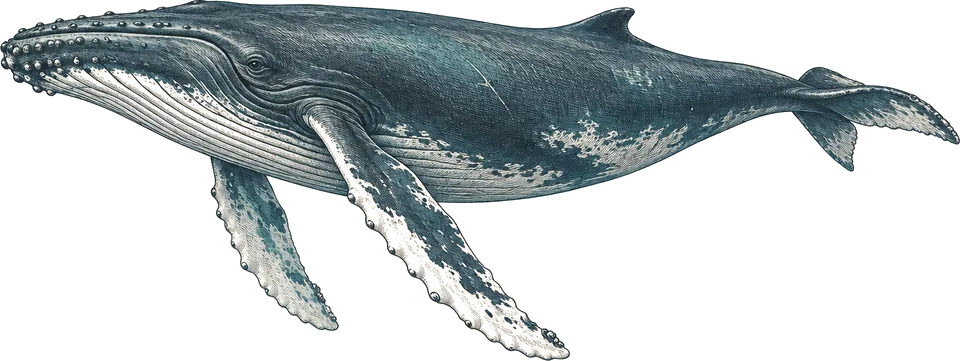
South Shore, Brennecke's Ledge
Listen for song on winter dives and watch from the boat; keep 100 yards away.6
Seasonal; January is the heart of whale season.
Compiled from the sources above, last checked 2026-11-12. Monthly conditions come from our own climate records; see how we score.