
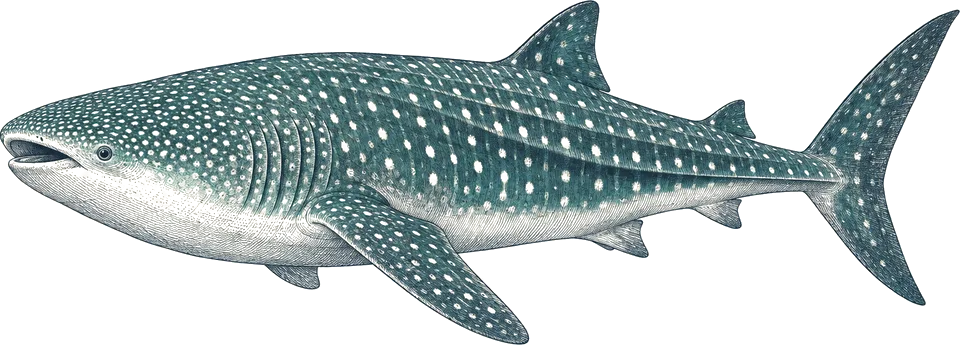
whale shark
Apr–JunGladden Spit
Blue-water dive above 24 m off the spit while snapper spawn; no reef in sight.1
Now rare: Splash logged none in 2024 or 2026.
The best time to dive Gladden Spit is April to June, in the ten days or so after each full moon, when snapper spawn and whale sharks may come to feed. Sightings have become rare since 2019. I'd go for the spawn and count a whale shark as luck.
Operators say: April to June, after each full moon; whale sharks now rare. Our weather data rates March to June alike; operators start at the April full moon.
111 km across · coastline from Natural Earth 10m
Gladden Spit is a bend in the Belize Barrier Reef about 1.5 hours by boat from Placencia. In spring, cubera, dog and mutton snapper gather here to spawn after the full moon, and whale sharks have come to feed on the spawn. The dive is in blue water off the reef point, where the wall falls past 50 m; divers stay above 24 m, with no reef in sight. Bull sharks, reef sharks, eagle rays and dolphins follow the spawn as well.
Operators run trips in set windows after the April, May and June full moons, and the reserve manager, SEA, assigns boat time slots. Whale sharks are no longer reliable: Splash Dive Center reports no sightings in 2019, 2024 or 2026 and one in 2023 and 2025. The second dive is usually a shallow reef in the Silk Cayes. Outside the season, the Silk Cayes and Laughing Bird Caye are easy reef dives.
Hover a month to isolate it.
| January | February | March | April | May | June | July | August | September | October | November | December | |
|---|---|---|---|---|---|---|---|---|---|---|---|---|
| Conditions | Poor | Poor | Excellent | Excellent | Excellent | Excellent | Poor | Poor | Poor | Poor | Poor | Poor |
| Water temp (°C) | 27 | 27 | 27 | 28 | 29 | 29 | 29 | 30 | 30 | 30 | 29 | 28 |
| Visibility (m) | 15–25 | 15–25 | 15–25 | 20–30 | 20–30 | 20–30 | 20–30 | 20–30 | 20–30 | 15–25 | 15–25 | 15–25 |
| Marine life | Steady | Steady | Busy | Busy | Busy | Busy | Steady | Steady | Steady | Steady | Steady | Steady |
| Best time | Peak | Peak | Peak |
Long-term averages, 2016–2025. Visibility is estimated from satellite chlorophyll-a. Water temperature is the surface mean; it is cooler at depth.
Diving conditionsRain is frequent topside. The sea is rougher. The wind is up.
Marine lifeWhale shark (likely) peaks at Gladden Spit, Belize in these months.
Diving conditionsIt rains more. The sea is calmer.
554 underwater observation records · 25 surveyed years of ocean data · 10 years of sea temperature
Dashed: monthly average. Band: eight days in ten.
10th to 90th percentile rangemonthly mean
Seas top 1.5 m on 3% of days. Enough to cancel a day boat
Gusts over 40 km/h, about where a day boat stays in port
7 of them bring heavy rain
| Month | Swell | Gusts over 40 km/h | Wet days | Heavy rain | Air | Daylight |
|---|---|---|---|---|---|---|
| Jan | 1.3 m | 7% | 18 | 5 | 26 °C | 11.1 h |
| Feb | 1.4 m | 7% | 13 | 2 | 27 °C | 11.5 h |
| Mar | 1.3 m | 5% | 11 | 2 | 27 °C | 11.9 h |
| Apr | 1.5 m | 3% | 8 | 1 | 28 °C | 12.4 h |
| May | 1.3 m | 1% | 12 | 2 | 29 °C | 12.8 h |
| Jun | 1.4 m | 5% | 23 | 9 | 29 °C | 13.0 h |
| Jul | 1.3 m | 4% | 23 | 8 | 29 °C | 12.9 h |
| Aug | 1.1 m | 1% | 26 | 9 | 29 °C | 12.6 h |
| Sep | 0.8 m | 1% | 26 | 10 | 30 °C | 12.1 h |
| Oct | 0.9 m | 3% | 25 | 13 | 29 °C | 11.6 h |
| Nov | 1.1 m | 5% | 24 | 10 | 28 °C | 11.2 h |
| Dec | 1.4 m | 7% | 23 | 8 | 27 °C | 11.0 h |
Swell is the rough end of the month: nine days in ten come in under it. Sea temperature covers 10 years, waves 4.
Darker is better, against this site's own year. Pick a month for its weeks.
| Week 1 | ||||||||||||
|---|---|---|---|---|---|---|---|---|---|---|---|---|
| Week 2 | ||||||||||||
| Week 3 | ||||||||||||
| Week 4 |
| Week | Conditions | Water | Swell | Wind | Rain chance |
|---|---|---|---|---|---|
| Week 1 | Moderate | 27 °C | 1.3 m | 27 km/h | 60% |
| Week 2 | Poor | 27 °C | 1.1 m | 27 km/h | 62% |
| Week 3 | Poor | 27 °C | 1.4 m | 28 km/h | 60% |
| Week 4 | Poor | 27 °C | 1.5 m | 29 km/h | 54% |
| Week 1 | Moderate | 27 °C | 1.3 m | 30 km/h | 52% |
| Week 2 | Poor | 27 °C | 1.4 m | 30 km/h | 51% |
| Week 3 | Moderate | 27 °C | 1.4 m | 31 km/h | 45% |
| Week 4 | Moderate | 27 °C | 1.3 m | 31 km/h | 37% |
| Week 1 | Good | 27 °C | 1.2 m | 29 km/h | 40% |
| Week 2 | Excellent | 27 °C | 1.1 m | 28 km/h | 40% |
| Week 3 | Excellent | 27 °C | 1.3 m | 29 km/h | 36% |
| Week 4 | Excellent | 28 °C | 1.5 m | 30 km/h | 30% |
| Week 1 | Good | 28 °C | 1.6 m | 30 km/h | 26% |
| Week 2 | Good | 28 °C | 1.5 m | 30 km/h | 28% |
| Week 3 | Excellent | 28 °C | 1.3 m | 30 km/h | 29% |
| Week 4 | Excellent | 28 °C | 1.2 m | 30 km/h | 29% |
| Week 1 | Excellent | 29 °C | 1.2 m | 30 km/h | 30% |
| Week 2 | Excellent | 29 °C | 1.2 m | 29 km/h | 30% |
| Week 3 | Excellent | 29 °C | 1.3 m | 30 km/h | 36% |
| Week 4 | Good | 29 °C | 1.3 m | 30 km/h | 49% |
| Week 1 | Good | 29 °C | 1.3 m | 30 km/h | 59% |
| Week 2 | Excellent | 29 °C | 1.4 m | 30 km/h | 73% |
| Week 3 | Good | 29 °C | 1.5 m | 32 km/h | 81% |
| Week 4 | Excellent | 29 °C | 1.4 m | 32 km/h | 81% |
| Week 1 | Poor | 29 °C | 1.3 m | 32 km/h | 80% |
| Week 2 | Poor | 29 °C | 1.4 m | 32 km/h | 78% |
| Week 3 | Poor | 29 °C | 1.3 m | 31 km/h | 73% |
| Week 4 | Poor | 29 °C | 1.3 m | 30 km/h | 75% |
| Week 1 | Moderate | 30 °C | 1.2 m | 29 km/h | 81% |
| Week 2 | Poor | 30 °C | 1.1 m | 29 km/h | 80% |
| Week 3 | Poor | 30 °C | 1.1 m | 28 km/h | 84% |
| Week 4 | Poor | 30 °C | 1.0 m | 27 km/h | 86% |
| Week 1 | Poor | 30 °C | 0.9 m | 26 km/h | 85% |
| Week 2 | Poor | 30 °C | 0.8 m | 25 km/h | 86% |
| Week 3 | Poor | 30 °C | 0.8 m | 24 km/h | 87% |
| Week 4 | Poor | 30 °C | 0.8 m | 23 km/h | 88% |
| Week 1 | Moderate | 30 °C | 0.8 m | 23 km/h | 83% |
| Week 2 | Poor | 30 °C | 1.0 m | 23 km/h | 81% |
| Week 3 | Poor | 30 °C | 1.1 m | 24 km/h | 82% |
| Week 4 | Poor | 29 °C | 1.0 m | 26 km/h | 79% |
| Week 1 | Poor | 29 °C | 1.1 m | 25 km/h | 79% |
| Week 2 | Poor | 29 °C | 1.2 m | 24 km/h | 81% |
| Week 3 | Poor | 29 °C | 1.1 m | 25 km/h | 78% |
| Week 4 | Poor | 28 °C | 1.1 m | 25 km/h | 73% |
| Week 1 | Poor | 28 °C | 1.4 m | 25 km/h | 71% |
| Week 2 | Poor | 28 °C | 1.4 m | 27 km/h | 75% |
| Week 3 | Poor | 28 °C | 1.2 m | 28 km/h | 79% |
| Week 4 | Poor | 27 °C | 1.3 m | 28 km/h | 69% |
10 years of daily records, averaged into weeks.
Sized for each month's coldest water.
| Jan | Feb | Mar | Apr | May | Jun | Jul | Aug | Sep | Oct | Nov | Dec | |
|---|---|---|---|---|---|---|---|---|---|---|---|---|
| Suit | 3 mm | 3 mm | 3 mm | skin | skin | skin | skin | skin | skin | skin | skin | skin |
Suit row is for surface water. At depth: 3 mm wetsuit. Dive computer with depth alarm set for 24 m, SMB. No flash or pole cameras.
Each month's rough end: nine days in ten are calmer.
Amber is over 1.5 m.
6 of the last 30 Octobers saw a tropical storm pass within 250 km. Anything has been recorded May–Jun, Aug–Nov.
Share of the last 30 years with a storm that month.
| Species | When | Observed window | Reliability | Evidence | Records |
|---|---|---|---|---|---|
| Spotted eagle ray | All year | Near-guaranteed | 150 | ||
| Nurse shark | All year | Near-guaranteed | 132 | ||
| Southern stingray | All year | Near-guaranteed | 111 | ||
| Hawksbill turtle | All year | Likely | 28 | ||
| Manatee | Jan–Mar | Likely | 30 | ||
| Nassau grouper | All year | Likely | 19 | ||
| Bottlenose dolphin | Dec–Feb | Likely | 16 | ||
| Green turtle | Sep, Nov | Hit-or-miss | 13 | ||
| Whale shark | Mar, May | Likely | 11 | ||
| Loggerhead turtle | Mar, May–Jun, Dec | Likely | 25 |
Logged sightings, not a full survey. How to read this table.
| Site | Depth | Level | What to expect |
|---|---|---|---|
| Gladden Spit (whale shark dive)blue water | 10–24 m | Advanced | Mid-water dive off the reef point; wall drops to 50 m, but divers must stay above 24 m.1 |
| Silk Cayesreef | 5–15 m | Open Water | Shallow reefs at 5 to 15 m with turtles and southern stingrays; often the second dive on a whale shark day.2 |
| Laughing Bird Cayereef | 3–10 m | Open Water | National park caye; coral gardens rarely deeper than 10 m with nurse sharks, lobsters and hawksbill turtles.2 |
| Pompion Cayereef | ≈ 5–20 m | Open Water | Barrier-reef caye on the Placencia dive menus of Seahorse and Splash; no depth published.3 |
Gladden Spit
Blue-water dive above 24 m off the spit while snapper spawn; no reef in sight.1
Now rare: Splash logged none in 2024 or 2026.
Gladden Spit
Hang in mid-water over the drop in the days after the full moon.1
Reliable in the post-full-moon windows.
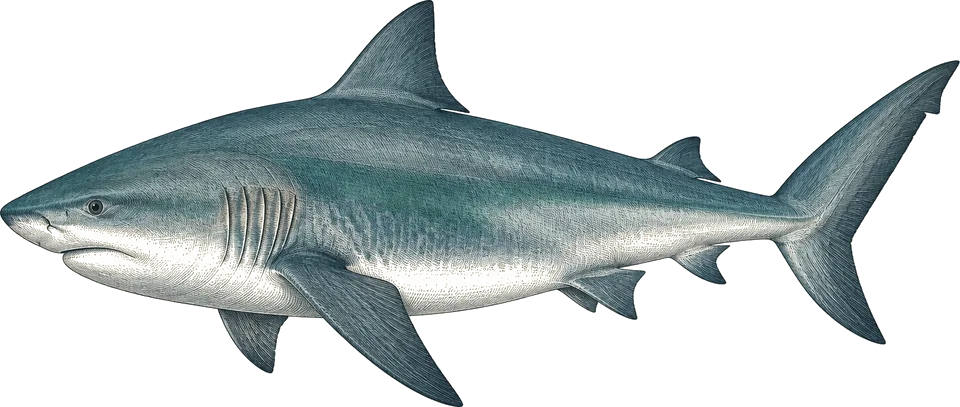
Gladden Spit
Arrive with the snapper spawn; seen on the same blue-water dives.1
Many seen on 2022 trips that missed whale sharks.
Gladden Spit
Circle the spawning snapper on the same blue-water dive.1
Regular during the spawn.
Compiled from the sources above, last checked 2026-11-12. Monthly conditions come from our own climate records; see how we score.