
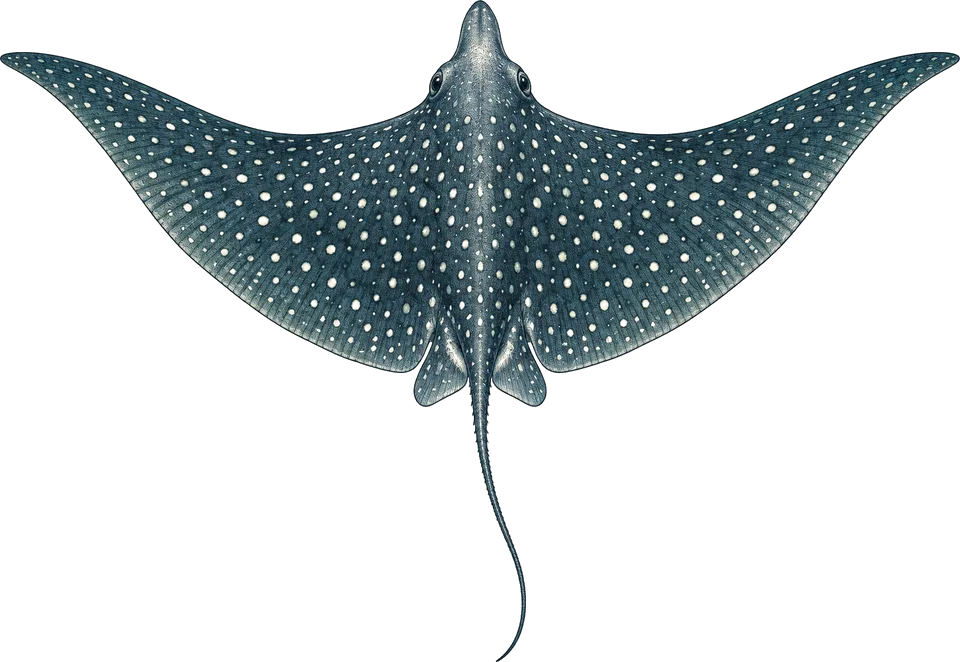
spotted eagle ray
All yearSouthwest Cay
Shallow reef and sand edges at 10 to 15 m; watch the blue.2
Regular; no season documented.
The best time to dive Guanaja is February to June, after the October to January rainy season and before hurricane activity peaks in August and September. Water runs about 25 to 29 °C. I'd aim for March to May, the driest stretch in our rain data.
Operators say: February to June: dry, calm, before the hurricane peak. Our data agrees on rain, with March to May driest, but shows the trade winds strongest from April to June; August to November has the flattest seas.
Worth knowing: 6 days a month of heavy rain.
111 km across · coastline from Natural Earth 10m
Guanaja is the quietest of the Bay Islands, with more than 50 named dive sites on a reef that rings the island and only a handful of small dive resorts. The best known dives are the Jado Trader, a freighter of 200 to 240 feet lying on its side at about 30 m, and Black Rock Canyon, a field of old lava formations with caverns and swim-throughs at 21 to 26 m. The Pinnacle has black coral, and shallow sites such as Southwest Cay suit easier dives.
The rainy season runs from early October to January, though full wash-out days are rare. Hurricane season runs June to November and is busiest in August and September. Seas are usually calm and current-free; when wind blows, boats dive the other side of the island. Water runs from about 25 °C in January to 29 °C in August and September.
Hover a month to isolate it.
| January | February | March | April | May | June | July | August | September | October | November | December | |
|---|---|---|---|---|---|---|---|---|---|---|---|---|
| Conditions | Good | Good | Excellent | Good | Good | Moderate | Excellent | Moderate | Excellent | Poor | Moderate | Excellent |
| Water temp (°C) | 27 | 27 | 27 | 28 | 29 | 29 | 29 | 29 | 30 | 30 | 29 | 28 |
| Visibility (m) | 10–20 | 10–20 | 10–20 | 10–20 | 10–20 | 10–20 | 10–20 | 10–20 | 10–20 | 10–20 | 5–15 | 10–20 |
| Marine life | Steady | Steady | Busy | Steady | Steady | Steady | Steady | Steady | Busy | Busy | Peak | Busy |
| Best time | Peak | Peak | Peak | Peak | Peak |
Long-term averages, 2016–2025. Visibility is estimated from satellite chlorophyll-a. Water temperature is the surface mean; it is cooler at depth.
Diving conditionsIt rains more. The sea is calmer.
Diving conditionsRain is frequent topside. The sea is rougher. The wind is up.
83 underwater observation records · 18 surveyed years of ocean data · 10 years of sea temperature
Dashed: monthly average. Band: eight days in ten.
10th to 90th percentile rangemonthly mean
Seas top 1.5 m on 19% of days. Enough to cancel a day boat
Gusts over 40 km/h, about where a day boat stays in port
3 of them bring heavy rain
| Month | Swell | Gusts over 40 km/h | Wet days | Heavy rain | Air | Daylight |
|---|---|---|---|---|---|---|
| Jan | 1.6 m | 16% | 18 | 3 | 27 °C | 11.1 h |
| Feb | 1.8 m | 22% | 15 | 2 | 27 °C | 11.5 h |
| Mar | 1.8 m | 27% | 9 | 1 | 27 °C | 11.9 h |
| Apr | 1.9 m | 33% | 6 | 1 | 28 °C | 12.4 h |
| May | 1.8 m | 29% | 5 | 1 | 29 °C | 12.8 h |
| Jun | 1.8 m | 30% | 12 | 2 | 29 °C | 13.0 h |
| Jul | 1.5 m | 10% | 20 | 2 | 29 °C | 12.9 h |
| Aug | 1.2 m | 9% | 18 | 3 | 29 °C | 12.6 h |
| Sep | 1.2 m | 6% | 17 | 2 | 29 °C | 12.1 h |
| Oct | 1.4 m | 7% | 23 | 10 | 29 °C | 11.6 h |
| Nov | 1.5 m | 4% | 22 | 9 | 28 °C | 11.2 h |
| Dec | 1.7 m | 8% | 22 | 5 | 27 °C | 11.0 h |
Swell is the rough end of the month: nine days in ten come in under it. Sea temperature covers 10 years, waves 4.
Darker is better, against this site's own year. Pick a month for its weeks.
| Week 1 | ||||||||||||
|---|---|---|---|---|---|---|---|---|---|---|---|---|
| Week 2 | ||||||||||||
| Week 3 | ||||||||||||
| Week 4 |
| Week | Conditions | Water | Swell | Wind | Rain chance |
|---|---|---|---|---|---|
| Week 1 | Excellent | 27 °C | 1.5 m | 31 km/h | 56% |
| Week 2 | Excellent | 27 °C | 1.5 m | 31 km/h | 59% |
| Week 3 | Moderate | 27 °C | 1.8 m | 32 km/h | 60% |
| Week 4 | Moderate | 27 °C | 1.9 m | 32 km/h | 55% |
| Week 1 | Excellent | 27 °C | 1.7 m | 32 km/h | 57% |
| Week 2 | Excellent | 27 °C | 1.8 m | 34 km/h | 57% |
| Week 3 | Excellent | 27 °C | 1.8 m | 34 km/h | 50% |
| Week 4 | Excellent | 27 °C | 1.8 m | 34 km/h | 42% |
| Week 1 | Good | 27 °C | 1.8 m | 34 km/h | 36% |
| Week 2 | Good | 27 °C | 1.8 m | 34 km/h | 32% |
| Week 3 | Good | 27 °C | 1.8 m | 35 km/h | 30% |
| Week 4 | Excellent | 28 °C | 1.9 m | 37 km/h | 25% |
| Week 1 | Moderate | 28 °C | 2.0 m | 38 km/h | 21% |
| Week 2 | Moderate | 28 °C | 1.9 m | 37 km/h | 23% |
| Week 3 | Good | 28 °C | 1.7 m | 34 km/h | 23% |
| Week 4 | Excellent | 28 °C | 1.7 m | 35 km/h | 17% |
| Week 1 | Excellent | 28 °C | 1.7 m | 36 km/h | 13% |
| Week 2 | Good | 28 °C | 1.9 m | 36 km/h | 17% |
| Week 3 | Moderate | 29 °C | 2.0 m | 36 km/h | 19% |
| Week 4 | Excellent | 29 °C | 1.8 m | 36 km/h | 17% |
| Week 1 | Good | 29 °C | 1.7 m | 36 km/h | 18% |
| Week 2 | Good | 29 °C | 1.8 m | 38 km/h | 32% |
| Week 3 | Moderate | 29 °C | 1.9 m | 39 km/h | 45% |
| Week 4 | Moderate | 29 °C | 1.8 m | 37 km/h | 55% |
| Week 1 | Good | 29 °C | 1.7 m | 35 km/h | 63% |
| Week 2 | Excellent | 29 °C | 1.6 m | 33 km/h | 64% |
| Week 3 | Excellent | 29 °C | 1.5 m | 32 km/h | 61% |
| Week 4 | Excellent | 29 °C | 1.5 m | 32 km/h | 63% |
| Week 1 | Moderate | 29 °C | 1.4 m | 33 km/h | 65% |
| Week 2 | Moderate | 29 °C | 1.3 m | 32 km/h | 60% |
| Week 3 | Moderate | 29 °C | 1.2 m | 31 km/h | 59% |
| Week 4 | Moderate | 30 °C | 1.2 m | 31 km/h | 50% |
| Week 1 | Good | 30 °C | 1.2 m | 31 km/h | 46% |
| Week 2 | Good | 30 °C | 1.3 m | 30 km/h | 54% |
| Week 3 | Excellent | 30 °C | 1.2 m | 29 km/h | 61% |
| Week 4 | Excellent | 30 °C | 1.2 m | 26 km/h | 68% |
| Week 1 | Poor | 30 °C | 1.3 m | 25 km/h | 69% |
| Week 2 | Poor | 30 °C | 1.5 m | 25 km/h | 71% |
| Week 3 | Poor | 30 °C | 1.4 m | 25 km/h | 74% |
| Week 4 | Poor | 29 °C | 1.4 m | 25 km/h | 77% |
| Week 1 | Moderate | 29 °C | 1.4 m | 24 km/h | 76% |
| Week 2 | Moderate | 29 °C | 1.7 m | 23 km/h | 77% |
| Week 3 | Moderate | 29 °C | 1.6 m | 24 km/h | 76% |
| Week 4 | Moderate | 28 °C | 1.5 m | 26 km/h | 66% |
| Week 1 | Good | 28 °C | 1.7 m | 27 km/h | 68% |
| Week 2 | Good | 28 °C | 1.8 m | 28 km/h | 73% |
| Week 3 | Excellent | 28 °C | 1.6 m | 28 km/h | 74% |
| Week 4 | Excellent | 28 °C | 1.5 m | 29 km/h | 65% |
10 years of daily records, averaged into weeks.
Sized for each month's coldest water.
| Jan | Feb | Mar | Apr | May | Jun | Jul | Aug | Sep | Oct | Nov | Dec | |
|---|---|---|---|---|---|---|---|---|---|---|---|---|
| Suit | 3 mm | 3 mm | 3 mm | skin | skin | skin | skin | skin | skin | skin | skin | skin |
Suit row is for surface water. At depth: 3 mm suit or skin. A torch for Black Rock Canyon. Small planes from Roatán carry 50 lb of checked bags free, then charge per pound.
Each month's rough end: nine days in ten are calmer.
Amber is over 1.5 m.
10 of the last 30 Octobers saw a tropical storm pass within 250 km. Anything has been recorded May–Jun, Aug–Nov.
Share of the last 30 years with a storm that month.
Only 83 records have been logged within 60 km. A thin record is not an empty reef.
| Species | When | Observed window | Reliability | Evidence | Records |
|---|---|---|---|---|---|
| Hawksbill turtle | Sep–Dec | Near-guaranteed | 17 | ||
| Nurse shark | All year | Likely | 15 | ||
| Southern stingray | May–Jul | Hit-or-miss | 9 | ||
| Green turtle | Mar, Nov | Likely | 11 | ||
| Spotted eagle ray | Mar, Jul, Sep | Hit-or-miss | 10 |
Logged sightings, not a full survey. How to read this table.
| Site | Depth | Level | What to expect |
|---|---|---|---|
| Jado Traderwreck | 24–30 m | Advanced | Freighter of 200 to 240 feet on its side at about 30 m, with tarpon, green morays and soft coral. The one dive I wouldn't skip here.2 |
| Black Rock Canyoncaverns / swim-throughs | 21–26 m | Advanced | Old lava flow off Mangrove Bight with caverns, pinnacles and swim-throughs; morays and barracuda. Guides lead the routes.3 |
| The Pinnaclepinnacle / wall | 11–34 m | Experienced | Walls with black coral and bluebell tunicates, dived to about 34 m; reef fish on top at around 11 m.2 |
| Southwest Cayreef | ≈ 8–14 m | Open Water | Hard corals and sea fans at about 12 m; eagle rays, southern stingrays, barracuda and hawksbill turtles. A sensible first dive of the week.2 |
| Michael's Rockreef / swim-throughs | ≈ 12–21 m | Advanced | Crevices and swim-throughs at about 21 m with lobsters, black grouper and flamingo tongues; little or no current.2 |
| Paradisesand flat | ≈ 10–15 m | Open Water | Sand flat at about 15 m with garden eels, jawfish, stingrays and passing barracuda.2 |
Southwest Cay
Shallow reef and sand edges at 10 to 15 m; watch the blue.2
Regular; no season documented.
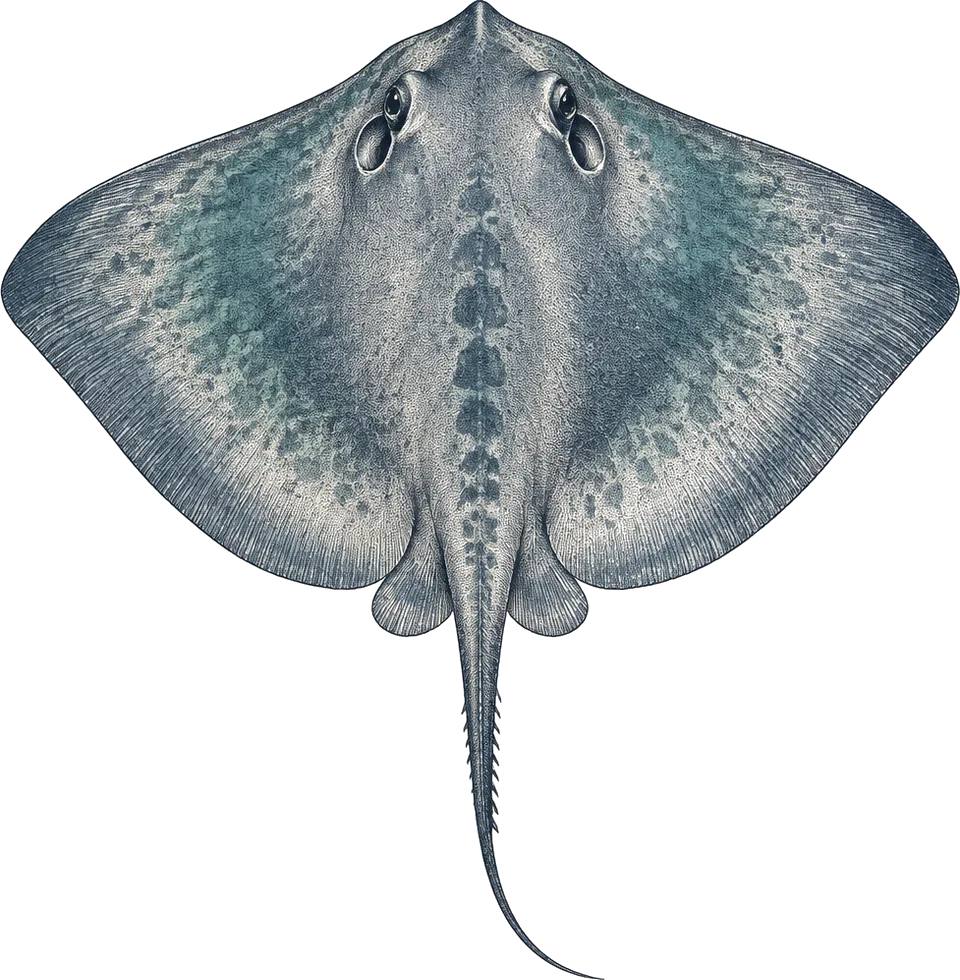
Southwest Cay, Paradise
Sand flats at 12 to 15 m.2
Common on sand sites.
Jado Trader
Look inside and around the wreck at 24 to 30 m.2
Reported on the wreck; one report saw five.
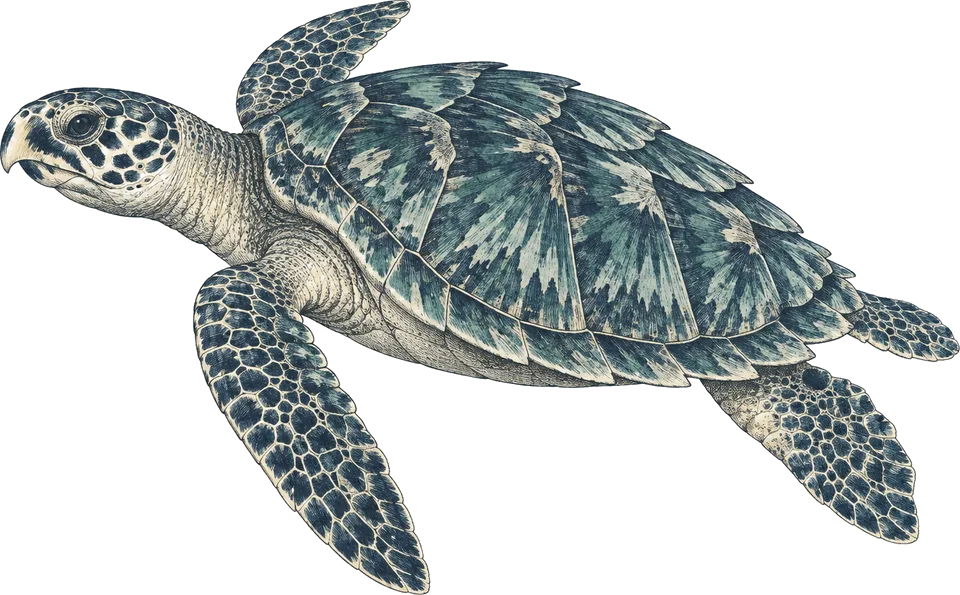
Southwest Cay
Shallow reef dives.2
Occasional.
Compiled from the sources above, last checked 2026-11-12. Monthly conditions come from our own climate records; see how we score.