
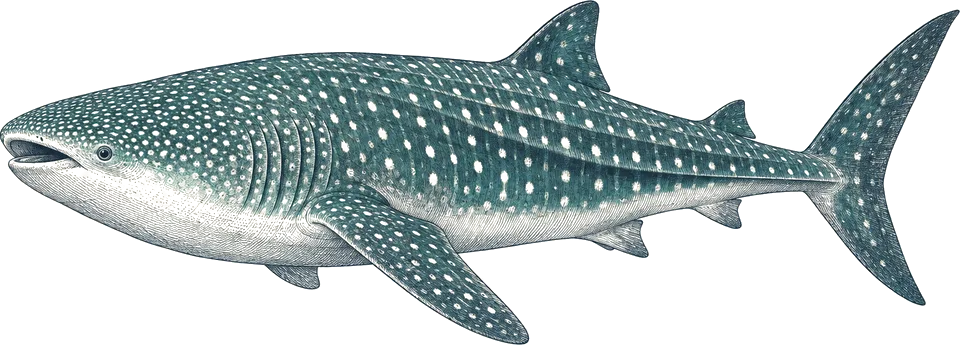
whale shark
Feb–Apr, Oct–DecNorth side, Black Hills, The Pinnacle
Boats search for bait balls off the north side; you slip in on snorkel.1
Possible all year; most reliable in these months.
The best time to dive Utila is March to August, the drier half of the year, with March to May bringing the clearest water. Whale sharks are most reliable February to April and October to December. I'd go in April, when the two overlap.
Operators say: March to August, the drier half of the year; March to May adds the clearest water and spring whale sharks. Our data rates January to September highly and marks October and November, the wettest months, as poor.
111 km across · coastline from Natural Earth 10m
Utila is the smallest and least developed of Honduras's three main Bay Islands, and a busy, low-cost training centre with dozens of dive shops. The reefs fringe the island close to shore, so boat rides are short. The south side has gentle coral slopes and walls such as CJ's Drop-off and Raggedy Cay, plus macro dives on seagrass and sand for seahorses and frogfish. The north side drops into deep water, where seamounts such as Black Hills and the Pinnacle draw schooling fish and passing whale sharks.
Whale sharks are seen all year in Utila's open water, most reliably from February to April and October to December, when bait balls form off the north side; encounters are usually on snorkel from the boat. Water is 26 to 30 °C and visibility usually 20 to 30 m, clearest from March to May.
Hover a month to isolate it.
| January | February | March | April | May | June | July | August | September | October | November | December | |
|---|---|---|---|---|---|---|---|---|---|---|---|---|
| Conditions | Excellent | Excellent | Excellent | Excellent | Excellent | Excellent | Excellent | Excellent | Excellent | Poor | Moderate | Good |
| Water temp (°C) | 27 | 27 | 28 | 28 | 29 | 29 | 29 | 30 | 30 | 30 | 29 | 28 |
| Visibility (m) | 20–30 | 20–30 | 20–30 | 20–30 | 25–35 | 20–30 | 20–30 | 20–30 | 20–30 | 20–30 | 15–25 | 20–30 |
| Marine life | Peak | Peak | Peak | Peak | Peak | Peak | Peak | Peak | Peak | Peak | Peak | Peak |
| Best time | Peak | Peak | Peak | Peak | Peak | Peak |
Long-term averages, 2016–2025. Visibility is estimated from satellite chlorophyll-a. Water temperature is the surface mean; it is cooler at depth.
Diving conditionsSeas stay mostly calm. It rains more. The wind eases.
Diving conditionsRain is frequent topside. The wind is up. The sea is rougher.
Marine lifeWhale shark (hit-or-miss) peaks at Utila in these months.
914 underwater observation records · 28 surveyed years of ocean data · 10 years of sea temperature
Dashed: monthly average. Band: eight days in ten.
10th to 90th percentile rangemonthly mean
Seas top 1.5 m on 17% of days. Enough to cancel a day boat
Gusts over 40 km/h, about where a day boat stays in port
4 of them bring heavy rain
| Month | Swell | Gusts over 40 km/h | Wet days | Heavy rain | Air | Daylight |
|---|---|---|---|---|---|---|
| Jan | 1.8 m | 10% | 17 | 5 | 27 °C | 11.1 h |
| Feb | 1.8 m | 18% | 11 | 3 | 27 °C | 11.5 h |
| Mar | 1.7 m | 17% | 9 | 2 | 27 °C | 11.9 h |
| Apr | 1.9 m | 18% | 6 | 2 | 28 °C | 12.4 h |
| May | 1.6 m | 16% | 5 | 1 | 29 °C | 12.8 h |
| Jun | 1.7 m | 23% | 11 | 2 | 29 °C | 13.0 h |
| Jul | 1.6 m | 13% | 15 | 2 | 29 °C | 12.9 h |
| Aug | 1.3 m | 8% | 17 | 2 | 29 °C | 12.5 h |
| Sep | 1.1 m | 3% | 20 | 4 | 30 °C | 12.1 h |
| Oct | 1.4 m | 3% | 24 | 11 | 29 °C | 11.6 h |
| Nov | 1.6 m | 5% | 23 | 9 | 28 °C | 11.2 h |
| Dec | 1.7 m | 6% | 22 | 8 | 27 °C | 11.0 h |
Swell is the rough end of the month: nine days in ten come in under it. Sea temperature covers 10 years, waves 4.
Darker is better, against this site's own year. Pick a month for its weeks.
| Week 1 | ||||||||||||
|---|---|---|---|---|---|---|---|---|---|---|---|---|
| Week 2 | ||||||||||||
| Week 3 | ||||||||||||
| Week 4 |
| Week | Conditions | Water | Swell | Wind | Rain chance |
|---|---|---|---|---|---|
| Week 1 | Excellent | 27 °C | 1.6 m | 29 km/h | 55% |
| Week 2 | Excellent | 27 °C | 1.5 m | 28 km/h | 60% |
| Week 3 | Good | 27 °C | 1.8 m | 31 km/h | 54% |
| Week 4 | Good | 27 °C | 2.0 m | 32 km/h | 49% |
| Week 1 | Good | 27 °C | 1.8 m | 32 km/h | 46% |
| Week 2 | Good | 27 °C | 1.8 m | 33 km/h | 42% |
| Week 3 | Good | 27 °C | 1.8 m | 34 km/h | 40% |
| Week 4 | Excellent | 27 °C | 1.6 m | 34 km/h | 33% |
| Week 1 | Excellent | 27 °C | 1.5 m | 33 km/h | 30% |
| Week 2 | Excellent | 27 °C | 1.5 m | 31 km/h | 33% |
| Week 3 | Excellent | 28 °C | 1.7 m | 32 km/h | 34% |
| Week 4 | Excellent | 28 °C | 1.8 m | 35 km/h | 26% |
| Week 1 | Good | 28 °C | 2.0 m | 35 km/h | 21% |
| Week 2 | Excellent | 28 °C | 1.9 m | 33 km/h | 22% |
| Week 3 | Excellent | 28 °C | 1.7 m | 33 km/h | 23% |
| Week 4 | Excellent | 28 °C | 1.5 m | 33 km/h | 18% |
| Week 1 | Excellent | 29 °C | 1.5 m | 34 km/h | 14% |
| Week 2 | Excellent | 29 °C | 1.6 m | 33 km/h | 15% |
| Week 3 | Excellent | 29 °C | 1.6 m | 33 km/h | 15% |
| Week 4 | Excellent | 29 °C | 1.6 m | 34 km/h | 20% |
| Week 1 | Excellent | 29 °C | 1.6 m | 34 km/h | 23% |
| Week 2 | Excellent | 30 °C | 1.8 m | 35 km/h | 31% |
| Week 3 | Good | 29 °C | 1.8 m | 36 km/h | 40% |
| Week 4 | Good | 29 °C | 1.7 m | 36 km/h | 46% |
| Week 1 | Excellent | 29 °C | 1.6 m | 37 km/h | 47% |
| Week 2 | Excellent | 29 °C | 1.6 m | 36 km/h | 45% |
| Week 3 | Excellent | 29 °C | 1.6 m | 34 km/h | 45% |
| Week 4 | Excellent | 29 °C | 1.6 m | 33 km/h | 51% |
| Week 1 | Good | 29 °C | 1.5 m | 34 km/h | 58% |
| Week 2 | Excellent | 30 °C | 1.4 m | 33 km/h | 55% |
| Week 3 | Excellent | 30 °C | 1.3 m | 31 km/h | 56% |
| Week 4 | Excellent | 30 °C | 1.3 m | 30 km/h | 56% |
| Week 1 | Good | 30 °C | 1.2 m | 29 km/h | 58% |
| Week 2 | Excellent | 30 °C | 1.1 m | 27 km/h | 67% |
| Week 3 | Excellent | 30 °C | 1.1 m | 25 km/h | 72% |
| Week 4 | Excellent | 30 °C | 1.1 m | 24 km/h | 73% |
| Week 1 | Poor | 30 °C | 1.1 m | 23 km/h | 75% |
| Week 2 | Poor | 30 °C | 1.3 m | 23 km/h | 77% |
| Week 3 | Poor | 30 °C | 1.5 m | 23 km/h | 79% |
| Week 4 | Poor | 29 °C | 1.4 m | 24 km/h | 80% |
| Week 1 | Good | 29 °C | 1.4 m | 24 km/h | 79% |
| Week 2 | Moderate | 29 °C | 1.8 m | 23 km/h | 79% |
| Week 3 | Moderate | 29 °C | 1.5 m | 24 km/h | 78% |
| Week 4 | Moderate | 28 °C | 1.5 m | 25 km/h | 71% |
| Week 1 | Good | 28 °C | 1.7 m | 26 km/h | 70% |
| Week 2 | Moderate | 28 °C | 1.7 m | 29 km/h | 73% |
| Week 3 | Excellent | 28 °C | 1.5 m | 28 km/h | 74% |
| Week 4 | Good | 28 °C | 1.6 m | 28 km/h | 63% |
10 years of daily records, averaged into weeks.
Sized for each month's coldest water.
| Jan | Feb | Mar | Apr | May | Jun | Jul | Aug | Sep | Oct | Nov | Dec | |
|---|---|---|---|---|---|---|---|---|---|---|---|---|
| Suit | 3 mm | 3 mm | skin | skin | skin | skin | skin | skin | skin | skin | skin | skin |
Suit row is for surface water. At depth: 3 mm wetsuit or shorty. SMB for drifts on the north side. Mask and fins in the boat for whale shark snorkels.
Each month's rough end: nine days in ten are calmer.
Amber is over 1.5 m.
8 of the last 30 Octobers saw a tropical storm pass within 250 km. Anything has been recorded May–Jun, Aug–Nov.
Share of the last 30 years with a storm that month.
| Species | When | Observed window | Reliability | Evidence | Records |
|---|---|---|---|---|---|
| Hawksbill turtle | All year | Near-guaranteed | 99 | ||
| Whale shark | All year | Hit-or-miss | 413 | ||
| Spotted eagle ray | All year | Likely | 108 | ||
| Nassau grouper | All year | Likely | 63 | ||
| Southern stingray | All year | Likely | 41 | ||
| Green turtle | All year | Likely | 38 | ||
| Spinner dolphin | Apr, Jun | Hit-or-miss | 19 | ||
| Bottlenose dolphin | Mar, May, Jul, Sep | Hit-or-miss | 11 | ||
| Nurse shark | Apr, Oct, Dec | Likely | 38 | ||
| Manatee | Mar, Sep–Nov | Hit-or-miss | 10 |
Logged sightings, not a full survey. How to read this table.
| Site | Depth | Level | What to expect |
|---|---|---|---|
| Black Hillsseamount | 10–30 m | Advanced | Seamount topping out at 10 m with schools of barracuda, jacks and spadefish, turtles and frogfish. Current can be strong; whale sharks pass over. My first pick.1 |
| The Pinnacleseamount | 12–30 m | Advanced | North-side seamount from 12 m, usually drifted, dived only in calm seas. Horse-eye jacks, barracuda, eagle rays.1 |
| Halliburtonwreck | 24–30 m | Advanced | Vessel scuttled as an artificial reef around 1998 to 2001; main deck about 24 to 27 m. Reel-guided penetration for trained divers; fireworms, arrow crabs.1 |
| CJ's Drop-offwall | 9–30 m | Open Water | South-side wall from a 9 m reef top, with sponges, sea fans and black coral; lobsters and goldentail morays.1 |
| Raggedy Caywall | 8–30 m | Open Water | Shallow reef from 8 m to a wall; nurse sharks and turtles rest at the base, eagle rays in the blue.1 |
| Duppy Watersslope | 6–24 m | Open Water | Gentle coral garden with eagle rays, stingrays and octopus; a popular night dive for bioluminescence.1 |
| Ron's Wreckwreck | 12–18 m | Open Water | 12 m fishing boat upright at 18 m on the south side, with frogfish, arrow crabs, garden eels and flounder.1 |
| Jack Neil Pointreef | 5–12 m | Open Water | Shallow spur-and-groove reef to 12 m: seahorses, flying gurnards and toadfish, with turtles and eagle rays overhead.1 |
| Seahorse Reefseagrass / sand | 2–8 m | Open Water | Seagrass and coral heads to about 8 m with lined and slender seahorses, frogfish and jawfish; also a snorkel.1 |
| Lighthouse Reefreef | 6–27 m | Open Water | Remote eastern coral garden with large elkhorn and staghorn and a small wall; many turtles. Charter or liveaboard only.1 |
North side, Black Hills, The Pinnacle
Boats search for bait balls off the north side; you slip in on snorkel.1
Possible all year; most reliable in these months.
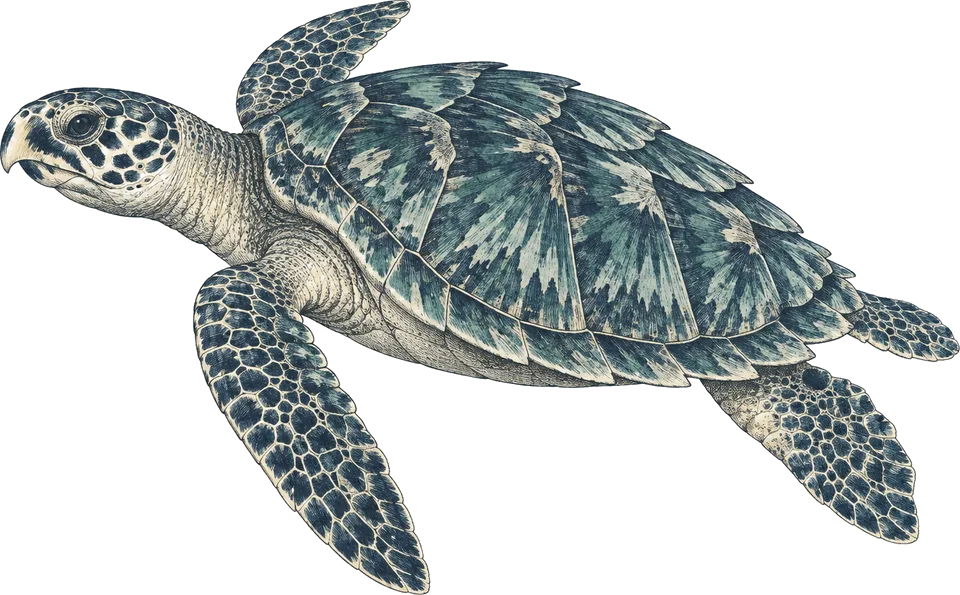
Black Hills, Lighthouse Reef, Raggedy Cay
Look along the seamount and reef top.2
Common on most reef dives.
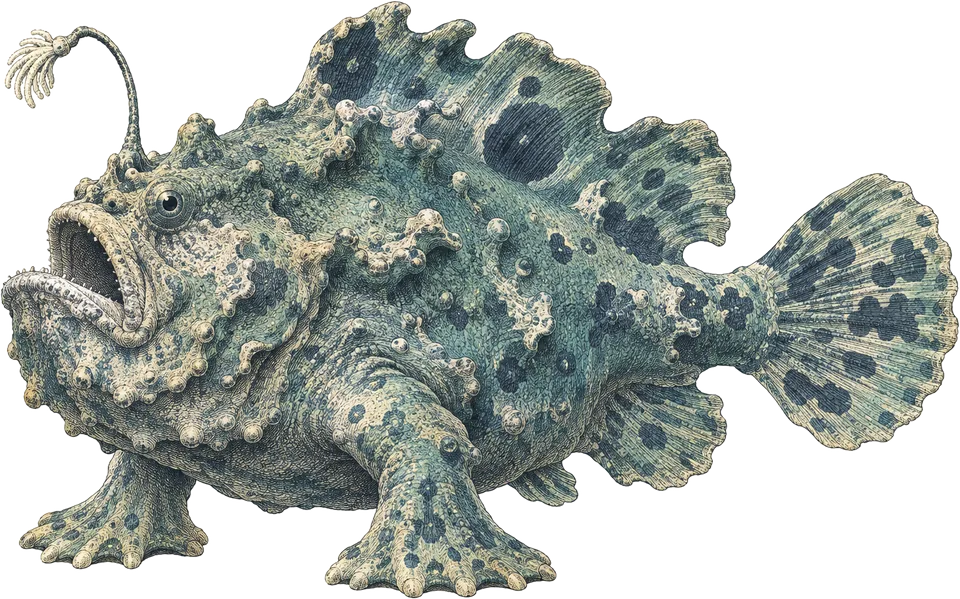
Seahorse Reef, Jack Neil Point, Ron's Wreck
Slow, shallow dives over seagrass and sand.1
Resident; good odds with a guide.
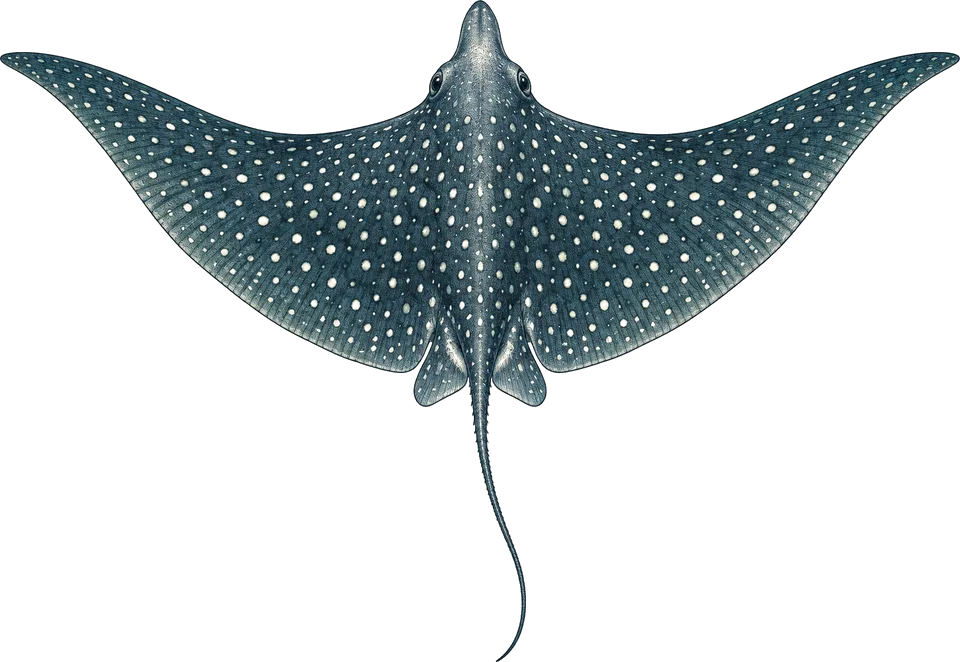
Duppy Waters, Raggedy Cay, The Pinnacle
Watch the blue off the reef edge and over sand.1
Regular.
Compiled from the sources above, last checked 2026-11-12. Monthly conditions come from our own climate records; see how we score.