
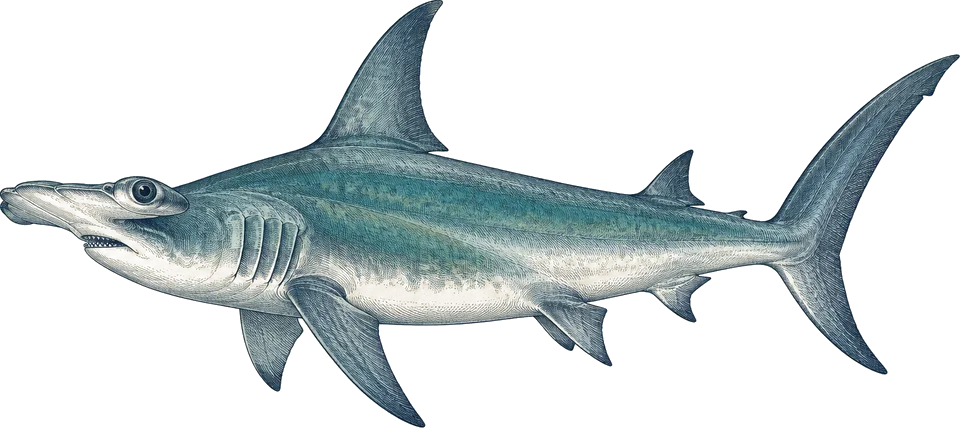
great hammerhead
Dec–AprGreat Hammerhead site (South Bimini)
Kneel on the sand at about 6 m while the feeder works the bait box.7
Peak January to March; seen on most dives then.
The best time to dive Bimini is January to March, the peak of the great hammerhead season, on a baited dive at about 6 m. The sharks are around from about December to April. February is when I'd go: operators often call it the most reliable month.
Operators say: January to March for great hammerheads; trips run from about December to April. Our data rates March only good, not excellent; operators and the Bimini Shark Lab count it in the peak.
111 km across · coastline from Natural Earth 10m
Bimini sits where the shallow Great Bahama Bank meets the Gulf Stream, which gives it two kinds of diving: easy bank sites such as the SS Sapona and Bimini Road at 3 to 6 m, and current-swept wrecks and walls on the Stream edge. Most divers come for one thing: the great hammerheads that visit the sand flats off South Bimini in winter.
The hammerhead dive is a stationary, baited dive in about 6 m of water, a few minutes by boat from North Bimini. Divers kneel on the sand while a feeder works a bait box, and dives can run past 90 minutes. Operators run it from about November or December to the end of April, with January to March the most reliable. The water is then in the low to mid 20s °C, so bring a full 5 mm. Wild Atlantic spotted dolphins can be found all year, and calm summer seas give the best dolphin days.
Hover a month to isolate it.
| January | February | March | April | May | June | July | August | September | October | November | December | |
|---|---|---|---|---|---|---|---|---|---|---|---|---|
| Conditions | Excellent | Excellent | Good | Poor | Poor | Poor | Poor | Poor | Moderate | Poor | Moderate | Poor |
| Water temp (°C) | 25 | 25 | 26 | 26 | 28 | 29 | 30 | 30 | 30 | 29 | 27 | 26 |
| Visibility (m) | 5–15 | 5–15 | 5–15 | 5–15 | 5–15 | 5–15 | 0–10 | 0–10 | 5–15 | 5–15 | 5–15 | 5–15 |
| Marine life | Busy | Busy | Steady | Steady | Steady | Steady | Steady | Steady | Steady | Steady | Steady | Steady |
| Best time | Peak | Peak | Peak |
Long-term averages, 2016–2025. Visibility is estimated from satellite chlorophyll-a. Water temperature is the surface mean; it is cooler at depth.
Diving conditionsThe sea is rougher. The wind is up.
Marine lifeGreat hammerhead (likely) peaks at Bimini, Bahamas in these months.
Diving conditionsIt rains more. The sea is calmer.
Diving conditionsThe sea is rougher. The wind is up.
Diving conditionsThe sea is rougher. It rains less.
325 underwater observation records · 29 surveyed years of ocean data · 10 years of sea temperature
Dashed: monthly average. Band: eight days in ten.
10th to 90th percentile rangemonthly mean
Seas top 1.5 m on 7% of days. Enough to cancel a day boat
Gusts over 40 km/h, about where a day boat stays in port
3 of them bring heavy rain
| Month | Swell | Gusts over 40 km/h | Wet days | Heavy rain | Air | Daylight |
|---|---|---|---|---|---|---|
| Jan | 1.8 m | 19% | 9 | 2 | 24 °C | 10.6 h |
| Feb | 1.4 m | 15% | 7 | 1 | 24 °C | 11.1 h |
| Mar | 1.5 m | 14% | 7 | 1 | 24 °C | 11.8 h |
| Apr | 1.2 m | 6% | 9 | 1 | 26 °C | 12.6 h |
| May | 0.9 m | 5% | 12 | 3 | 27 °C | 13.3 h |
| Jun | 1.0 m | 1% | 18 | 4 | 29 °C | 13.6 h |
| Jul | 0.7 m | 0% | 17 | 3 | 30 °C | 13.5 h |
| Aug | 0.8 m | 2% | 19 | 3 | 30 °C | 12.9 h |
| Sep | 1.1 m | 7% | 18 | 5 | 29 °C | 12.1 h |
| Oct | 1.4 m | 10% | 17 | 4 | 28 °C | 11.4 h |
| Nov | 1.6 m | 13% | 9 | 2 | 26 °C | 10.7 h |
| Dec | 1.6 m | 17% | 8 | 3 | 25 °C | 10.4 h |
Swell is the rough end of the month: nine days in ten come in under it. Sea temperature covers 10 years, waves 4.
Darker is better, against this site's own year. Pick a month for its weeks.
| Week 1 | ||||||||||||
|---|---|---|---|---|---|---|---|---|---|---|---|---|
| Week 2 | ||||||||||||
| Week 3 | ||||||||||||
| Week 4 |
| Week | Conditions | Water | Swell | Wind | Rain chance |
|---|---|---|---|---|---|
| Week 1 | Good | 26 °C | 1.4 m | 30 km/h | 27% |
| Week 2 | Good | 25 °C | 1.8 m | 32 km/h | 31% |
| Week 3 | Good | 25 °C | 1.8 m | 32 km/h | 30% |
| Week 4 | Good | 25 °C | 1.8 m | 30 km/h | 26% |
| Week 1 | Good | 25 °C | 1.7 m | 28 km/h | 20% |
| Week 2 | Good | 25 °C | 1.6 m | 29 km/h | 21% |
| Week 3 | Good | 25 °C | 1.5 m | 31 km/h | 27% |
| Week 4 | Good | 26 °C | 1.4 m | 30 km/h | 25% |
| Week 1 | Moderate | 26 °C | 1.3 m | 29 km/h | 22% |
| Week 2 | Good | 26 °C | 1.4 m | 31 km/h | 23% |
| Week 3 | Moderate | 26 °C | 1.7 m | 29 km/h | 22% |
| Week 4 | Good | 26 °C | 1.6 m | 29 km/h | 23% |
| Week 1 | Poor | 26 °C | 1.4 m | 29 km/h | 25% |
| Week 2 | Poor | 26 °C | 1.2 m | 29 km/h | 28% |
| Week 3 | Poor | 26 °C | 1.3 m | 29 km/h | 31% |
| Week 4 | Poor | 27 °C | 1.2 m | 29 km/h | 32% |
| Week 1 | Poor | 27 °C | 1.1 m | 28 km/h | 33% |
| Week 2 | Poor | 27 °C | 1.0 m | 27 km/h | 38% |
| Week 3 | Moderate | 28 °C | 0.9 m | 27 km/h | 42% |
| Week 4 | Poor | 28 °C | 0.9 m | 25 km/h | 40% |
| Week 1 | Moderate | 28 °C | 1.1 m | 25 km/h | 52% |
| Week 2 | Moderate | 29 °C | 1.0 m | 25 km/h | 62% |
| Week 3 | Poor | 29 °C | 0.9 m | 24 km/h | 58% |
| Week 4 | Poor | 29 °C | 0.7 m | 23 km/h | 56% |
| Week 1 | Poor | 30 °C | 0.7 m | 22 km/h | 52% |
| Week 2 | Poor | 30 °C | 0.7 m | 23 km/h | 52% |
| Week 3 | Moderate | 30 °C | 0.7 m | 24 km/h | 60% |
| Week 4 | Moderate | 30 °C | 0.7 m | 23 km/h | 57% |
| Week 1 | Poor | 30 °C | 0.8 m | 23 km/h | 57% |
| Week 2 | Poor | 30 °C | 0.8 m | 22 km/h | 54% |
| Week 3 | Poor | 30 °C | 0.8 m | 23 km/h | 54% |
| Week 4 | Poor | 30 °C | 0.9 m | 25 km/h | 67% |
| Week 1 | Moderate | 30 °C | 1.0 m | 23 km/h | 65% |
| Week 2 | Poor | 30 °C | 0.8 m | 21 km/h | 58% |
| Week 3 | Poor | 30 °C | 0.9 m | 21 km/h | 62% |
| Week 4 | Moderate | 30 °C | 1.5 m | 24 km/h | 64% |
| Week 1 | Moderate | 29 °C | 1.7 m | 27 km/h | 64% |
| Week 2 | Moderate | 29 °C | 1.5 m | 27 km/h | 62% |
| Week 3 | Moderate | 29 °C | 1.5 m | 29 km/h | 50% |
| Week 4 | Poor | 28 °C | 1.4 m | 31 km/h | 39% |
| Week 1 | Moderate | 28 °C | 1.6 m | 31 km/h | 34% |
| Week 2 | Moderate | 28 °C | 1.9 m | 30 km/h | 35% |
| Week 3 | Moderate | 27 °C | 1.7 m | 28 km/h | 33% |
| Week 4 | Good | 27 °C | 1.5 m | 27 km/h | 25% |
| Week 1 | Poor | 27 °C | 1.5 m | 27 km/h | 19% |
| Week 2 | Poor | 27 °C | 2.0 m | 29 km/h | 26% |
| Week 3 | Moderate | 26 °C | 2.0 m | 30 km/h | 31% |
| Week 4 | Poor | 26 °C | 1.3 m | 29 km/h | 25% |
10 years of daily records, averaged into weeks.
Sized for each month's coldest water.
| Jan | Feb | Mar | Apr | May | Jun | Jul | Aug | Sep | Oct | Nov | Dec | |
|---|---|---|---|---|---|---|---|---|---|---|---|---|
| Suit | 3 mm | 3 mm | 3 mm | 3 mm | 3 mm | skin | skin | skin | skin | skin | 3 mm | 3 mm |
Suit row is for surface water. At depth: Full 5 mm, hood and gloves for the hammerhead dive, and extra weight for a long static dive. 3 mm in summer. SMB for Stream-edge sites.
Each month's rough end: nine days in ten are calmer.
Amber is over 1.5 m.
8 of the last 30 Septembers saw a tropical storm pass within 250 km. Anything has been recorded Jul–Nov.
Share of the last 30 years with a storm that month.
| Species | When | Observed window | Reliability | Evidence | Records |
|---|---|---|---|---|---|
| Nurse shark | All year | Likely | 40 | ||
| Southern stingray | All year | Likely | 50 | ||
| Bull shark | All year | Likely | 25 | ||
| Great hammerhead | Jan–Feb | Likely | 22 | ||
| Yellowfin tuna | All year | Hit-or-miss | 75 | ||
| Loggerhead turtle | Jul, Sep | Likely | 14 | ||
| Silky shark | Dec | Hit-or-miss | 11 | ||
| Green turtle | Jun, Aug–Sep | Hit-or-miss | 8 | ||
| Lemon shark | May, Aug, Oct | Hit-or-miss | 13 | ||
| Bottlenose dolphin | May, Aug | Hit-or-miss | 8 |
Logged sightings, not a full survey. How to read this table.
| Site | Depth | Level | What to expect |
|---|---|---|---|
| Great Hammerhead site (South Bimini)sand flat | 5–7 m | Open Water | Sand at about 6 m close to shore. Kneel in a V while a feeder works a bait box; dives can pass 90 minutes.6 |
| SS Saponawreck | 2–6 m | Open Water | Concrete-hulled ship built 1911, aground south of the islands with its hull above water. Nurse sharks underneath; squid and octopus at night. I'd save it for a night dive.1 |
| Bimini Roadrock formation | 3–6 m | Open Water | Line of flat limestone blocks at about 5 m that looks like a paved road; also a snorkel stop.6 |
| Turtle Rocksreef | 5–10 m | Open Water | Three rock formations to 10 m with spotted eagle rays, Caribbean reef sharks and nurse sharks.1 |
| Bull Runwall / drift | 12–24 m | Advanced | Drift along a sloping wall and pinnacles with swim-throughs; blacktip, nurse and lemon sharks, bull sharks December to March.1 |
| Bimini Bargewreck | 24–30 m | Experienced | 60 m barge upright on sand at 29 m near the Gulf Stream edge; current brings pelagics and sharks.1 |
| Victory Reefwall | 15–35 m | Advanced | Sponge and coral slope south of Cat Cay with overhangs, caverns and swim-throughs; turtles and reef sharks.1 |
| Continental Shelfwall | 30–40 m | Experienced | Wall-top dive at about 40 m on the Gulf Stream edge, in strong current.1 |
Great Hammerhead site (South Bimini)
Kneel on the sand at about 6 m while the feeder works the bait box.7
Peak January to March; seen on most dives then.
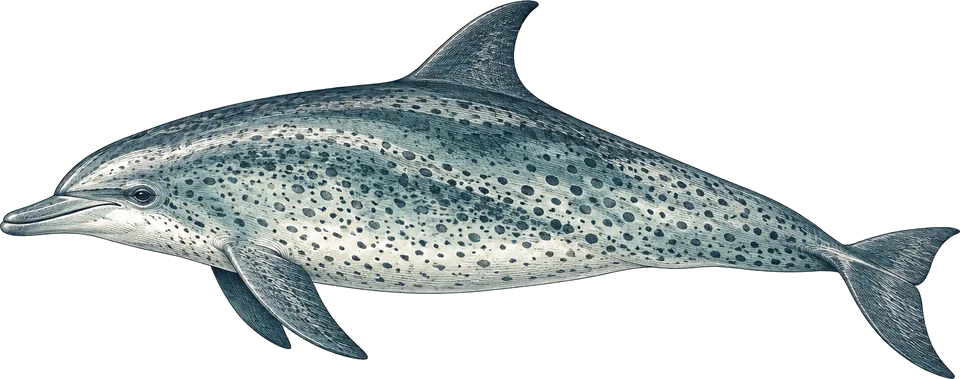
Dolphin grounds off North Bimini
Snorkel only; slip in when the captain says the pod is engaged.6
Not guaranteed; calm summer days work best.
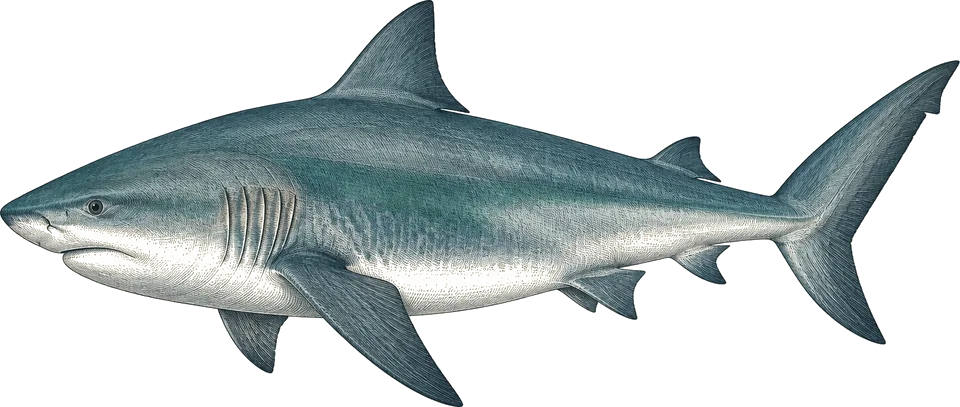
Bull Run, Great Hammerhead site
Seen at Bull Run and sometimes on the hammerhead dive; some trips use a cage.1
Seasonal, December to March.
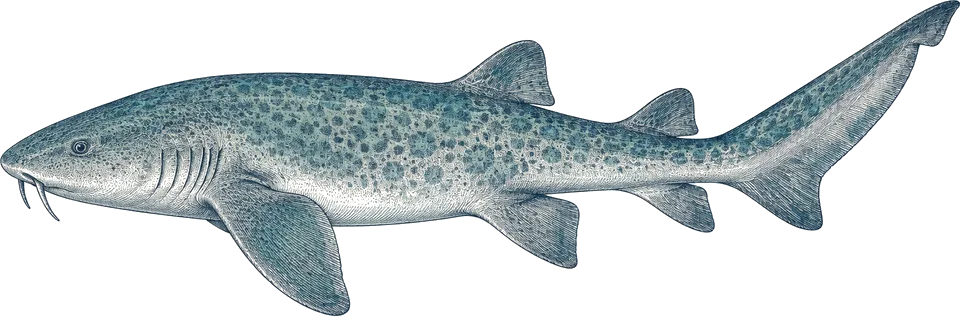
SS Sapona, Great Hammerhead site
Easy shallow dives; they rest under the Sapona and join the bait dives.1
Common.
Compiled from the sources above, last checked 2026-11-11. Monthly conditions come from our own climate records; see how we score.