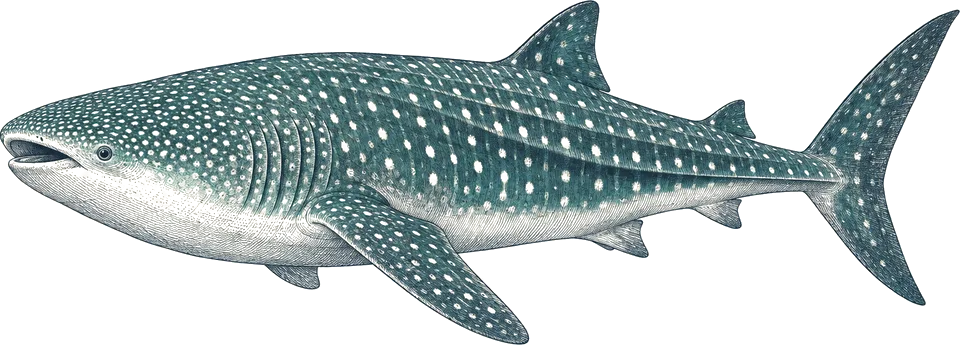
whale shark
Mar–AugOuter Ningaloo Reef, from Exmouth and Coral Bay
Snorkel only, on licensed tours from Exmouth or Coral Bay; confident swimmers, wetsuit supplied.12
Very high March to July; peak June and July.
The best time to dive Ningaloo Reef is May to July, when whale shark season peaks and the seas are at their calmest. Humpback swims run August to October. If I could pick one month, it'd be June.
Operators say: May to July, for whale sharks at their peak and the calmest sea; dive tours run March to October. Our data rates March and April just as calm; operators put the whale shark peak in June and July.
Worth knowing: 72% of days see seas over 1.5 m.

By Eugen. Based on 14 sources, checked 12 November 2026.
111 km across · coastline from Natural Earth 10m
Ningaloo is Australia's largest fringing reef, close enough to shore to snorkel from the beach. Most visitors come for the whale sharks, which are met on licensed snorkel tours, not on scuba. The scuba diving is shallow and relaxed: outer-reef sites in Lighthouse Bay and on the Westside at 8 to 24 m, soft corals and nudibranchs around the Muiron Islands, and the Exmouth Navy Pier, a shore dive under an active naval pier with grey nurse sharks, potato cod and wobbegongs.
Whale sharks feed on the reef from about March to July or August, peaking in June and July. Humpbacks pass from July and can be swum with from August to mid-October. Water is about 22 to 24 °C in winter and warmer in summer, and visibility is modest, usually 5 to 15 m. Western Australia saw severe coral bleaching in 2025, so ask operators about current reef condition.
Hover a month to isolate it.
| January | February | March | April | May | June | July | August | September | October | November | December | |
|---|---|---|---|---|---|---|---|---|---|---|---|---|
| Conditions | Poor | Poor | Excellent | Excellent | Excellent | Excellent | Excellent | Poor | Poor | Poor | Poor | Poor |
| Water temp (°C) | 27 | 28 | 29 | 28 | 27 | 25 | 24 | 23 | 23 | 24 | 25 | 26 |
| Visibility (m) | 5–15 | 5–15 | 5–15 | 5–15 | 5–15 | 5–15 | 5–15 | 5–15 | 5–15 | 5–15 | 5–15 | 5–15 |
| Marine life | Steady | Steady | Peak | Peak | Peak | Peak | Peak | Steady | Steady | Steady | Steady | Steady |
| Best time | Peak | Peak | Peak |
Long-term averages, 2016–2025. Visibility is estimated from satellite chlorophyll-a. Water temperature is the surface mean; it is cooler at depth.
Diving conditionsIt rains more. The wind eases.
Marine lifeWhale shark (near-guaranteed), Scalloped hammerhead (hit-or-miss) peak at Ningaloo in these months.
Diving conditionsThe wind is up. It rains less.
Marine lifeReef manta (hit-or-miss) peaks at Ningaloo in these months.
9,421 underwater observation records · 32 surveyed years of ocean data · 10 years of sea temperature
Dashed: monthly average. Band: eight days in ten.
10th to 90th percentile rangemonthly mean
Seas top 1.5 m on 80% of days. Enough to cancel a day boat
Gusts over 40 km/h, about where a day boat stays in port
0 of them bring heavy rain
| Month | Swell | Gusts over 40 km/h | Wet days | Heavy rain | Air | Daylight |
|---|---|---|---|---|---|---|
| Jan | 2.6 m | 2% | 2 | 1 | 34 °C | 13.2 h |
| Feb | 2.5 m | 1% | 3 | 1 | 34 °C | 12.7 h |
| Mar | 2.2 m | 0% | 2 | 1 | 35 °C | 12.2 h |
| Apr | 2.3 m | 0% | 2 | 0 | 33 °C | 11.5 h |
| May | 2.4 m | 1% | 3 | 1 | 29 °C | 10.9 h |
| Jun | 2.7 m | 0% | 6 | 2 | 24 °C | 10.7 h |
| Jul | 2.9 m | 0% | 2 | 0 | 25 °C | 10.8 h |
| Aug | 3.0 m | 0% | 2 | 1 | 26 °C | 11.2 h |
| Sep | 2.9 m | 0% | 1 | 0 | 29 °C | 11.9 h |
| Oct | 2.7 m | 1% | 0 | 0 | 31 °C | 12.5 h |
| Nov | 2.4 m | 0% | 0 | 0 | 31 °C | 13.1 h |
| Dec | 2.5 m | 0% | 0 | 0 | 34 °C | 13.3 h |
Swell is the rough end of the month: nine days in ten come in under it. Sea temperature covers 10 years, waves 4.
Darker is better, against this site's own year. Pick a month for its weeks.
| Week 1 | ||||||||||||
|---|---|---|---|---|---|---|---|---|---|---|---|---|
| Week 2 | ||||||||||||
| Week 3 | ||||||||||||
| Week 4 |
| Week | Conditions | Water | Swell | Wind | Rain chance |
|---|---|---|---|---|---|
| Week 1 | Poor | 26 °C | 2.5 m | 29 km/h | 0% |
| Week 2 | Poor | 27 °C | 2.5 m | 29 km/h | 4% |
| Week 3 | Poor | 27 °C | 2.7 m | 28 km/h | 9% |
| Week 4 | Poor | 27 °C | 2.7 m | 29 km/h | 9% |
| Week 1 | Poor | 27 °C | 2.6 m | 27 km/h | 13% |
| Week 2 | Poor | 28 °C | 2.6 m | 26 km/h | 11% |
| Week 3 | Poor | 28 °C | 2.4 m | 26 km/h | 7% |
| Week 4 | Poor | 28 °C | 2.5 m | 26 km/h | 6% |
| Week 1 | Excellent | 28 °C | 2.4 m | 24 km/h | 4% |
| Week 2 | Excellent | 28 °C | 2.3 m | 24 km/h | 6% |
| Week 3 | Good | 29 °C | 2.2 m | 25 km/h | 9% |
| Week 4 | Good | 29 °C | 2.2 m | 23 km/h | 10% |
| Week 1 | Good | 29 °C | 2.2 m | 22 km/h | 11% |
| Week 2 | Good | 29 °C | 2.3 m | 23 km/h | 10% |
| Week 3 | Good | 28 °C | 2.4 m | 23 km/h | 6% |
| Week 4 | Good | 28 °C | 2.3 m | 22 km/h | 3% |
| Week 1 | Excellent | 28 °C | 2.2 m | 23 km/h | 5% |
| Week 2 | Excellent | 27 °C | 2.2 m | 22 km/h | 4% |
| Week 3 | Excellent | 27 °C | 2.3 m | 22 km/h | 7% |
| Week 4 | Good | 26 °C | 2.7 m | 23 km/h | 15% |
| Week 1 | Good | 26 °C | 2.7 m | 23 km/h | 24% |
| Week 2 | Good | 25 °C | 2.7 m | 22 km/h | 26% |
| Week 3 | Good | 25 °C | 2.7 m | 22 km/h | 21% |
| Week 4 | Excellent | 25 °C | 2.6 m | 23 km/h | 13% |
| Week 1 | Good | 24 °C | 2.7 m | 23 km/h | 7% |
| Week 2 | Excellent | 24 °C | 2.7 m | 23 km/h | 4% |
| Week 3 | Good | 24 °C | 2.7 m | 23 km/h | 7% |
| Week 4 | Good | 24 °C | 3.0 m | 23 km/h | 8% |
| Week 1 | Moderate | 23 °C | 3.1 m | 23 km/h | 7% |
| Week 2 | Poor | 23 °C | 3.0 m | 24 km/h | 7% |
| Week 3 | Poor | 23 °C | 2.8 m | 24 km/h | 5% |
| Week 4 | Moderate | 23 °C | 2.8 m | 24 km/h | 4% |
| Week 1 | Poor | 23 °C | 2.9 m | 25 km/h | 4% |
| Week 2 | Moderate | 23 °C | 3.0 m | 26 km/h | 3% |
| Week 3 | Poor | 23 °C | 2.9 m | 27 km/h | 2% |
| Week 4 | Poor | 24 °C | 2.7 m | 28 km/h | 2% |
| Week 1 | Moderate | 24 °C | 2.7 m | 28 km/h | 1% |
| Week 2 | Moderate | 24 °C | 2.7 m | 28 km/h | 1% |
| Week 3 | Poor | 24 °C | 2.7 m | 29 km/h | 1% |
| Week 4 | Moderate | 24 °C | 2.6 m | 30 km/h | 0% |
| Week 1 | Poor | 24 °C | 2.6 m | 29 km/h | 0% |
| Week 2 | Poor | 24 °C | 2.5 m | 28 km/h | 1% |
| Week 3 | Moderate | 25 °C | 2.4 m | 28 km/h | 1% |
| Week 4 | Poor | 25 °C | 2.4 m | 29 km/h | 1% |
| Week 1 | Poor | 25 °C | 2.5 m | 30 km/h | 1% |
| Week 2 | Moderate | 26 °C | 2.4 m | 29 km/h | 2% |
| Week 3 | Moderate | 26 °C | 2.4 m | 29 km/h | 1% |
| Week 4 | Poor | 26 °C | 2.6 m | 29 km/h | 0% |
10 years of daily records, averaged into weeks.
Sized for each month's coldest water.
| Jan | Feb | Mar | Apr | May | Jun | Jul | Aug | Sep | Oct | Nov | Dec | |
|---|---|---|---|---|---|---|---|---|---|---|---|---|
| Suit | 3 mm | 3 mm | skin | skin | 3 mm | 3 mm | 5 mm | 5 mm | 5 mm | 5 mm | 5 mm | 3 mm |
Suit row is for surface water. At depth: 3 mm full suit for most of the year, 5 mm for long winter dives. SMB for the outer reef. Bring photo ID and your card for the Navy Pier.
Each month's rough end: nine days in ten are calmer.
Amber is over 1.5 m.
8 of the last 30 Marchs saw a tropical storm pass within 250 km. Anything has been recorded Dec–May.
Share of the last 30 years with a storm that month.
| Species | When | Observed window | Reliability | Evidence | Records |
|---|---|---|---|---|---|
| Whale shark | Apr, Jun | Near-guaranteed | 205 | ||
| Humpback whale | Aug–Sep | Near-guaranteed | 155 | ||
| Green turtle | All year | Likely | 4738 | ||
| Tiger shark | All year | Likely | 424 | ||
| Blacktip reef shark | All year | Likely | 1824 | ||
| Whitetip reef shark | All year | Hit-or-miss | 95 | ||
| Grey reef shark | All year | Hit-or-miss | 1377 | ||
| Loggerhead turtle | Dec–Mar | Hit-or-miss | 465 | ||
| Dugong | Sep, Nov | Hit-or-miss | 10 | ||
| Reef manta | Jul–Aug, Oct | Hit-or-miss | 9 | ||
| Bluespotted ribbontail ray | May–Jun, Sep–Oct | Hit-or-miss | 25 | ||
| Scalloped hammerhead | Feb–Mar, Jun | Hit-or-miss | 75 |
Logged sightings, not a full survey. How to read this table.
| Site | Depth | Level | What to expect |
|---|---|---|---|
| Exmouth Navy Pierpier / shore dive | 3–14 m | Open Water | Shore dive under a working naval pier, giant stride from 3 m. Grey nurse sharks, potato cod, wobbegongs. Slack tide only; rated intermediate. The one I'd plan around.1 |
| Blizzard Ridgeouter reef | ≈ 8–18 m | Open Water | Lighthouse Bay sanctuary zone at the cape's northern tip: big fish schools, sea snakes, crayfish, shrimps and reef sharks.2 |
| Labyrinthouter reef | ≈ 8–18 m | Open Water | Lighthouse Bay site in the northern sanctuary zone: fish schools, sea snakes, crayfish and reef sharks.2 |
| Dibleyouter reef | ≈ 12–24 m | Advanced | The deeper of the Lighthouse Bay sites, with the same fish schools, sea snakes and reef sharks.2 |
| Whale Bone (South Muiron Island)reef | 5–12 m | Open Water | Moored site off the north-west tip of South Muiron, to 12 m: fan corals, potato cod, many nudibranchs. Swell reaches the bottom.5 |
| Eastside Bommies (South Muiron Island)bommies | 3–8 m | Open Water | Sheltered bommies on the lee side of South Muiron, to 8 m, often clearer than the west side; good for nudibranchs.5 |
Outer Ningaloo Reef, from Exmouth and Coral Bay
Snorkel only, on licensed tours from Exmouth or Coral Bay; confident swimmers, wetsuit supplied.12
Very high March to July; peak June and July.
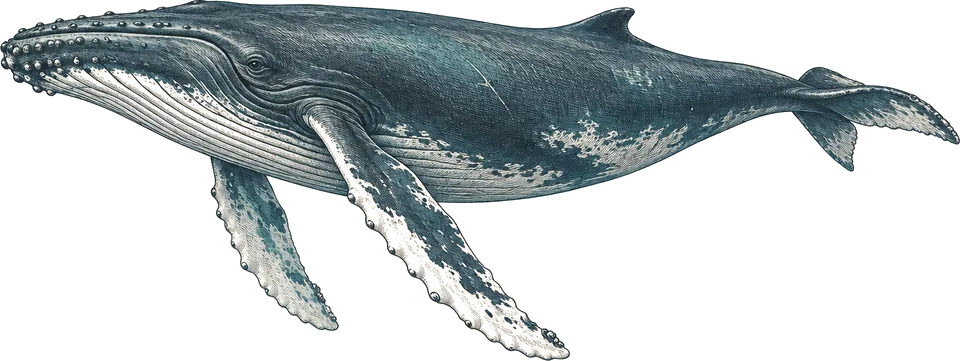
Outside the reef off Exmouth and Coral Bay
Seen from the boat July to October; in-water swims on licensed tours from August.9
Common on boat trips; swims run to mid-October.
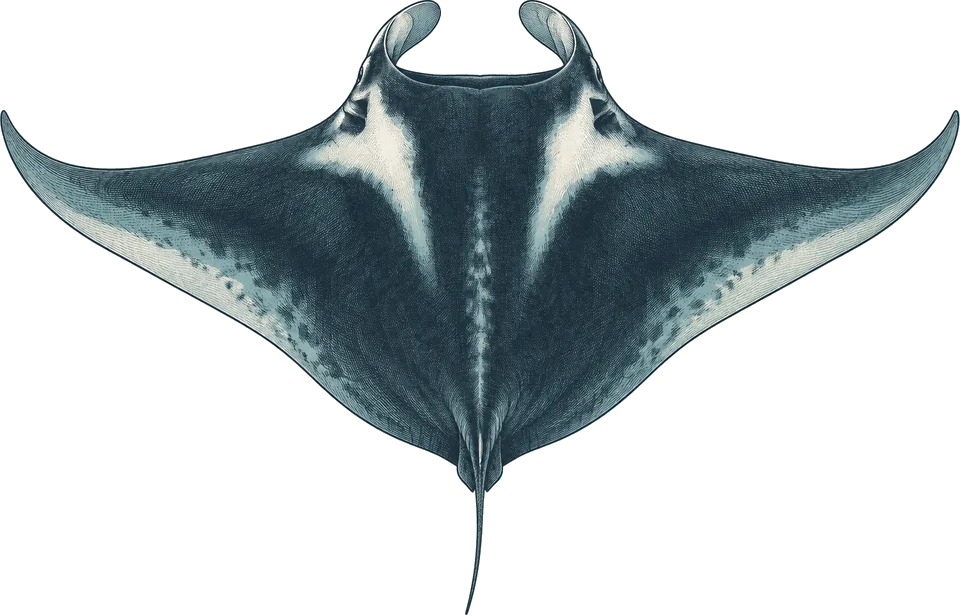
Coral Bay, Muiron Islands
Snorkel tours from Coral Bay; occasionally on scuba around the Muiron Islands.12
Year-round from Coral Bay, weather permitting.
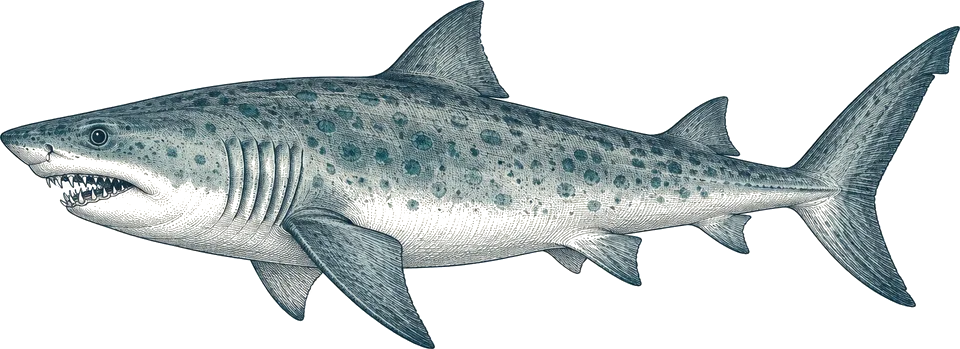
Exmouth Navy Pier
Settle among the pier pylons at 10 to 14 m and wait at slack tide.4
Reported by a dive club, with potato cod and wobbegongs.
Compiled from the sources above, last checked 2026-11-12. Monthly conditions come from our own climate records; see how we score.