
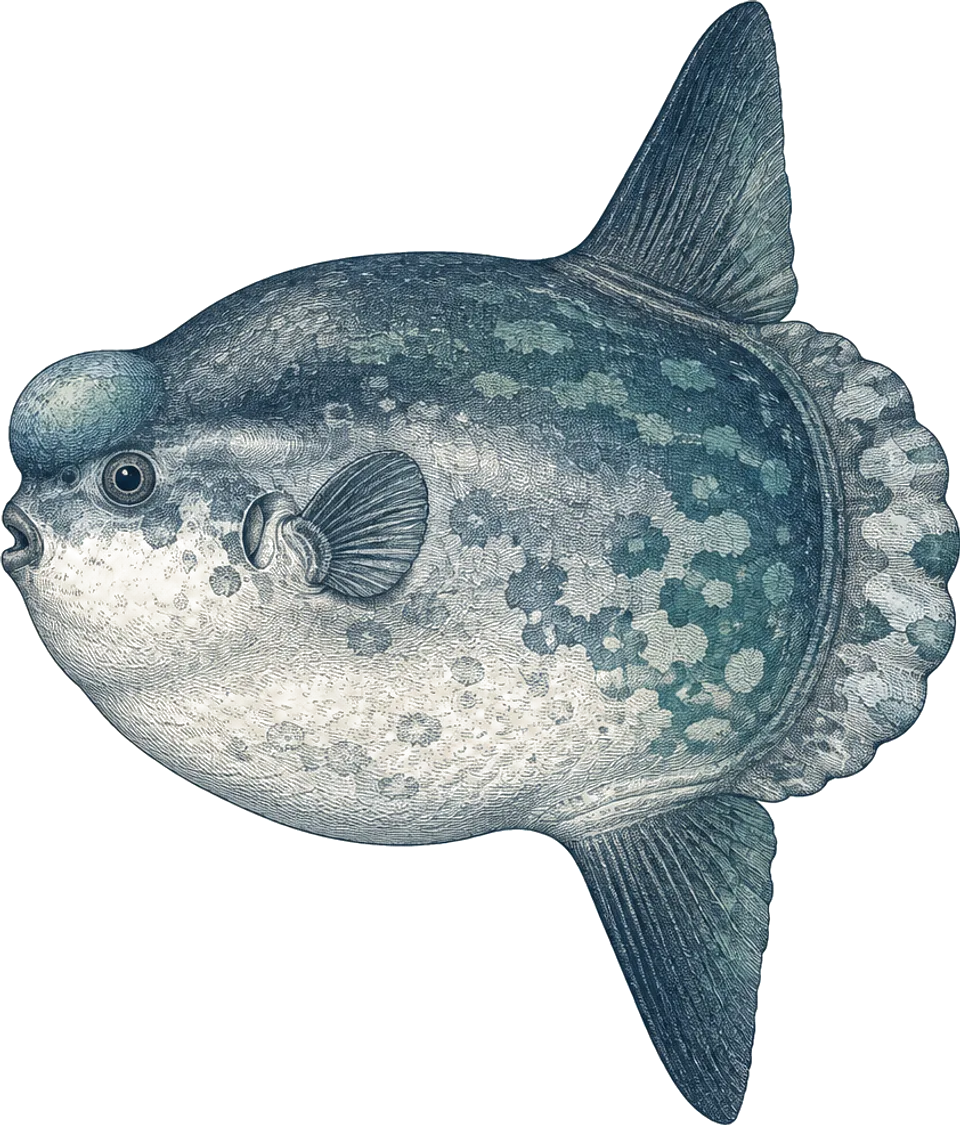
bump-head sunfish (mola)
Jul–OctCrystal Bay, Blue Corner, Toyapakeh, Gamat Bay
Hover at 20 to 30 m in the thermocline near cleaning stations; approach low and slow, behind the guide.1
About 1 in 10 dives; better over a full day.
The best time to dive Nusa Penida is July to October, when cold upwelling brings mola (ocean sunfish) up to cleaning stations at Crystal Bay and Blue Corner. Reef mantas visit Manta Point all year. I'd aim for August or September, the usual peak, and pack a 5 mm with a hood.
Operators say: July to October for mola; reef mantas all year. We agree on the months. Our 27 to 29 °C is surface water; in mola season divers meet thermoclines down to about 16 to 20 °C.
Worth knowing: 89% of days see seas over 1.5 m.
111 km across · coastline from Natural Earth 10m
Nusa Penida and its smaller neighbours Lembongan and Ceningan get cold upwelling and strong tidal currents, so the diving is often cool, clear and fast. Most dives are drifts along the north coast or the channel at Toyapakeh. Two sites draw most visitors: Manta Point, where reef mantas use shallow cleaning rocks under the southern cliffs all year, and Crystal Bay, the best-known mola site.
Mola season runs July to October. Upwelling then pushes cold water up the slopes and the sunfish rise to be cleaned, usually at 20 to 30 m in or below a thermocline that can fall under 20 °C. It is not a beginner's place: currents can reach about 5 knots and change with depth. Open Water divers do well at Manta Point, SD and the sheltered inner part of Crystal Bay.
Hover a month to isolate it.
| January | February | March | April | May | June | July | August | September | October | November | December | |
|---|---|---|---|---|---|---|---|---|---|---|---|---|
| Conditions | Poor | Poor | Poor | Poor | Poor | Poor | Excellent | Excellent | Excellent | Excellent | Poor | Poor |
| Water temp (°C) | 29 | 29 | 29 | 29 | 28 | 28 | 27 | 27 | 27 | 28 | 29 | 29 |
| Visibility (m) | 20–30 | 20–30 | 15–25 | 15–25 | 15–25 | 15–25 | 15–25 | 15–25 | 15–25 | 15–25 | 15–25 | 15–25 |
| Marine life | Steady | Steady | Steady | Steady | Steady | Steady | Peak | Peak | Peak | Peak | Steady | Steady |
| Best time | Peak | Peak | Peak | Peak |
Long-term averages, 2016–2025. Visibility is estimated from satellite chlorophyll-a. Water temperature is the surface mean; it is cooler at depth.
Diving conditionsThe wind eases. It rains less.
Marine lifeReef manta (near-guaranteed), Bump-head sunfish (near-guaranteed) peak at Nusa Penida in these months.
Diving conditionsThe wind is up. It rains more.
811 underwater observation records · 23 surveyed years of ocean data · 10 years of sea temperature
Dashed: monthly average. Band: eight days in ten.
10th to 90th percentile rangemonthly mean
Seas top 1.5 m on 74% of days. Enough to cancel a day boat
Gusts over 40 km/h, about where a day boat stays in port
4 of them bring heavy rain
| Month | Swell | Gusts over 40 km/h | Wet days | Heavy rain | Air | Daylight |
|---|---|---|---|---|---|---|
| Jan | 2.1 m | 0% | 28 | 10 | 29 °C | 12.5 h |
| Feb | 2.5 m | 0% | 27 | 11 | 29 °C | 12.3 h |
| Mar | 2.2 m | 0% | 27 | 7 | 29 °C | 12.1 h |
| Apr | 2.2 m | 0% | 20 | 3 | 30 °C | 11.8 h |
| May | 2.3 m | 0% | 16 | 1 | 30 °C | 11.6 h |
| Jun | 2.5 m | 0% | 15 | 1 | 29 °C | 11.5 h |
| Jul | 2.8 m | 0% | 11 | 0 | 28 °C | 11.5 h |
| Aug | 2.7 m | 0% | 12 | 0 | 29 °C | 11.7 h |
| Sep | 2.5 m | 0% | 15 | 1 | 29 °C | 12.0 h |
| Oct | 2.3 m | 0% | 17 | 1 | 30 °C | 12.2 h |
| Nov | 1.8 m | 0% | 24 | 5 | 30 °C | 12.4 h |
| Dec | 2.0 m | 0% | 26 | 9 | 29 °C | 12.5 h |
Swell is the rough end of the month: nine days in ten come in under it. Sea temperature covers 10 years, waves 4.
Darker is better, against this site's own year. Pick a month for its weeks.
| Week 1 | ||||||||||||
|---|---|---|---|---|---|---|---|---|---|---|---|---|
| Week 2 | ||||||||||||
| Week 3 | ||||||||||||
| Week 4 |
| Week | Conditions | Water | Swell | Wind | Rain chance |
|---|---|---|---|---|---|
| Week 1 | Poor | 29 °C | 2.0 m | 15 km/h | 89% |
| Week 2 | Poor | 29 °C | 2.1 m | 16 km/h | 84% |
| Week 3 | Poor | 29 °C | 2.2 m | 18 km/h | 89% |
| Week 4 | Poor | 29 °C | 2.2 m | 18 km/h | 95% |
| Week 1 | Poor | 29 °C | 2.6 m | 17 km/h | 95% |
| Week 2 | Poor | 29 °C | 2.5 m | 16 km/h | 96% |
| Week 3 | Poor | 29 °C | 2.1 m | 14 km/h | 93% |
| Week 4 | Poor | 29 °C | 2.0 m | 12 km/h | 91% |
| Week 1 | Poor | 29 °C | 2.2 m | 12 km/h | 89% |
| Week 2 | Poor | 29 °C | 2.3 m | 12 km/h | 87% |
| Week 3 | Poor | 29 °C | 2.3 m | 12 km/h | 84% |
| Week 4 | Poor | 29 °C | 2.0 m | 12 km/h | 83% |
| Week 1 | Poor | 29 °C | 1.9 m | 12 km/h | 82% |
| Week 2 | Poor | 29 °C | 2.1 m | 13 km/h | 74% |
| Week 3 | Poor | 29 °C | 2.2 m | 14 km/h | 61% |
| Week 4 | Poor | 29 °C | 2.1 m | 16 km/h | 53% |
| Week 1 | Poor | 29 °C | 2.2 m | 16 km/h | 54% |
| Week 2 | Moderate | 28 °C | 2.3 m | 18 km/h | 52% |
| Week 3 | Poor | 28 °C | 2.2 m | 19 km/h | 43% |
| Week 4 | Poor | 28 °C | 2.4 m | 18 km/h | 48% |
| Week 1 | Poor | 28 °C | 2.6 m | 17 km/h | 51% |
| Week 2 | Poor | 28 °C | 2.6 m | 18 km/h | 48% |
| Week 3 | Poor | 28 °C | 2.5 m | 19 km/h | 47% |
| Week 4 | Poor | 28 °C | 2.5 m | 20 km/h | 47% |
| Week 1 | Good | 27 °C | 2.5 m | 21 km/h | 44% |
| Week 2 | Good | 27 °C | 2.6 m | 21 km/h | 36% |
| Week 3 | Good | 27 °C | 2.7 m | 21 km/h | 30% |
| Week 4 | Good | 27 °C | 2.8 m | 21 km/h | 39% |
| Week 1 | Good | 27 °C | 3.0 m | 20 km/h | 43% |
| Week 2 | Good | 27 °C | 2.8 m | 19 km/h | 41% |
| Week 3 | Good | 27 °C | 2.5 m | 20 km/h | 40% |
| Week 4 | Good | 27 °C | 2.6 m | 20 km/h | 38% |
| Week 1 | Good | 27 °C | 2.7 m | 19 km/h | 42% |
| Week 2 | Good | 27 °C | 2.6 m | 18 km/h | 49% |
| Week 3 | Good | 27 °C | 2.5 m | 17 km/h | 49% |
| Week 4 | Good | 27 °C | 2.5 m | 17 km/h | 50% |
| Week 1 | Excellent | 27 °C | 2.5 m | 17 km/h | 52% |
| Week 2 | Good | 28 °C | 2.4 m | 17 km/h | 54% |
| Week 3 | Good | 28 °C | 2.2 m | 16 km/h | 56% |
| Week 4 | Good | 28 °C | 2.1 m | 15 km/h | 62% |
| Week 1 | Moderate | 28 °C | 2.0 m | 15 km/h | 70% |
| Week 2 | Moderate | 29 °C | 1.9 m | 14 km/h | 76% |
| Week 3 | Poor | 29 °C | 1.8 m | 14 km/h | 80% |
| Week 4 | Poor | 29 °C | 1.8 m | 13 km/h | 84% |
| Week 1 | Poor | 29 °C | 1.9 m | 14 km/h | 85% |
| Week 2 | Poor | 29 °C | 2.0 m | 15 km/h | 86% |
| Week 3 | Poor | 29 °C | 2.2 m | 17 km/h | 83% |
| Week 4 | Poor | 29 °C | 2.2 m | 17 km/h | 86% |
10 years of daily records, averaged into weeks.
Sized for each month's coldest water.
| Jan | Feb | Mar | Apr | May | Jun | Jul | Aug | Sep | Oct | Nov | Dec | |
|---|---|---|---|---|---|---|---|---|---|---|---|---|
| Suit | skin | skin | skin | skin | skin | 3 mm | 3 mm | 3 mm | 3 mm | 3 mm | skin | skin |
Suit row is for surface water. At depth: 5 mm and a hood or vest from July to October; 3 to 5 mm the rest of the year. An SMB for every drift.
Each month's rough end: nine days in ten are calmer.
Amber is over 1.5 m.
1 of the last 30 Aprils saw a tropical storm pass within 250 km. April is the only month with a recorded pass.
Share of the last 30 years with a storm that month.
| Species | When | Observed window | Reliability | Evidence | Records |
|---|---|---|---|---|---|
| Hawksbill turtle | All year | Near-guaranteed | 239 | ||
| Reef manta | All year | Near-guaranteed | 216 | ||
| Bump-head sunfish | Aug–Oct | Near-guaranteed | 54 | ||
| Bluespotted ribbontail ray | All year | Near-guaranteed | 42 | ||
| Whitetip reef shark | All year | Near-guaranteed | 47 | ||
| Green turtle | All year | Likely | 109 | ||
| Bumphead parrotfish | Jun, Aug, Oct, Dec | Likely | 24 | ||
| Napoleon wrasse | All year | Likely | 22 | ||
| Bigeye trevally | Apr–May, Oct | Likely | 16 | ||
| Blacktip reef shark | Mar–Apr, Aug | Hit-or-miss | 8 |
Logged sightings, not a full survey. How to read this table.
| Site | Depth | Level | What to expect |
|---|---|---|---|
| Crystal BayNusa Penida · bay / wall | 10–30 m | Advanced | Calm inner bay for easy dives; mola cleaning stations at the corner around 20 to 30 m, in strong current and cold water. The dive I'd build the trip around.2 |
| Manta PointNusa Penida · cleaning station | 5–20 m | Open Water | Bay under the southern cliffs; mantas circle cleaning rocks at 5 to 10 m. Surge with swell, often many boats.4 |
| Blue CornerNusa Lembongan · drift / wall | 18–30 m | Experienced | Negative entry to 18 to 20 m, then a very strong drift that can change direction. Sharks, eagle rays, mola in season.2 |
| ToyapakehNusa Penida · drift | 5–25 m | Advanced | Drift through the channel past bommies and terraced reef. Mild on a good day, powerful on spring tides; a mola station sits near 40 m.2 |
| Gamat BayNusa Penida · bay / wall | 8–30 m | Advanced | Small bay beside Crystal Bay: macro and marbled rays in the shallows, mola on the wall in season. Current can funnel.2 |
| SD PointNusa Penida · slope | 5–25 m | Open Water | North-coast reef sloping to 20 m, then 40 m. Milder current that can reverse; turtles and schooling fish.3 |
| PedNusa Penida · drift | 5–25 m | Advanced | North-coast drift past barrel sponges and gorgonians; chevron barracuda and the odd manta.3 |
| MangroveNusa Lembongan · slope | 5–15 m | Open Water | Gentle coral slope off Lembongan, used for first dives and refreshers.3 |
Crystal Bay, Blue Corner, Toyapakeh, Gamat Bay
Hover at 20 to 30 m in the thermocline near cleaning stations; approach low and slow, behind the guide.1
About 1 in 10 dives; better over a full day.
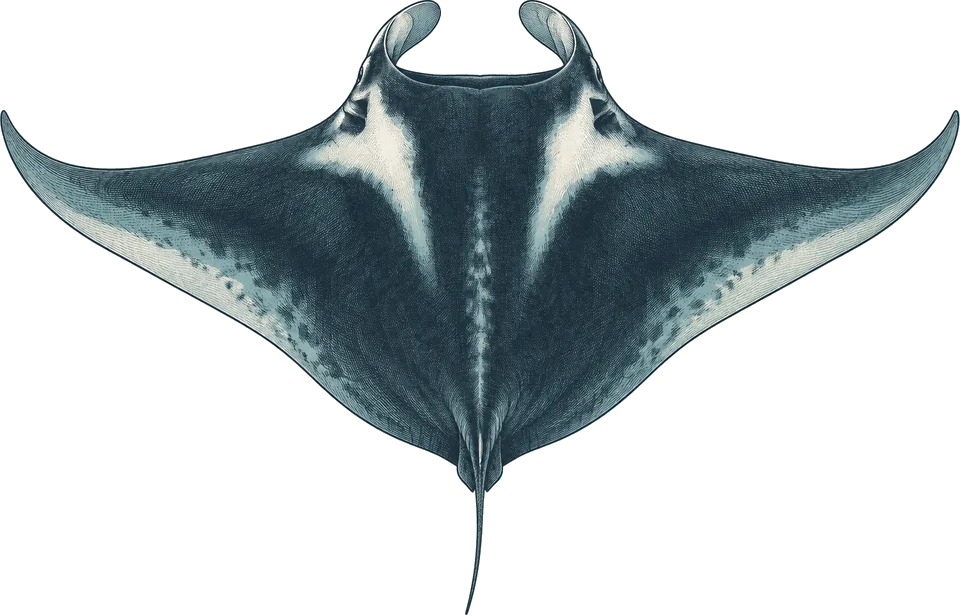
Manta Point
Kneel off the cleaning rocks at 5 to 15 m or snorkel above; do not chase.2
About 95% of dives, per one operator.
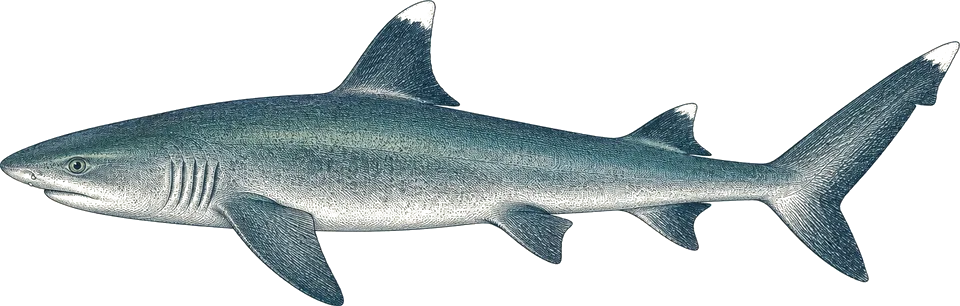
Crystal Bay, Blue Corner
Look along the walls and outer reef while drifting.3
Regular, especially when current runs.
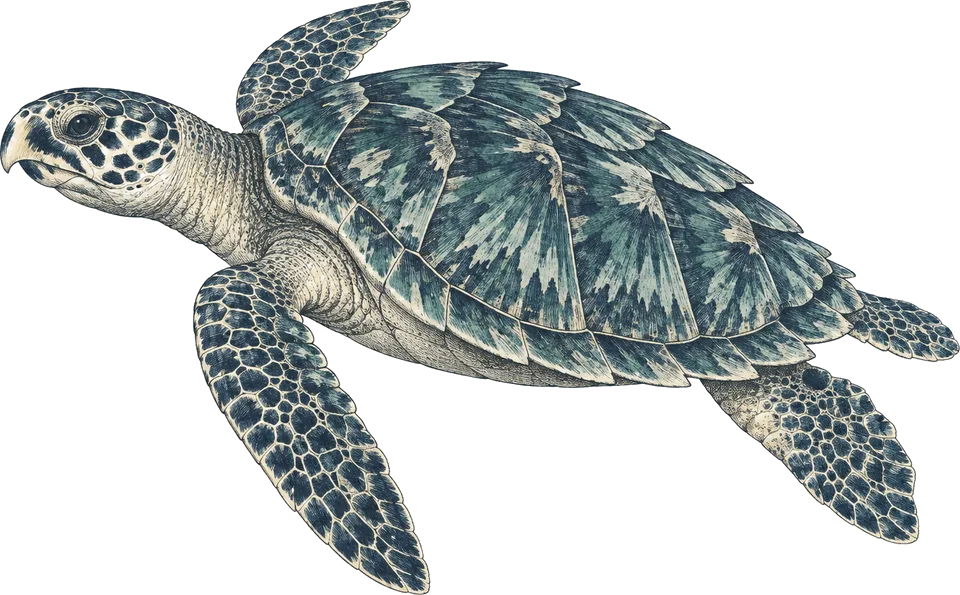
SD Point, Ped
Easy drift along the north-coast reefs at 5 to 20 m.2
Common.
Compiled from the sources above, last checked 2026-11-11. Monthly conditions come from our own climate records; see how we score.