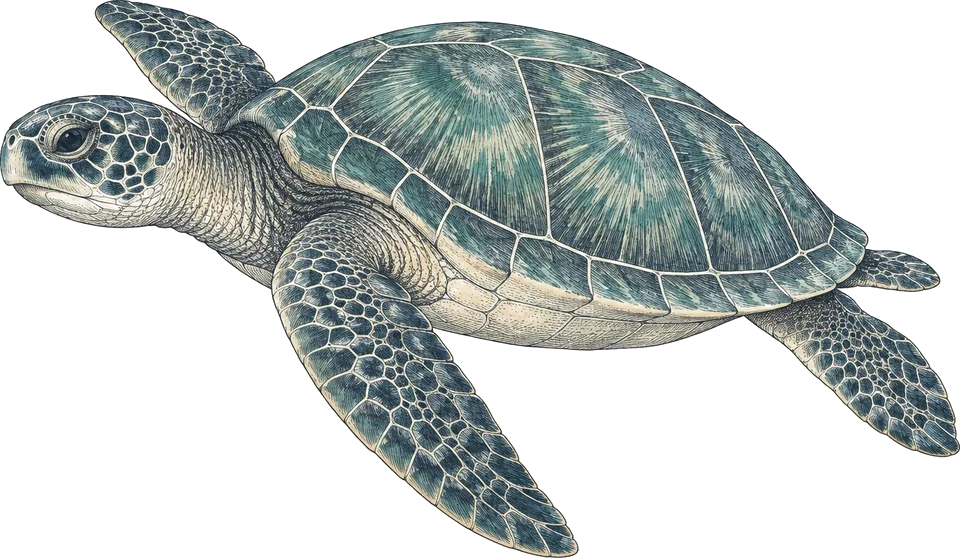
green and hawksbill turtles
All yearHikkaduwa house reef (marine national park)
Shallow reef at 2 to 7 m off the beach; snorkellers see them too. Do not feed them.1
Seen on most visits to the shallow reef.
The best time to dive Hikkaduwa is November to April, when the north-east monsoon leaves Sri Lanka's south-west coast calm. From May to October the south-west monsoon brings big swell and most centres close or move to Trincomalee. If it were my trip, I'd go in February.
Operators say: November to April, when the south-west coast is calm. Our data starts in December, since November seas are still settling; operators open in November, some in October.

By Eugen. Based on 11 sources, checked 11 November 2026.
111 km across · coastline from Natural Earth 10m
Hikkaduwa is the main dive town on Sri Lanka's south-west coast and dives in the opposite season to Trincomalee, roughly November to April. Several centres split the year between the two coasts.
The diving mixes wrecks and rock reefs. The SS Conch, a 1903 oil tanker at 14 to 21 m, and the 1893 Earl of Shaftesbury are the best-known wrecks; Coral Garden, Sunil Gala and Goda Gala are shallow-to-mid rock reefs, and Kiralagala is a deep pinnacle dive for Advanced or Deep divers. Green and hawksbill turtles visit the shallow reef inside the marine national park, close enough for snorkellers.
Hover a month to isolate it.
| January | February | March | April | May | June | July | August | September | October | November | December | |
|---|---|---|---|---|---|---|---|---|---|---|---|---|
| Conditions | Excellent | Excellent | Excellent | Excellent | Poor | Poor | Poor | Poor | Poor | Poor | Poor | Good |
| Water temp (°C) | 28 | 29 | 29 | 30 | 29 | 29 | 28 | 28 | 28 | 29 | 29 | 29 |
| Visibility (m) | 10–20 | 10–20 | 10–20 | 10–20 | 5–15 | 0–10 | 0–10 | 0–10 | 5–15 | 5–15 | 10–20 | 10–20 |
| Marine life | Steady | Steady | Peak | Peak | Steady | Steady | Steady | Steady | Steady | Steady | Steady | Peak |
| Best time | Peak | Peak | Peak | Peak | Peak | Peak |
Long-term averages, 2016–2025. Visibility is estimated from satellite chlorophyll-a. Water temperature is the surface mean; it is cooler at depth.
Diving conditionsThe sea is rougher. It rains more.
Diving conditionsThe wind eases. The sea is calmer.
358 underwater observation records · 18 surveyed years of ocean data · 10 years of sea temperature
Dashed: monthly average. Band: eight days in ten.
10th to 90th percentile rangemonthly mean
Seas top 1.5 m on 49% of days. Enough to cancel a day boat
Gusts over 40 km/h, about where a day boat stays in port
9 of them bring heavy rain
| Month | Swell | Gusts over 40 km/h | Wet days | Heavy rain | Air | Daylight |
|---|---|---|---|---|---|---|
| Jan | 1.3 m | 0% | 18 | 5 | 29 °C | 11.7 h |
| Feb | 1.2 m | 0% | 17 | 3 | 30 °C | 11.8 h |
| Mar | 1.3 m | 0% | 22 | 4 | 31 °C | 12.0 h |
| Apr | 1.6 m | 0% | 26 | 6 | 30 °C | 12.1 h |
| May | 2.9 m | 0% | 30 | 15 | 29 °C | 12.3 h |
| Jun | 2.5 m | 0% | 29 | 11 | 29 °C | 12.4 h |
| Jul | 2.8 m | 0% | 28 | 9 | 29 °C | 12.3 h |
| Aug | 2.5 m | 0% | 29 | 9 | 29 °C | 12.2 h |
| Sep | 2.3 m | 0% | 28 | 12 | 29 °C | 12.0 h |
| Oct | 2.2 m | 0% | 28 | 11 | 29 °C | 11.9 h |
| Nov | 1.8 m | 0% | 26 | 13 | 29 °C | 11.7 h |
| Dec | 1.6 m | 0% | 21 | 6 | 29 °C | 11.6 h |
Swell is the rough end of the month: nine days in ten come in under it. Sea temperature covers 10 years, waves 4.
Darker is better, against this site's own year. Pick a month for its weeks.
| Week 1 | ||||||||||||
|---|---|---|---|---|---|---|---|---|---|---|---|---|
| Week 2 | ||||||||||||
| Week 3 | ||||||||||||
| Week 4 |
| Week | Conditions | Water | Swell | Wind | Rain chance |
|---|---|---|---|---|---|
| Week 1 | Excellent | 28 °C | 1.3 m | 11 km/h | 63% |
| Week 2 | Excellent | 28 °C | 1.3 m | 12 km/h | 58% |
| Week 3 | Excellent | 28 °C | 1.3 m | 12 km/h | 55% |
| Week 4 | Excellent | 28 °C | 1.2 m | 12 km/h | 54% |
| Week 1 | Excellent | 28 °C | 1.2 m | 12 km/h | 52% |
| Week 2 | Excellent | 29 °C | 1.2 m | 12 km/h | 56% |
| Week 3 | Excellent | 29 °C | 1.2 m | 12 km/h | 62% |
| Week 4 | Excellent | 29 °C | 1.3 m | 12 km/h | 66% |
| Week 1 | Excellent | 29 °C | 1.3 m | 13 km/h | 69% |
| Week 2 | Excellent | 29 °C | 1.3 m | 13 km/h | 72% |
| Week 3 | Excellent | 29 °C | 1.4 m | 13 km/h | 70% |
| Week 4 | Excellent | 30 °C | 1.4 m | 13 km/h | 68% |
| Week 1 | Excellent | 30 °C | 1.5 m | 13 km/h | 77% |
| Week 2 | Excellent | 30 °C | 1.6 m | 13 km/h | 86% |
| Week 3 | Excellent | 30 °C | 1.5 m | 13 km/h | 91% |
| Week 4 | Excellent | 30 °C | 1.7 m | 13 km/h | 93% |
| Week 1 | Poor | 30 °C | 2.2 m | 13 km/h | 95% |
| Week 2 | Poor | 30 °C | 2.6 m | 16 km/h | 95% |
| Week 3 | Poor | 29 °C | 2.9 m | 20 km/h | 96% |
| Week 4 | Poor | 29 °C | 3.0 m | 22 km/h | 99% |
| Week 1 | Poor | 29 °C | 2.8 m | 22 km/h | 97% |
| Week 2 | Poor | 29 °C | 2.4 m | 21 km/h | 97% |
| Week 3 | Poor | 29 °C | 2.5 m | 22 km/h | 98% |
| Week 4 | Poor | 28 °C | 2.7 m | 22 km/h | 98% |
| Week 1 | Poor | 28 °C | 2.9 m | 22 km/h | 94% |
| Week 2 | Poor | 28 °C | 2.8 m | 22 km/h | 93% |
| Week 3 | Poor | 28 °C | 2.7 m | 23 km/h | 93% |
| Week 4 | Poor | 28 °C | 2.7 m | 22 km/h | 90% |
| Week 1 | Poor | 28 °C | 2.7 m | 22 km/h | 93% |
| Week 2 | Poor | 28 °C | 2.6 m | 22 km/h | 95% |
| Week 3 | Poor | 28 °C | 2.4 m | 21 km/h | 93% |
| Week 4 | Poor | 28 °C | 2.4 m | 21 km/h | 95% |
| Week 1 | Poor | 28 °C | 2.4 m | 20 km/h | 95% |
| Week 2 | Poor | 28 °C | 2.2 m | 20 km/h | 91% |
| Week 3 | Poor | 28 °C | 2.0 m | 20 km/h | 94% |
| Week 4 | Poor | 28 °C | 2.2 m | 19 km/h | 95% |
| Week 1 | Poor | 28 °C | 2.4 m | 18 km/h | 92% |
| Week 2 | Poor | 28 °C | 2.4 m | 18 km/h | 93% |
| Week 3 | Poor | 29 °C | 2.2 m | 17 km/h | 93% |
| Week 4 | Poor | 29 °C | 1.9 m | 16 km/h | 87% |
| Week 1 | Poor | 29 °C | 1.7 m | 15 km/h | 86% |
| Week 2 | Poor | 29 °C | 1.6 m | 14 km/h | 87% |
| Week 3 | Poor | 29 °C | 1.6 m | 13 km/h | 84% |
| Week 4 | Poor | 29 °C | 2.1 m | 13 km/h | 82% |
| Week 1 | Moderate | 29 °C | 2.0 m | 13 km/h | 75% |
| Week 2 | Good | 29 °C | 1.6 m | 12 km/h | 69% |
| Week 3 | Excellent | 29 °C | 1.5 m | 12 km/h | 68% |
| Week 4 | Excellent | 29 °C | 1.5 m | 11 km/h | 67% |
10 years of daily records, averaged into weeks.
Sized for each month's coldest water.
| Jan | Feb | Mar | Apr | May | Jun | Jul | Aug | Sep | Oct | Nov | Dec | |
|---|---|---|---|---|---|---|---|---|---|---|---|---|
| Suit | skin | skin | skin | skin | skin | skin | skin | 3 mm | skin | skin | skin | skin |
Suit row is for surface water. At depth: 3 mm suit is enough at about 28 °C. Carry an SMB for the offshore rocks. Do not feed the turtles on the house reef, whatever you see others doing.
Each month's rough end: nine days in ten are calmer.
Amber is over 1.5 m.
2 of the last 30 Novembers saw a tropical storm pass within 250 km. Anything has been recorded Nov–Dec.
Share of the last 30 years with a storm that month.
| Species | When | Observed window | Reliability | Evidence | Records |
|---|---|---|---|---|---|
| Green turtle | All year | Near-guaranteed | 134 | ||
| Saltwater crocodile | All year | Near-guaranteed | 80 | ||
| Blue whale | Dec–Jan, Mar | Likely | 12 | ||
| Spinner dolphin | Mar–Apr, Dec | Near-guaranteed | 75 | ||
| Blacktip reef shark | Jan–Feb, Oct | Hit-or-miss | 10 | ||
| Hawksbill turtle | Feb, Sep | Hit-or-miss | 10 |
Logged sightings, not a full survey. How to read this table.
| Site | Depth | Level | What to expect |
|---|---|---|---|
| SS ConchWest (Hikkaduwa) · wreck | 14–21 m | Advanced | Oil tanker lost in 1903, split in two with three boilers and a half-buried propeller. Open Water divers stay on the upper wreck. The one I'd book first.11 |
| Earl of ShaftesburyWest (Hikkaduwa) · wreck | 12–14 m | Open Water | 85 m four-masted iron sailing ship that capsized off Akurala in May 1893; hull, masts and cabin remains on flat sand.1 |
| Coral GardenWest (Hikkaduwa) · reef | 6–18 m | Open Water | Easy reef about five minutes by boat from the dive centres: caves, swim-throughs, morays, lobsters and octopus.1 |
| KiralagalaWest (Hikkaduwa) · rock pinnacles | 18–40 m | Experienced | Rock pillars covered in soft, hard and fan coral with trevally, fusiliers and redtooth triggerfish. Advanced or Deep certified divers only.1 |
| Black Coral PointWest (Hikkaduwa) · rock | 20–30 m | Advanced | Field of large rocks with black coral trees, cleaning stations, morays, groupers and bandit shrimp.1 |
| Goda GalaWest (Hikkaduwa) · rock | 8–22 m | Advanced | Multi-level rock complex south of the Coral Garden: crevices with morays, hawkfish and anthias. Can run as a drift.1 |
| Sunil GalaWest (Hikkaduwa) · rock | 4–18 m | Open Water | Boulders and pinnacles close to shore with reef fish, nudibranchs and flatworms. Strong surge.1 |
| Hikkaduwa house reefWest (Hikkaduwa) · shallow reef | 2–7 m | Open Water | Shallow reef off Hikkaduwa beach in the marine national park, for beginners and snorkellers; turtles on most visits.6 |
Hikkaduwa house reef (marine national park)
Shallow reef at 2 to 7 m off the beach; snorkellers see them too. Do not feed them.1
Seen on most visits to the shallow reef.
Kiralagala
Deep dive on the pillar walls at 25 to 40 m; needs Deep certification.1
Regular on the pillars.
Coral Garden, Goda Gala
Slow reef dives at 6 to 18 m, checking caves and crevices.1
Seen on most reef dives.
Compiled from the sources above, last checked 2026-11-11. Monthly conditions come from our own climate records; see how we score.