
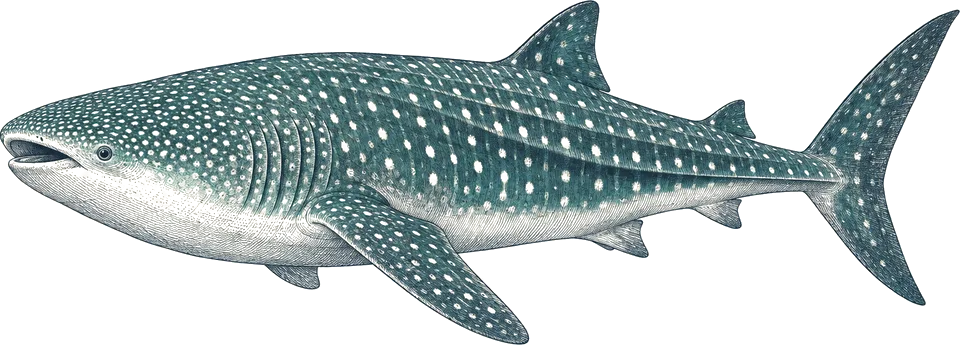
whale shark
Oct–AprNamatota and East Kaimana bagans
Early boat to the bagans as the nets lift; snorkel or dive shallow beside the platform.4
Likely December to February; poor around full moon.
The best time to dive Triton Bay is October to April, after the south-east monsoon, when the sea is calm and the resort and liveaboards operate. Whale sharks at the bagans are most reliable December to February. I'd aim for November, where operators and our data agree.
Operators say: October to April, with whale sharks most reliable December to February. Our data rates September to November best and April and May poor; operators say the monsoon keeps the bay rough until late September.
111 km across · coastline from Natural Earth 10m
Triton Bay, on the south coast of West Papua, is known for soft coral: walls and boulders covered in pink, orange and white soft corals and black coral, often as shallow as 8 to 20 m. Nutrient-rich water that feeds the coral also limits visibility, usually 10 to 15 m. Most dives are 20 m or shallower, with tasselled wobbegongs, pygmy seahorses, flasher wrasse and a local walking shark on night dives.
Whale sharks feed at the bagans, lift-net fishing platforms near Namatota and in East Kaimana, early in the morning after the nets come up; they are calm and shallow enough for snorkellers. Liveaboards and Triton Bay Divers, the only land-based resort we found, work from about late September or October to April. From June to September the south-east monsoon makes the bay rough and drops the water to about 24 °C.
Hover a month to isolate it.
| January | February | March | April | May | June | July | August | September | October | November | December | |
|---|---|---|---|---|---|---|---|---|---|---|---|---|
| Conditions | Good | Good | Moderate | Poor | Poor | Moderate | Moderate | Good | Excellent | Excellent | Excellent | Good |
| Water temp (°C) | 30 | 30 | 30 | 30 | 29 | 28 | 27 | 27 | 28 | 29 | 30 | 30 |
| Visibility (m) | 5–15 | 10–20 | 5–15 | 5–15 | 5–15 | 5–15 | 5–15 | 5–15 | 5–15 | 5–15 | 5–15 | 5–15 |
| Marine life | No data | No data | No data | No data | No data | No data | No data | No data | No data | No data | No data | No data |
| Best time | Peak | Peak | Peak | Peak | Peak | Peak | Peak |
Long-term averages, 2016–2025. Visibility is estimated from satellite chlorophyll-a. Water temperature is the surface mean; it is cooler at depth.
Diving conditionsThe sea is calmer. The wind eases.
Diving conditionsThe wind eases. The sea is calmer.
Diving conditionsThe sea is rougher. The wind is up.
Diving conditionsThe sea is calmer.
10 years of sea temperature
Dashed: monthly average. Band: eight days in ten.
10th to 90th percentile rangemonthly mean
Seas top 2.5 m on under 1% of days. Enough to cancel a liveaboard crossing
Gusts over 40 km/h, about where a day boat stays in port
7 of them bring heavy rain
| Month | Swell | Gusts over 40 km/h | Wet days | Heavy rain | Air | Daylight |
|---|---|---|---|---|---|---|
| Jan | 0.6 m | 0% | 23 | 7 | 30 °C | 12.2 h |
| Feb | 0.7 m | 0% | 22 | 6 | 30 °C | 12.1 h |
| Mar | 0.6 m | 0% | 27 | 9 | 29 °C | 12.0 h |
| Apr | 0.5 m | 0% | 28 | 12 | 29 °C | 11.9 h |
| May | 0.9 m | 0% | 29 | 13 | 29 °C | 11.8 h |
| Jun | 0.8 m | 0% | 27 | 8 | 28 °C | 11.8 h |
| Jul | 1.1 m | 0% | 28 | 8 | 27 °C | 11.8 h |
| Aug | 1.0 m | 0% | 26 | 5 | 27 °C | 11.9 h |
| Sep | 0.8 m | 0% | 23 | 5 | 28 °C | 12.0 h |
| Oct | 0.5 m | 0% | 26 | 4 | 29 °C | 12.1 h |
| Nov | 0.4 m | 0% | 26 | 6 | 29 °C | 12.2 h |
| Dec | 0.5 m | 0% | 26 | 7 | 30 °C | 12.2 h |
Swell is the rough end of the month: nine days in ten come in under it. Sea temperature covers 10 years, waves 4.
Darker is better, against this site's own year. Pick a month for its weeks.
| Week 1 | ||||||||||||
|---|---|---|---|---|---|---|---|---|---|---|---|---|
| Week 2 | ||||||||||||
| Week 3 | ||||||||||||
| Week 4 |
| Week | Conditions | Water | Swell | Wind | Rain chance |
|---|---|---|---|---|---|
| Week 1 | Good | 30 °C | 0.6 m | 14 km/h | 75% |
| Week 2 | Good | 30 °C | 0.6 m | 13 km/h | 79% |
| Week 3 | Good | 30 °C | 0.6 m | 14 km/h | 74% |
| Week 4 | Good | 30 °C | 0.7 m | 14 km/h | 67% |
| Week 1 | Good | 30 °C | 0.7 m | 16 km/h | 68% |
| Week 2 | Good | 30 °C | 0.7 m | 15 km/h | 75% |
| Week 3 | Excellent | 30 °C | 0.6 m | 14 km/h | 81% |
| Week 4 | Excellent | 30 °C | 0.6 m | 13 km/h | 80% |
| Week 1 | Moderate | 30 °C | 0.6 m | 12 km/h | 82% |
| Week 2 | Moderate | 30 °C | 0.6 m | 12 km/h | 87% |
| Week 3 | Moderate | 30 °C | 0.6 m | 12 km/h | 85% |
| Week 4 | Moderate | 30 °C | 0.5 m | 13 km/h | 88% |
| Week 1 | Poor | 30 °C | 0.4 m | 13 km/h | 89% |
| Week 2 | Poor | 30 °C | 0.5 m | 12 km/h | 90% |
| Week 3 | Poor | 30 °C | 0.5 m | 11 km/h | 95% |
| Week 4 | Poor | 30 °C | 0.5 m | 12 km/h | 95% |
| Week 1 | Poor | 30 °C | 0.5 m | 13 km/h | 94% |
| Week 2 | Poor | 29 °C | 0.7 m | 14 km/h | 95% |
| Week 3 | Poor | 29 °C | 0.9 m | 14 km/h | 92% |
| Week 4 | Poor | 29 °C | 0.9 m | 16 km/h | 89% |
| Week 1 | Moderate | 29 °C | 0.8 m | 17 km/h | 84% |
| Week 2 | Moderate | 28 °C | 0.8 m | 17 km/h | 88% |
| Week 3 | Moderate | 28 °C | 0.9 m | 17 km/h | 94% |
| Week 4 | Moderate | 28 °C | 0.8 m | 17 km/h | 90% |
| Week 1 | Good | 28 °C | 0.9 m | 18 km/h | 88% |
| Week 2 | Moderate | 27 °C | 1.0 m | 20 km/h | 93% |
| Week 3 | Moderate | 27 °C | 1.2 m | 21 km/h | 93% |
| Week 4 | Moderate | 27 °C | 1.1 m | 21 km/h | 84% |
| Week 1 | Good | 27 °C | 1.1 m | 21 km/h | 82% |
| Week 2 | Excellent | 27 °C | 1.0 m | 20 km/h | 81% |
| Week 3 | Good | 27 °C | 0.9 m | 21 km/h | 80% |
| Week 4 | Good | 27 °C | 1.0 m | 21 km/h | 81% |
| Week 1 | Good | 27 °C | 0.9 m | 20 km/h | 85% |
| Week 2 | Good | 27 °C | 0.9 m | 20 km/h | 84% |
| Week 3 | Excellent | 28 °C | 0.9 m | 19 km/h | 73% |
| Week 4 | Excellent | 28 °C | 0.7 m | 16 km/h | 70% |
| Week 1 | Excellent | 28 °C | 0.7 m | 15 km/h | 80% |
| Week 2 | Excellent | 29 °C | 0.6 m | 14 km/h | 81% |
| Week 3 | Excellent | 29 °C | 0.4 m | 13 km/h | 83% |
| Week 4 | Excellent | 29 °C | 0.4 m | 13 km/h | 84% |
| Week 1 | Good | 29 °C | 0.3 m | 12 km/h | 82% |
| Week 2 | Excellent | 30 °C | 0.3 m | 11 km/h | 83% |
| Week 3 | Excellent | 30 °C | 0.4 m | 11 km/h | 86% |
| Week 4 | Good | 30 °C | 0.4 m | 11 km/h | 87% |
| Week 1 | Excellent | 30 °C | 0.4 m | 11 km/h | 87% |
| Week 2 | Good | 30 °C | 0.5 m | 12 km/h | 87% |
| Week 3 | Good | 30 °C | 0.6 m | 14 km/h | 86% |
| Week 4 | Good | 30 °C | 0.6 m | 14 km/h | 80% |
10 years of daily records, averaged into weeks.
Sized for each month's coldest water.
| Jan | Feb | Mar | Apr | May | Jun | Jul | Aug | Sep | Oct | Nov | Dec | |
|---|---|---|---|---|---|---|---|---|---|---|---|---|
| Suit | skin | skin | skin | skin | skin | 3 mm | 3 mm | 3 mm | 3 mm | skin | skin | skin |
Suit row is for surface water. At depth: 3 mm wetsuit in season; 5 mm if you go near the monsoon, when the water drops to about 24 °C. SMB, torch for macro, and a reef hook for Pintu Arus.
Each month's rough end: nine days in ten are calmer.
Amber is over 2.5 m.
1 of the last 30 Aprils saw a tropical storm pass within 250 km. April is the only month with a recorded pass.
Share of the last 30 years with a storm that month.
Only 0 records have been logged within 60 km. A thin record is not an empty reef.
No survey records within 60 km of this site.
Logged sightings, not a full survey. How to read this table.
| Site | Depth | Level | What to expect |
|---|---|---|---|
| Little Komodoboulders / wall | 5–25 m | Advanced | Boulders off Saruenus Island down to a soft coral wall; anthias, fusiliers, sweetlips, wobbegongs and pygmy seahorses from 15 m. Moderate to strong current.1 |
| Larry's Heavenslope / wall | 5–30 m | Advanced | Slope and wall beside Little Komodo, dropping past 40 m; densest soft coral at 8–20 m, bigeye trevally and dogtooth tuna.1 |
| Bo's Rainbowisland slope | 5–16 m | Open Water | Sandy slope to 16 m with soft-coral boulders and a swim-through. Stay on the sheltered side, or circle the island if there is no current.3 |
| Disney Landreef | 5–18 m | Open Water | Shallow Iris Strait site, mostly above 18 m: black coral, sweetlips, snapper and wobbegongs. Current can be strong at times.1 |
| Pintu Arusreef | ≈ 5–20 m | Experienced | Soft coral wedding-cake reef off Saruenus with giant grouper and fusiliers. Strong, unpredictable current and eddies; timing is critical. I'd skip it without current experience.3 |
| Aquariumbommies | ≈ 5–20 m | Open Water | Small Saruenus site of soft coral bommies and schooling fish; dived in calm morning water, sometimes as a gentle wall drift.3 |
| White Rockslope | 3–14 m | Open Water | Gentle slope to about 14 m with soft coral bushes, wobbegongs and frogfish; dived by day or night. An easy first dive, and where I'd start.3 |
| Macro Rockslope / sand | 5–20 m | Open Water | White sand to 20 m; a nudibranch site, best early in the season.3 |
| Batu Jatuhreef | ≈ 5–20 m | Open Water | Large hard coral gardens with batfish, jacks, bumphead parrotfish and Napoleon wrasse; mobula and eagle rays pass.3 |
Namatota and East Kaimana bagans
Early boat to the bagans as the nets lift; snorkel or dive shallow beside the platform.4
Likely December to February; poor around full moon.
Little Komodo, Disney Land, White Rock
Check under boulders and ledges in the shallows.3
Regular on several sites.
Triton Bay Divers house reef
Night dive the house reef shallows with a torch.3
Seen on night dives.
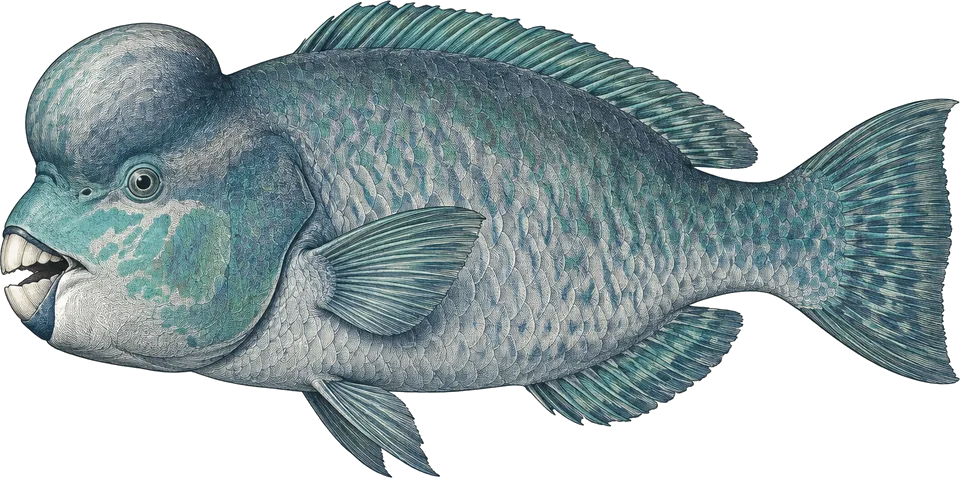
Batu Jatuh, Little Komodo
Seen over the hard coral gardens and around boulders.3
Regular.
Compiled from the sources above, last checked 2026-11-12. Monthly conditions come from our own climate records; see how we score.