
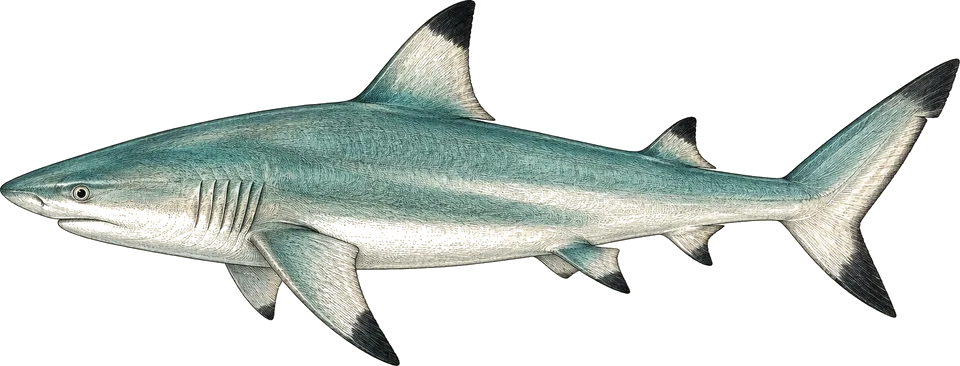
blacktip reef shark
Mar–OctShark Point, Batu Layar
Reef dives at 12 to 18 m; stay low and still, they are shy.2
Often seen, not guaranteed.
The best time to dive the Perhentian Islands is April to August, when the sea settles after the north-east monsoon and the rain eases. Most dive shops close November to February. I'd go in May or June.
Operators say: April to August, inside a dive season that runs mid-March to October. Our data peaks March to July, when rain is lowest; operators say the sea settles from April and stays diveable into October.
111 km across · coastline from Natural Earth 10m
The two Perhentian islands, Kecil (small) and Besar (big), sit about 20 km off Malaysia's north-east coast and are among the cheapest places in the region to learn to dive. Most sites are short, usually smooth boat rides of 10 to 18 m over granite boulders and coral: Tokong Laut (the Pinnacle), the Three Brothers, Shark Point for blacktip reef sharks, and wrecks including the Sugar Wreck, a 90 m cargo ship lying on its side at about 18 m.
The diving is seasonal. The north-east monsoon shuts most dive shops and much of the accommodation from November to February, and boats start running again in mid-March. Conditions settle from April; July and August are the busiest months and September and October quieter. Water is 28 to 30 °C and visibility usually 10 to 20 m, lower on the wrecks and when the surface is choppy.
Hover a month to isolate it.
| January | February | March | April | May | June | July | August | September | October | November | December | |
|---|---|---|---|---|---|---|---|---|---|---|---|---|
| Conditions | Closed | Closed | Poor | Excellent | Excellent | Excellent | Excellent | Excellent | Excellent | Excellent | Poor | Closed |
| Water temp (°C) | 28 | 28 | 29 | 30 | 31 | 31 | 30 | 30 | 30 | 30 | 29 | 28 |
| Visibility (m) | 10–20 | 15–25 | 10–20 | 15–25 | 15–25 | 15–25 | 15–25 | 15–25 | 20–30 | 15–25 | 10–20 | — |
| Marine life | Closed | Closed | Busy | Peak | Steady | Busy | Peak | Peak | Peak | Steady | Quiet | Closed |
| Best time | Peak | Peak | Peak | Peak | Peak |
Long-term averages, 2016–2025. Visibility is estimated from satellite chlorophyll-a. Water temperature is the surface mean; it is cooler at depth.
Diving conditionsThis is the wet season topside. The wind eases. The sea is calmer.
Marine lifeWhale shark (hit-or-miss) peaks at Perhentian in these months.
The site is closed to diving in these months.
226 underwater observation records · 23 surveyed years of ocean data · 10 years of sea temperature
Dashed: monthly average. Band: eight days in ten.
10th to 90th percentile rangemonthly mean
Seas top 1.5 m on 2% of days. Enough to cancel a day boat
Gusts over 40 km/h, about where a day boat stays in port
7 of them bring heavy rain
| Month | Swell | Gusts over 40 km/h | Wet days | Heavy rain | Air | Daylight |
|---|---|---|---|---|---|---|
| Jan | 1.4 m | 4% | 19 | 6 | 27 °C | 11.7 h |
| Feb | 1.3 m | 3% | 13 | 3 | 27 °C | 11.8 h |
| Mar | 1.0 m | 0% | 11 | 1 | 28 °C | 12.0 h |
| Apr | 0.6 m | 0% | 17 | 4 | 29 °C | 12.1 h |
| May | 0.4 m | 0% | 23 | 5 | 30 °C | 12.3 h |
| Jun | 0.3 m | 0% | 22 | 5 | 30 °C | 12.3 h |
| Jul | 0.4 m | 0% | 22 | 3 | 30 °C | 12.3 h |
| Aug | 0.3 m | 0% | 23 | 6 | 29 °C | 12.2 h |
| Sep | 0.3 m | 0% | 23 | 5 | 29 °C | 12.0 h |
| Oct | 0.6 m | 0% | 27 | 11 | 29 °C | 11.9 h |
| Nov | 1.2 m | 1% | 28 | 17 | 28 °C | 11.7 h |
| Dec | 1.3 m | 4% | 24 | 14 | 28 °C | 11.7 h |
Swell is the rough end of the month: nine days in ten come in under it. Sea temperature covers 10 years, waves 4.
Darker is better, against this site's own year. Pick a month for its weeks.
| Week 1 | ||||||||||||
|---|---|---|---|---|---|---|---|---|---|---|---|---|
| Week 2 | ||||||||||||
| Week 3 | ||||||||||||
| Week 4 |
| Week | Conditions | Water | Swell | Wind | Rain chance |
|---|---|---|---|---|---|
| Week 1 | Poor | 28 °C | 1.2 m | 24 km/h | 73% |
| Week 2 | Poor | 28 °C | 1.3 m | 23 km/h | 64% |
| Week 3 | Poor | 28 °C | 1.4 m | 23 km/h | 57% |
| Week 4 | Poor | 28 °C | 1.4 m | 23 km/h | 52% |
| Week 1 | Poor | 28 °C | 1.2 m | 22 km/h | 45% |
| Week 2 | Poor | 28 °C | 1.2 m | 23 km/h | 42% |
| Week 3 | Poor | 28 °C | 1.2 m | 23 km/h | 45% |
| Week 4 | Poor | 28 °C | 1.3 m | 23 km/h | 47% |
| Week 1 | Moderate | 28 °C | 1.3 m | 22 km/h | 42% |
| Week 2 | Poor | 29 °C | 1.0 m | 20 km/h | 32% |
| Week 3 | Poor | 29 °C | 0.9 m | 20 km/h | 32% |
| Week 4 | Moderate | 29 °C | 0.8 m | 20 km/h | 45% |
| Week 1 | Excellent | 30 °C | 0.8 m | 20 km/h | 54% |
| Week 2 | Excellent | 30 °C | 0.7 m | 20 km/h | 53% |
| Week 3 | Excellent | 30 °C | 0.6 m | 19 km/h | 50% |
| Week 4 | Excellent | 30 °C | 0.6 m | 19 km/h | 57% |
| Week 1 | Excellent | 31 °C | 0.6 m | 19 km/h | 68% |
| Week 2 | Excellent | 31 °C | 0.5 m | 19 km/h | 76% |
| Week 3 | Excellent | 31 °C | 0.4 m | 18 km/h | 79% |
| Week 4 | Excellent | 31 °C | 0.3 m | 18 km/h | 76% |
| Week 1 | Excellent | 31 °C | 0.3 m | 17 km/h | 72% |
| Week 2 | Excellent | 31 °C | 0.3 m | 17 km/h | 70% |
| Week 3 | Excellent | 30 °C | 0.3 m | 17 km/h | 74% |
| Week 4 | Excellent | 30 °C | 0.3 m | 17 km/h | 74% |
| Week 1 | Excellent | 30 °C | 0.3 m | 17 km/h | 73% |
| Week 2 | Excellent | 30 °C | 0.4 m | 17 km/h | 72% |
| Week 3 | Excellent | 30 °C | 0.4 m | 17 km/h | 68% |
| Week 4 | Excellent | 30 °C | 0.4 m | 17 km/h | 68% |
| Week 1 | Excellent | 30 °C | 0.3 m | 16 km/h | 69% |
| Week 2 | Excellent | 30 °C | 0.3 m | 17 km/h | 72% |
| Week 3 | Excellent | 30 °C | 0.3 m | 17 km/h | 76% |
| Week 4 | Excellent | 30 °C | 0.3 m | 17 km/h | 78% |
| Week 1 | Excellent | 30 °C | 0.3 m | 17 km/h | 77% |
| Week 2 | Excellent | 30 °C | 0.3 m | 17 km/h | 79% |
| Week 3 | Excellent | 30 °C | 0.3 m | 17 km/h | 75% |
| Week 4 | Excellent | 30 °C | 0.3 m | 17 km/h | 75% |
| Week 1 | Excellent | 30 °C | 0.4 m | 17 km/h | 82% |
| Week 2 | Excellent | 30 °C | 0.5 m | 17 km/h | 83% |
| Week 3 | Excellent | 30 °C | 0.7 m | 18 km/h | 86% |
| Week 4 | Excellent | 30 °C | 0.7 m | 18 km/h | 92% |
| Week 1 | Moderate | 30 °C | 0.7 m | 18 km/h | 94% |
| Week 2 | Poor | 29 °C | 0.8 m | 18 km/h | 94% |
| Week 3 | Poor | 29 °C | 1.2 m | 19 km/h | 94% |
| Week 4 | Poor | 29 °C | 1.4 m | 22 km/h | 93% |
| Week 1 | Poor | 29 °C | 1.2 m | 22 km/h | 86% |
| Week 2 | Poor | 28 °C | 1.2 m | 24 km/h | 82% |
| Week 3 | Poor | 28 °C | 1.5 m | 24 km/h | 79% |
| Week 4 | Poor | 28 °C | 1.6 m | 23 km/h | 72% |
10 years of daily records, averaged into weeks.
Sized for each month's coldest water.
| Jan | Feb | Mar | Apr | May | Jun | Jul | Aug | Sep | Oct | Nov | Dec | |
|---|---|---|---|---|---|---|---|---|---|---|---|---|
| Suit | skin | skin | skin | skin | skin | skin | skin | skin | skin | skin | skin | skin |
Suit row is for surface water. At depth: Water is about 30 °C: a 3 mm shorty or rash vest is enough. Torch for wrecks and night dives.
Each month's rough end: nine days in ten are calmer.
Amber is over 1.5 m.
1 of the last 30 Januarys saw a tropical storm pass within 250 km. January is the only month with a recorded pass.
Share of the last 30 years with a storm that month.
| Species | When | Observed window | Reliability | Evidence | Records |
|---|---|---|---|---|---|
| Bumphead parrotfish | Jun–Jul, Sep | Likely | 17 | ||
| Whale shark | Jul–Sep | Hit-or-miss | 9 | ||
| Green turtle | Apr, Jul, Sep | Near-guaranteed | 96 | ||
| Bigeye trevally | Jan–Feb | Hit-or-miss | 8 | ||
| Blacktip reef shark | Mar, Jun–Jul | Likely | 49 | ||
| Bluespotted ribbontail ray | Mar–Apr, Jul, Sep | Likely | 33 | ||
| Hawksbill turtle | Mar, Jul, Sep | Likely | 12 |
Logged sightings, not a full survey. How to read this table.
| Site | Depth | Level | What to expect |
|---|---|---|---|
| Tokong Laut (The Pinnacle)pinnacle | 18–25 m | Advanced | Rock rising to the surface, circled on the ascent. Morays, stingrays, bamboo sharks; occasional blacktips and whale sharks. Strong currents at times. I'd save a calm day for it.2 |
| Terumbu Tiga (Three Brothers)boulders / swim-throughs | 18–25 m | Advanced | Three large boulders with small swim-throughs and soft corals, usually little current. Titan triggerfish, stingrays and nudibranchs.2 |
| Sugar Wreckwreck | ≈ 10–18 m | Open Water | 90 m cargo ship sunk in a 2000 monsoon, on its side at about 18 m and partly collapsed; no penetration. Bamboo sharks, batfish.1 |
| Police Wreckswreck | 15–18 m | Open Water | Three sunken police boats linked by rope, a short ride from Kecil. Stingrays, batfish, lionfish and anemone shrimp.2 |
| Shark Pointreef | 12–18 m | Open Water | Off Besar. Blacktip reef sharks often seen but shy, plus turtles, batfish and stingrays.2 |
| D'Lagoonreef slope | 12–15 m | Open Water | Sheltered reef sloping onto sand five minutes from Long Beach, with little current. Used for training and refreshers; Jenkins rays at times.2 |
| Batu Nisanreef | 10–15 m | Open Water | Shallow site near Long Beach, popular for check dives and courses and good for snorkelling; can be busy.2 |
| Serenggeh Rockreef | 15–18 m | Open Water | Less-visited rock on the way to the Pinnacle with better coral than the busy sites; the fallback when the Pinnacle current is too strong.2 |
| Batu Layar (Sail Rock)reef | ≈ 3–18 m | Open Water | Submerged reef from the shallows to 18 m with frequent blacktips and hawksbill turtles, batfish and schools of snapper.1 |
| Secret Wreckwreck | ≈ 30–38 m | Experienced | Old freighter at 38 m; Turtle Bay Divers takes only experienced, Nitrox-certified divers.5 |
Shark Point, Batu Layar
Reef dives at 12 to 18 m; stay low and still, they are shy.2
Often seen, not guaranteed.
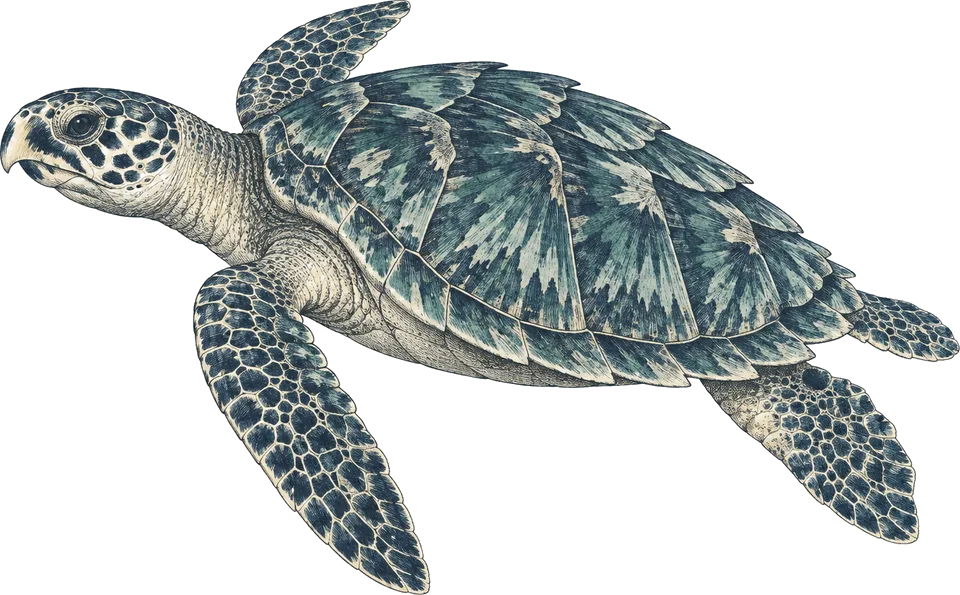
Batu Layar, Shark Point
Shallow reef dives and snorkels; keep your distance and do not touch.1
Frequent at Batu Layar.
Sugar Wreck, Tokong Laut
Look under ledges and wreck plates at about 18 m.2
Common on the wrecks and the Pinnacle.
Compiled from the sources above, last checked 2026-11-12. Monthly conditions come from our own climate records; see how we score.