
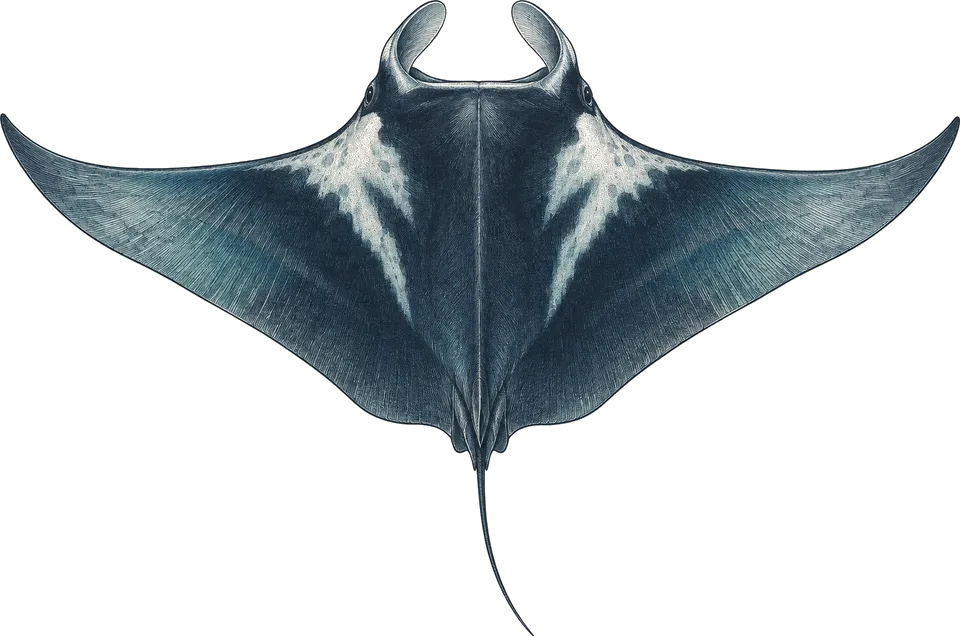
manta ray
Nov–AprHin Daeng, Hin Muang
Hang off the pinnacle in the blue at mid-depth; mantas pass and sometimes breach at the surface.4
Possible on most trips in season, never guaranteed.
The best time to dive Koh Lanta and Hin Daeng is November to April, the north-east monsoon, when the Andaman Sea is calm and boats reach Hin Daeng and Hin Muang, where mantas and whale sharks are most likely. Some centres dive locally all year. March would be my pick.
Operators say: November to April, the calm north-east monsoon; boats start running to the park sites from October and a few centres dive all year. Our data starts the best window in December rather than November.
111 km across · coastline from Natural Earth 10m
Koh Lanta is the closest base for Hin Daeng and Hin Muang, two isolated rocks in open water south of the island. Hin Daeng's wall drops past 60 m and Hin Muang is a chain of pinnacles covered in purple soft coral; both draw schools of jacks and tuna, grey reef sharks, manta rays and the occasional whale shark, and both have current and surface chop that call for Advanced divers. Closer in, the Koh Haa islands offer easy reefs, a shallow lagoon and The Cathedral, a cavern at about 20 m, while Koh Rok and Koh Bida have turtles, blacktip and leopard sharks.
The season follows the monsoon. From November to April the sea is calm and the offshore trips run; the national park areas around Koh Haa, Koh Rok and the Hins reopen around 1 October. From May to October the south-west monsoon brings rain and swell. A few centres keep diving closer sites, but Koh Haa has closed for part of the low season.
Hover a month to isolate it.
| January | February | March | April | May | June | July | August | September | October | November | December | |
|---|---|---|---|---|---|---|---|---|---|---|---|---|
| Conditions | Excellent | Excellent | Excellent | Good | Poor | Moderate | Poor | Poor | Poor | Poor | Poor | Excellent |
| Water temp (°C) | 29 | 29 | 30 | 31 | 31 | 30 | 30 | 30 | 30 | 30 | 30 | 29 |
| Visibility (m) | 15–25 | 15–25 | 10–20 | 10–20 | 10–20 | 10–20 | 15–25 | 15–25 | 10–20 | 15–25 | 15–25 | 10–20 |
| Marine life | No data | No data | No data | No data | No data | No data | No data | No data | No data | No data | No data | No data |
| Best time | Peak | Peak | Peak | Peak | Peak | Peak |
Long-term averages, 2016–2025. Visibility is estimated from satellite chlorophyll-a. Water temperature is the surface mean; it is cooler at depth.
Diving conditionsIt rains more. The wind is up.
Diving conditionsThe sea is calmer. It rains less.
10 years of sea temperature
Dashed: monthly average. Band: eight days in ten.
10th to 90th percentile rangemonthly mean
Seas top 1.5 m on under 1% of days. Enough to cancel a day boat
Gusts over 40 km/h, about where a day boat stays in port
7 of them bring heavy rain
| Month | Swell | Gusts over 40 km/h | Wet days | Heavy rain | Air | Daylight |
|---|---|---|---|---|---|---|
| Jan | 0.6 m | 1% | 8 | 1 | 29 °C | 11.6 h |
| Feb | 0.6 m | 1% | 4 | 1 | 30 °C | 11.8 h |
| Mar | 0.5 m | 0% | 11 | 1 | 30 °C | 12.0 h |
| Apr | 0.5 m | 0% | 22 | 5 | 30 °C | 12.2 h |
| May | 0.9 m | 0% | 27 | 11 | 30 °C | 12.3 h |
| Jun | 1.0 m | 1% | 22 | 8 | 30 °C | 12.4 h |
| Jul | 1.2 m | 3% | 20 | 8 | 29 °C | 12.4 h |
| Aug | 1.0 m | 1% | 24 | 10 | 29 °C | 12.2 h |
| Sep | 1.2 m | 3% | 23 | 11 | 29 °C | 12.0 h |
| Oct | 0.9 m | 0% | 27 | 12 | 29 °C | 11.8 h |
| Nov | 0.7 m | 1% | 25 | 8 | 28 °C | 11.7 h |
| Dec | 0.5 m | 0% | 13 | 3 | 29 °C | 11.6 h |
Swell is the rough end of the month: nine days in ten come in under it. Sea temperature covers 10 years, waves 4.
Darker is better, against this site's own year. Pick a month for its weeks.
| Week 1 | ||||||||||||
|---|---|---|---|---|---|---|---|---|---|---|---|---|
| Week 2 | ||||||||||||
| Week 3 | ||||||||||||
| Week 4 |
| Week | Conditions | Water | Swell | Wind | Rain chance |
|---|---|---|---|---|---|
| Week 1 | Excellent | 29 °C | 0.5 m | 24 km/h | 28% |
| Week 2 | Good | 29 °C | 0.6 m | 24 km/h | 30% |
| Week 3 | Excellent | 29 °C | 0.6 m | 23 km/h | 27% |
| Week 4 | Excellent | 29 °C | 0.6 m | 24 km/h | 18% |
| Week 1 | Excellent | 29 °C | 0.6 m | 24 km/h | 12% |
| Week 2 | Excellent | 29 °C | 0.6 m | 24 km/h | 14% |
| Week 3 | Excellent | 29 °C | 0.6 m | 25 km/h | 17% |
| Week 4 | Excellent | 29 °C | 0.6 m | 26 km/h | 18% |
| Week 1 | Excellent | 29 °C | 0.6 m | 25 km/h | 22% |
| Week 2 | Excellent | 30 °C | 0.5 m | 22 km/h | 27% |
| Week 3 | Excellent | 30 °C | 0.5 m | 22 km/h | 33% |
| Week 4 | Good | 30 °C | 0.4 m | 20 km/h | 55% |
| Week 1 | Good | 30 °C | 0.5 m | 19 km/h | 66% |
| Week 2 | Good | 31 °C | 0.5 m | 20 km/h | 64% |
| Week 3 | Good | 31 °C | 0.5 m | 19 km/h | 73% |
| Week 4 | Excellent | 31 °C | 0.4 m | 19 km/h | 84% |
| Week 1 | Moderate | 31 °C | 0.5 m | 18 km/h | 88% |
| Week 2 | Poor | 31 °C | 0.8 m | 19 km/h | 88% |
| Week 3 | Poor | 31 °C | 0.9 m | 20 km/h | 86% |
| Week 4 | Poor | 30 °C | 1.0 m | 20 km/h | 83% |
| Week 1 | Poor | 30 °C | 1.1 m | 20 km/h | 74% |
| Week 2 | Moderate | 30 °C | 1.0 m | 20 km/h | 67% |
| Week 3 | Moderate | 30 °C | 0.9 m | 21 km/h | 78% |
| Week 4 | Moderate | 30 °C | 1.0 m | 20 km/h | 77% |
| Week 1 | Moderate | 30 °C | 1.0 m | 20 km/h | 69% |
| Week 2 | Poor | 30 °C | 1.2 m | 21 km/h | 68% |
| Week 3 | Poor | 30 °C | 1.2 m | 20 km/h | 61% |
| Week 4 | Moderate | 30 °C | 1.0 m | 22 km/h | 63% |
| Week 1 | Poor | 30 °C | 0.9 m | 23 km/h | 70% |
| Week 2 | Poor | 30 °C | 1.0 m | 22 km/h | 73% |
| Week 3 | Poor | 30 °C | 1.0 m | 23 km/h | 77% |
| Week 4 | Poor | 30 °C | 1.1 m | 22 km/h | 81% |
| Week 1 | Poor | 30 °C | 1.1 m | 22 km/h | 78% |
| Week 2 | Poor | 30 °C | 1.1 m | 24 km/h | 79% |
| Week 3 | Poor | 30 °C | 1.2 m | 24 km/h | 80% |
| Week 4 | Poor | 30 °C | 1.2 m | 23 km/h | 79% |
| Week 1 | Poor | 30 °C | 0.9 m | 21 km/h | 88% |
| Week 2 | Poor | 30 °C | 0.8 m | 21 km/h | 88% |
| Week 3 | Poor | 30 °C | 1.0 m | 20 km/h | 85% |
| Week 4 | Poor | 30 °C | 0.9 m | 19 km/h | 90% |
| Week 1 | Poor | 29 °C | 0.8 m | 19 km/h | 92% |
| Week 2 | Moderate | 30 °C | 0.6 m | 19 km/h | 89% |
| Week 3 | Poor | 30 °C | 0.6 m | 20 km/h | 82% |
| Week 4 | Poor | 29 °C | 0.6 m | 23 km/h | 77% |
| Week 1 | Good | 29 °C | 0.5 m | 23 km/h | 64% |
| Week 2 | Good | 29 °C | 0.5 m | 22 km/h | 48% |
| Week 3 | Excellent | 29 °C | 0.5 m | 23 km/h | 38% |
| Week 4 | Excellent | 29 °C | 0.5 m | 24 km/h | 27% |
10 years of daily records, averaged into weeks.
Sized for each month's coldest water.
| Jan | Feb | Mar | Apr | May | Jun | Jul | Aug | Sep | Oct | Nov | Dec | |
|---|---|---|---|---|---|---|---|---|---|---|---|---|
| Suit | skin | skin | skin | skin | skin | skin | skin | skin | skin | skin | skin | skin |
Suit row is for surface water. At depth: 3 mm suit is enough at 27 to 30 °C. Carry an SMB and a computer for the Hins, where the surface current can carry you off the rock; a torch for The Cathedral.
Each month's rough end: nine days in ten are calmer.
Amber is over 1.5 m.
1 of the last 30 Januarys saw a tropical storm pass within 250 km. Anything has been recorded Jan, Nov.
Share of the last 30 years with a storm that month.
Only 0 records have been logged within 60 km. A thin record is not an empty reef.
No survey records within 60 km of this site.
Logged sightings, not a full survey. How to read this table.
| Site | Depth | Level | What to expect |
|---|---|---|---|
| Hin Daengwall / pinnacle | 6–40 m | Experienced | Isolated rock whose wall drops past 60 m. Jacks and tuna around 30 m, reef sharks, mantas; purple soft coral. Current and chop. The site I'd come for.4 |
| Hin Muangpinnacle | 12–40 m | Experienced | Chain of about six submerged pinnacles a few hundred metres from Hin Daeng, carpeted in purple soft coral. Mantas, grey reef sharks, harlequin shrimp.4 |
| The Cathedral (Koh Haa Yai 5)cavern | 5–20 m | Advanced | Two large caverns at about 20 m, about 30 minutes by boat from Lanta; you can surface inside.3 |
| Koh Haa Lagoon (Koh Haa 3)lagoon / reef | ≈ 3–12 m | Open Water | Very easy and shallow with no current, ringed by the Koh Haa islands; used for training and snorkelling.3 |
| Koh Haa 4wall | 5–30 m | Advanced | Wall on the Koh Haa group going down to about 30 m.3 |
| Koh Rok Naireef | 5–20 m | Open Water | About 30 km south of Lanta: reef to 20 m, average 12 m. Turtles, snapper, morays and powder-blue surgeonfish.3 |
| Koh Bida Nok and Naireef | ≈ 5–25 m | Open Water | Islets west of Lanta with schools of pelagic fish, blacktip reef sharks and leopard sharks on the sand.1 |
Hin Daeng, Hin Muang
Hang off the pinnacle in the blue at mid-depth; mantas pass and sometimes breach at the surface.4
Possible on most trips in season, never guaranteed.
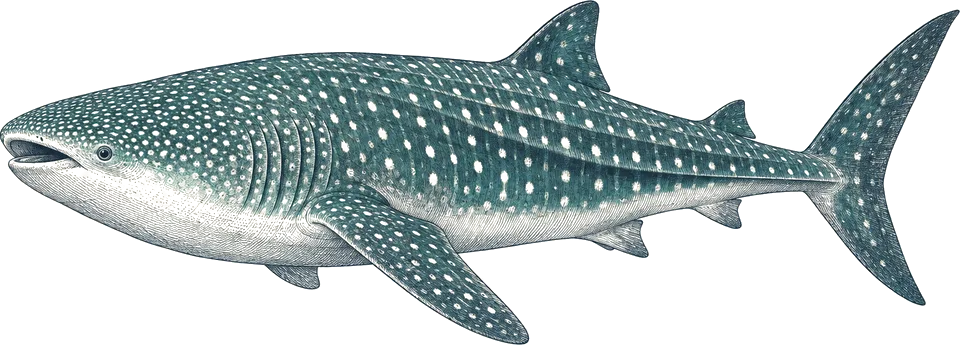
Hin Daeng, Hin Muang
Watch the blue on the safety stop and between pinnacles; do not chase.4
Occasional; most likely November to April.
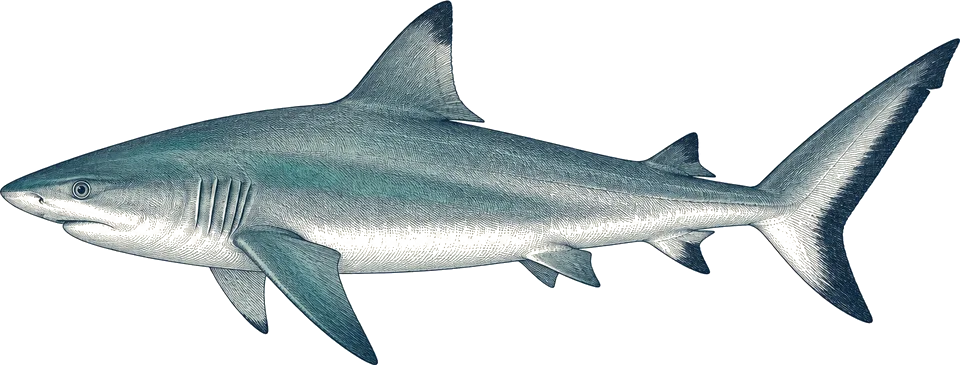
Hin Muang, Hin Daeng
Patrol the walls and pinnacle edges where the current hits.4
Regular on the Hins.
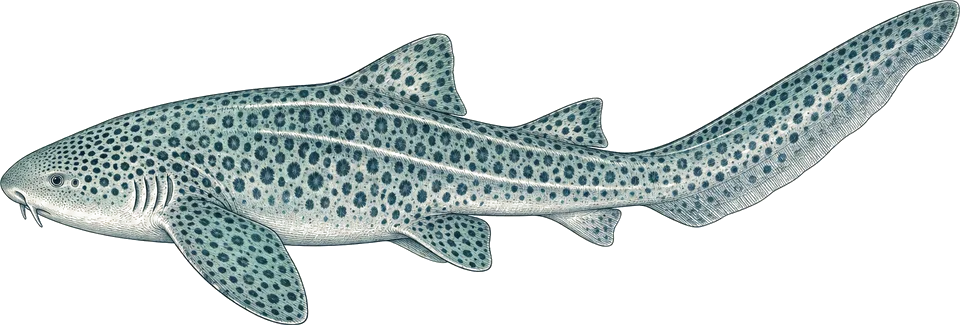
Koh Bida
Scan the sand at the base of the reef; they rest on the bottom.1
Regular at Bida.
Compiled from the sources above, last checked 2026-11-12. Monthly conditions come from our own climate records; see how we score.