
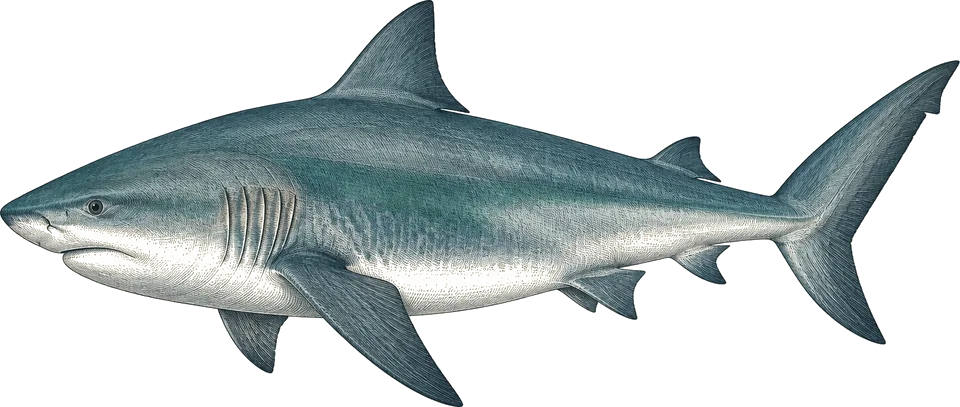
bull shark
Jan–JulShark Reef (The Arena)
Hold a fixed position at 30 m in The Arena while staff drop tuna heads overhead.6
Up to 100 in peak season; fewest October to December.
The best time to dive Beqa Lagoon is April to September: bull sharks at Shark Reef are most numerous until about July, and visibility peaks July to September. Numbers dip October to December, and April can still bring a cyclone. I'd book May.
Operators say: April to September: bull sharks are numerous until about July and visibility peaks July to September. Our data favours March, May and July on sea state; bull sharks are fewest October to December, and April can bring a late cyclone.
Worth knowing: 41% of days see seas over 1.5 m.
111 km across · coastline from Natural Earth 10m
Most divers come to Beqa Lagoon for one dive: the fed shark dive at Shark Reef, a marine reserve between Pacific Harbour and Beqa Island. It is a fixed-position, two-tank morning trip. The first stage is at 30 m in The Arena, where bull sharks come in to tuna heads dropped by the staff, followed by shallower stages with grey reef, whitetip, blacktip and sicklefin lemon sharks. Up to eight species turn up, and the occasional tiger shark.
The rest of the lagoon is easy soft coral diving: bommies, swim-throughs and a fishing-boat wreck, mostly in gentle current and suited to beginners. Water runs about 24 °C in July and August to 28 °C in February and March, and visibility is best July to September. Bull shark numbers are highest in the first half of the year and lowest October to December, when many females leave the site, probably to give birth.
Hover a month to isolate it.
| January | February | March | April | May | June | July | August | September | October | November | December | |
|---|---|---|---|---|---|---|---|---|---|---|---|---|
| Conditions | Poor | Poor | Excellent | Poor | Excellent | Poor | Excellent | Poor | Poor | Poor | Poor | Poor |
| Water temp (°C) | 29 | 29 | 29 | 29 | 28 | 27 | 26 | 26 | 26 | 27 | 27 | 28 |
| Visibility (m) | 15–25 | 15–25 | 15–25 | 15–25 | 15–25 | 15–25 | 20–30 | 20–30 | 20–30 | 20–30 | 20–30 | 20–30 |
| Marine life | Steady | Steady | Busy | Steady | Busy | Steady | Busy | Steady | Steady | Steady | Steady | Steady |
| Best time | Peak | Peak | Peak | Peak | Peak | Peak |
Long-term averages, 2016–2025. Visibility is estimated from satellite chlorophyll-a. Water temperature is the surface mean; it is cooler at depth.
Diving conditionsSwell is common, and crossings can be rough. Rain is frequent topside.
Diving conditionsSwell is common, and crossings can be rough. Rain is frequent topside.
Marine lifeScalloped hammerhead (hit-or-miss), Tiger shark (likely) peak at Beqa Lagoon, Fiji in these months.
522 underwater observation records · 20 surveyed years of ocean data · 10 years of sea temperature
Dashed: monthly average. Band: eight days in ten.
10th to 90th percentile rangemonthly mean
Seas top 1.5 m on 33% of days. Enough to cancel a day boat
Gusts over 40 km/h, about where a day boat stays in port
4 of them bring heavy rain
| Month | Swell | Gusts over 40 km/h | Wet days | Heavy rain | Air | Daylight |
|---|---|---|---|---|---|---|
| Jan | 1.6 m | 5% | 23 | 6 | 28 °C | 13.0 h |
| Feb | 1.7 m | 5% | 23 | 8 | 28 °C | 12.6 h |
| Mar | 1.6 m | 1% | 24 | 8 | 28 °C | 12.1 h |
| Apr | 1.9 m | 9% | 21 | 5 | 28 °C | 11.6 h |
| May | 2.1 m | 15% | 18 | 4 | 27 °C | 11.1 h |
| Jun | 2.0 m | 12% | 15 | 2 | 26 °C | 10.9 h |
| Jul | 2.2 m | 16% | 15 | 2 | 25 °C | 11.0 h |
| Aug | 2.0 m | 19% | 14 | 2 | 25 °C | 11.4 h |
| Sep | 2.1 m | 16% | 14 | 2 | 25 °C | 11.9 h |
| Oct | 2.0 m | 16% | 17 | 4 | 26 °C | 12.4 h |
| Nov | 1.7 m | 6% | 18 | 4 | 27 °C | 12.9 h |
| Dec | 1.6 m | 6% | 21 | 6 | 27 °C | 13.1 h |
Swell is the rough end of the month: nine days in ten come in under it. Sea temperature covers 10 years, waves 4.
Darker is better, against this site's own year. Pick a month for its weeks.
| Week 1 | ||||||||||||
|---|---|---|---|---|---|---|---|---|---|---|---|---|
| Week 2 | ||||||||||||
| Week 3 | ||||||||||||
| Week 4 |
| Week | Conditions | Water | Swell | Wind | Rain chance |
|---|---|---|---|---|---|
| Week 1 | Moderate | 28 °C | 1.6 m | 25 km/h | 72% |
| Week 2 | Moderate | 28 °C | 1.7 m | 23 km/h | 72% |
| Week 3 | Poor | 29 °C | 1.6 m | 22 km/h | 74% |
| Week 4 | Poor | 29 °C | 1.3 m | 23 km/h | 80% |
| Week 1 | Poor | 29 °C | 1.7 m | 24 km/h | 84% |
| Week 2 | Moderate | 29 °C | 1.9 m | 25 km/h | 85% |
| Week 3 | Moderate | 29 °C | 1.8 m | 26 km/h | 81% |
| Week 4 | Moderate | 29 °C | 1.7 m | 25 km/h | 75% |
| Week 1 | Good | 29 °C | 1.9 m | 25 km/h | 72% |
| Week 2 | Excellent | 29 °C | 1.7 m | 25 km/h | 72% |
| Week 3 | Good | 29 °C | 1.4 m | 24 km/h | 75% |
| Week 4 | Good | 29 °C | 1.4 m | 24 km/h | 81% |
| Week 1 | Moderate | 29 °C | 1.5 m | 26 km/h | 74% |
| Week 2 | Poor | 29 °C | 1.8 m | 27 km/h | 65% |
| Week 3 | Poor | 29 °C | 1.9 m | 27 km/h | 67% |
| Week 4 | Poor | 28 °C | 1.9 m | 27 km/h | 73% |
| Week 1 | Excellent | 28 °C | 2.1 m | 31 km/h | 73% |
| Week 2 | Good | 28 °C | 2.1 m | 33 km/h | 61% |
| Week 3 | Excellent | 28 °C | 2.1 m | 31 km/h | 50% |
| Week 4 | Good | 27 °C | 2.1 m | 28 km/h | 50% |
| Week 1 | Poor | 27 °C | 2.0 m | 29 km/h | 49% |
| Week 2 | Poor | 27 °C | 1.9 m | 30 km/h | 46% |
| Week 3 | Poor | 27 °C | 1.9 m | 30 km/h | 46% |
| Week 4 | Moderate | 27 °C | 2.0 m | 32 km/h | 51% |
| Week 1 | Good | 26 °C | 2.1 m | 34 km/h | 55% |
| Week 2 | Good | 26 °C | 2.3 m | 33 km/h | 49% |
| Week 3 | Good | 26 °C | 2.2 m | 31 km/h | 44% |
| Week 4 | Good | 26 °C | 2.0 m | 32 km/h | 46% |
| Week 1 | Poor | 26 °C | 2.0 m | 32 km/h | 45% |
| Week 2 | Poor | 26 °C | 2.0 m | 31 km/h | 43% |
| Week 3 | Poor | 26 °C | 2.0 m | 32 km/h | 45% |
| Week 4 | Poor | 26 °C | 2.0 m | 32 km/h | 44% |
| Week 1 | Poor | 26 °C | 2.0 m | 32 km/h | 42% |
| Week 2 | Poor | 26 °C | 2.0 m | 33 km/h | 47% |
| Week 3 | Moderate | 26 °C | 2.1 m | 34 km/h | 53% |
| Week 4 | Poor | 26 °C | 2.1 m | 33 km/h | 46% |
| Week 1 | Poor | 26 °C | 2.1 m | 33 km/h | 46% |
| Week 2 | Moderate | 26 °C | 2.0 m | 33 km/h | 59% |
| Week 3 | Moderate | 27 °C | 1.9 m | 34 km/h | 62% |
| Week 4 | Poor | 27 °C | 1.8 m | 33 km/h | 56% |
| Week 1 | Poor | 27 °C | 1.7 m | 31 km/h | 61% |
| Week 2 | Poor | 27 °C | 1.9 m | 29 km/h | 63% |
| Week 3 | Poor | 27 °C | 1.8 m | 26 km/h | 57% |
| Week 4 | Poor | 28 °C | 1.6 m | 26 km/h | 58% |
| Week 1 | Moderate | 28 °C | 1.6 m | 27 km/h | 63% |
| Week 2 | Moderate | 28 °C | 1.6 m | 28 km/h | 68% |
| Week 3 | Moderate | 28 °C | 1.6 m | 28 km/h | 68% |
| Week 4 | Moderate | 28 °C | 1.5 m | 27 km/h | 70% |
10 years of daily records, averaged into weeks.
Sized for each month's coldest water.
| Jan | Feb | Mar | Apr | May | Jun | Jul | Aug | Sep | Oct | Nov | Dec | |
|---|---|---|---|---|---|---|---|---|---|---|---|---|
| Suit | skin | skin | skin | skin | skin | 3 mm | 3 mm | 3 mm | 3 mm | 3 mm | 3 mm | skin |
Suit row is for surface water. At depth: Dark full-length wetsuit (3 mm suits 24 to 28 °C) and black gloves for the shark dive; gloves can be lent. BCD with power inflator, octopus, depth gauge and SPG are required.
Each month's rough end: nine days in ten are calmer.
Amber is over 1.5 m.
6 of the last 30 Aprils saw a tropical storm pass within 250 km. Anything has been recorded Oct–May.
Share of the last 30 years with a storm that month.
| Species | When | Observed window | Reliability | Evidence | Records |
|---|---|---|---|---|---|
| Bull shark | Mar, May, Jul | Near-guaranteed | 123 | ||
| Grey reef shark | All year | Near-guaranteed | 27 | ||
| Whitetip reef shark | May–Jun | Likely | 95 | ||
| Camouflage grouper | Jul, Sep | Hit-or-miss | 34 | ||
| Blacktip reef shark | Dec–Jan, Mar–Apr | Likely | 17 | ||
| Scalloped hammerhead | Mar | Hit-or-miss | 82 | ||
| Tiger shark | Mar, Jul | Likely | 56 | ||
| Silvertip shark | Jan, Jul, Sep | Likely | 19 | ||
| Hawksbill turtle | Jan, Aug | Hit-or-miss | 16 | ||
| Bigeye trevally | Apr, Oct | Hit-or-miss | 8 |
Logged sightings, not a full survey. How to read this table.
| Site | Depth | Level | What to expect |
|---|---|---|---|
| Shark Reef (The Arena)Beqa Lagoon · shark feeding dive | 4–30 m | Open Water | Fed shark dive in a marine reserve: 10 to 12 minutes at 30 m with bull sharks, then stages at 10 m and 4 m. The reason I'd come.2 |
| The BistroBeqa Lagoon · shark feeding dive | 5–25 m | Advanced | Aqua-Trek's feeding site: moor on a 5 m pinnacle, drop to an 18 m plateau, feed on the slope to 25 m.7 |
| Carpet CoveBeqa Lagoon · wreck / wall | 20–30 m | Advanced | Intact Japanese fishing boat sunk in 1994 at 20 to 30 m, beside a reef wall with lionfish and blue ribbon eels.1 |
| Caesar's RocksBeqa Lagoon · bommies / swim-throughs | ≈ 5–18 m | Open Water | Soft coral bommies with swim-throughs and a tunnel at about 15 m. Turtles, tuna and the odd manta. A good second-day dive, I'd say.1 |
| FantaseaBeqa Lagoon · reef ridge | ≈ 5–15 m | Open Water | Coral ridge at about 14 m through Big Fan Alley past garden eels, ending on a pinnacle top at 5 m. Current can be strong.1 |
| Seven SistersBeqa Lagoon · drift | ≈ 5–20 m | Open Water | Drift over a line of pinnacles and ridges with octopus, whitetip and blacktip reef sharks.1 |
| The Three NunsBeqa Lagoon · bommies | ≈ 5–18 m | Open Water | Three bommies near Yanuca Island with red gorgonians, hawkfish, giant morays and macro life. Suits newer divers.1 |
| The Pinnacle (Vatulele)Beqa Lagoon · seamount | ≈ 10–30 m | Experienced | Open-water seamount near Vatulele Island, undercut at about 25 m. Grey reef sharks, eagle rays, schooling hammerheads at times; moderate current.1 |
Shark Reef (The Arena)
Hold a fixed position at 30 m in The Arena while staff drop tuna heads overhead.6
Up to 100 in peak season; fewest October to December.
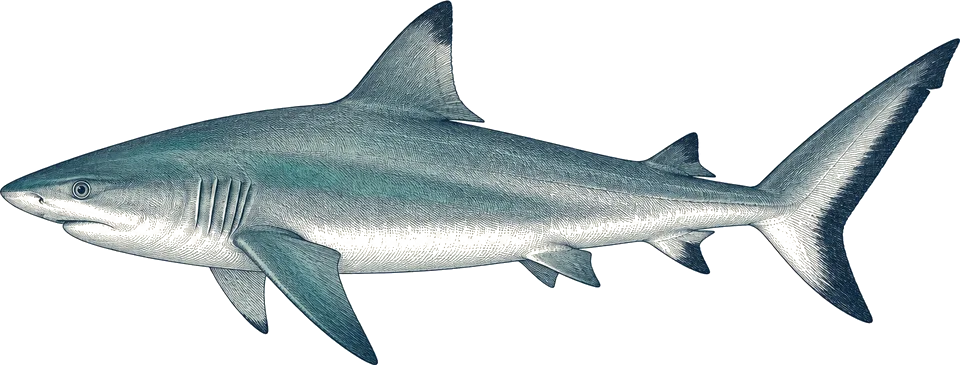
Shark Reef
Hand-fed at the 10 m stage, then around you at 4 m during the safety stop.3
10 to 20 or more of each on most dives; residents.
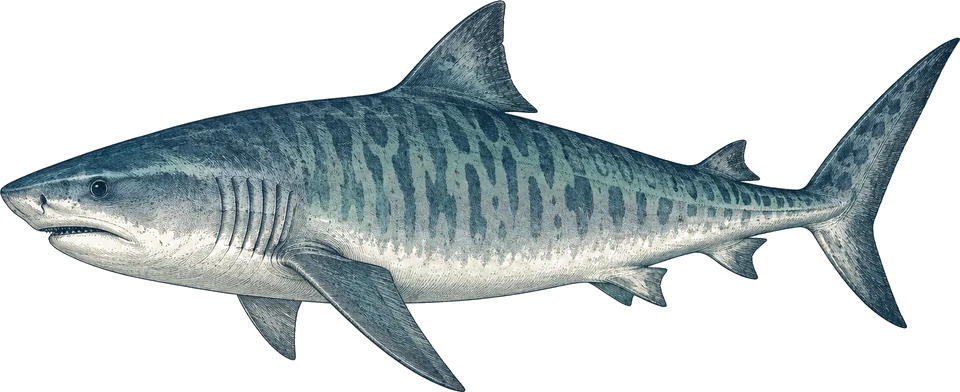
Shark Reef
Turns up unannounced during the feed, usually alone.3
Sporadic, mostly females; never guaranteed.
Shark Reef
Watch at the 30 m and 10 m stages; nurse sharks crowd the bait on the bottom.3
Up to 40 nurse sharks; lemons alone or up to six.
Compiled from the sources above, last checked 2026-11-12. Monthly conditions come from our own climate records; see how we score.