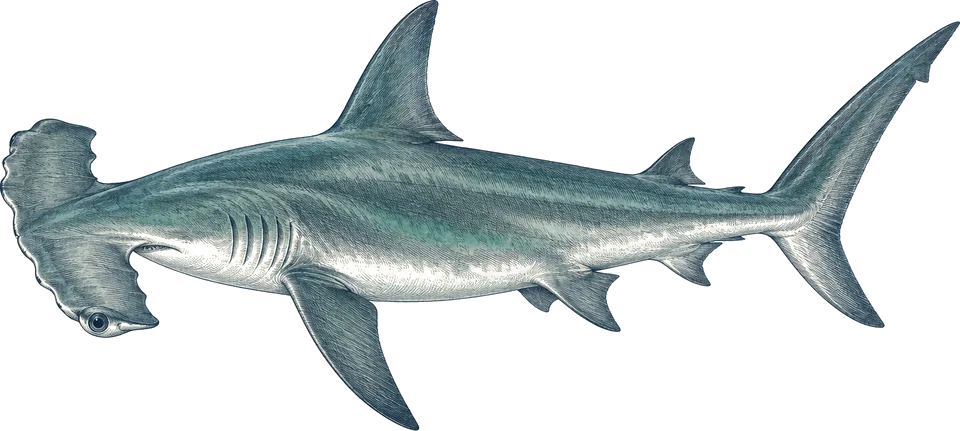
scalloped hammerhead
Feb–MarEast and West Flower Garden Banks
Watch the blue off the coral caps on winter trips.2
Schools pass through in late winter; not guaranteed.
The best time to dive the Flower Garden Banks is May to August, when the water is 24 to 30 °C and visibility often tops 25 m. The coral spawn falls 7 to 10 days after the August full moon. That's the trip I'd book, and early, as spawning trips fill fast.
Operators say: Summer, May to October, for warm, clear water and the August coral spawn; February to April for hammerheads. Our data stops at August because tropical storms become likely from August to October; operators keep running through October.
Worth knowing: 31% of days gust over 40 km/h.

By Eugen. Based on 11 sources, checked 11 November 2026.
444 km across · coastline from Natural Earth 10m
The Flower Garden Banks are coral caps on salt domes in the north-west Gulf of Mexico, about 100 nautical miles off Galveston. East and West Flower Garden Banks are covered in brain and star coral from about 18 m down; Stetson Bank, nearer shore, is siltstone ridges with sponges and fire coral. All three are a protected national marine sanctuary.
There is no day trip. The usual way out is a two- or three-day liveaboard from Freeport, leaving in the evening and diving from dawn, with a midday dive on an oil or gas platform. The diving season runs May to October, warm and clearest; February to April is cooler and rougher but brings schooling hammerheads and eagle rays. Currents and seas are unpredictable, and trips are often cancelled for weather.
Hover a month to isolate it.
| January | February | March | April | May | June | July | August | September | October | November | December | |
|---|---|---|---|---|---|---|---|---|---|---|---|---|
| Conditions | Poor | Moderate | Moderate | Moderate | Excellent | Good | Good | Excellent | Poor | Poor | Moderate | Poor |
| Water temp (°C) | 22 | 22 | 22 | 23 | 26 | 29 | 30 | 30 | 30 | 28 | 26 | 24 |
| Visibility (m) | 15–25 | 20–30 | 20–30 | 20–30 | 20–30 | 20–30 | 20–30 | 25–35 | 25–35 | 20–30 | 20–30 | 20–30 |
| Marine life | Steady | Busy | Steady | Steady | Busy | Steady | Steady | Busy | Steady | Steady | Steady | Steady |
| Best time | Peak | Peak | Peak | Peak |
Long-term averages, 2016–2025. Visibility is estimated from satellite chlorophyll-a. Water temperature is the surface mean; it is cooler at depth.
Diving conditionsThe wind is up. The sea is rougher.
Diving conditionsThe wind eases. The sea is calmer.
Diving conditionsSwell is common, and crossings can be rough. It rains more.
385 underwater observation records · 21 surveyed years of ocean data · 10 years of sea temperature
Dashed: monthly average. Band: eight days in ten.
10th to 90th percentile rangemonthly mean
Seas top 2.5 m on 11% of days. Enough to cancel a liveaboard crossing
Gusts over 40 km/h, about where a day boat stays in port
3 of them bring heavy rain
| Month | Swell | Gusts over 40 km/h | Wet days | Heavy rain | Air | Daylight |
|---|---|---|---|---|---|---|
| Jan | 3.2 m | 39% | 12 | 4 | 20 °C | 10.4 h |
| Feb | 2.7 m | 31% | 9 | 2 | 21 °C | 11.0 h |
| Mar | 2.8 m | 25% | 7 | 2 | 22 °C | 11.8 h |
| Apr | 2.8 m | 28% | 6 | 2 | 24 °C | 12.7 h |
| May | 2.0 m | 11% | 9 | 3 | 26 °C | 13.4 h |
| Jun | 1.8 m | 5% | 9 | 3 | 29 °C | 13.8 h |
| Jul | 1.1 m | 2% | 12 | 3 | 30 °C | 13.6 h |
| Aug | 1.2 m | 3% | 13 | 3 | 30 °C | 13.0 h |
| Sep | 1.7 m | 6% | 15 | 5 | 29 °C | 12.2 h |
| Oct | 2.4 m | 20% | 11 | 3 | 27 °C | 11.3 h |
| Nov | 2.8 m | 23% | 10 | 2 | 24 °C | 10.6 h |
| Dec | 2.7 m | 30% | 12 | 4 | 22 °C | 10.2 h |
Swell is the rough end of the month: nine days in ten come in under it. Sea temperature covers 10 years, waves 4.
Darker is better, against this site's own year. Pick a month for its weeks.
| Week 1 | ||||||||||||
|---|---|---|---|---|---|---|---|---|---|---|---|---|
| Week 2 | ||||||||||||
| Week 3 | ||||||||||||
| Week 4 |
| Week | Conditions | Water | Swell | Wind | Rain chance |
|---|---|---|---|---|---|
| Week 1 | Poor | 23 °C | 3.2 m | 36 km/h | 40% |
| Week 2 | Poor | 23 °C | 3.3 m | 36 km/h | 39% |
| Week 3 | Poor | 22 °C | 3.3 m | 37 km/h | 37% |
| Week 4 | Poor | 22 °C | 2.8 m | 37 km/h | 37% |
| Week 1 | Poor | 22 °C | 2.6 m | 36 km/h | 35% |
| Week 2 | Poor | 22 °C | 2.7 m | 36 km/h | 34% |
| Week 3 | Poor | 22 °C | 2.8 m | 35 km/h | 34% |
| Week 4 | Good | 22 °C | 2.6 m | 34 km/h | 29% |
| Week 1 | Moderate | 22 °C | 2.3 m | 34 km/h | 28% |
| Week 2 | Moderate | 22 °C | 2.4 m | 34 km/h | 27% |
| Week 3 | Moderate | 22 °C | 2.8 m | 35 km/h | 18% |
| Week 4 | Moderate | 22 °C | 3.1 m | 34 km/h | 19% |
| Week 1 | Poor | 23 °C | 3.2 m | 34 km/h | 22% |
| Week 2 | Poor | 23 °C | 2.9 m | 33 km/h | 23% |
| Week 3 | Moderate | 24 °C | 2.5 m | 33 km/h | 22% |
| Week 4 | Good | 24 °C | 2.3 m | 33 km/h | 18% |
| Week 1 | Excellent | 25 °C | 2.3 m | 33 km/h | 20% |
| Week 2 | Excellent | 25 °C | 2.0 m | 32 km/h | 24% |
| Week 3 | Excellent | 26 °C | 2.0 m | 31 km/h | 29% |
| Week 4 | Excellent | 27 °C | 2.0 m | 30 km/h | 33% |
| Week 1 | Good | 28 °C | 1.8 m | 26 km/h | 31% |
| Week 2 | Excellent | 28 °C | 1.6 m | 27 km/h | 28% |
| Week 3 | Excellent | 29 °C | 1.9 m | 29 km/h | 29% |
| Week 4 | Excellent | 29 °C | 1.7 m | 27 km/h | 34% |
| Week 1 | Excellent | 29 °C | 1.4 m | 25 km/h | 37% |
| Week 2 | Excellent | 30 °C | 1.2 m | 24 km/h | 35% |
| Week 3 | Good | 30 °C | 1.0 m | 23 km/h | 41% |
| Week 4 | Excellent | 30 °C | 1.0 m | 22 km/h | 45% |
| Week 1 | Excellent | 30 °C | 1.0 m | 22 km/h | 39% |
| Week 2 | Excellent | 30 °C | 1.1 m | 22 km/h | 35% |
| Week 3 | Excellent | 30 °C | 1.3 m | 23 km/h | 39% |
| Week 4 | Good | 30 °C | 1.2 m | 24 km/h | 55% |
| Week 1 | Poor | 30 °C | 1.4 m | 24 km/h | 60% |
| Week 2 | Poor | 30 °C | 1.6 m | 24 km/h | 52% |
| Week 3 | Poor | 30 °C | 1.3 m | 25 km/h | 48% |
| Week 4 | Poor | 29 °C | 1.9 m | 26 km/h | 44% |
| Week 1 | Moderate | 29 °C | 2.3 m | 28 km/h | 38% |
| Week 2 | Moderate | 29 °C | 2.3 m | 29 km/h | 31% |
| Week 3 | Poor | 28 °C | 2.4 m | 30 km/h | 35% |
| Week 4 | Poor | 28 °C | 2.6 m | 32 km/h | 39% |
| Week 1 | Good | 27 °C | 2.7 m | 31 km/h | 35% |
| Week 2 | Good | 26 °C | 2.9 m | 30 km/h | 33% |
| Week 3 | Moderate | 26 °C | 2.9 m | 34 km/h | 34% |
| Week 4 | Poor | 25 °C | 2.6 m | 35 km/h | 37% |
| Week 1 | Moderate | 25 °C | 2.4 m | 35 km/h | 40% |
| Week 2 | Poor | 24 °C | 2.8 m | 35 km/h | 40% |
| Week 3 | Poor | 24 °C | 2.9 m | 34 km/h | 37% |
| Week 4 | Poor | 23 °C | 2.8 m | 34 km/h | 38% |
10 years of daily records, averaged into weeks.
Sized for each month's coldest water.
| Jan | Feb | Mar | Apr | May | Jun | Jul | Aug | Sep | Oct | Nov | Dec | |
|---|---|---|---|---|---|---|---|---|---|---|---|---|
| Suit | 5 mm | 5 mm + | 5 mm | 5 mm | 3 mm | skin | skin | skin | skin | skin | 3 mm | 5 mm |
Suit row is for surface water. At depth: 3 mm in summer; 5 to 7 mm from December to April when the water is 19 to 21 °C. Bring an SMB, your own gear (no rentals on board) and seasickness medication.
Each month's rough end: nine days in ten are calmer.
Amber is over 2.5 m.
11 of the last 30 Septembers saw a tropical storm pass within 250 km. Anything has been recorded Jun–Oct.
Share of the last 30 years with a storm that month.
| Species | When | Observed window | Reliability | Evidence | Records |
|---|---|---|---|---|---|
| Yellowfin tuna | All year | Likely | 277 | ||
| Silky shark | Apr | Hit-or-miss | 14 | ||
| Sperm whale | Jun, Aug, Dec | Hit-or-miss | 51 | ||
| Bottlenose dolphin | Feb, May, Aug | Likely | 27 |
Logged sightings, not a full survey. How to read this table.
| Site | Depth | Level | What to expect |
|---|---|---|---|
| East Flower Garden BankFlower Garden Banks · coral cap | 18–30 m | Advanced | Brain and star coral cap; seven sanctuary mooring buoys sit on 19 to 21 m. Descend and ascend on the line.3 |
| West Flower Garden BankFlower Garden Banks · coral cap | 20–30 m | Advanced | Slightly deeper coral cap; five mooring buoys on 21 to 24 m. Usually the first two dives of a weekend trip.3 |
| Stetson BankFlower Garden Banks · ridges / pinnacles | 17–30 m | Advanced | Siltstone ridges about 80 miles off Texas with sponges, fire coral and big fish; buoys on 22 to 26 m, north wall drops much deeper.4 |
| Sierra Madracis (Stetson Bank)Flower Garden Banks · pinnacle | ≈ 17–25 m | Advanced | Stetson's highest peak, named for its dense ten-ray star coral; the shallowest part of the bank.4 |
| Oil and gas platform (rig dive)Flower Garden Banks · artificial structure | ≈ 5–27 m | Advanced | Midday or evening dive on a platform leg near the banks; jacks, barracuda and sharks. Current and chop often build by evening.7 |
East and West Flower Garden Banks
Watch the blue off the coral caps on winter trips.2
Schools pass through in late winter; not guaranteed.
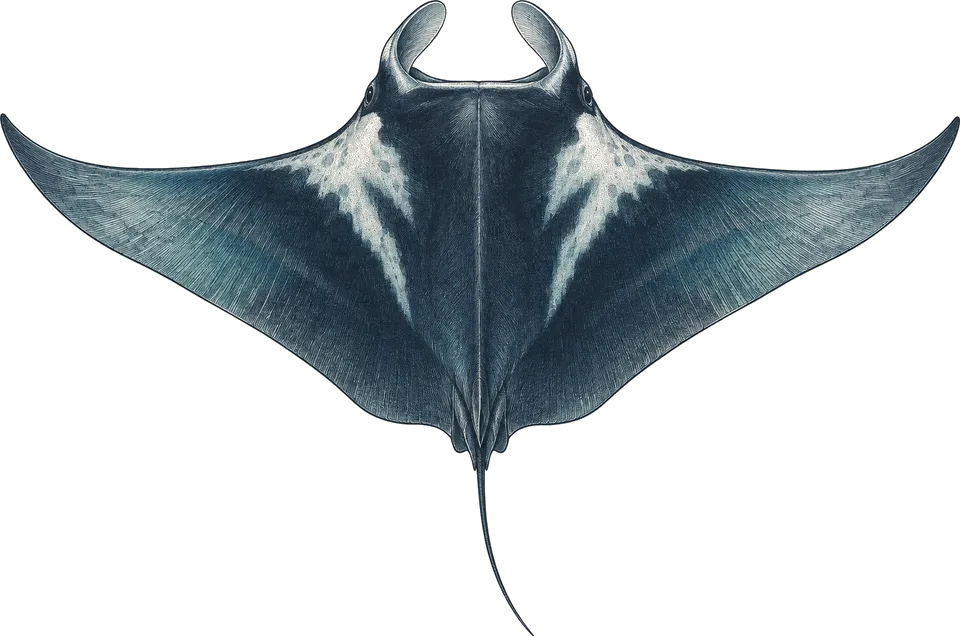
Flower Garden Banks and Stetson Bank
Look up and out from the reef; mantas cruise over the banks.6
Common; the banks are a nursery. No reliable season given.
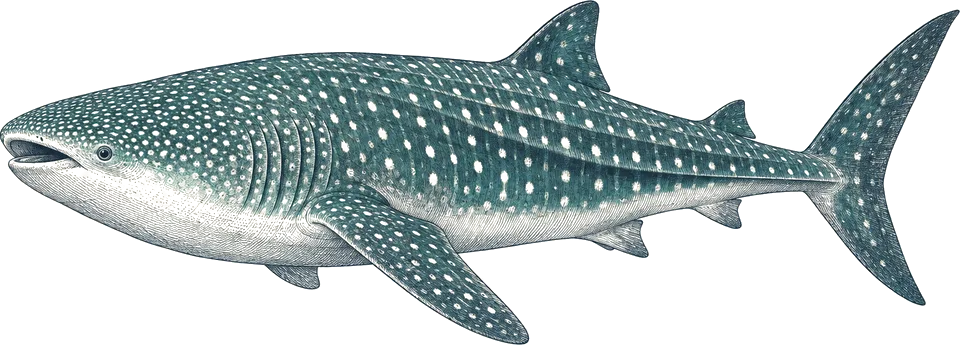
Flower Garden Banks
Sightings come on summer trips, often around the coral spawn.2
Sporadic, mostly late summer.
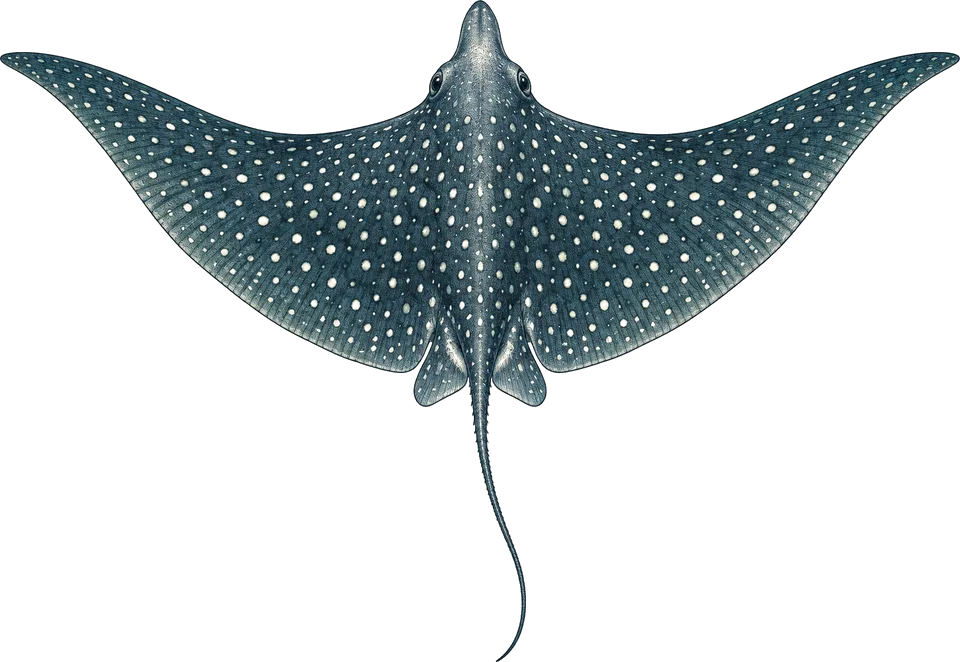
Flower Garden Banks
Large groups over the coral caps early in the year.8
Regular in late winter and early spring.
Compiled from the sources above, last checked 2026-11-11. Monthly conditions come from our own climate records; see how we score.