
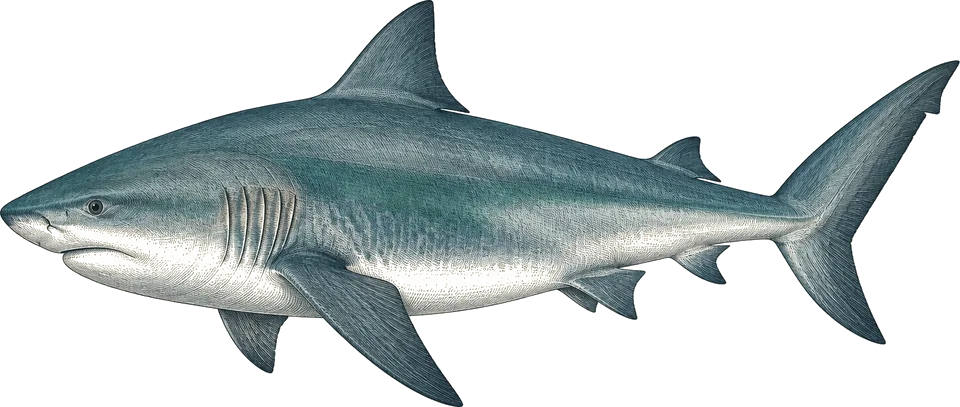
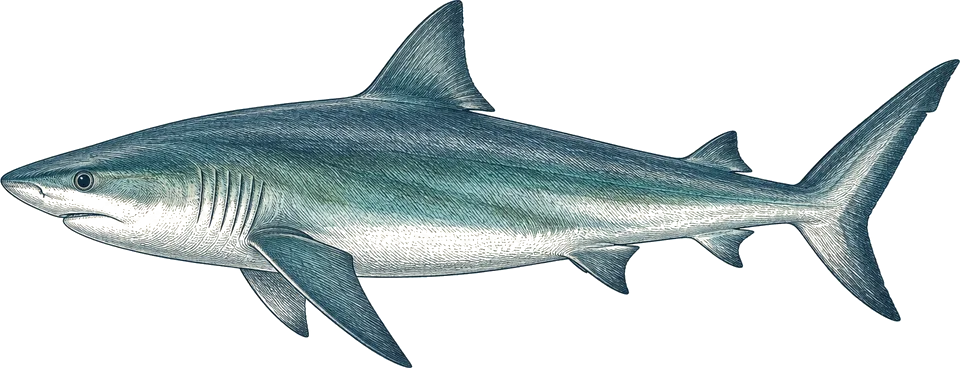
bull (Zambezi) shark
Nov–MaySouthern Pinnacles, Southern Cave
Stay close to the reef and your guide at 30 m; also drawn in on baited drifts.4
Resident most of the year; most active November to April.
The best time to dive Protea Banks is December to May, when bull sharks, tiger sharks and schooling scalloped hammerheads are most active. June to November brings ragged-tooth sharks to the Northern Pinnacles instead. I'd aim for February, inside the hammerhead peak.
Operators say: December to May for bull, tiger and hammerhead sharks; June to November for ragged-tooth sharks. Our data agrees on summer, but rates August to October poor for rough, cool seas; operators still run winter dives for the ragged-tooth aggregation.
Worth knowing: 96% of days see seas over 1.5 m.
222 km across · coastline from Natural Earth 10m
Protea Banks is a ridge of sandstone reef, roughly 6 km long and 800 m wide, on the edge of the continental shelf where the Agulhas Current runs past. The reef starts at about 26 to 30 m and is cut by caves and gullies, so this is deep diving: most dives touch 30 to 40 m, with 25 to 30 minutes of bottom time, in currents that can exceed 2 knots. It is for experienced divers only.
The sharks change with the season. From about November to May, bull (Zambezi) sharks patrol the Southern Pinnacles, tiger sharks visit and scalloped hammerheads school, peaking January to March. From June to November, ragged-tooth sharks gather in the caves of the Northern Pinnacles, with copper sharks around the sardine run. Baited drift dives held at about 12 m run alongside the reef dives.
Hover a month to isolate it.
| January | February | March | April | May | June | July | August | September | October | November | December | |
|---|---|---|---|---|---|---|---|---|---|---|---|---|
| Conditions | Excellent | Excellent | Excellent | Moderate | Good | Moderate | Excellent | Poor | Poor | Poor | Moderate | Excellent |
| Water temp (°C) | 26 | 27 | 27 | 26 | 24 | 23 | 22 | 22 | 22 | 22 | 24 | 25 |
| Visibility (m) | 20–30 | 20–30 | 20–30 | 15–25 | 15–25 | 15–25 | 15–25 | 10–20 | 15–25 | 15–25 | 15–25 | 20–30 |
| Marine life | Busy | Busy | Busy | Steady | Steady | Steady | Busy | Steady | Steady | Steady | Steady | Busy |
| Best time | Peak | Peak | Peak | Peak | Peak | Peak |
Long-term averages, 2016–2025. Visibility is estimated from satellite chlorophyll-a. Water temperature is the surface mean; it is cooler at depth.
Diving conditionsIt rains less. The wind eases.
Diving conditionsIt rains less.
Diving conditionsThe wind is up.
Diving conditionsThe wind is up. It rains more.
Diving conditionsIt rains more.
Marine lifeSand tiger shark (hit-or-miss), Tiger shark (hit-or-miss), Scalloped hammerhead (hit-or-miss), Sailfish (hit-or-miss) peak at Protea Banks in these months.
3,621 underwater observation records · 26 surveyed years of ocean data · 10 years of sea temperature
Dashed: monthly average. Band: eight days in ten.
10th to 90th percentile rangemonthly mean
Seas top 1.5 m on 96% of days. Enough to cancel a day boat
Gusts over 40 km/h, about where a day boat stays in port
2 of them bring heavy rain
| Month | Swell | Gusts over 40 km/h | Wet days | Heavy rain | Air | Daylight |
|---|---|---|---|---|---|---|
| Jan | 2.8 m | 2% | 13 | 4 | 27 °C | 13.8 h |
| Feb | 2.8 m | 2% | 13 | 3 | 27 °C | 13.1 h |
| Mar | 3.1 m | 1% | 11 | 3 | 27 °C | 12.2 h |
| Apr | 3.4 m | 3% | 10 | 3 | 25 °C | 11.2 h |
| May | 3.5 m | 1% | 5 | 2 | 24 °C | 10.4 h |
| Jun | 3.8 m | 2% | 3 | 1 | 23 °C | 10.0 h |
| Jul | 3.7 m | 3% | 4 | 0 | 22 °C | 10.2 h |
| Aug | 4.3 m | 6% | 6 | 1 | 22 °C | 10.9 h |
| Sep | 3.9 m | 4% | 9 | 2 | 23 °C | 11.8 h |
| Oct | 3.5 m | 8% | 12 | 3 | 23 °C | 12.8 h |
| Nov | 3.0 m | 3% | 12 | 3 | 24 °C | 13.6 h |
| Dec | 2.8 m | 4% | 15 | 4 | 26 °C | 14.0 h |
Swell is the rough end of the month: nine days in ten come in under it. Sea temperature covers 10 years, waves 4.
Darker is better, against this site's own year. Pick a month for its weeks.
| Week 1 | ||||||||||||
|---|---|---|---|---|---|---|---|---|---|---|---|---|
| Week 2 | ||||||||||||
| Week 3 | ||||||||||||
| Week 4 |
| Week | Conditions | Water | Swell | Wind | Rain chance |
|---|---|---|---|---|---|
| Week 1 | Good | 26 °C | 2.5 m | 25 km/h | 44% |
| Week 2 | Excellent | 26 °C | 2.6 m | 25 km/h | 45% |
| Week 3 | Good | 26 °C | 2.8 m | 26 km/h | 41% |
| Week 4 | Excellent | 26 °C | 2.9 m | 27 km/h | 39% |
| Week 1 | Good | 26 °C | 2.8 m | 25 km/h | 41% |
| Week 2 | Good | 27 °C | 2.8 m | 24 km/h | 49% |
| Week 3 | Good | 27 °C | 2.9 m | 24 km/h | 49% |
| Week 4 | Good | 27 °C | 3.0 m | 24 km/h | 41% |
| Week 1 | Good | 27 °C | 3.0 m | 24 km/h | 36% |
| Week 2 | Good | 27 °C | 3.2 m | 25 km/h | 40% |
| Week 3 | Good | 27 °C | 3.2 m | 25 km/h | 42% |
| Week 4 | Good | 26 °C | 3.0 m | 25 km/h | 36% |
| Week 1 | Poor | 26 °C | 3.3 m | 24 km/h | 37% |
| Week 2 | Poor | 26 °C | 3.7 m | 24 km/h | 37% |
| Week 3 | Good | 25 °C | 3.6 m | 23 km/h | 31% |
| Week 4 | Good | 25 °C | 3.1 m | 23 km/h | 27% |
| Week 1 | Moderate | 25 °C | 3.0 m | 22 km/h | 20% |
| Week 2 | Excellent | 25 °C | 3.4 m | 21 km/h | 19% |
| Week 3 | Good | 24 °C | 3.6 m | 21 km/h | 16% |
| Week 4 | Good | 24 °C | 3.8 m | 21 km/h | 11% |
| Week 1 | Moderate | 24 °C | 4.0 m | 21 km/h | 13% |
| Week 2 | Good | 23 °C | 3.9 m | 21 km/h | 11% |
| Week 3 | Good | 23 °C | 3.8 m | 21 km/h | 8% |
| Week 4 | Good | 23 °C | 3.7 m | 22 km/h | 8% |
| Week 1 | Good | 23 °C | 3.6 m | 22 km/h | 7% |
| Week 2 | Excellent | 23 °C | 3.6 m | 22 km/h | 11% |
| Week 3 | Good | 22 °C | 3.4 m | 23 km/h | 14% |
| Week 4 | Good | 22 °C | 4.0 m | 24 km/h | 12% |
| Week 1 | Moderate | 22 °C | 4.1 m | 24 km/h | 12% |
| Week 2 | Poor | 22 °C | 3.9 m | 25 km/h | 18% |
| Week 3 | Poor | 22 °C | 4.4 m | 26 km/h | 20% |
| Week 4 | Poor | 22 °C | 4.5 m | 26 km/h | 18% |
| Week 1 | Moderate | 22 °C | 3.8 m | 25 km/h | 23% |
| Week 2 | Moderate | 22 °C | 4.0 m | 25 km/h | 29% |
| Week 3 | Poor | 22 °C | 4.6 m | 26 km/h | 33% |
| Week 4 | Poor | 22 °C | 4.0 m | 27 km/h | 37% |
| Week 1 | Poor | 22 °C | 3.6 m | 28 km/h | 38% |
| Week 2 | Poor | 22 °C | 3.5 m | 29 km/h | 37% |
| Week 3 | Poor | 22 °C | 3.5 m | 28 km/h | 37% |
| Week 4 | Poor | 23 °C | 3.3 m | 27 km/h | 39% |
| Week 1 | Poor | 23 °C | 3.2 m | 27 km/h | 46% |
| Week 2 | Poor | 23 °C | 2.9 m | 27 km/h | 44% |
| Week 3 | Good | 24 °C | 2.8 m | 27 km/h | 40% |
| Week 4 | Good | 24 °C | 2.9 m | 26 km/h | 40% |
| Week 1 | Excellent | 24 °C | 2.9 m | 26 km/h | 44% |
| Week 2 | Good | 24 °C | 3.1 m | 26 km/h | 48% |
| Week 3 | Good | 25 °C | 2.9 m | 26 km/h | 51% |
| Week 4 | Good | 25 °C | 2.7 m | 26 km/h | 48% |
10 years of daily records, averaged into weeks.
Sized for each month's coldest water.
| Jan | Feb | Mar | Apr | May | Jun | Jul | Aug | Sep | Oct | Nov | Dec | |
|---|---|---|---|---|---|---|---|---|---|---|---|---|
| Suit | 3 mm | 3 mm | 3 mm | 3 mm | 5 mm | 5 mm | 5 mm | 5 mm | 5 mm | 5 mm | 5 mm | 5 mm |
Suit row is for surface water. At depth: 5 mm wetsuit; add a hood or thicker suit in winter, when the water nears 20 °C. DSMB, whistle and signal mirror are required. Nitrox helps at 30 to 40 m.
Each month's rough end: nine days in ten are calmer.
Amber is over 1.5 m.
1 of the last 30 Aprils saw a tropical storm pass within 250 km. April is the only month with a recorded pass.
Share of the last 30 years with a storm that month.
| Species | When | Observed window | Reliability | Evidence | Records |
|---|---|---|---|---|---|
| Yellowfin tuna | All year | Likely | 3316 | ||
| Bull shark | Mar–Apr | Hit-or-miss | 40 | ||
| Sand tiger shark | Mar | Hit-or-miss | 35 | ||
| Tiger shark | Mar | Hit-or-miss | 31 | ||
| Scalloped hammerhead | Mar | Hit-or-miss | 25 | ||
| Humpback whale | Jun, Aug–Sep | Hit-or-miss | 19 | ||
| Smooth hammerhead | Mar | Hit-or-miss | 24 | ||
| Sailfish | Dec–Feb | Hit-or-miss | 20 | ||
| Oceanic manta | Mar | Hit-or-miss | 22 | ||
| Spotted eagle ray | Mar | Hit-or-miss | 22 | ||
| Whale shark | Jan, Mar | Hit-or-miss | 13 | ||
| Common thresher | Mar | Hit-or-miss | 8 | ||
| Bronze whaler | Mar, Jul, Dec | Hit-or-miss | 11 |
Logged sightings, not a full survey. How to read this table.
| Site | Depth | Level | What to expect |
|---|---|---|---|
| Northern Pinnaclesdeep reef / caves | 30–35 m | Experienced | Ridge of caves and ledges where ragged-tooth sharks rest during their winter aggregation; mostly dived June to November.4 |
| Northern Cavecave | 30–35 m | Experienced | Large cave and ledge near the northern pinnacle, averaging 33 m, where sharks rest by day. Hard coral, sea fans and game fish.3 |
| Southern Pinnaclesdeep reef | 30–40 m | Experienced | Rugged reef of rocks and holes, dived in summer for bull sharks and passing hammerhead schools; reaches about 45 m. The site I'd most want to see.4 |
| Southern Cavecave | 25–35 m | Experienced | Averages 30 m. Known for large Zambezi (bull) sharks from October to May, when scalloped hammerheads also gather.3 |
| Kingfish Gullygully | 25–35 m | Experienced | Scattered rock and an overhang holding big shoals of kingfish; averages 30 m. Humpbacks pass over the deeper ground in October and November.3 |
| Sand Shark Gullygully | 19–35 m | Experienced | Southern Pinnacle site: descend to about 35 m, then drift up the reef. A tiger shark, ragged-tooth sharks and juvenile hammerheads logged on one dive.1 |
| Baited shark driftbaited drift | 10–15 m | Advanced | Mid-water drift beside a bait drum at about 12 m, no cage, for bull, tiger and blacktip sharks in the warmer months. My pick for a first Protea dive.2 |
Southern Pinnacles, Southern Cave
Stay close to the reef and your guide at 30 m; also drawn in on baited drifts.4
Resident most of the year; most active November to April.
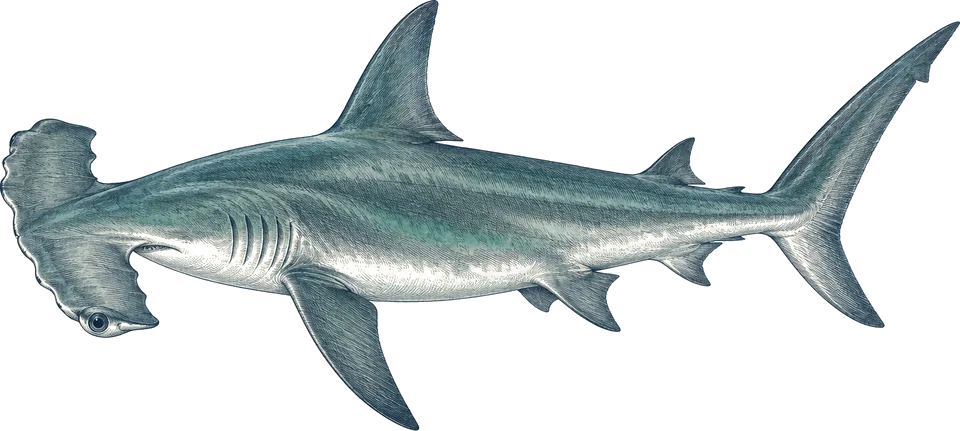
Southern Pinnacles
Watch the blue off the reef edge; schools pass mid-water above the pinnacles.4
Schools peak January to March; one operator says September to January.
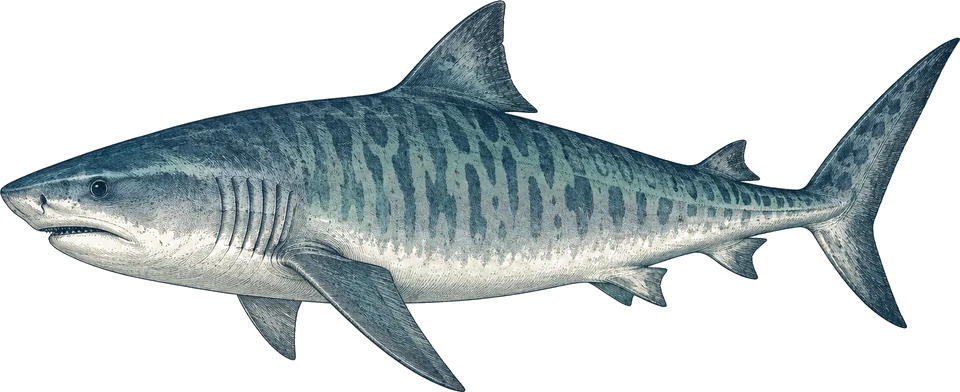
Baited drift, Southern Pinnacles
Most often on baited drifts at about 12 m; occasional on deep reef dives.5
Hit or miss; locals rate April and May best.
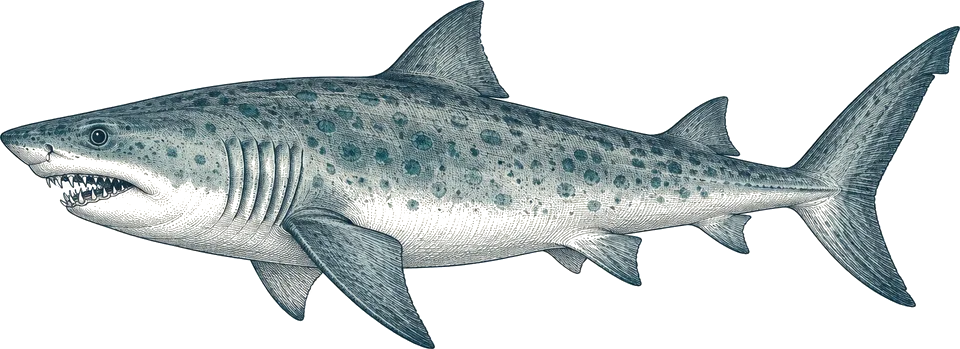
Northern Pinnacles, Northern Cave
Settle at the cave mouths at 30 to 35 m and let them hover; short bottom time.4
Hundreds in the winter aggregation; start date varies by source.
Across the banks
Seen mid-water and on drifts, often following sardine shoals.1
Often seen June to October.
Compiled from the sources above, last checked 2026-11-12. Monthly conditions come from our own climate records; see how we score.