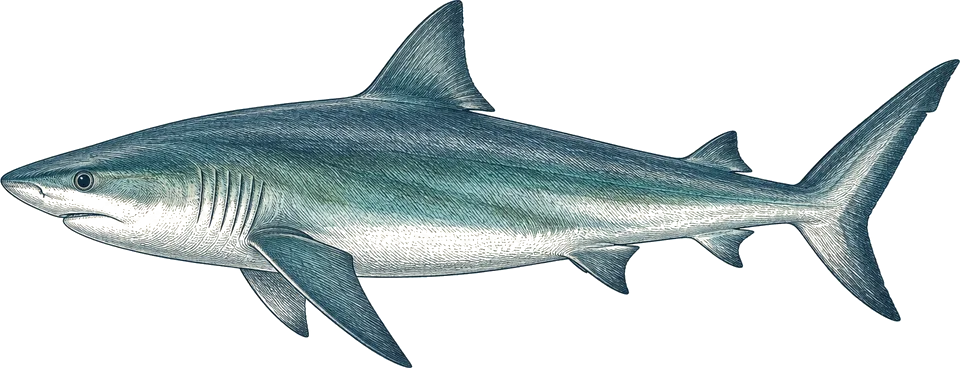
bronze whaler (copper shark)
All yearJoubertsdam, Shark Bay
Surface cage at anchor while the crew chums; sharks circle the cage.5
The most likely shark on any trip; more active in warm water.
The best time to dive Gansbaai is June to September, when the water around Dyer Island is clearest. Great whites, once the draw, are now rare and bronze whalers are the usual shark. I'd go for the bronzies and treat a white as a bonus.
Operators say: Operators still name June to September for clearer water and the best white shark chance; bronze whalers run all year. Our data favours December to April for calmer seas. With white sharks now rare, summer's calm water is a fair choice for bronze whalers.
Worth knowing: 97% of days see seas over 1.5 m.

By Eugen. Based on 13 sources, checked 11 November 2026.
111 km across · coastline from Natural Earth 10m
Gansbaai built its name on white shark cage diving around Dyer Island and Geyser Rock, where about 60,000 Cape fur seals live beside the channel called Shark Alley. Boats leave the small harbour at Kleinbaai, anchor 20 to 30 minutes out, chum and wait while guests take turns in a surface cage. No scuba certificate is needed.
The white sharks have largely gone. Sightings fell from about 2015, and the arrival of two shark-hunting orcas, Port and Starboard, around 2017 is the favoured explanation. In 2025 and 2026 operator logs mostly record bronze whalers, short-tail stingrays and seals; one log in October 2025 noted the first white shark in over a year. Visibility is usually poor, 0.5 to 6 m, and best in winter. Recreational scuba diving is banned along this coast to protect abalone, so the cage is the only diving here.
Hover a month to isolate it.
| January | February | March | April | May | June | July | August | September | October | November | December | |
|---|---|---|---|---|---|---|---|---|---|---|---|---|
| Conditions | Excellent | Excellent | Excellent | Excellent | Poor | Poor | Poor | Poor | Moderate | Good | Good | Excellent |
| Water temp (°C) | 20 | 20 | 19 | 17 | 16 | 16 | 15 | 15 | 15 | 16 | 17 | 19 |
| Visibility (m) | 0–10 | 0–10 | 0–10 | 5–15 | 5–15 | 5–15 | 5–15 | 5–15 | 5–15 | 5–15 | 5–15 | 5–15 |
| Marine life | Peak | Peak | Peak | Peak | Peak | Peak | Peak | Peak | Peak | Peak | Peak | Peak |
| Best time | Peak | Peak | Peak | Peak |
Long-term averages, 2016–2025. Visibility is estimated from satellite chlorophyll-a. Water temperature is the surface mean; it is cooler at depth.
Diving conditionsIt rains more.
Marine lifeSouthern elephant seal (hit-or-miss) peaks at Gansbaai in these months.
Diving conditionsSwell is common, and crossings can be rough.
Marine lifeShortfin mako (hit-or-miss), Blue shark (hit-or-miss) peak at Gansbaai in these months.
Diving conditionsIt rains less.
Marine lifeCape fur seal (near-guaranteed) peaks at Gansbaai in these months.
1,208 underwater observation records · 32 surveyed years of ocean data · 10 years of sea temperature
Dashed: monthly average. Band: eight days in ten.
10th to 90th percentile rangemonthly mean
Seas top 1.5 m on 97% of days. Enough to cancel a day boat
Gusts over 40 km/h, about where a day boat stays in port
1 of them bring heavy rain
| Month | Swell | Gusts over 40 km/h | Wet days | Heavy rain | Air | Daylight |
|---|---|---|---|---|---|---|
| Jan | 3.3 m | 3% | 7 | 0 | 24 °C | 14.1 h |
| Feb | 3.5 m | 3% | 5 | 0 | 24 °C | 13.3 h |
| Mar | 3.3 m | 2% | 8 | 1 | 22 °C | 12.3 h |
| Apr | 3.8 m | 3% | 6 | 1 | 21 °C | 11.1 h |
| May | 4.2 m | 5% | 7 | 2 | 19 °C | 10.2 h |
| Jun | 4.8 m | 13% | 11 | 3 | 18 °C | 9.7 h |
| Jul | 5.4 m | 13% | 10 | 3 | 16 °C | 9.9 h |
| Aug | 5.2 m | 14% | 10 | 3 | 16 °C | 10.7 h |
| Sep | 4.7 m | 10% | 9 | 2 | 17 °C | 11.8 h |
| Oct | 3.5 m | 9% | 7 | 1 | 20 °C | 12.9 h |
| Nov | 3.3 m | 6% | 6 | 1 | 21 °C | 13.8 h |
| Dec | 3.4 m | 6% | 7 | 0 | 22 °C | 14.3 h |
Swell is the rough end of the month: nine days in ten come in under it. Sea temperature covers 10 years, waves 4.
Darker is better, against this site's own year. Pick a month for its weeks.
| Week 1 | ||||||||||||
|---|---|---|---|---|---|---|---|---|---|---|---|---|
| Week 2 | ||||||||||||
| Week 3 | ||||||||||||
| Week 4 |
| Week | Conditions | Water | Swell | Wind | Rain chance |
|---|---|---|---|---|---|
| Week 1 | Excellent | 20 °C | 3.2 m | 28 km/h | 20% |
| Week 2 | Excellent | 20 °C | 3.2 m | 29 km/h | 21% |
| Week 3 | Excellent | 20 °C | 3.5 m | 29 km/h | 24% |
| Week 4 | Excellent | 20 °C | 3.5 m | 27 km/h | 22% |
| Week 1 | Excellent | 20 °C | 3.3 m | 26 km/h | 17% |
| Week 2 | Excellent | 20 °C | 3.5 m | 27 km/h | 18% |
| Week 3 | Excellent | 20 °C | 3.5 m | 27 km/h | 19% |
| Week 4 | Excellent | 19 °C | 3.4 m | 27 km/h | 17% |
| Week 1 | Excellent | 19 °C | 3.3 m | 26 km/h | 23% |
| Week 2 | Good | 19 °C | 3.3 m | 26 km/h | 27% |
| Week 3 | Excellent | 18 °C | 3.3 m | 26 km/h | 23% |
| Week 4 | Excellent | 18 °C | 3.5 m | 26 km/h | 23% |
| Week 1 | Good | 18 °C | 3.8 m | 26 km/h | 24% |
| Week 2 | Excellent | 17 °C | 3.6 m | 24 km/h | 21% |
| Week 3 | Excellent | 17 °C | 3.6 m | 23 km/h | 16% |
| Week 4 | Excellent | 17 °C | 4.0 m | 22 km/h | 18% |
| Week 1 | Moderate | 17 °C | 3.9 m | 21 km/h | 17% |
| Week 2 | Moderate | 16 °C | 4.0 m | 21 km/h | 15% |
| Week 3 | Poor | 16 °C | 4.2 m | 21 km/h | 20% |
| Week 4 | Poor | 16 °C | 4.3 m | 24 km/h | 31% |
| Week 1 | Poor | 16 °C | 4.5 m | 22 km/h | 34% |
| Week 2 | Moderate | 16 °C | 4.8 m | 22 km/h | 35% |
| Week 3 | Poor | 16 °C | 5.0 m | 26 km/h | 38% |
| Week 4 | Poor | 15 °C | 4.8 m | 27 km/h | 38% |
| Week 1 | Poor | 15 °C | 5.4 m | 26 km/h | 38% |
| Week 2 | Poor | 15 °C | 5.6 m | 24 km/h | 33% |
| Week 3 | Poor | 15 °C | 5.0 m | 23 km/h | 31% |
| Week 4 | Moderate | 15 °C | 5.0 m | 23 km/h | 30% |
| Week 1 | Poor | 15 °C | 5.0 m | 24 km/h | 28% |
| Week 2 | Poor | 15 °C | 4.9 m | 26 km/h | 32% |
| Week 3 | Poor | 15 °C | 5.5 m | 27 km/h | 37% |
| Week 4 | Poor | 15 °C | 5.4 m | 27 km/h | 36% |
| Week 1 | Moderate | 15 °C | 4.6 m | 26 km/h | 31% |
| Week 2 | Good | 15 °C | 4.7 m | 25 km/h | 26% |
| Week 3 | Poor | 15 °C | 4.7 m | 26 km/h | 27% |
| Week 4 | Moderate | 16 °C | 4.2 m | 28 km/h | 30% |
| Week 1 | Good | 16 °C | 3.8 m | 28 km/h | 25% |
| Week 2 | Good | 16 °C | 3.5 m | 28 km/h | 21% |
| Week 3 | Good | 16 °C | 3.3 m | 28 km/h | 23% |
| Week 4 | Good | 17 °C | 3.4 m | 29 km/h | 25% |
| Week 1 | Moderate | 17 °C | 3.4 m | 29 km/h | 25% |
| Week 2 | Good | 17 °C | 3.2 m | 28 km/h | 21% |
| Week 3 | Excellent | 18 °C | 3.3 m | 27 km/h | 20% |
| Week 4 | Excellent | 18 °C | 3.3 m | 27 km/h | 21% |
| Week 1 | Excellent | 18 °C | 3.2 m | 28 km/h | 22% |
| Week 2 | Good | 19 °C | 3.5 m | 27 km/h | 25% |
| Week 3 | Excellent | 19 °C | 3.4 m | 28 km/h | 23% |
| Week 4 | Excellent | 19 °C | 3.4 m | 29 km/h | 19% |
10 years of daily records, averaged into weeks.
Sized for each month's coldest water.
| Jan | Feb | Mar | Apr | May | Jun | Jul | Aug | Sep | Oct | Nov | Dec | |
|---|---|---|---|---|---|---|---|---|---|---|---|---|
| Suit | 5 mm + | 5 mm + | 5 mm + | 7 mm | 7 mm | 7 mm | 7 mm | 7 mm | 7 mm | 7 mm | 7 mm | 5 mm + |
Suit row is for surface water. At depth: Operators supply the wetsuit, mask and towel. Bring a warm jacket, hat, waterproof sunscreen and a change of clothes; the deck is cold and wet in winter.
Each month's rough end: nine days in ten are calmer.
Amber is over 1.5 m.
No tropical storm has come within 250 km in 30 years of records. Swell and wind set the season, not cyclones.
| Species | When | Observed window | Reliability | Evidence | Records |
|---|---|---|---|---|---|
| Cape fur seal | All year | Near-guaranteed | 318 | ||
| Bronze whaler | All year | Likely | 243 | ||
| Humpback whale | Jun–Jul | Likely | 226 | ||
| Yellowfin tuna | Apr–May | Hit-or-miss | 171 | ||
| Common dolphin | Feb–Mar, Sep, Dec | Hit-or-miss | 48 | ||
| Southern elephant seal | Feb, Jul | Hit-or-miss | 33 | ||
| Shortfin mako | Apr, Sep | Hit-or-miss | 18 | ||
| Blue shark | Apr, Sep | Hit-or-miss | 14 | ||
| Bottlenose dolphin | Feb, May, Oct | Hit-or-miss | 10 |
Logged sightings, not a full survey. How to read this table.
| Site | Depth | Level | What to expect |
|---|---|---|---|
| Dyer Island anchoragescage dive | 0–2 m | Open Water | Main anchorages from about April to September, 8 km offshore; clearest water of the year, with seals and penguins nearby.1 |
| Shark Bay inshore reefcage dive | ≈ 0–2 m | Open Water | Inshore reef anchorage used from about September to March; calmer, but visibility often 0.5 to 2 m in summer.1 |
| Joubertsdamcage dive | ≈ 0–2 m | Open Water | Anchorage logged on most 2025–2026 trips; bronze whalers circling the cage, stingrays, and the October 2025 white shark sighting.3 |
| Shark Alleychannel | ≈ 0–2 m | Open Water | Shallow channel between Dyer Island and Geyser Rock's seal colony. Boats pass through when safe; it is not the main anchorage.1 |
Joubertsdam, Shark Bay
Surface cage at anchor while the crew chums; sharks circle the cage.5
The most likely shark on any trip; more active in warm water.
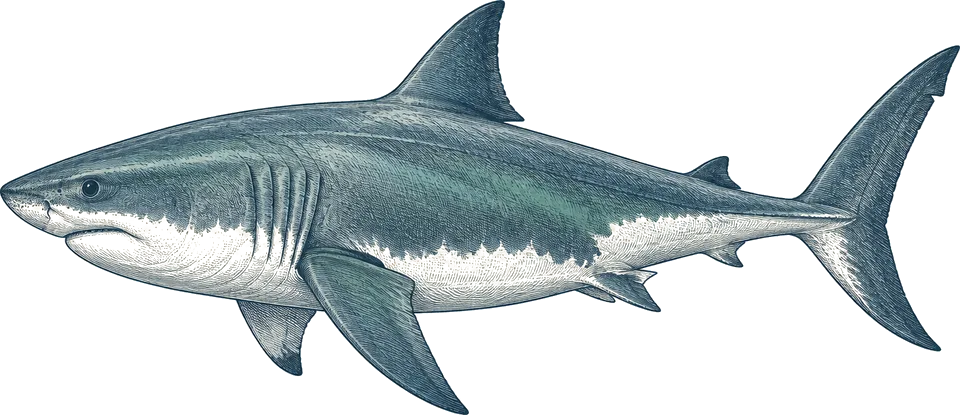
Dyer Island, Joubertsdam
Surface cage; historically most often around Dyer Island in winter.6
Rare since about 2017; one logged October 2025.
Shark Alley, Geyser Rock
Seen from the boat in Shark Alley beside Geyser Rock's colony.8
Thousands present on almost every trip.
Around Dyer Island
Seen from the boat on the way to or from anchor.2
Common in season; they visit to mate and calve.
Compiled from the sources above, last checked 2026-11-11. Monthly conditions come from our own climate records; see how we score.