
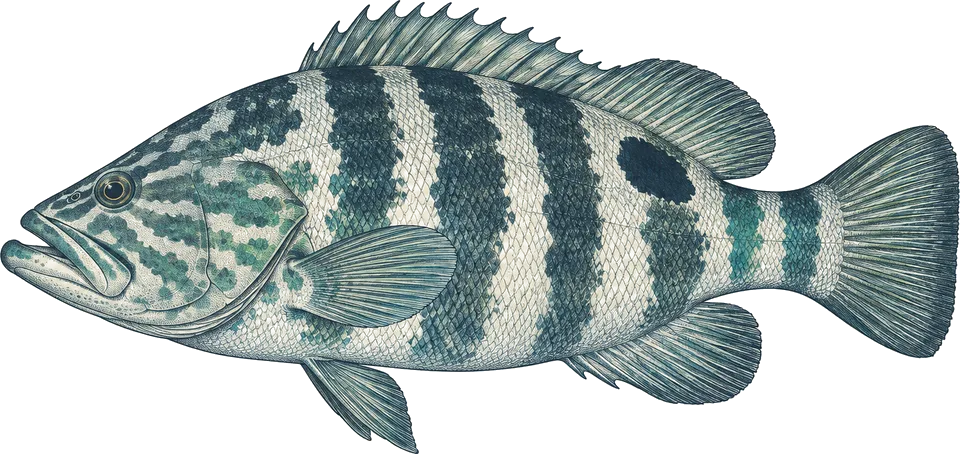
Nassau grouper
All yearBloody Bay Wall, Lea Lea's Lookout, Jigsaw Puzzle
Any Bloody Bay or Jackson dive; protected fish follow divers closely.2
Likely on most north-side dives.
The best time to dive Little Cayman is March to July, when the north shore and Bloody Bay Wall are calmest and clearest. Winter north winds can close the north-side sites. If it were my trip, I'd go in April, ahead of hurricane season from June.
Operators say: March to July, when north winds ease and Bloody Bay Wall is reliably reachable.
| Site | Best months |
|---|---|
| Grand Cayman | Mar–Jul |
| Little Cayman | Mar–Jul |
444 km across · coastline from Natural Earth 10m
Little Cayman's diving centres on Bloody Bay and Jackson Bay on the north shore, where the reef runs out to a wall that starts at about 5 to 7 m and drops past 300 m. Dive boats moor on sites such as Randy's Gazebo, Lea Lea's Lookout and the Great Wall a short ride from the resorts. Current is usually light and visibility runs 18 to 37 m.
The island is boat-diving only and depends on the wind. Strong, persistent north winds, mostly in winter, stir up the north side and push boats to south-side sites such as the Soto Trader wreck, where visibility is then better. March to July brings the most settled seas. Water runs 26 to 30 °C. Resorts also run weather-dependent day trips to the Captain Keith Tibbetts wreck off Cayman Brac.
Hover a month to isolate it.
| January | February | March | April | May | June | July | August | September | October | November | December | |
|---|---|---|---|---|---|---|---|---|---|---|---|---|
| Conditions | Moderate | Good | Excellent | Excellent | Excellent | Good | Good | Moderate | Good | Moderate | Poor | Moderate |
| Water temp (°C) | 28 | 27 | 27 | 28 | 29 | 29 | 30 | 30 | 30 | 30 | 29 | 28 |
| Visibility (m) | 25–35 | 25–35 | 25–35 | 25–35 | 25–35 | 25–35 | 25–35 | 25–35 | 25–35 | 25–35 | 25–35 | 25–35 |
| Marine life | Busy | Steady | Steady | Busy | Busy | Steady | Busy | Steady | Busy | Busy | Steady | Busy |
| Best time | Peak | Peak | Peak | Peak | Peak |
Long-term averages, 2016–2025. Visibility is estimated from satellite chlorophyll-a. Water temperature is the surface mean; it is cooler at depth.
Diving conditionsThe wind eases.
Diving conditionsRain is frequent topside. The wind is up.
256 underwater observation records · 20 surveyed years of ocean data · 10 years of sea temperature
Dashed: monthly average. Band: eight days in ten.
10th to 90th percentile rangemonthly mean
Seas top 1.5 m on 23% of days. Enough to cancel a day boat
Gusts over 40 km/h, about where a day boat stays in port
2 of them bring heavy rain
| Month | Swell | Gusts over 40 km/h | Wet days | Heavy rain | Air | Daylight |
|---|---|---|---|---|---|---|
| Jan | 1.8 m | 20% | 8 | 0 | 27 °C | 10.9 h |
| Feb | 1.9 m | 12% | 7 | 0 | 27 °C | 11.4 h |
| Mar | 1.7 m | 12% | 7 | 0 | 27 °C | 11.9 h |
| Apr | 1.8 m | 6% | 8 | 0 | 27 °C | 12.5 h |
| May | 1.4 m | 1% | 15 | 3 | 28 °C | 12.9 h |
| Jun | 1.7 m | 2% | 14 | 3 | 29 °C | 13.2 h |
| Jul | 1.5 m | 2% | 13 | 1 | 30 °C | 13.1 h |
| Aug | 1.3 m | 2% | 16 | 3 | 30 °C | 12.7 h |
| Sep | 1.4 m | 3% | 16 | 3 | 30 °C | 12.1 h |
| Oct | 1.9 m | 10% | 20 | 5 | 29 °C | 11.5 h |
| Nov | 1.9 m | 13% | 15 | 4 | 28 °C | 11.0 h |
| Dec | 2.1 m | 20% | 9 | 1 | 27 °C | 10.8 h |
Swell is the rough end of the month: nine days in ten come in under it. Sea temperature covers 10 years, waves 4.
Darker is better, against this site's own year. Pick a month for its weeks.
| Week 1 | ||||||||||||
|---|---|---|---|---|---|---|---|---|---|---|---|---|
| Week 2 | ||||||||||||
| Week 3 | ||||||||||||
| Week 4 |
| Week | Conditions | Water | Swell | Wind | Rain chance |
|---|---|---|---|---|---|
| Week 1 | Moderate | 28 °C | 1.8 m | 30 km/h | 27% |
| Week 2 | Moderate | 28 °C | 1.7 m | 29 km/h | 30% |
| Week 3 | Moderate | 27 °C | 1.9 m | 30 km/h | 27% |
| Week 4 | Moderate | 27 °C | 2.0 m | 33 km/h | 24% |
| Week 1 | Moderate | 27 °C | 2.0 m | 33 km/h | 26% |
| Week 2 | Moderate | 27 °C | 1.9 m | 32 km/h | 25% |
| Week 3 | Good | 27 °C | 1.9 m | 31 km/h | 22% |
| Week 4 | Excellent | 27 °C | 1.8 m | 30 km/h | 21% |
| Week 1 | Excellent | 27 °C | 1.5 m | 29 km/h | 21% |
| Week 2 | Excellent | 27 °C | 1.5 m | 28 km/h | 26% |
| Week 3 | Good | 27 °C | 1.6 m | 29 km/h | 28% |
| Week 4 | Excellent | 27 °C | 1.8 m | 29 km/h | 19% |
| Week 1 | Excellent | 28 °C | 1.8 m | 27 km/h | 16% |
| Week 2 | Excellent | 28 °C | 1.8 m | 27 km/h | 22% |
| Week 3 | Good | 28 °C | 1.9 m | 28 km/h | 31% |
| Week 4 | Good | 28 °C | 1.7 m | 27 km/h | 37% |
| Week 1 | Excellent | 28 °C | 1.5 m | 26 km/h | 41% |
| Week 2 | Excellent | 29 °C | 1.3 m | 24 km/h | 43% |
| Week 3 | Excellent | 29 °C | 1.4 m | 25 km/h | 46% |
| Week 4 | Good | 29 °C | 1.6 m | 27 km/h | 54% |
| Week 1 | Moderate | 29 °C | 1.8 m | 26 km/h | 55% |
| Week 2 | Moderate | 29 °C | 1.8 m | 27 km/h | 50% |
| Week 3 | Good | 29 °C | 1.7 m | 26 km/h | 46% |
| Week 4 | Excellent | 29 °C | 1.6 m | 26 km/h | 40% |
| Week 1 | Good | 30 °C | 1.6 m | 26 km/h | 40% |
| Week 2 | Excellent | 30 °C | 1.5 m | 26 km/h | 39% |
| Week 3 | Good | 30 °C | 1.5 m | 25 km/h | 43% |
| Week 4 | Moderate | 30 °C | 1.5 m | 26 km/h | 50% |
| Week 1 | Moderate | 30 °C | 1.4 m | 26 km/h | 49% |
| Week 2 | Moderate | 30 °C | 1.3 m | 26 km/h | 47% |
| Week 3 | Moderate | 30 °C | 1.3 m | 25 km/h | 49% |
| Week 4 | Moderate | 30 °C | 1.4 m | 24 km/h | 53% |
| Week 1 | Good | 30 °C | 1.4 m | 23 km/h | 54% |
| Week 2 | Excellent | 30 °C | 1.1 m | 22 km/h | 48% |
| Week 3 | Excellent | 30 °C | 1.4 m | 22 km/h | 53% |
| Week 4 | Moderate | 30 °C | 2.0 m | 23 km/h | 65% |
| Week 1 | Good | 30 °C | 1.6 m | 25 km/h | 68% |
| Week 2 | Good | 30 °C | 1.4 m | 24 km/h | 66% |
| Week 3 | Moderate | 30 °C | 1.8 m | 25 km/h | 61% |
| Week 4 | Poor | 30 °C | 2.2 m | 31 km/h | 61% |
| Week 1 | Poor | 29 °C | 2.2 m | 33 km/h | 60% |
| Week 2 | Poor | 29 °C | 2.0 m | 32 km/h | 55% |
| Week 3 | Poor | 29 °C | 1.8 m | 32 km/h | 46% |
| Week 4 | Moderate | 29 °C | 1.8 m | 31 km/h | 33% |
| Week 1 | Good | 28 °C | 2.0 m | 31 km/h | 24% |
| Week 2 | Moderate | 28 °C | 2.1 m | 33 km/h | 28% |
| Week 3 | Poor | 28 °C | 2.1 m | 33 km/h | 35% |
| Week 4 | Moderate | 28 °C | 2.0 m | 33 km/h | 27% |
10 years of daily records, averaged into weeks.
Sized for each month's coldest water.
| Jan | Feb | Mar | Apr | May | Jun | Jul | Aug | Sep | Oct | Nov | Dec | |
|---|---|---|---|---|---|---|---|---|---|---|---|---|
| Suit | skin | 3 mm | 3 mm | skin | skin | skin | skin | skin | skin | skin | skin | skin |
Suit row is for surface water. At depth: 3 mm full suit and your own dive computer. Pack light or ship gear ahead: the Twin Otter limited checked bags to 25 kg in total (2025 figure).
Each month's rough end: nine days in ten are calmer.
Amber is over 1.5 m.
5 of the last 30 Augusts saw a tropical storm pass within 250 km. Anything has been recorded Jul–Nov.
Share of the last 30 years with a storm that month.
| Species | When | Observed window | Reliability | Evidence | Records |
|---|---|---|---|---|---|
| Nassau grouper | All year | Near-guaranteed | 123 | ||
| Hawksbill turtle | All year | Likely | 43 | ||
| Nurse shark | May, Jul, Sep | Likely | 18 | ||
| Southern stingray | May, Jul, Sep, Dec | Likely | 29 | ||
| Green turtle | Jan, Apr, Sep–Oct | Likely | 8 | ||
| Spotted eagle ray | Jan, May, Oct | Hit-or-miss | 8 |
Logged sightings, not a full survey. How to read this table.
| Site | Depth | Level | What to expect |
|---|---|---|---|
| Bloody Bay Wallwall | 6–30 m | Open Water | Wall top at about 5 to 7 m dropping past 300 m; more than 15 moored sites. Open Water divers stay near the top. The reason I'd come.1 |
| Randy's Gazebowall / swim-through | 9–24 m | Advanced | Chimney from 24 m up to 9 m, swim-throughs, huge barrel sponges, eagle rays and turtles.1 |
| Lea Lea's Lookoutwall / pinnacle | ≈ 9–30 m | Advanced | Channel to a pinnacle with long coral cuts, lobsters and groupers; the wall bottoms out at about 36 m.8 |
| Sara's Setwall | 7–27 m | Advanced | Starts at 7 to 10 m and runs down the wall to about 27 m; eagle rays, nurse sharks and reef sharks at the edge.8 |
| Great Wall Eastreef / wall | 7–20 m | Open Water | Average 7 to 10 m, maximum about 20 m. Turtles, groupers tucked into barrel sponges, fairy basslets.8 |
| Mixing Bowl (Three Fathom Wall)wall | ≈ 5–25 m | Open Water | Wall beginning at about 5 m where Bloody Bay meets Jackson Bight; big schools of fish over the reef.2 |
| Jackson's Reefreef / wall | ≈ 10–25 m | Open Water | Reef from about 10 m with swim-throughs, sandy patches, stingrays, reef sharks at the wall edge; a good night dive.8 |
| Blacktip Boulevardsand flat / reef edge | ≈ 10–18 m | Open Water | Sand flat at about 15 m beside the reef edge, patrolled by blacktip reef sharks.1 |
| Soto Traderwreck | ≈ 10–15 m | Open Water | 37 m freighter on the south side resting at about 15 m; the fallback when north winds close Bloody Bay.2 |
Bloody Bay Wall, Lea Lea's Lookout, Jigsaw Puzzle
Any Bloody Bay or Jackson dive; protected fish follow divers closely.2
Likely on most north-side dives.
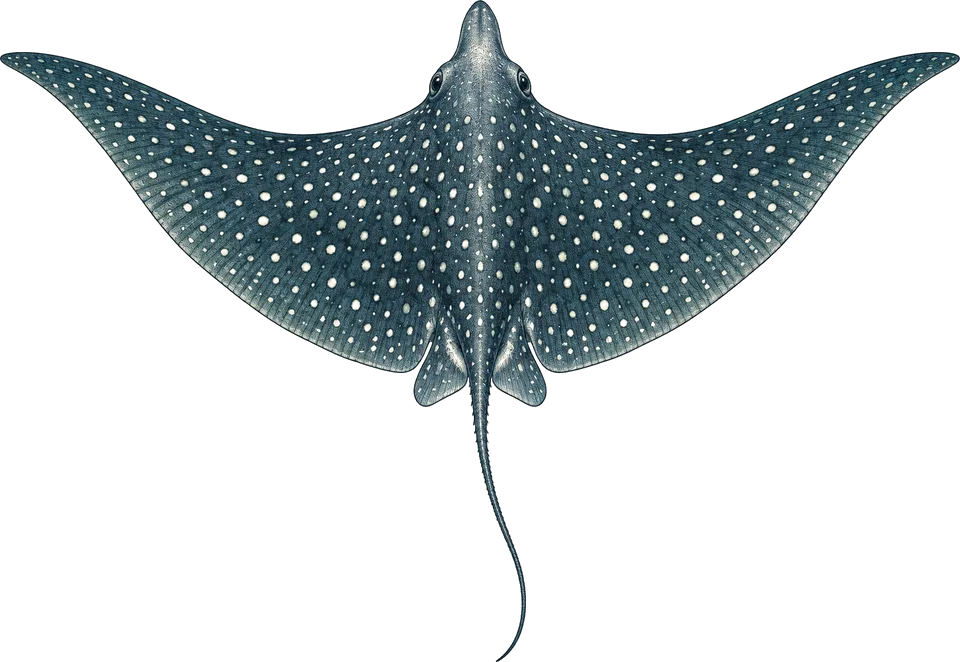
Eagle Ray Roundup, Jackson Bight, Sara's Set
Sand flats and the wall edge at 10 to 20 m.1
Common; no strong season reported.
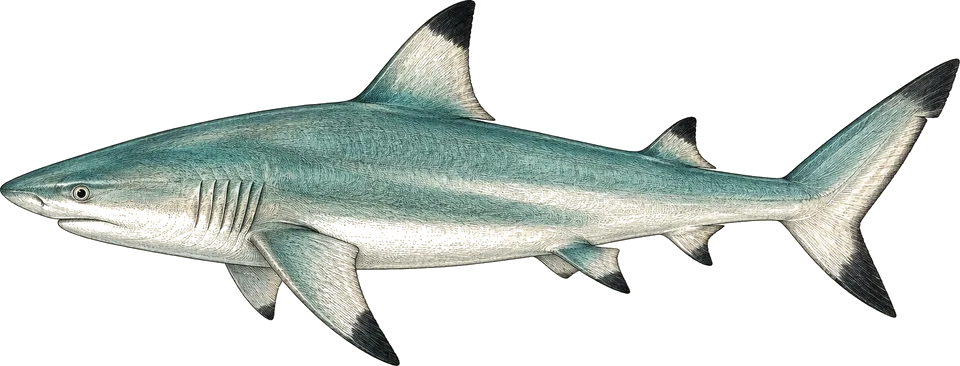
Blacktip Boulevard, Bloody Bay Wall, Jackson's Reef
Look off the wall edge and along the sand at Blacktip Boulevard.5
Frequent along the wall edge and the sand.
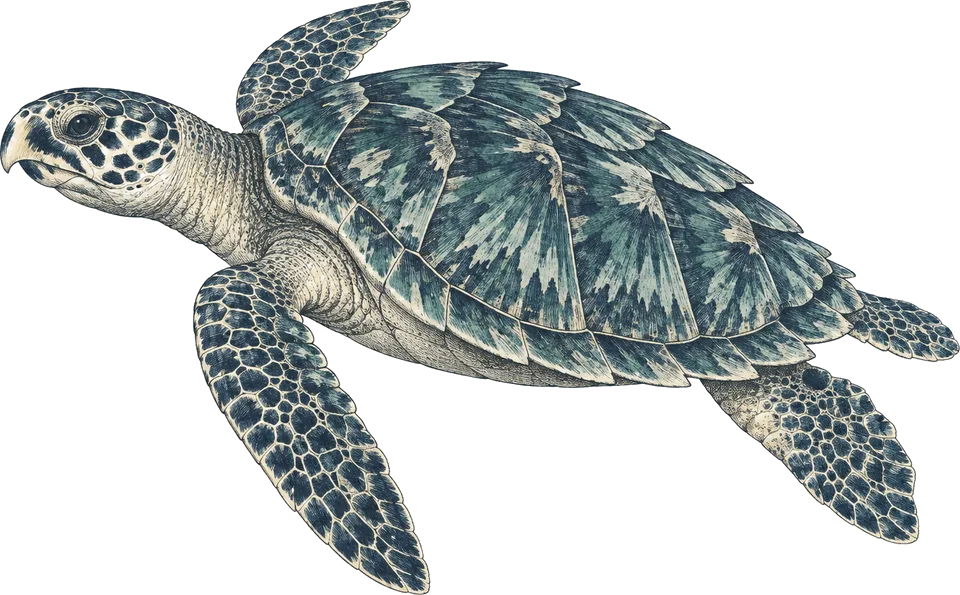
Great Wall East, Randy's Gazebo
Shallow wall tops at 6 to 15 m.8
Seen on most dives.
Compiled from the sources above, last checked 2026-11-12. Monthly conditions come from our own climate records; see how we score.