
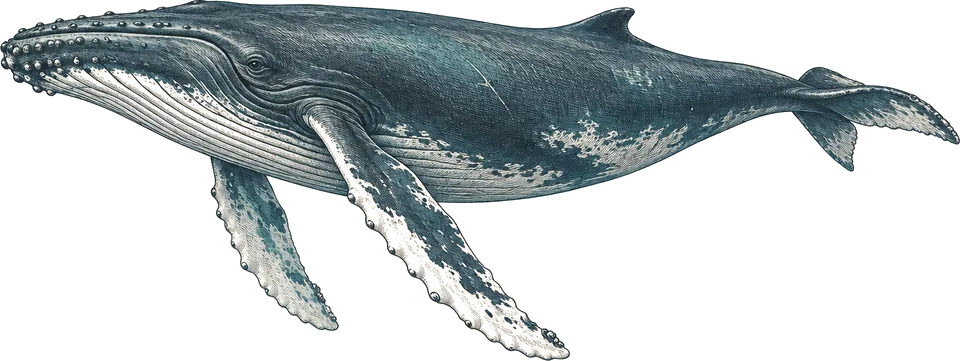
humpback whale
Dec–AprAround the Kerama Islands
Whale-watching trips from Zamami; on dives you may hear them singing.5
Common in season.
The best time to dive Okinawa is April to May and October to November, at either end of typhoon season, with warm water and Kerama mantas from May. Humpbacks visit Kerama December to April. My pick would be May.
Operators say: April to May and October to November: warm water, outside the August and September storm peak. Our data favours January to May; a storm passes in about two Septembers in three. Operators prefer April to October for warmth and mantas.
Worth knowing: 46% of days see seas over 1.5 m.
111 km across · coastline from Natural Earth 10m
Okinawa diving splits between the main island and the Kerama Islands. On the main island, shops in Onna and Chatan run shore dives such as Maeda Point's Blue Cave and Sunabe Seawall, boat dives to Manza and Cape Zampa, and the USS Emmons, a Second World War destroyer at about 45 m off Kouri Island. The Kerama Islands, a national park since 2014, are an hour or less by fast ferry from Naha's Tomari Port and have nearly 100 sites, most of them calm coral slopes, plus drifts at Ugan and Shimosone.
Water runs from about 22 °C in February and March to 29 °C in summer. Operators call April to October the best diving, with mantas at Ijyakajya from May to October, but typhoons can stop diving for a few days at a time from May to October. Winter brings north winds and cooler water, and humpback whales off Kerama from December to April.
Hover a month to isolate it.
| January | February | March | April | May | June | July | August | September | October | November | December | |
|---|---|---|---|---|---|---|---|---|---|---|---|---|
| Conditions | Good | Good | Excellent | Excellent | Excellent | Moderate | Moderate | Poor | Poor | Moderate | Excellent | Moderate |
| Water temp (°C) | 23 | 22 | 22 | 23 | 25 | 27 | 29 | 29 | 29 | 28 | 26 | 24 |
| Visibility (m) | 20–30 | 20–30 | 20–30 | 20–30 | 20–30 | 20–30 | 20–30 | 20–30 | 20–30 | 20–30 | 20–30 | 20–30 |
| Marine life | Steady | Steady | Steady | Steady | Steady | Steady | Steady | Steady | Steady | Steady | Steady | Steady |
| Best time | Peak | Peak | Peak | Peak |
Long-term averages, 2016–2025. Visibility is estimated from satellite chlorophyll-a. Water temperature is the surface mean; it is cooler at depth.
Diving conditionsSwell is common, and crossings can be rough.
Diving conditionsExpect some swell.
Diving conditionsThe wind eases. The sea is calmer.
Diving conditionsSwell is common, and crossings can be rough.
Diving conditionsSwell is common, and crossings can be rough. The wind is up.
1,945 underwater observation records · 24 surveyed years of ocean data · 10 years of sea temperature
Dashed: monthly average. Band: eight days in ten.
10th to 90th percentile rangemonthly mean
Seas top 1.5 m on 46% of days. Enough to cancel a day boat
Gusts over 40 km/h, about where a day boat stays in port
5 of them bring heavy rain
| Month | Swell | Gusts over 40 km/h | Wet days | Heavy rain | Air | Daylight |
|---|---|---|---|---|---|---|
| Jan | 2.8 m | 35% | 13 | 4 | 20 °C | 10.5 h |
| Feb | 2.6 m | 35% | 12 | 3 | 20 °C | 11.1 h |
| Mar | 2.5 m | 24% | 13 | 4 | 21 °C | 11.8 h |
| Apr | 2.1 m | 16% | 12 | 6 | 23 °C | 12.6 h |
| May | 2.0 m | 8% | 16 | 7 | 25 °C | 13.3 h |
| Jun | 2.0 m | 11% | 17 | 9 | 28 °C | 13.6 h |
| Jul | 2.9 m | 17% | 12 | 4 | 29 °C | 13.5 h |
| Aug | 2.3 m | 17% | 15 | 4 | 29 °C | 12.9 h |
| Sep | 2.9 m | 20% | 16 | 6 | 29 °C | 12.1 h |
| Oct | 2.8 m | 27% | 12 | 4 | 27 °C | 11.4 h |
| Nov | 2.6 m | 33% | 12 | 3 | 25 °C | 10.7 h |
| Dec | 3.1 m | 47% | 14 | 4 | 22 °C | 10.4 h |
Swell is the rough end of the month: nine days in ten come in under it. Sea temperature covers 10 years, waves 4.
Darker is better, against this site's own year. Pick a month for its weeks.
| Week 1 | ||||||||||||
|---|---|---|---|---|---|---|---|---|---|---|---|---|
| Week 2 | ||||||||||||
| Week 3 | ||||||||||||
| Week 4 |
| Week | Conditions | Water | Swell | Wind | Rain chance |
|---|---|---|---|---|---|
| Week 1 | Good | 23 °C | 2.5 m | 36 km/h | 48% |
| Week 2 | Excellent | 23 °C | 2.7 m | 36 km/h | 44% |
| Week 3 | Good | 23 °C | 3.1 m | 37 km/h | 42% |
| Week 4 | Good | 23 °C | 3.1 m | 36 km/h | 41% |
| Week 1 | Good | 22 °C | 2.7 m | 36 km/h | 42% |
| Week 2 | Excellent | 22 °C | 2.5 m | 36 km/h | 40% |
| Week 3 | Good | 22 °C | 2.6 m | 36 km/h | 41% |
| Week 4 | Good | 22 °C | 2.7 m | 36 km/h | 45% |
| Week 1 | Good | 22 °C | 2.4 m | 34 km/h | 47% |
| Week 2 | Excellent | 22 °C | 2.4 m | 32 km/h | 42% |
| Week 3 | Excellent | 22 °C | 2.4 m | 32 km/h | 37% |
| Week 4 | Excellent | 22 °C | 2.4 m | 33 km/h | 40% |
| Week 1 | Excellent | 23 °C | 2.2 m | 32 km/h | 39% |
| Week 2 | Excellent | 23 °C | 2.2 m | 31 km/h | 39% |
| Week 3 | Excellent | 23 °C | 2.0 m | 31 km/h | 46% |
| Week 4 | Excellent | 24 °C | 1.6 m | 31 km/h | 46% |
| Week 1 | Excellent | 24 °C | 1.6 m | 30 km/h | 44% |
| Week 2 | Excellent | 25 °C | 1.7 m | 29 km/h | 46% |
| Week 3 | Excellent | 25 °C | 2.0 m | 29 km/h | 53% |
| Week 4 | Good | 26 °C | 2.7 m | 30 km/h | 59% |
| Week 1 | Poor | 26 °C | 2.9 m | 29 km/h | 59% |
| Week 2 | Moderate | 27 °C | 2.1 m | 31 km/h | 64% |
| Week 3 | Moderate | 27 °C | 1.9 m | 32 km/h | 58% |
| Week 4 | Good | 28 °C | 1.5 m | 30 km/h | 42% |
| Week 1 | Good | 28 °C | 1.8 m | 29 km/h | 37% |
| Week 2 | Good | 29 °C | 2.0 m | 28 km/h | 34% |
| Week 3 | Poor | 29 °C | 3.0 m | 28 km/h | 38% |
| Week 4 | Poor | 29 °C | 4.1 m | 27 km/h | 46% |
| Week 1 | Poor | 29 °C | 4.1 m | 28 km/h | 51% |
| Week 2 | Poor | 29 °C | 2.7 m | 26 km/h | 49% |
| Week 3 | Moderate | 29 °C | 1.8 m | 24 km/h | 44% |
| Week 4 | Moderate | 30 °C | 2.3 m | 24 km/h | 45% |
| Week 1 | Poor | 29 °C | 2.7 m | 25 km/h | 56% |
| Week 2 | Poor | 29 °C | 2.7 m | 25 km/h | 60% |
| Week 3 | Poor | 29 °C | 3.0 m | 27 km/h | 52% |
| Week 4 | Poor | 29 °C | 2.9 m | 28 km/h | 45% |
| Week 1 | Moderate | 28 °C | 2.6 m | 30 km/h | 39% |
| Week 2 | Moderate | 28 °C | 2.4 m | 32 km/h | 39% |
| Week 3 | Moderate | 28 °C | 2.5 m | 33 km/h | 42% |
| Week 4 | Poor | 27 °C | 2.9 m | 35 km/h | 37% |
| Week 1 | Excellent | 27 °C | 2.8 m | 36 km/h | 34% |
| Week 2 | Excellent | 26 °C | 2.8 m | 35 km/h | 41% |
| Week 3 | Good | 26 °C | 2.9 m | 36 km/h | 45% |
| Week 4 | Good | 26 °C | 2.6 m | 37 km/h | 45% |
| Week 1 | Moderate | 25 °C | 2.7 m | 39 km/h | 47% |
| Week 2 | Moderate | 25 °C | 3.0 m | 39 km/h | 42% |
| Week 3 | Moderate | 24 °C | 3.2 m | 39 km/h | 42% |
| Week 4 | Moderate | 24 °C | 3.1 m | 37 km/h | 48% |
10 years of daily records, averaged into weeks.
Sized for each month's coldest water.
| Jan | Feb | Mar | Apr | May | Jun | Jul | Aug | Sep | Oct | Nov | Dec | |
|---|---|---|---|---|---|---|---|---|---|---|---|---|
| Suit | 5 mm | 5 mm | 5 mm | 5 mm | 5 mm | 3 mm | skin | skin | skin | 3 mm | 3 mm | 5 mm |
Suit row is for surface water. At depth: 5 mm and a hood or vest from December to April, 3 mm in summer. SMB for Kerama drifts. Many shops rent long and short suits.
Each month's rough end: nine days in ten are calmer.
Amber is over 1.5 m.
20 of the last 30 Septembers saw a tropical storm pass within 250 km. Anything has been recorded Apr–Oct.
Share of the last 30 years with a storm that month.
| Species | When | Observed window | Reliability | Evidence | Records |
|---|---|---|---|---|---|
| Humpback whale | Feb–Mar | Near-guaranteed | 1158 | ||
| Green turtle | All year | Near-guaranteed | 725 | ||
| Hawksbill turtle | All year | Likely | 26 | ||
| Whitetip reef shark | Feb, Dec | Hit-or-miss | 8 |
Logged sightings, not a full survey. How to read this table.
| Site | Depth | Level | What to expect |
|---|---|---|---|
| Maeda Point (Blue Cave)Okinawa main island · shore / cave | ≈ 3–15 m | Open Water | Shore dive into a sea cave at Onna, lit blue by sunlight. The best-known dive on the main island, and worth one dive in my book.2 |
| Sunabe SeawallOkinawa main island · shore / reef | ≈ 5–20 m | Open Water | Shore entry from the Chatan seawall onto soft-coral reefs.2 |
| USS EmmonsOkinawa main island · wreck | ≈ 35–45 m | Experienced | 106 m destroyer-minesweeper sunk after kamikaze hits in April 1945, lying at about 45 m off Kouri Island. Two dives to see it all.3 |
| UganKerama Islands · drift | ≈ 10–25 m | Advanced | Drift off Zamami to 25 m; dogtooth tuna, amberjack and tuna schools, mantas sometimes near the surface. Current can be very strong. Not one for my first trip.5 |
| ShimosoneKerama Islands · pinnacle | ≈ 15–40 m | Experienced | Offshore rocks rising from 40 m; big pelagics and 30 to 50 m visibility. Dived in summer only, too rough in winter.5 |
| IjyakajyaKerama Islands · reef / cleaning station | ≈ 10–30 m | Open Water | Manta cleaning station to 30 m with mild current; mantas usually May to October, turtles often.4 |
| Cave NitaKerama Islands · cavern | ≈ 5–15 m | Advanced | Cavern off Zamami to about 15 m with skylights, silver sweepers and soldierfish, surrounded by coral gardens.4 |
| NishibamaKerama Islands · reef | ≈ 5–25 m | Open Water | Coral reef off Aka to 25 m with cardinalfish, anthias and garden eels. Diving is regulated here to protect the coral.4 |
| GinaKerama Islands · reef | ≈ 5–25 m | Open Water | Coral slopes off Aka to 25 m with little current; green and hawksbill turtles.4 |
| Toudaishita (Aharen Lighthouse)Kerama Islands · reef / caves | ≈ 5–18 m | Open Water | Caves and arches off Tokashiki to about 18 m; broadclub cuttlefish spawn here. Dived year-round.5 |
Around the Kerama Islands
Whale-watching trips from Zamami; on dives you may hear them singing.5
Common in season.
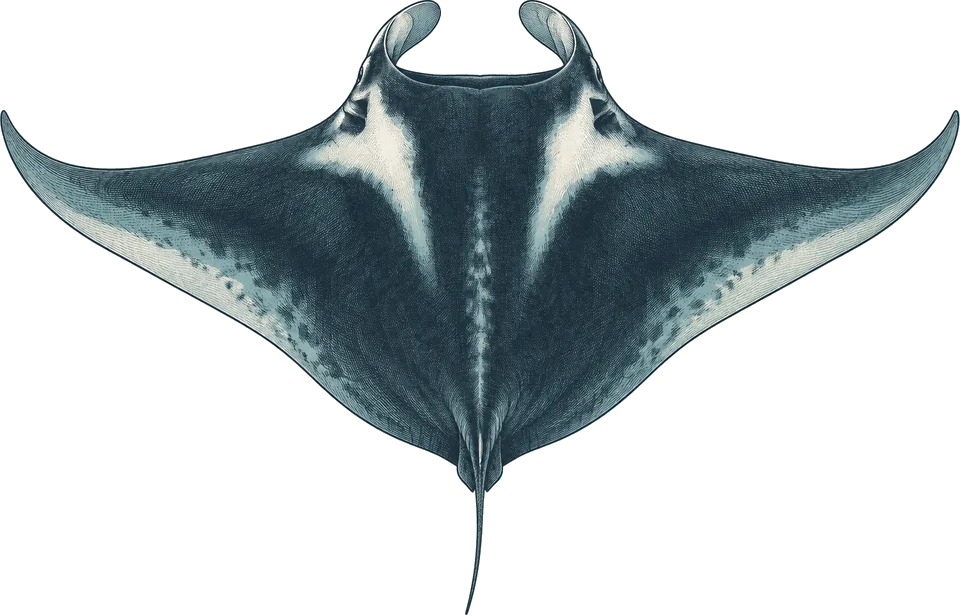
Ijyakajya, Ugan
Settle near the cleaning station at Ijyakajya and wait; also passes at Ugan.4
Usually seen in season, not guaranteed.
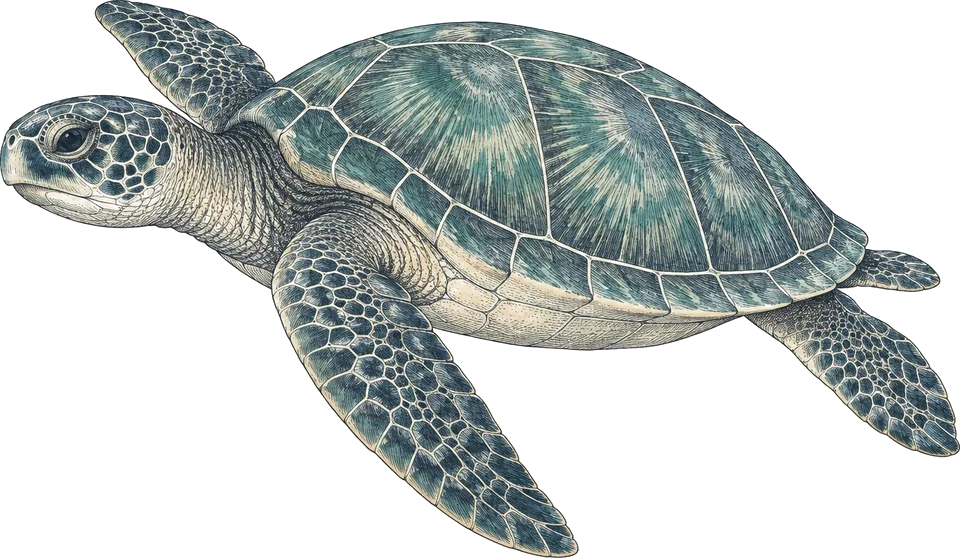
Gina, Ijyakajya, Kerama Islands
Easy coral-slope dives at 5 to 20 m; they nest around the Keramas.4
Likely on Kerama dives.
Ugan, Shimosone
Drift the offshore points and watch the blue.5
Regular on current-swept points in summer.
Compiled from the sources above, last checked 2026-11-12. Monthly conditions come from our own climate records; see how we score.