
batfish and lionfish
All yearOkikawa Maru, Olympia Maru, East Tangat Gunboat
Hang off the superstructure and coral-covered hulls at 10 to 25 m.1
Resident on most wrecks.
The best time to dive Coron is January to May, the dry season, when seas are calm and wreck visibility is best. June to November brings rain, rough seas and typhoons, though the sheltered wrecks are dived all year. I'd go in March or April.
Operators say: Guides name the dry season, December to April or May; the wrecks are dived all year. Our data still finds December wet and windy, so it starts the window in January.
Worth knowing: 11 days a month of heavy rain.
111 km across · coastline from Natural Earth 10m
Coron Bay, between Busuanga and Coron islands in northern Palawan, holds a fleet of Japanese supply ships sunk by US carrier aircraft on 24 September 1944. Six large wrecks and two small gunboats are dived regularly, lying at 3 to 43 m. Most sit at 12 to 30 m, which puts several within reach of Advanced divers, while the Irako and Akitsushima are deep, dark and for experienced wreck divers. Coral, batfish, groupers and lionfish cover the hulls.
The bay is sheltered, so diving runs all year, but visibility is modest at 5 to 20 m and best in the dry season. Most sources name December to April or May; our data puts the window at January to May. Away from the wrecks, Barracuda Lake on Coron Island is a dive through fresh water over warmer salt water, with a sharp temperature change near 15 m, and reefs such as Siete Pecados suit snorkellers too.
Hover a month to isolate it.
| January | February | March | April | May | June | July | August | September | October | November | December | |
|---|---|---|---|---|---|---|---|---|---|---|---|---|
| Conditions | Excellent | Excellent | Excellent | Excellent | Good | Poor | Poor | Poor | Poor | Poor | Poor | Poor |
| Water temp (°C) | 28 | 28 | 28 | 29 | 30 | 30 | 30 | 30 | 30 | 30 | 30 | 29 |
| Visibility (m) | 5–15 | 5–15 | 5–15 | 5–15 | 5–15 | 5–15 | 0–10 | 5–15 | 0–10 | 5–15 | 5–15 | 5–15 |
| Marine life | Quiet | Busy | Peak | Steady | Peak | Peak | Busy | Quiet | Busy | Steady | Steady | Steady |
| Best time | Peak | Peak | Peak | Peak | Peak |
Long-term averages, 2016–2025. Visibility is estimated from satellite chlorophyll-a. Water temperature is the surface mean; it is cooler at depth.
Diving conditionsIt rains less. The sea is rougher.
Diving conditionsIt rains more. The sea is calmer.
94 underwater observation records · 13 surveyed years of ocean data · 10 years of sea temperature
Dashed: monthly average. Band: eight days in ten.
10th to 90th percentile rangemonthly mean
Seas top 1.5 m on under 1% of days. Enough to cancel a day boat
Gusts over 40 km/h, about where a day boat stays in port
7 of them bring heavy rain
| Month | Swell | Gusts over 40 km/h | Wet days | Heavy rain | Air | Daylight |
|---|---|---|---|---|---|---|
| Jan | 1.0 m | 1% | 7 | 1 | 30 °C | 11.4 h |
| Feb | 1.0 m | 0% | 7 | 1 | 30 °C | 11.6 h |
| Mar | 0.8 m | 0% | 6 | 0 | 32 °C | 11.9 h |
| Apr | 0.7 m | 0% | 8 | 1 | 33 °C | 12.3 h |
| May | 0.7 m | 0% | 21 | 5 | 32 °C | 12.6 h |
| Jun | 0.6 m | 0% | 28 | 13 | 30 °C | 12.7 h |
| Jul | 0.8 m | 0% | 29 | 16 | 29 °C | 12.6 h |
| Aug | 0.6 m | 1% | 27 | 13 | 29 °C | 12.4 h |
| Sep | 0.7 m | 0% | 27 | 14 | 29 °C | 12.1 h |
| Oct | 0.6 m | 1% | 27 | 11 | 30 °C | 11.7 h |
| Nov | 0.8 m | 2% | 15 | 4 | 30 °C | 11.4 h |
| Dec | 0.8 m | 0% | 13 | 4 | 30 °C | 11.3 h |
Swell is the rough end of the month: nine days in ten come in under it. Sea temperature covers 10 years, waves 4.
Darker is better, against this site's own year. Pick a month for its weeks.
| Week 1 | ||||||||||||
|---|---|---|---|---|---|---|---|---|---|---|---|---|
| Week 2 | ||||||||||||
| Week 3 | ||||||||||||
| Week 4 |
| Week | Conditions | Water | Swell | Wind | Rain chance |
|---|---|---|---|---|---|
| Week 1 | Excellent | 29 °C | 1.0 m | 17 km/h | 29% |
| Week 2 | Excellent | 28 °C | 1.0 m | 17 km/h | 23% |
| Week 3 | Excellent | 28 °C | 1.0 m | 17 km/h | 23% |
| Week 4 | Excellent | 28 °C | 0.9 m | 17 km/h | 18% |
| Week 1 | Excellent | 28 °C | 1.0 m | 18 km/h | 22% |
| Week 2 | Excellent | 28 °C | 0.9 m | 19 km/h | 28% |
| Week 3 | Excellent | 28 °C | 1.0 m | 19 km/h | 24% |
| Week 4 | Excellent | 28 °C | 1.0 m | 20 km/h | 17% |
| Week 1 | Excellent | 28 °C | 0.9 m | 18 km/h | 16% |
| Week 2 | Excellent | 28 °C | 0.7 m | 17 km/h | 21% |
| Week 3 | Excellent | 28 °C | 0.8 m | 17 km/h | 20% |
| Week 4 | Excellent | 29 °C | 0.8 m | 19 km/h | 18% |
| Week 1 | Excellent | 29 °C | 0.7 m | 18 km/h | 19% |
| Week 2 | Excellent | 29 °C | 0.7 m | 16 km/h | 29% |
| Week 3 | Excellent | 29 °C | 0.7 m | 17 km/h | 33% |
| Week 4 | Excellent | 30 °C | 0.7 m | 17 km/h | 33% |
| Week 1 | Good | 30 °C | 0.7 m | 17 km/h | 44% |
| Week 2 | Good | 30 °C | 0.7 m | 16 km/h | 55% |
| Week 3 | Good | 30 °C | 0.6 m | 14 km/h | 72% |
| Week 4 | Good | 30 °C | 0.7 m | 14 km/h | 84% |
| Week 1 | Poor | 30 °C | 0.6 m | 14 km/h | 90% |
| Week 2 | Poor | 30 °C | 0.6 m | 14 km/h | 91% |
| Week 3 | Poor | 30 °C | 0.5 m | 13 km/h | 92% |
| Week 4 | Poor | 30 °C | 0.5 m | 13 km/h | 93% |
| Week 1 | Poor | 30 °C | 0.6 m | 14 km/h | 91% |
| Week 2 | Poor | 30 °C | 0.7 m | 15 km/h | 92% |
| Week 3 | Poor | 30 °C | 0.9 m | 16 km/h | 96% |
| Week 4 | Poor | 30 °C | 0.8 m | 19 km/h | 92% |
| Week 1 | Poor | 30 °C | 0.7 m | 19 km/h | 85% |
| Week 2 | Poor | 30 °C | 0.6 m | 16 km/h | 84% |
| Week 3 | Poor | 30 °C | 0.6 m | 15 km/h | 86% |
| Week 4 | Poor | 30 °C | 0.7 m | 16 km/h | 89% |
| Week 1 | Poor | 30 °C | 0.7 m | 15 km/h | 86% |
| Week 2 | Poor | 30 °C | 0.7 m | 15 km/h | 90% |
| Week 3 | Poor | 30 °C | 0.7 m | 16 km/h | 94% |
| Week 4 | Poor | 30 °C | 0.6 m | 14 km/h | 93% |
| Week 1 | Poor | 30 °C | 0.6 m | 12 km/h | 91% |
| Week 2 | Poor | 30 °C | 0.5 m | 12 km/h | 88% |
| Week 3 | Poor | 30 °C | 0.5 m | 13 km/h | 85% |
| Week 4 | Poor | 30 °C | 0.9 m | 15 km/h | 81% |
| Week 1 | Poor | 30 °C | 0.9 m | 15 km/h | 70% |
| Week 2 | Poor | 30 °C | 0.8 m | 15 km/h | 58% |
| Week 3 | Poor | 30 °C | 0.8 m | 15 km/h | 47% |
| Week 4 | Poor | 29 °C | 0.8 m | 16 km/h | 37% |
| Week 1 | Poor | 29 °C | 0.8 m | 15 km/h | 38% |
| Week 2 | Poor | 29 °C | 0.7 m | 14 km/h | 41% |
| Week 3 | Poor | 29 °C | 0.9 m | 16 km/h | 42% |
| Week 4 | Poor | 29 °C | 1.0 m | 17 km/h | 41% |
10 years of daily records, averaged into weeks.
Sized for each month's coldest water.
| Jan | Feb | Mar | Apr | May | Jun | Jul | Aug | Sep | Oct | Nov | Dec | |
|---|---|---|---|---|---|---|---|---|---|---|---|---|
| Suit | skin | skin | skin | skin | skin | skin | skin | skin | skin | skin | skin | skin |
Suit row is for surface water. At depth: 3 mm, full length to protect against sharp metal inside the wrecks. Primary and backup torch, SMB, and a computer for the deeper wrecks. Nitrox helps on repeat wreck dives.
Each month's rough end: nine days in ten are calmer.
Amber is over 1.5 m.
11 of the last 30 Novembers saw a tropical storm pass within 250 km. Anything has been recorded Mar, May–Jul, Sep–Dec.
Share of the last 30 years with a storm that month.
Only 94 records have been logged within 60 km. A thin record is not an empty reef.
| Species | When | Observed window | Reliability | Evidence | Records |
|---|---|---|---|---|---|
| Green turtle | Mar, May–Jul | Near-guaranteed | 20 | ||
| Hawksbill turtle | May, Jul, Sep | Likely | 12 | ||
| Bigeye trevally | Mar, May | Likely | 8 | ||
| Dugong | Feb, May–Jun, Sep | Near-guaranteed | 28 |
Logged sightings, not a full survey. How to read this table.
| Site | Depth | Level | What to expect |
|---|---|---|---|
| Irakowreck | 28–43 m | Experienced | 147 m refrigerated supply ship, almost upright at 43 m with decks around 30 m. Galley, boilers and holds; dark inside. I'd leave it until I had a wreck course.3 |
| Akitsushimawreck | 22–36 m | Experienced | 118 m seaplane tender on its port side at 35 m. Crane, anti-aircraft guns, engine rooms and a control room.1 |
| Kogyo Maruwreck | 22–34 m | Advanced | 135 m cargo ship carrying construction gear: a bulldozer, tractor and cement bags in the holds. Swim-throughs at 22–28 m can be tight.1 |
| Olympia Maruwreck | 16–30 m | Advanced | 122 m freighter upright near Sangat Island, formerly called the Tangat wreck. Easy penetration and schooling fish; a common first wreck, and the one I'd start on.3 |
| Okikawa Maruwreck | 10–26 m | Advanced | 160 m oil tanker upright with decks at 12–15 m and coral at 10–16 m. Enter along the prop shaft; plenty of daylight inside.3 |
| Morazan Maruwreck | 12–25 m | Advanced | Former British passenger-cargo ship on its starboard side; bow-to-stern route through four holds and the engine room.1 |
| East Tangat Gunboatwreck | 3–19 m | Open Water | 35 m submarine chaser, stripped by salvors, at 3–19 m. Batfish, lionfish and crocodilefish; limited swim-throughs.1 |
| Lusong Gunboatwreck | 5–14 m | Open Water | 30 m gunboat whose stern breaks the surface at low tide; hard coral and reef fish. Good for beginners and snorkellers.1 |
| Barracuda Lakelake | ≈ 5–32 m | Advanced | Limestone lake on Coron Island: salt and fresh water layers, a sharp temperature change near 15 m, bottom at about 32 m.1 |
| Siete Pecadosreef | ≈ 3–24 m | Open Water | Islets off Coron Town with table and staghorn coral, giant clams, turtles and cuttlefish to 24 m; also a snorkelling stop.1 |
Okikawa Maru, Olympia Maru, East Tangat Gunboat
Hang off the superstructure and coral-covered hulls at 10 to 25 m.1
Resident on most wrecks.
Akitsushima, Irako
Look inside holds and under the hull plates with a torch.1
Regular on the deeper wrecks.
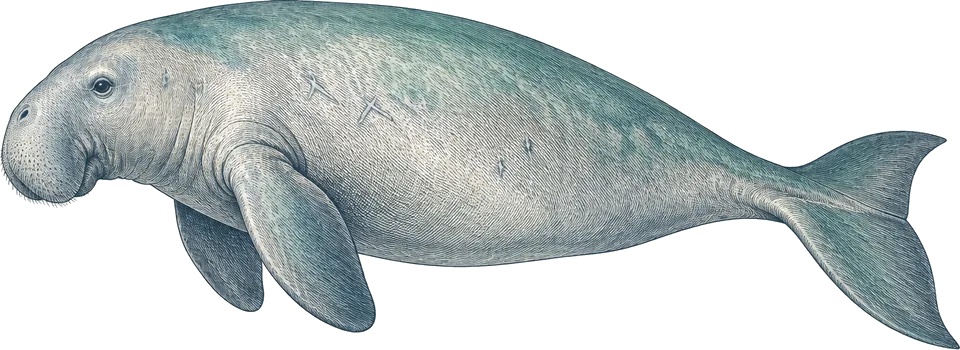
Busuanga seagrass beds, near Calauit
Early-morning trips to the seagrass off northern Busuanga; keep 2 m away.1
About 30 animals around Calauit; sightings not guaranteed.
Compiled from the sources above, last checked 2026-11-12. Monthly conditions come from our own climate records; see how we score.