
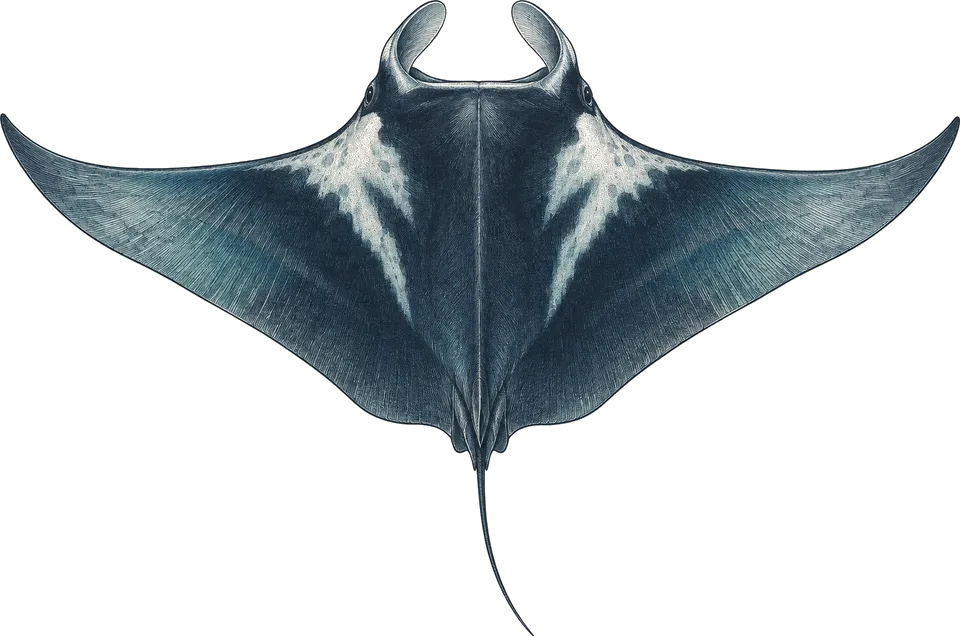
giant manta ray
Jan–MayThe Sisters, Speyside
Watch the blue on north-east drifts and at the Sisters; most sightings are at a few sites.3
Lucky now; once resident at Speyside.
The best time to dive Tobago is January to May, the dry season, when visibility is best (up to 30 m) and manta odds are highest. From July to November, Orinoco outflow and rain can turn the upper water green. I'd aim for April.
Operators say: January to May: the dry season brings the clearest water and the best chance of mantas.
Worth knowing: 29% of days see seas over 1.5 m.
111 km across · coastline from Natural Earth 10m
Tobago sits where the Guyana Current, carrying nutrients from the Orinoco River, meets the Caribbean. The result is oversized sponges and corals, including a brain coral at Kelleston Drain about 5 m across, and plenty of big fish, but also green water at times and strong current. Most diving is drift diving with the boat following the divemaster's buoy. Speyside and Little Tobago in the north-east have the fastest water, from 2 knots to a stretch locals call the African Express, and suit Advanced divers; the Caribbean coast from Crown Point to Arnos Vale is calmer and better for beginners, with the Maverick wreck at 15 to 30 m.
The dry season, roughly December or January to May or June, brings the best visibility and the best manta odds, though mantas are now a lucky sighting. From July to November, Orinoco floodwater can lay a green freshwater layer over the Atlantic side, with clearer, cooler water below. Tobago lies outside the main hurricane belt. The island's recompression chamber is in Roxborough.
Hover a month to isolate it.
| January | February | March | April | May | June | July | August | September | October | November | December | |
|---|---|---|---|---|---|---|---|---|---|---|---|---|
| Conditions | Excellent | Good | Excellent | Excellent | Excellent | Poor | Poor | Good | Moderate | Poor | Poor | Good |
| Water temp (°C) | 27 | 27 | 27 | 28 | 28 | 28 | 29 | 29 | 30 | 30 | 29 | 28 |
| Visibility (m) | 15–25 | 15–25 | 15–25 | 15–25 | 15–25 | 15–25 | 15–25 | 5–15 | 5–15 | 5–15 | 15–25 | 15–25 |
| Marine life | Busy | Busy | Steady | Busy | Steady | Busy | Busy | Busy | Steady | Steady | Steady | Busy |
| Best time | Peak | Peak | Peak | Peak | Peak |
Long-term averages, 2016–2025. Visibility is estimated from satellite chlorophyll-a. Water temperature is the surface mean; it is cooler at depth.
Diving conditionsSwell is common, and crossings can be rough. The wind is up. It rains more.
Diving conditionsThis is the wet season topside. The wind eases. The sea is calmer.
Diving conditionsSwell is common, and crossings can be rough. This is the wet season topside. The wind eases.
Diving conditionsSwell is common, and crossings can be rough. The wind is up. It rains less.
93 underwater observation records · 18 surveyed years of ocean data · 10 years of sea temperature
Dashed: monthly average. Band: eight days in ten.
10th to 90th percentile rangemonthly mean
Seas top 1.5 m on 41% of days. Enough to cancel a day boat
Gusts over 40 km/h, about where a day boat stays in port
3 of them bring heavy rain
| Month | Swell | Gusts over 40 km/h | Wet days | Heavy rain | Air | Daylight |
|---|---|---|---|---|---|---|
| Jan | 2.0 m | 0% | 19 | 1 | 28 °C | 11.4 h |
| Feb | 2.1 m | 0% | 17 | 1 | 28 °C | 11.6 h |
| Mar | 2.2 m | 0% | 18 | 0 | 28 °C | 11.9 h |
| Apr | 1.8 m | 0% | 18 | 1 | 29 °C | 12.3 h |
| May | 1.8 m | 0% | 23 | 1 | 29 °C | 12.5 h |
| Jun | 2.0 m | 0% | 25 | 5 | 29 °C | 12.7 h |
| Jul | 1.8 m | 0% | 27 | 6 | 29 °C | 12.6 h |
| Aug | 1.4 m | 0% | 26 | 5 | 29 °C | 12.4 h |
| Sep | 1.2 m | 0% | 21 | 4 | 30 °C | 12.1 h |
| Oct | 1.6 m | 0% | 24 | 7 | 29 °C | 11.7 h |
| Nov | 1.9 m | 0% | 26 | 7 | 29 °C | 11.5 h |
| Dec | 2.1 m | 1% | 23 | 4 | 28 °C | 11.3 h |
Swell is the rough end of the month: nine days in ten come in under it. Sea temperature covers 10 years, waves 4.
Darker is better, against this site's own year. Pick a month for its weeks.
| Week 1 | ||||||||||||
|---|---|---|---|---|---|---|---|---|---|---|---|---|
| Week 2 | ||||||||||||
| Week 3 | ||||||||||||
| Week 4 |
| Week | Conditions | Water | Swell | Wind | Rain chance |
|---|---|---|---|---|---|
| Week 1 | Excellent | 27 °C | 1.9 m | 21 km/h | 62% |
| Week 2 | Excellent | 27 °C | 1.9 m | 20 km/h | 62% |
| Week 3 | Good | 27 °C | 2.0 m | 21 km/h | 64% |
| Week 4 | Good | 27 °C | 2.1 m | 21 km/h | 59% |
| Week 1 | Excellent | 27 °C | 2.1 m | 22 km/h | 60% |
| Week 2 | Good | 27 °C | 2.3 m | 23 km/h | 62% |
| Week 3 | Good | 27 °C | 2.2 m | 23 km/h | 59% |
| Week 4 | Excellent | 27 °C | 1.9 m | 22 km/h | 56% |
| Week 1 | Excellent | 27 °C | 2.0 m | 21 km/h | 59% |
| Week 2 | Excellent | 27 °C | 2.2 m | 22 km/h | 59% |
| Week 3 | Excellent | 27 °C | 2.2 m | 21 km/h | 55% |
| Week 4 | Excellent | 27 °C | 2.1 m | 21 km/h | 58% |
| Week 1 | Good | 27 °C | 2.1 m | 21 km/h | 62% |
| Week 2 | Excellent | 28 °C | 1.8 m | 21 km/h | 60% |
| Week 3 | Excellent | 28 °C | 1.8 m | 21 km/h | 58% |
| Week 4 | Excellent | 28 °C | 1.6 m | 21 km/h | 58% |
| Week 1 | Excellent | 28 °C | 1.6 m | 21 km/h | 64% |
| Week 2 | Excellent | 28 °C | 1.8 m | 22 km/h | 75% |
| Week 3 | Excellent | 28 °C | 1.9 m | 22 km/h | 78% |
| Week 4 | Excellent | 28 °C | 1.8 m | 21 km/h | 76% |
| Week 1 | Poor | 28 °C | 1.8 m | 21 km/h | 81% |
| Week 2 | Poor | 28 °C | 2.0 m | 22 km/h | 85% |
| Week 3 | Poor | 28 °C | 2.0 m | 22 km/h | 83% |
| Week 4 | Poor | 28 °C | 2.0 m | 22 km/h | 84% |
| Week 1 | Poor | 28 °C | 1.9 m | 21 km/h | 89% |
| Week 2 | Poor | 29 °C | 1.8 m | 20 km/h | 91% |
| Week 3 | Poor | 29 °C | 1.7 m | 19 km/h | 87% |
| Week 4 | Poor | 29 °C | 1.6 m | 18 km/h | 84% |
| Week 1 | Good | 29 °C | 1.5 m | 17 km/h | 86% |
| Week 2 | Good | 29 °C | 1.4 m | 18 km/h | 86% |
| Week 3 | Good | 29 °C | 1.3 m | 17 km/h | 81% |
| Week 4 | Excellent | 30 °C | 1.3 m | 16 km/h | 82% |
| Week 1 | Good | 30 °C | 1.2 m | 16 km/h | 79% |
| Week 2 | Good | 30 °C | 1.2 m | 15 km/h | 70% |
| Week 3 | Moderate | 30 °C | 1.2 m | 16 km/h | 67% |
| Week 4 | Good | 30 °C | 1.3 m | 16 km/h | 70% |
| Week 1 | Moderate | 30 °C | 1.4 m | 17 km/h | 78% |
| Week 2 | Poor | 30 °C | 1.5 m | 17 km/h | 77% |
| Week 3 | Poor | 29 °C | 1.7 m | 17 km/h | 77% |
| Week 4 | Poor | 29 °C | 1.8 m | 17 km/h | 81% |
| Week 1 | Poor | 29 °C | 1.8 m | 18 km/h | 84% |
| Week 2 | Poor | 29 °C | 1.9 m | 19 km/h | 89% |
| Week 3 | Poor | 29 °C | 1.9 m | 19 km/h | 88% |
| Week 4 | Poor | 28 °C | 1.9 m | 19 km/h | 84% |
| Week 1 | Good | 28 °C | 2.0 m | 20 km/h | 80% |
| Week 2 | Good | 28 °C | 2.1 m | 20 km/h | 80% |
| Week 3 | Good | 28 °C | 2.1 m | 21 km/h | 77% |
| Week 4 | Good | 28 °C | 2.0 m | 21 km/h | 68% |
10 years of daily records, averaged into weeks.
Sized for each month's coldest water.
| Jan | Feb | Mar | Apr | May | Jun | Jul | Aug | Sep | Oct | Nov | Dec | |
|---|---|---|---|---|---|---|---|---|---|---|---|---|
| Suit | 3 mm | 3 mm | 3 mm | skin | skin | skin | skin | skin | skin | skin | skin | skin |
Suit row is for surface water. At depth: Full 3 mm suit for surge and current; 5 mm in the wet season if you feel the cold. SMB is strongly recommended.
Each month's rough end: nine days in ten are calmer.
Amber is over 1.5 m.
5 of the last 30 Septembers saw a tropical storm pass within 250 km. Anything has been recorded Jun–Oct.
Share of the last 30 years with a storm that month.
Only 93 records have been logged within 60 km. A thin record is not an empty reef.
| Species | When | Observed window | Reliability | Evidence | Records |
|---|---|---|---|---|---|
| Southern stingray | All year | Near-guaranteed | 33 | ||
| Hawksbill turtle | Apr, Jun–Jul | Likely | 13 | ||
| Green turtle | Jan, Jun–Jul | Likely | 13 | ||
| Spotted eagle ray | Feb, Aug, Dec | Likely | 9 |
Logged sightings, not a full survey. How to read this table.
| Site | Depth | Level | What to expect |
|---|---|---|---|
| Kelleston Draindrift | ≈ 10–25 m | Advanced | Drift off Little Tobago to a brain coral 3 m high and 5 m wide, said to be the Caribbean's largest; nurse sharks rest below. The one I'd most want.2 |
| Japanese Gardens (Kamikaze Cut)drift | ≈ 8–20 m | Advanced | Sponge- and gorgonian-covered reef off Goat Island that ends in a narrow cut where the current accelerates; turtles and French angelfish.3 |
| London Bridgedrift | ≈ 8–20 m | Experienced | Rock arch off the St Giles Islands; surge and current funnel divers through. Tarpon, turtles, sharks and octopus.1 |
| The Sisterspinnacle | 18–40 m | Experienced | Pinnacles about 2.5 km offshore, dropping to 43 m; hammerheads, mantas and jacks. Needs calm seas to round the island.4 |
| MV Maverickwreck | 15–30 m | Advanced | 107 m Trinidad–Tobago car ferry sunk off Mount Irvine in 1997; top at 15 m, upper deck 18 m, sand 30 m. Usually little current.2 |
| Arnos Valereef | 3–13 m | Open Water | Shallow Caribbean-coast reef to 13 m with lobster, eels and torpedo rays in the sand; among the best hard coral on the island.5 |
| Flying Reefdrift | ≈ 5–15 m | Open Water | Long shallow reef near Crown Point, a usual first drift; plate corals, nurse and blacktip sharks, stingrays.4 |
| Diver's Dreamdrift | 6–11 m | Advanced | About 3 km beyond Crown Point in the Columbus Passage; strong current over current-sculpted barrel sponges, rays and turtles.4 |
The Sisters, Speyside
Watch the blue on north-east drifts and at the Sisters; most sightings are at a few sites.3
Lucky now; once resident at Speyside.
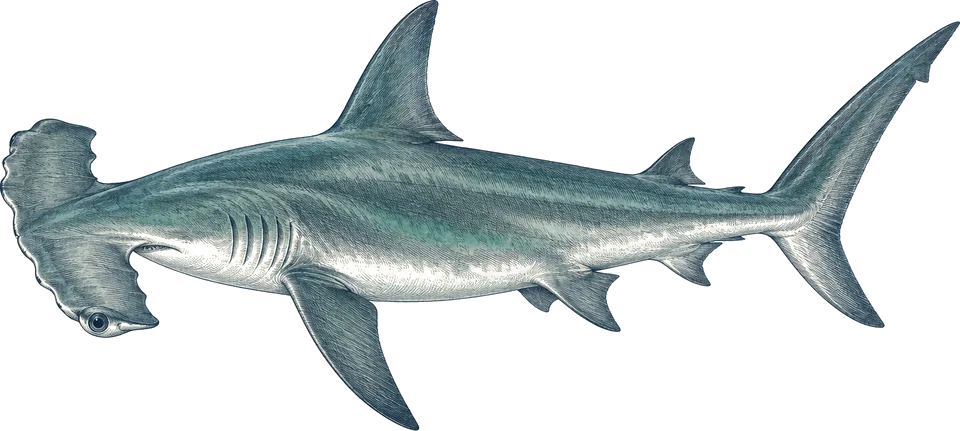
The Sisters
Deep dives on the pinnacles, looking into open water.4
Schools reported October to May.
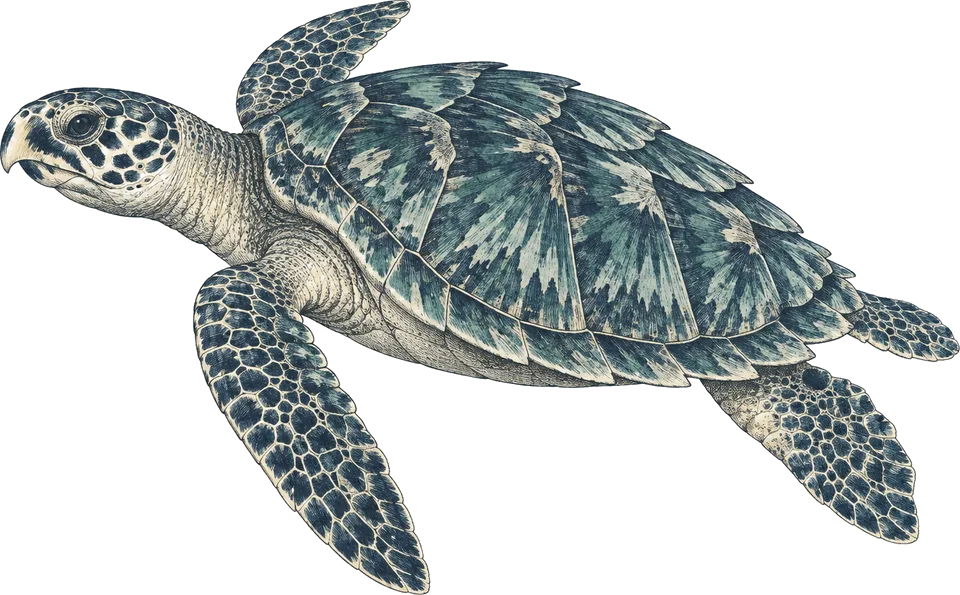
Japanese Gardens, Mount Irvine Wall, Speyside
Drifts and reef dives around Speyside and the Caribbean coast.3
Hawksbills common on most dives.
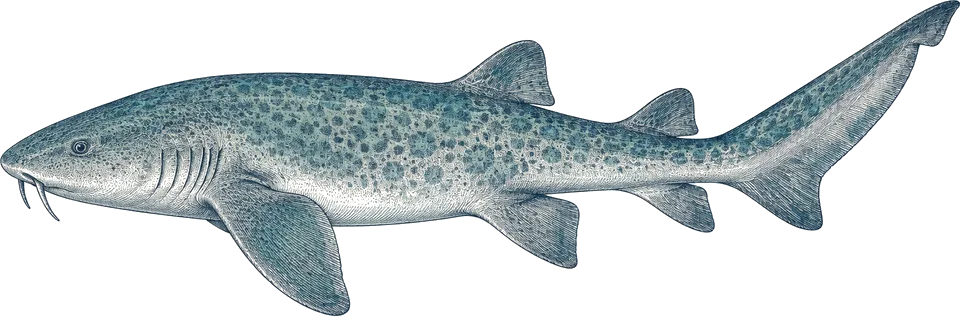
Kelleston Drain, Black Jack Hole, Flying Reef
Look under ledges and the Kelleston Drain brain coral.1
Common.
Compiled from the sources above, last checked 2026-11-12. Monthly conditions come from our own climate records; see how we score.